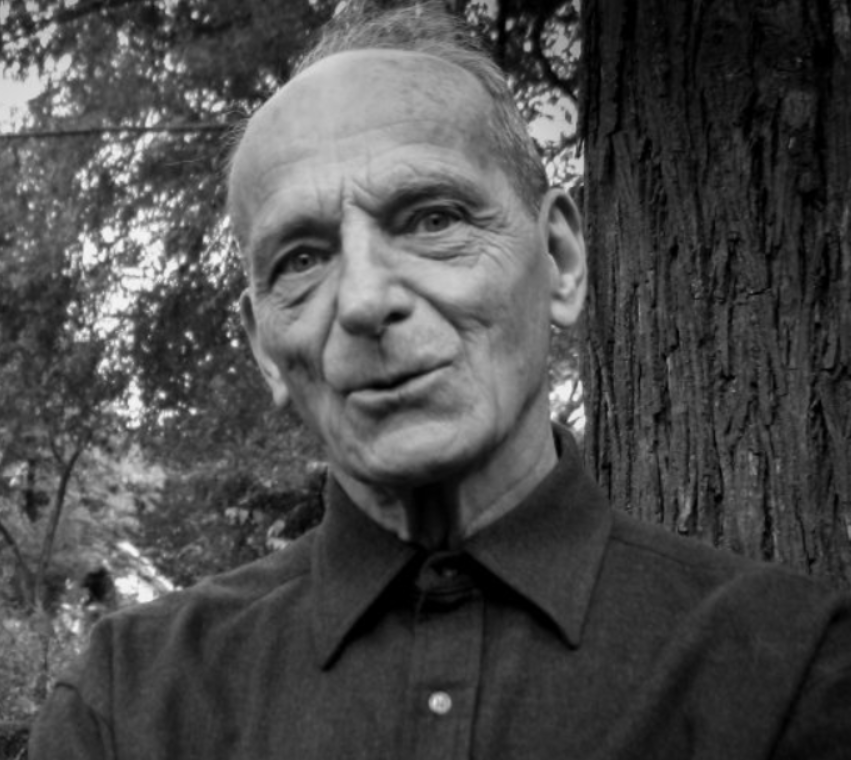

Toyin Falola
It is a privilege to give the Jan Vansina lecture at the University of Wisconsin-Madison on October 1st, 2025. With the defunding of Title VI programs, it is such a depressing moment for African Studies. Perhaps the field is set for new definitions, or it will be reimagined, or it will be ghettoized, as Philip Curtin once predicted, or it will shift its centers to the margins as the future of empires is reconfigured. The future is always in hiding; the new clothes of today are rags of tomorrow. Nothing is eternal. Africa should not be confused with African Studies. The Sagole baobab should not be confused with the African baobab. In the lecture, I will split my time between the past that Vansina speaks to and the future that partly draws from his career.

Colonial narratives caused African history to be routinely marginalized and misrepresented in the first half of the 20th century. These stories ignored the many indigenous oral traditions of the continent in favor of written materials. This exclusive method essentially undermined civilizations whose historical records grew only through oral storytelling, therefore limiting our knowledge of the historical richness of Africa. Born in 1929, Belgian historian Jan Vansina challenged this constrained historiographical paradigm. He transformed the field of African historical study by promoting the integrity and rigor of oral traditions.
Early in his career, in what was then arrogantly called the Belgian Congo, Vansina was personally exposed to the dominant intellectual theories that rejected African oral traditions. Vansina first learned his craft under the guidelines of conventional colonial ethnography. His academic perspective was much changed by his deep and transforming interactions with the Kuba people. Through close interaction with their rich and complex oral histories, Vansina was able to identify the people’s inherent historical authenticity and depth. He began to realize that oral stories constitute a strong archive of historical knowledge, rather than merely folkloric. This realization changed his intellectual focus and made him a leader in supporting oral traditions as historical sources.
It was a common colonial belief that the validation for Africa’s historical accounts should primarily come from European archival materials. Vansina argued powerfully against this presumption. Historiographical circles initially fiercely opposed his method, mistrusting oral materials due to concerns about their reliability. Vansina continued to fight for the historical validity of oral traditions, thereby ever more transforming the world of scholars with relentless dedication. In his work, oral traditions are finally given the status of living and trustworthy sources, of inestimable value for interpreting Africa’s past in an exhaustive manner.

He also had an interdisciplinary mind, combining anthropology, linguistics, archaeology, and ethnography to fill in the gaps in his endeavor to make oral tradition credible. Thanks to his groundbreaking work, Oral Tradition as History, historians were presented with a challenging model of analysis to aid them in undertaking a critical examination of oral sources. Vansina was able to distinguish historical facts from politically or culturally inspired reinterpretations by comparing different modes of oral tradition, including genealogies, praise songs, epics, and personal testimonies. His research approaches revealed the need to examine oral materials inside the cultural and historical contexts most relevant to them.
Vansina convincingly demonstrated that advanced political and social systems existed in Central African kingdoms long before the arrival of Europeans. This was achieved through a thorough field study of the Kongo and Kuba, among other kingdoms. His research revealed in-depth records of the succession of leadership, political alliances, economic systems, and social standards that were preserved over his lifetime through oral histories. These results clearly refute presumptions that African nations are historically fixed or simple. Instead, they emphasized the dynamic government structures, sophisticated cultural traditions, and substantial economic ties.
Apart from their intellectual value, the strategies devised by Vansina had a profound influence on cultural reclamation movements that spread across Africa. Historically marginalized communities began to regain their stories and validate their historical autonomy, free from the distortions imposed by colonization. Vansina’s support of oral traditions helped indigenous historians and people to preserve, record, and understand their histories independently. This served to foster community pride and identity. This approach greatly helped African groups to restore more significant cultural rituals and strengthen historical self-assurance.
Vansina’s methodology has been criticized for being based on the inherent limitations of oral tradition, such as generation depth bias, selective memory, and political susceptibility. Critics argue that oral traditions can change or become distorted over time, thereby distorting historical fact. Vansina was eager to use strict methodological discipline and cross-verifying multidisciplinary methods to resolve verifiable problems. To make the data more credible and eliminate some of its weaknesses, he prescribed a triangulation of oral testimony, using archaeological data, linguistic forms, and anthropological evidence. The ideas of Vansina have pragmatic consequences that extend far beyond the academic field and significantly impact modern actions related to legal protection and cultural preservation.

Vansina-inspired techniques are now somewhat standard in indigenous rights groups. In the fields of land restitution, cultural conservation, and human rights campaigning, these groups have been gathering extraordinary evidence from oral testimony. In legal settings in countries such as Canada, Australia, and Latin America, where oral histories are accepted as legitimate historical evidence in court procedures, his scholarly method has been particularly significant. In such locations, his technique has been particularly effective.
Moreover, Vansina’s methods have had a significant influence on the field of digital humanities, enabling technological innovations to record, document, and methodically assess oral histories. Digital projects using his transdisciplinary validation techniques help to preserve oral histories. This protects and preserves cultural memories against urbanization, globalization, and social transformation. These digital archives ensure preservation, therefore extending Vansina’s legacy. A great advantage is also their making oral traditions generally available and academically trustworthy for the next generations.
Vansina’s devised strategies have been adopted by educational and cultural institutions, making a significant contribution to the historiographical decolonization process. His inclusive historical methods inspire historians to conduct research from diverse and sensitive perspectives, while also providing comprehensive and culturally conscious teaching. Universities are under greater scrutiny to appreciate multiple epistemologies and methodological rigor when handling oral histories. This helps to produce a more inclusive and balanced historical conversation.
The intellectual work of Vansina makes a considerable difference in indigenous studies worldwide, therefore influencing academic scholarship and constructing cross-cultural dialogue. Indigenous peoples in the Americas, Oceania, and Asia, among other nations, actively engage with Vansina’s scientific work of reconstructing histories that reflect their actual realities. Indigenous intellectuals construct epistemologies within the dominant academic scholarship through their work, deconstructing colonial historical constructions.
Through his essential work, Vansina revolutionized the field of world historical studies. Consistent with his advocacy for diversity, analytical rigor, and cultural sensitivity, his support for giving underprivileged voices—typically excluded from scholarly debate—the chance to share and communicate their stories using authority. Thus, his work serves to democratize historical research. Emphasizing pluralism and respect for a range of historical sources and knowledge systems, Vansina’s legacy inspires fresh historical research.
Lastly, the ongoing intellectual breakthroughs Vansina brought greatly expanded the horizons of history. These advances underlined the complementarity of written and oral traditions and justified the accuracy of much historical evidence. His appeal to rigorous, multidisciplinary approaches has dramatically influenced the methods of historical research, thereby making history an amazingly accessible, dynamic, and culturally responsive subject. The work of Vansina emphasizes the necessity of continually reconsidering historical methodology to honor alternative human perspectives. This helps to define his ongoing legacy as a forerunner of inclusive historical research.
This article is well written.