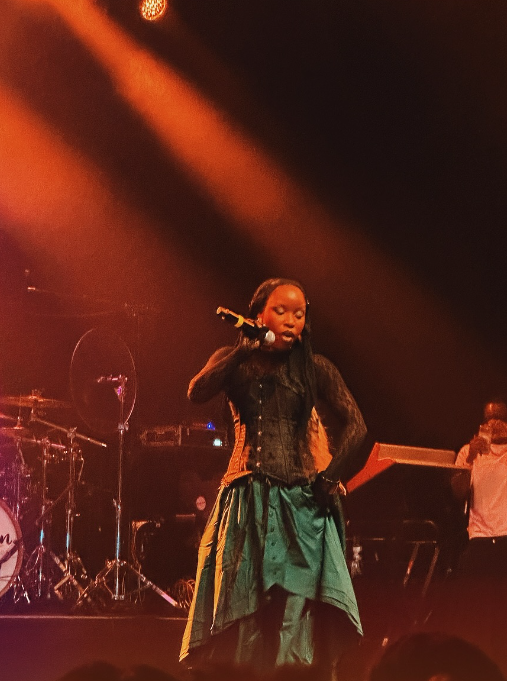

Toyin Falola
Perhaps, the one thing that makes Teledalase’s voice stand out in the Afro-folk genre is the smooth and calm nature of her lyrics and tune, as she delves into the depths of her childhood, personal history, and culture. https://youtu.be/QReeTcxgXDo?si=joGSD2PVX3IL-v8G. But this history is not hers alone; it is collective. Her music has the resonance of an African adage we use in South Africa, Ubuntu philosophy: “I am because you are.” In Teledalase’s music, you find yourself. You see a mirror of your Africanness. You search and you find yourself. You re-root your spirituality. She is super talented, partly because she was born in Osogbo, Osun State, and raised in a city not just historically steeped in Yoruba tradition but the home of a glamorous artistic and religious past. This tradition may have introduced her to indigenous music, the Yoruba-like potency of chanting and storytelling, and expressionism, which are essentially part of historic West African performances.
I have listened to a wide range of contemporary folk and roots music. I have witnessed the brilliance of Beautiful Nubia: in paper and in sound. I have followed Mike Ejeagha’s pattern for a while, and his influences as a distinct storyteller revolutionizing the Igbo music cannot be overstated. However, Teledalase’s fusion of geographical influences with subsequent life experience in diaspora migration created a sound that was culturally rooted and globally appealing. Although she draws from contemporary soul, R&B, and Afro-fusion, she never loses her grounding; instead, she purposefully incorporates Yoruba language and cosmology into her music.
She never missed the expressive simplicity and religious depth of her background, which was evident in the naturalness and depth of her lyric singing. Syncretism of influences is an intentional decision to entertain and maintain culture alive through sound. Her music is therefore no accident but an intentionally built bridge of worlds: home and exile, past and present. In the metamorphosis of Teledalase, it serves as a testament to the endurance of indigenous systems of knowledge, identity, and memory.
Her sound is a performative articulation of the Yoruba cultural heritage and the spirit of the avant-garde. In Teledalase’s music, the spiritual is as vital as the aesthetic. Language matters in her music. The Yoruba language is not only a tool of communication, but it is also a means to convey history, parables, proverbs, and symbolism. Teledalase may draw from ancient chants, tonal stress, and poetic declamations to convey the cosmology of her people through certain songs. Still, it is paired with Afro-soul, R&B, and alternative fusion grooves to create music that is both old-school and, in its worldview, progressive. When she is not worshipping, she mines strength, healing, love, and protection from within, scribbling metaphysics and emotion into catchy musicality. Sparse at one moment, lush at the next, her instrumentation forces one to listen to her message as hard as her melody. Most importantly, she resists the mainstream’s imposition and instead holds cultural preservation as her armor of empowerment and rebellion. Her sonic language is a space for the many who long to be part of an indigenous awakening, a proof that music, as a spiritual conduit, can serve as a vibrant bridge between tradition and contemporary expression.
Teledalase’s discography reveals how her individual albums contribute to an ever-expanding body of work grounded in cultural affirmation and spiritual storytelling. One of her top songs, “Eledumare,” exemplifies her commitment to combining music and sense. https://www.youtube.com/playlist?list=PL9t-Bl_LYKa4qAq0tjZJQoZNNV1d5hFUj. The track, utilizing the Yoruba designation for the Supreme Creator, transcends music appreciation into the realm of devotion. Her voice becomes more reverential, culminating in rhythmic motifs that evoke memories of older worship. The tune becomes more popular partly because it is featured on a movie soundtrack, helping it to reach listeners who would never otherwise be exposed to Yoruba culture and its associated religion. Its visual aesthetic, as seen in the official video of “Aabidi,” https://youtu.be/fmrJucAbp0Y?si=DJdGi8YrgxS5hA_e corresponds with its preoccupation with the use of imagery as an artistic device. In that reading, her costume, movement, and gestural dance further engage the lyrics’ themes, demonstrating that music and story are equally important to her.
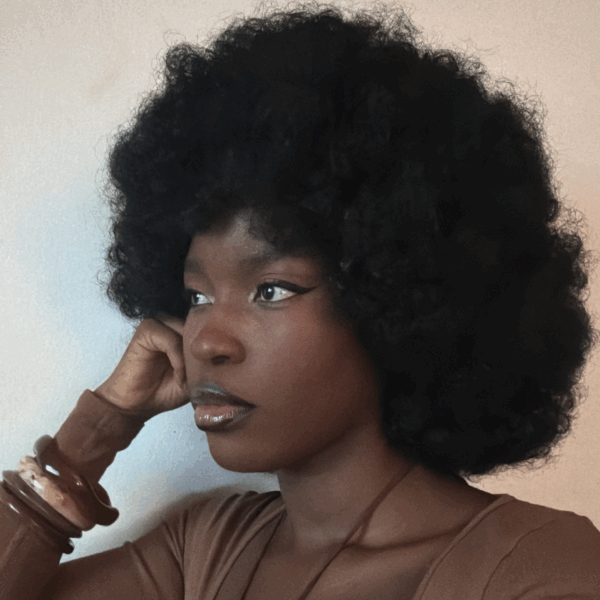
Another piece that has come under critical examination is her EP debut, “The Bad Wife Has No Tongue.” The title alone opens itself up for critique regarding gender roles, silencing women, and social roles in Yoruba and larger African societies. In this project, she aims to explore how music can serve as a space for subverting norms without compromising cultural identity. In all of these works, Teledalase proves that she does not just compose songs; she composes experiences that demand reflection and dialogue. The growing popularity of her music in Nigerian cities and the widespread streaming space suggest strong demand for music that addresses issues of identity, religion, and cultural continuities. With every release, she reinforces her ascendant authority and status as a voice shaping the next generation of African spiritual and fusion music.
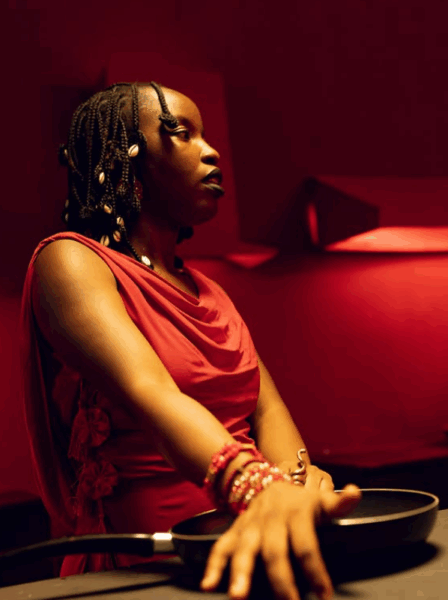
As African music and literature devolve, they are neither mere entertainment nor music but an expression and reclamation of culture and spirituality. Teledalase is firmly rooted in Yoruba tradition and culture, evident in her lyrics and textures. She is Yoruba, as evidenced by the content of her music, the language, mythic images, and traditional cosmology with which she anchors her work, and particularly by the sounds of the West African tradition in which she works. In singing in Yoruba and alluding to concepts like “Aje,” https://youtu.be/OEwwhgEJiLA?si=KNrpRyGfkcNofFu9, she lends her voice to preserve the old Nigerian beliefs for a little longer. She opens the doors to both national and international audiences. This is very important. This inclusion of Yoruba is not simply the addition of sonic texture to her compositions; it is an assurance of cultural perpetuation in the face of globalization.
As a Nigerian who travels between continents, she is a diasporic subject at the very point where her home country and the world meet. Her musical identity, thus, is a hybrid of innovation and tradition. In tunes like “‘The Bad Wife Has No Tongue,'” https://youtu.be/YOwqb5aDa-Y?si=gQ_NTAjCiCxnp7-D, she transgresses musical and societal rules, subverting gendered cultural practices in Yoruba African societies, giving voice to women whose identities have been culturally and conventionally marginalized. In this way, she views her art as a form of culture: preserving language, transgressing stereotypes, and fostering a spiritual connection. In the end, it all serves to instruct us that music is more than just about the long but about remembering where we came from and where we are going.
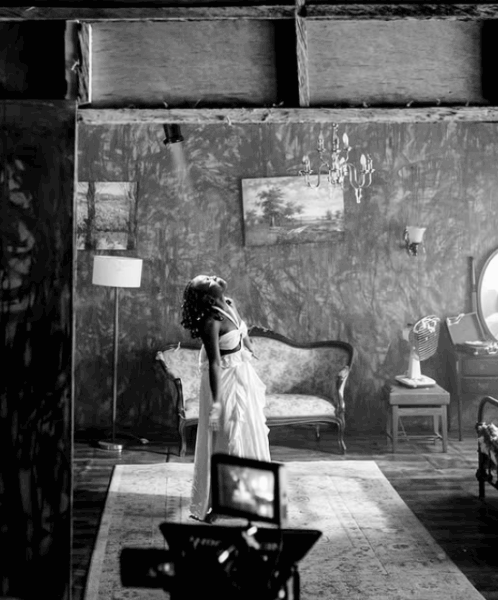
Two of Teledalase’s most powerful songs are the delicate “Ayanfe” and the thunderous “The Ones Who Didn’t Die”. https://youtu.be/Jy1PpaAno2I?si=89dHirHXmE7oSc52. Both songs are anthems that gather the individual into the communal body and clothe it in melody. “Ayanfe,” a Yoruba word meaning “beloved,” is a ballad of love—a love song in the Yoruba tradition, both in its dedication as a prayer to the spirit and as a witness to one’s survival. “Ayanfe” is a song of love, not as emotion, but as a commandment of the divine and as a necessity of agreement with fate. In hushed percussion and soft singing, it becomes a prayer for survival and togetherness; it becomes a reminder that in a world in flux, love can be a constant haven for the soul. “The Ones Who Didn’t Die” is an anthem of survival and strength. It is a song that unites the individual in a communal body that is whole in the face of struggle, a song of thanksgiving to the individual whose battle is one of disadvantage but who has not been defeated. Teledalase transforms this song into an acknowledgment of pain and victory because survival is not always beautiful, but it is an act that should be praised and cherished. It is a song for all those communities that have faced marginalization or trauma and have turned it into a source of power for their people. The songs display her range, as she moves from the private to the communal, from intimacy to activism, and from personal heartbreak to public struggle. In both songs, Teledalase affirms the continuity of love, memory, and spirit, as well as the idea that identity can be fixed and strong in the face of challenge. https://youtu.be/_KPSzwu0yZs?si=MgOfbFEBWm-XHfLP