
Toyin Falola
Your name is a lantern of thought
where the seeker finds what is lost.
You are the river that does not run dry,
flowing with wisdom across geographies.
We bend our calabashes to your stream.
As long as the drums sound
and the marketplace holds its business,
Your legacy will stand like the baobab in the square.
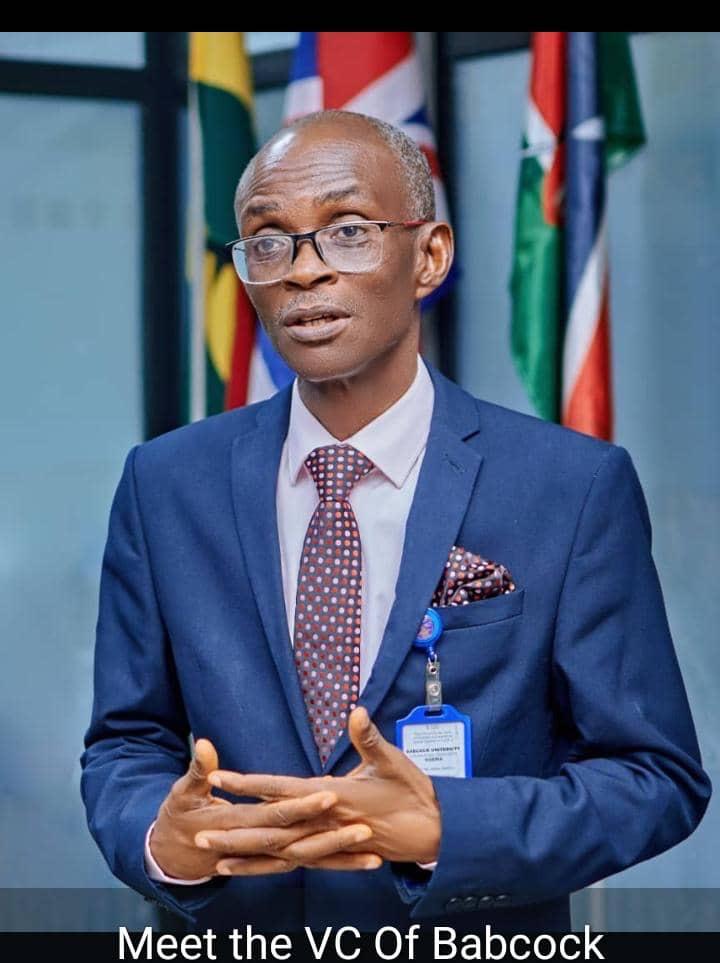
In this second part of my series on Babcock University, the focus is on Professor Ademola Stephen Tayo, the Vice-Chancellor, whose term is set to end in less than three weeks. Although I know all the Vice-Chancellors and their spouses, Professor Tayo is the one with whom I have interacted the most. I could call him any time, and one midnight, I woke him up to discuss an urgent matter. Humble and self-effacing, the contents of his mind are limitless, his strength is like that of Olumo Rock, and the depth of his genuineness is like diving to the bottom of the Atlantic Ocean. I am reminded that he is also a Pastor.
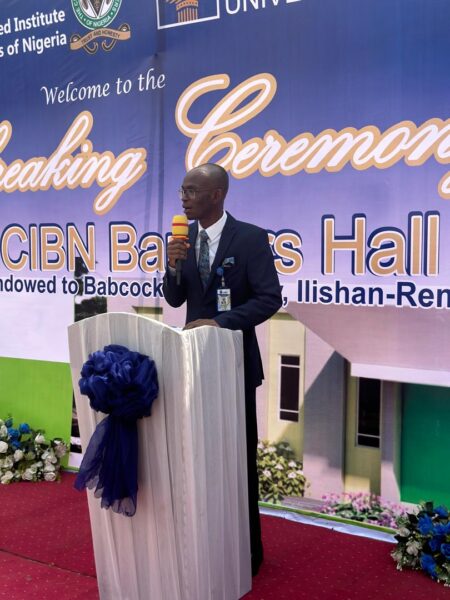
About eight years ago, I was reading The Sun newspaper in the serene gentleness of my office when I came across the headline, “Babcock graduates will detest corruption”. Immediately, I said out loud, “But of course!” Because with Professor Ademola Stephen Tayo as the Vice-Chancellor of Babcock University, the school has been known as a confluence where moral and intellectual excellence meet. Although trained in Ibadan as an agricultural economist, Professor Tayo not only practices on the farm; he also grooms worthy students who can be trusted with the nation’s future.
Babcock University ranks among the top schools in Nigeria in both academics and morals. His vision of connecting faith and scholarship has surely enlarged Babcock University’s coast. Perhaps his additional degrees in Development Education and Religious Studies catalyze this development, as he has consistently promoted a holistic approach to education, both as a scholar and as an administrator.

Professor Tayo is one of the most important figures at Babcock and a one-of-a-kind administrator whose approach to teaching and management is unique. One of the most intriguing innovations he brought on board was the consistent investment in human capital. He scrutinizes the curriculum and how the teaching and learning processes are being implemented, creating an environment that enables students and teachers to thrive.
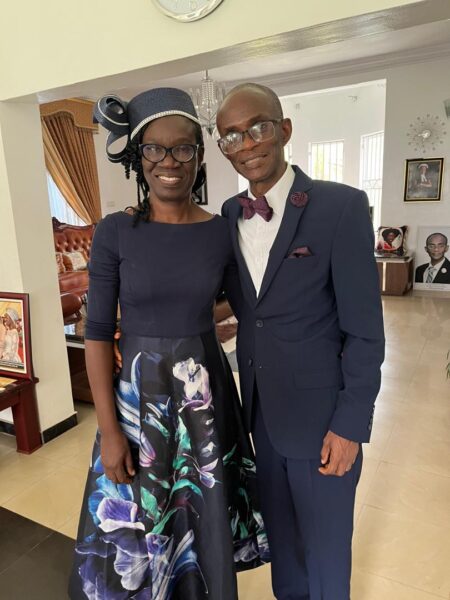
Professor Tayo earned a Master’s degree in Development Education, with a focus on Religious Studies, which serves as a credential. He has consistently emphasized the integration of faith into the educational process. His first lecture, which came my way, whose title has escaped me, reflects his belief that the Bible remains the most essential source of truth for Christian education in Nigeria, even in the current wave of theoretical shifts. The scholarly approach facilitated his encouragement of moral values as anchors for policies, student life, and institutional character in higher education. This is proof that his postgraduate education remains the foundation of his leadership style and his proposition for transformative education in Nigeria’s future.

To further demonstrate his passion for management, in his paper “Economic Thought About Private Sector Education: Policy Implications for Management of Universities in Africa”,Professor Tayo provides practical ideas that can promote innovation and progressive policies in Nigeria’s higher education sector. His recommendations highlight the need for stronger support systems, such as tax relief and partnerships, which could help institutions maintain quality. His argument is primarily built on the misconception that private universities are solely profit-driven and that their primary means of survival lies in the tuition paid by students.
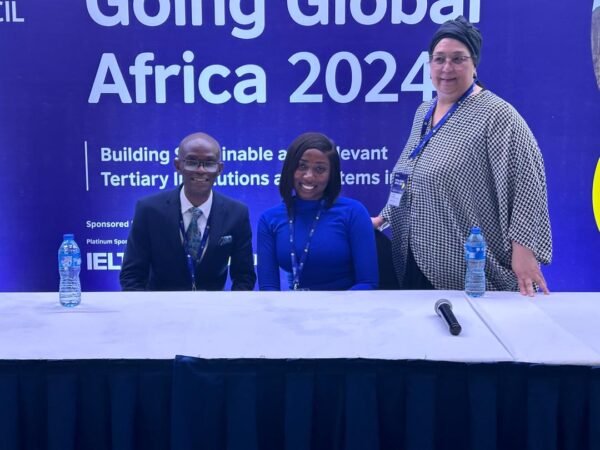
As a Vice-Chancellor of a private university, Professor Tayo’s paper makes a meaningful contribution to the state of higher education in Nigeria. He clamored for fair government policies that could make education more sustainable and affordable, even in the private sector. This is one of the numerous instances where he used scholarship to influence practice by guiding policies that not only shape Babcock but also the future of higher education in Nigeria. In addition, Professor Tayo’s ability to merge moral integrity and academic discipline, ensuring they coexist, is noteworthy. He has often mentioned that his decisions are guided by the conviction that education should not just be about schooling, but also about the quality of value and knowledge gained therein. In this vein, Professor Tayo is on a mission to transform education from the status quo to one that fosters innovation capable of building both the body and the mind simultaneously, which is incomplete without character.

As a result of his beliefs and thoughts on leadership, I can affirm that Professor Tayo is one person who embodies the saying that “If you are too big to serve, you are too small to lead.” Sometimes, leadership is stewardship. It is a service. It is using your position to serve the community. Through his leadership, he confirms that faith can lead to good governance in practical and enduring ways. The combination of service and belief is a powerful aspect of Professor Tayo’s legacy, and by preaching the gospel of transformation in education, he calls everyone to service.

To this distinguished administrator, education should not only prepare graduates for careers but also shape them to become better citizens. The scholarship is evident in his co-authored paper, “Synthesizing Education and Spirituality in Faith-Based Tertiary Institution”. By using the allegory of the Garden of Eden, Professor Tayo symbolizes God as the teacher, while Adam and Eve are the learners. I am moved by his examination of how educational institutions grounded in religious values can strengthen both learning and character formation.
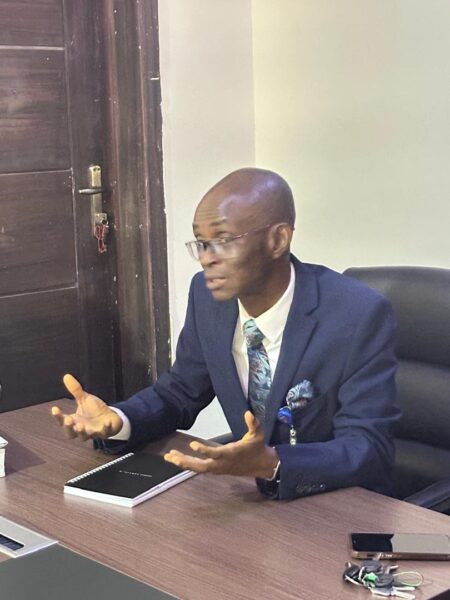
He has also proven this approach to be practical, aligning with integrity, belief, and prioritizing the development of all aspects of a person, as a dysfunction in one may lead to a dysfunction in all. He believes that the spiritual values taught in faith-based schools are the foundation for developing students who would become honest and passionate leaders. He demonstrates that education should include more than the curriculum. Still, it should instead be a journey of change that requires a strong academic ethic and a clear sense of morality.

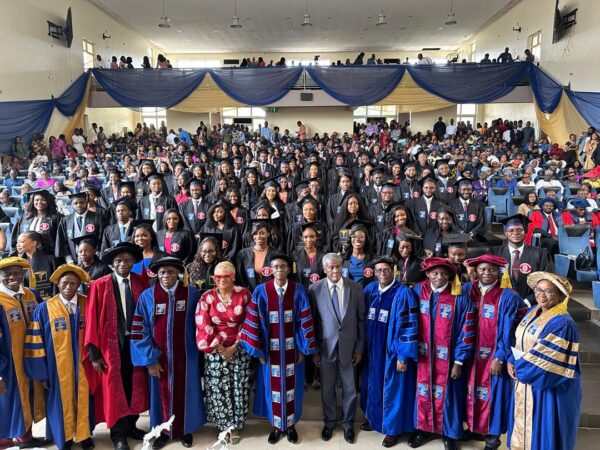
“Commitment to academic and spiritual excellence” is the best phrase to summarize Professor Tayo’s stint as the Vice-Chancellor of Babcock University. Little wonder, he has disclosed several times the significance of merit when awarding prizes, and he has also publicly denied charges that private institutions award first-class degrees without merit. He has witnessed the defense of numerous PhD degrees and attended the convocation of approximately 250 first-class graduates. This highlights the importance of hard work in a system where everything works. Professor Tayo has been diligent in teaching and securing numerous newsworthy projects through strategic contacts. One of such initiatives is the partnership with the Church Administrators Society of Nigeria (CASON), where he facilitated the launch of Nigeria’s first Executive Diploma in Church Administration.
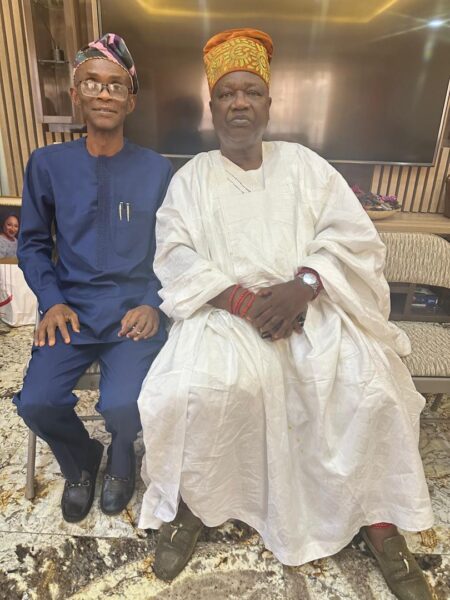
Professor Tayo’s academic evolution from the field of Agricultural Economics at the University of Ibadan to the human-centered field of Religious and Development Education is simply astounding. With his early grounding in Economics, he developed a strong analytical skill, which widened his thought process and his ability to manage resources, and later proved invaluable in his university administration. His growing interest in education as a transformative force did not alter his economic sensibilities; it instead enriched them by allowing him to blend practical considerations of resource management with a deep commitment to educational development. This peculiar combination signified his unique leadership style that prioritizes efficiency and ethics in policy, curriculum design, and mentorship.
Forward Ever
Backward Never

Onward to Kenya, where your office as the new Vice-Chancellor of the Adventist University of Africa, a postgraduate school, is being prepared.
Congratulations!
PS: This is the second in the series of four media pieces on Babcock University.
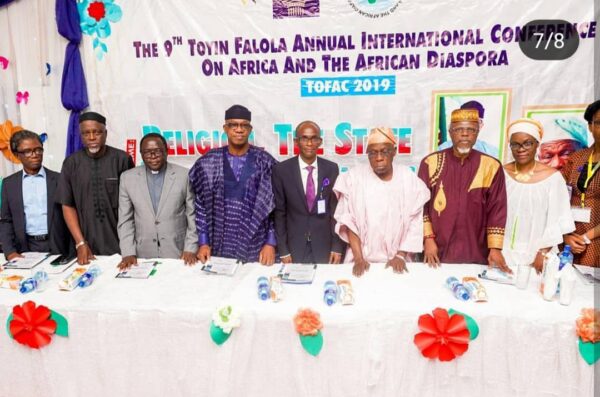
Would I say I know Professor Tayo? Not really; at least, not in the way Professor Falola has described his own knowledge of him here. Would I say he is a friend of mine? The answer to this is dicy, if not fuzzy. However, if we follow the rule of mathematical logic, where the friend of my friend is my friend, then I would say since this man is a friend of Professor Falola, and the latter is a friend of mine, I would comfortably say, by rule of positive extension, he is my friend as well. Through Professor Falola, I have been to Babcock University more than half a dozen times, and slept on that campus half of that time. I have met professor Tayo and interacted with him each time I visited the campus. As the Yoruba people would say, “If you don’t know the elephant, are you oblivious of the roaring trumpet of the wild beast? And if you have not been to the lagoon, have you never experienced the tasty power of the salt in seasoning of the stew? Essentially, even without a close fraternal interaction with Prof. Tayo, his works are witnesses to his charisma and visionary stance as the CEO of this University. The breathtaking pristine clean air campus that greets one on entering Babcock University speaks volumes to the charisma and administrative prowess of Prof. Tayo. His gentle, simple and respectful manner of conversing, fraught with a saintly persona could be characterized as extraordinary. No wonder, he is a minister, sound intellectual, competent and confident in running such a great Institution like Babcock. It’s so gratifying to know that this mega-higher education administrator is not retiring, but moving into a greater calling of running another institution with a bigger responsibility, and at a continental level. Professor Tayo, may this be the beginning of greater and better assignment the Good Lord has in store for you. Congratulations are in order! .