
Samson Ijaola
Head of Religious Studies Department
Lead City University, Ibadan
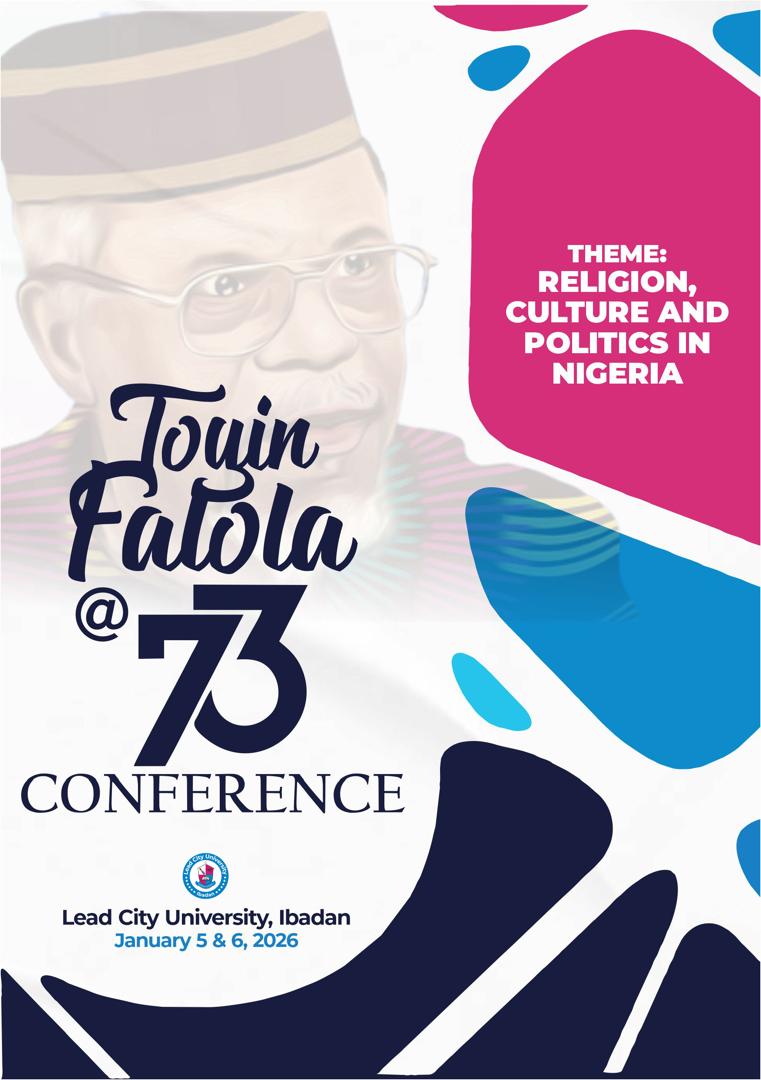
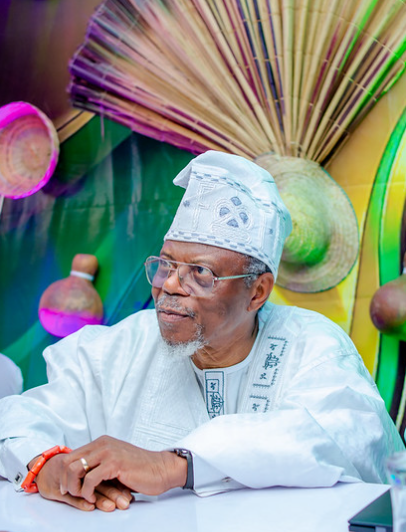
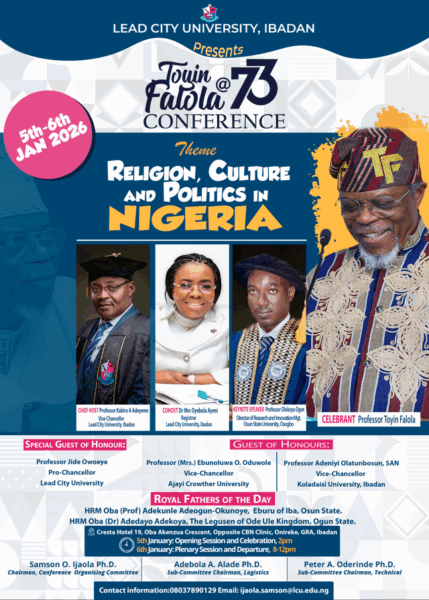
The choice of a religious theme to honor Professor Toyin Falola derives from his monumental contributions to the field, spanning Christianity, Islam, and African Traditional Religion. His recent book, Yoruba Metaphysics, solidifies his place in the front rank of scholars of religion. His creation of a new field, African Ancestral Studies, is revolutionary.

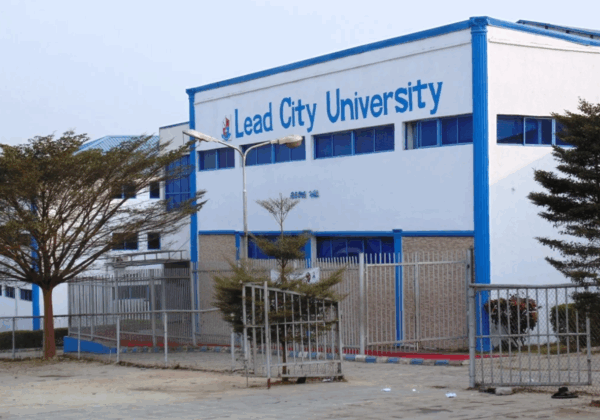
Again, Lead City University deserves commendation for convening a conference as distinguished as this for its intellectual seriousness and approach to national and continental discussions. As an academic institution, it has solidified its identity beyond a mere classroom to become a developer of memory and an arbiter of truth, as evidenced by its hosting of a major conference titled “Religion, Culture and Politics in Nigeria”. In current climes, tertiary institutions must seek relevance in a space where ideologies continue to shift, and cultural and democratic anxieties persist. In this setting, Lead City University situates itself amongst the few institutions engaging the complex Nigerian life from a holistic perspective. Therefore, its gesture to host this conference, which is critical for national reflection, is a sign of institutional maturity and a sign for universities to be more assertive and leaders of conversations that serve as the foundations for societies to develop their future.
The conference theme reflects the enduring questions in the examination of the country. It aims to dissect how faith, identity, and history become forces that shape Nigerians’ political experiences. The government cannot be understood solely from the perspectives of elections, policies, and constitutions; cultural and religious perspectives must also be incorporated for a well-rounded understanding. Religion and culture are deeply embedded in Nigerian politics – they determine how power is acquired, how leaders are evaluated, and how legitimacy is negotiated. Falola’s scholarly contributions, such as African Politics: An Introduction and Religion and Nationalism in Nigeria, among others, demonstrate that Nigerian politics is a study of the coexistence of modern institutions and ancient perspectives within a single civic terrain. Therefore, understanding Nigerian politics can be derived from paying attention to its people’s religious practices, cultural rituals, interpretations of history, and imaginings of community.
In Nigeria, religion is a living source of knowledge. Through it, there are provisions for morality, the definition of justice, communal structures, and expectations of leadership. The Nigerian citizens interpret their social reality from the perspectives of Islam, Christianity, and Traditional beliefs. In Africa, the religious system is not restricted to rituals; it also involves expressions of emotion, aids decision-making, and serves as the rationale for public judgment. Therefore, it forms a continuum between the dead, the living, and those yet to be born. From this spiritualized perspective, the citizens expect their leaders to be embodiments of virtue and divine approval, and to be metaphysically competent for the role of leadership.
Understanding this worldview can now help us better comprehend why Nigerian political campaigns is quite vocal about religious leanings, why political speeches take on the tone of religious sermons, and why political crises exhibit features of theological interpretations. When national-level upheavals face Nigeria, it people begins to seek the spiritual error that facilitated the trouble. When public tragedies are seen as divine warnings and elections become contests of divine approvals, political actors can transform what is supposed to be a democratic affair into a metaphysical affair, whilst claiming to have spiritual support. This overlap is not accidental; it is the outcome of a mixture between the precolonial belief systems, colonial territoriality, evangelism, Islamic reform, modern statehood, and civic anxieties of a changing population.
Once the moral structure of Nigerian politics is shaped by religion, culture provides communal texture. It determines how leadership legitimacy is derived, how public opinion is formulated, and how identity becomes a currency of politics. Political authority in several Nigerian states is not just about office function but also about cultural recognition, where kings, chiefs, and other cultural dignitaries occupy symbolic offices that outlive those of state actors. These offices, alongside their leaders, evoke emotional loyalty, collective memory, and ancestral allegiance that cannot be relegated to modern constitutions. The representation of music, folktales, rituals, and so on is an extension of culture that symbolizes their challenges or reinforces political structures.
The constant evolution of culture makes the political terrain in Nigeria fluid. Nigeria, therefore, is not a society organized strictly along precolonial nations, as its youths and elites now adopt global aesthetics and indigenous moral systems. This creates a hybrid identity in which citizens can be both secular and spiritual, local and modern. Politicians operating in societies like this must be able to communicate with hybridized identities to garner and mobilize support.
The history of Nigerian politics is essential for this discourse. The disruption of indigenous political systems and the reconfiguration of power during the colonial and post-colonial periods forced a new identity into Nigerian politics. In the precolonial era, political competition was based on legitimacy derived from communal processes and cultural symbolism. The advent of colonialism, however, changed this narrative and made ethnic identity a legitimate structure to challenge for political power. Modern politics, however, reactivates ancestral identities as it is derived from frameworks that privilege ethnicity as a boundary for political belonging. Politics in Nigeria, thus, can be said to be a negotiation of belonging in a society with contrasting histories, as the nation itself embodies a multiethnic society with an incomplete national identity. This unresolved history, therefore, provides a platform for ongoing debates over zoning, resource distribution, representation, and so on.
The combination of religion, culture, and politics materializes in federal government appointments, electoral plans, legislative debates, judicial rulings, and so on. When citizens begin to interpret the distribution of political offices from the perspectives of religious balance ahead of competency or justice, or when they start to express displeasure for exclusion through positions of spiritual displacement and historical disrespect and finally, when the emergence of a political office holder automatically signals cosmological ascent of their ethnic or religious groups – these can create a situation where Nigerian politics remain primarily emotive; as its citizens will experience political changes from the perspectives of spiritual alignment or dislocation.
The rise of technology, through the ascent of the Digital Age, adds another layer to this discourse, creating a new public space for identity to be performed, contested, and amplified. It allows Nigerian youths to draw from global narratives, histories, and spiritual symbolism for their digital participation in Nigerian politics. Increased interactions with social media platforms have allowed political campaigns, endorsements, policy debates, and ethnic mobilizations to be amplified; therefore, cultural and religious features have been strengthened in this era, and the current stock is multilayered political actors engaging in negotiations that eluded older generations. With this development, the governance of the current Nigerian state can only be derived from the understanding of its citizens’ identities, representations, and the politics of meaning.
The dynamics of religion, culture, and politics offer opportunities as well as risks. The fusion and proper harnessing of these elements can become a foundation of strength for communities whilst developing moral urgency and democratic participation. In Nigeria today, religious institutions remain among the most prominent sources of welfare, education, dispute resolution, social counseling, and moral guidance. The cultural associations in Nigeria also provide platforms for civic inclusion, advocacy, and generational continuity. The state’s recognition of the religious and cultural sectors as partners in nation-building can open new possibilities. For a government to be sustainable, it must first develop an epistemic foundation grounded in its understanding of how its citizens interpret reality. Any reform implemented in a society without understanding the structures people use to derive meaning will be futile. The government, therefore, must engage in constant dialogue with its people that is spiritually and culturally oriented, whilst pushing for economic and institutional development.
The complexity of the Nigerian society is a foundation for plural political imagination. No ethnicity or religion can permanently dominate the Nigerian state, as its structure is inherently a constant negotiation of coexistence during election periods that can be constructive or destructive. Nigeria needs to properly manage its diverse identities and develop the ability to interpret them as an inevitable dimension of an ample civilizational space. When the country can transform its diverse identities into political acumen, it will be able to create new pathways for multiethnic and multi-religious governance.
Lead City University must therefore be applauded. Its hosting of a discourse of this magnitude is a statement that Nigerian institutions are once again donning the attire of moral and philosophical epicenters of national thinking. Conferences like this serve as platforms for discussions between scholars, custodians of culture, religious leaders, policymakers, and the general public. Through conferences of this kind, we can revisit historical underpinnings of the present, examine points of disruption, and develop structures for solutions. Lead City University has taken on a great responsibility by creating a platform for public reflection. Interventions like these are vital for moments of national uncertainty because when nations stop reflecting, they are unable to imagine, and this can ultimately lead to the decline of such nations.
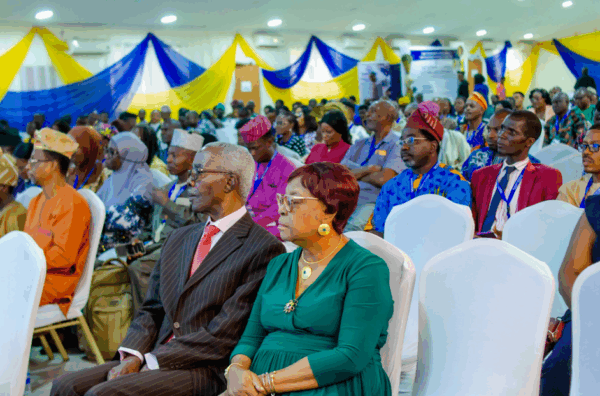
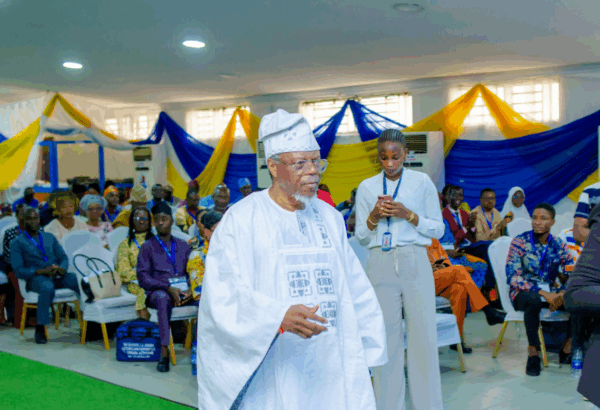
The convergence of eminent scholars, experts and public analysts on this theme is not merely a part of a birthday celebration nor just an academic exercise; it becomes part of a national responsibility. When tertiary institutions begin discussions on culture, religion, and politics, they help reduce the tensions that come with nation-building. Through this conference, Lead City University places itself in the same bracket with other tertiary institutions that have chosen to help define the future of Nigeria and, consequently, Africa.