
Toyin Falola
Ibibio Cuisines: Indigenous Dishes, Medicinal Knowledge, and Cultural Survival
Food in Africa is never just food. The adage ‘we are what we eat’ turns cuisine into an archive, food into culture, memories simmered into clay pots, and history preserved in leaves, and philosophy in edible form. So, for the Ibibio of what is now southern Nigeria’s Akwa Ibom State, questions of cuisine delve into identity, ecology, medicine, and survival. Every soup, every pottage, every preparation is a text, not written in ink but in palm oil, in leaves, in fish, and in fire. The Ibibio cuisine offers more than sustenance; it bears witness. It testifies about riverine economies, forest abundance, gendered labor, ritual knowledge, and the judicious negotiations between humans and nature. This becomes an act of cultural reclamation in today’s world of globalization, where fast foods replace wisdom and imported tastes threaten indigenization.
Victor Ekpuk, the artist, also serves as a culinary curator. He is fascinated by the plants and is quick to introduce my wife and me to the local names of trees, seeds, and vegetables. At his friend’s house, where we visited to collect palm wine, he plucked three herbal spices for us from the garden. Communities and people live with plantain trees, grow inside greens, and wade in waters. Indigenous African societies never lived in ways that disengaged them from the environment. The food is near you, the water is within walking distance, and the medicine for the common diseases is outside the door. The pawpaw is medicinal, everything about it.
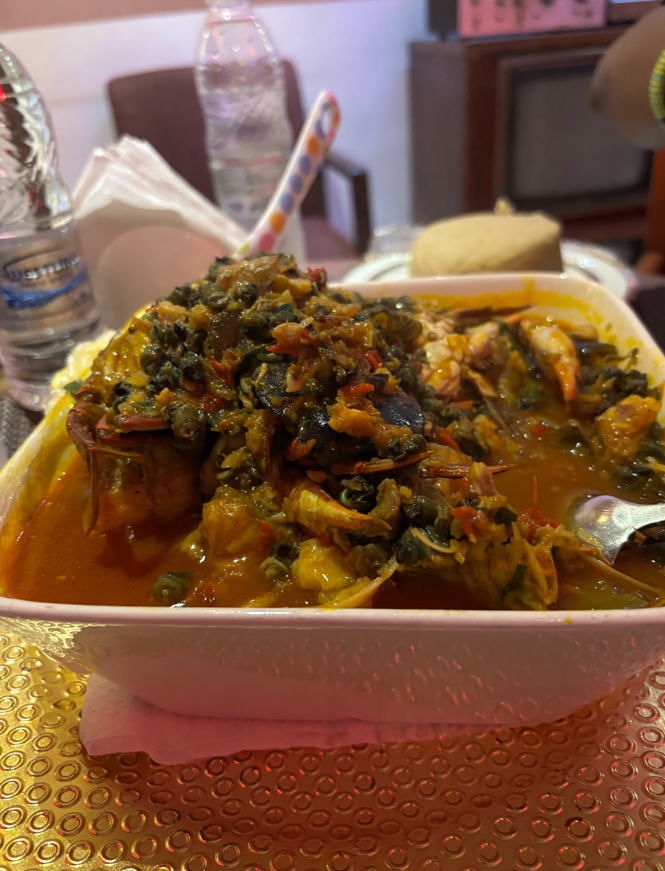
Upon arrival in Uyo, the first thing we did was to head to a restaurant to eat the Fisherman’s soup. It was so good that we kept the leftovers for 4 days and brought them to Lagos to continue the demolition exercise. I closed the last dinner with rice in coconut and crayfish; it was the first time I would try this delicacy. So good that I kept telling my wife to stop eating the local grilled fish and move to the rice. I have the stomach of a chef, as I can cook and keep tasting until I am full. At Uyo, I scored myself so low that an F grade will be flattering!
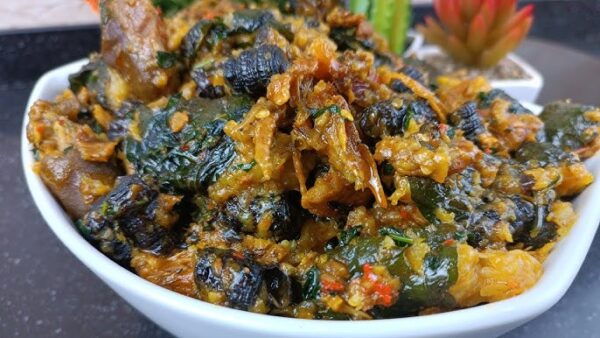
If we must place African dishes within systems of medicinal knowledge, we can select indigenous Ibibio dishes. I can only speak for my taste! We have Atama soup, Afang soup, Edikang Ikong, Fisherman’s soup, and plantain pottage. It will be a testament to the life in the land, in the rivers, mangroves, rainforests, and in the fertile soils. Land begets diet: the rivers give fish and crayfish, the forests give vegetables, spices, and medicinal leaves, the farms give yams, cassava, plantain, cocoyam, and maize. Ibibio cuisine is thus ecologically born of intimate acquaintance with seasons, soil, and water. The food systems of the Ibibio people were largely self-sustaining. Food was a social act led by women, and food production was both highly gendered and highly social. Cooking was both labor and teaching youth values, skills, and indigenous science through participation in food production.
Colonialism and indeed other events disrupted these systems through the foods brought in, but redefined taste, class, and aspiration. Foods such as white bread, tinned foods, and polished rice acquired “prestige,” with indigenous meals discursively framed as “local” or “poor people’s food.” Ibibio cuisine indeed persisted, taking on a life of adaptation rather than subjugation.
Atama soup is one of the most distinctive Ibibio dishes, notable for its bitter leaf component, atama leaves, combined with palm kernel extract. Bitterness in African food is never an accident; it is therapeutic, symbolic, and deliberate. Conventionally, Atama soup is associated with postpartum care, cleansing, and balancing the body. It is believed that the bitter leaves clean the blood, aid digestion, and restore vigor. Palm kernel extract provides healthy fats and energy, while the dried fish and meat add protein. As a part of African epistemology, bitterness is often the index of healing: that which is bitter today prevents sickness tomorrow. That logic, for its part, comes out well in the case of Atama soup: food as preventive medicine. “It is eaten not only because it tastes good but also because the body knows it wants it.”
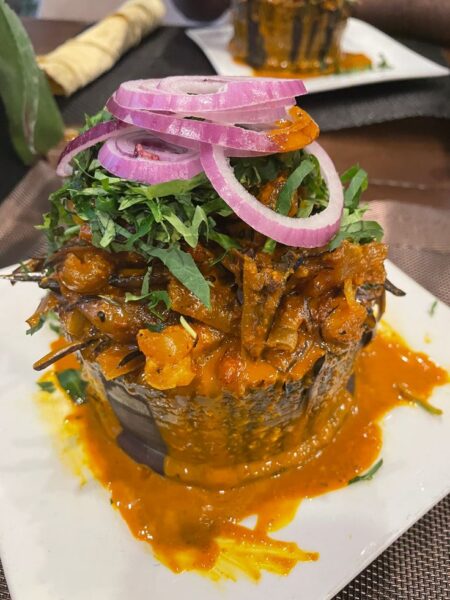
Afang soup is the crowning culinary achievement of the Ibibio and Efik. Victor and my wife sampled it at a posh golf hotel. Afang soup is a hearty stew full of Afang leaves (Gnetum africanum), waterleaf, palm oil, crayfish, periwinkles, and several other proteins. Afang leaves are high in dietary fiber, iron, antioxidants, and many necessary micronutrients. The combination of vegetables provides a balance of minerals, and palm oil contains fat-soluble vitamins. The soup is traditionally advised for consumption by a sick person convalescing, by women post-confine, and by aged persons whose systems require light but powerful nutrition. Preparing Afang soup is a very tedious task. The leaves must be torn to their smallest fragments, a process that demands patience, care, and often the combined effort of relatives, friends, and neighbors. In this way, Afang is not just a nutritional practice but also a social practice that fosters cooperation and communal obligations.
Edikang Ikong, called “vegetable soup,” belies its richness. The soup is truly a celebration of abundance: fluted pumpkin leaves, waterleaf, palm oil, assorted meats, dried fish, and spices flow together in near-ritualistic excess. Edikang Ikong is typically served at ceremonial occasions such as weddings, funerals, and festivals, when abundance symbolizes generosity, wealth, and respect. To the Ibibio mind, an essential moral issue is food abundance: to feed people well is to affirm their humanity. Edikang Ikong is also restorative in a medicinal sense. The soup’s high vegetable content stimulates blood production, immune health, and digestion. What’s more, the soup is just one good example of how, sans supplements or laboratories, African cuisines achieve nutritional completeness through indigenous knowledge.
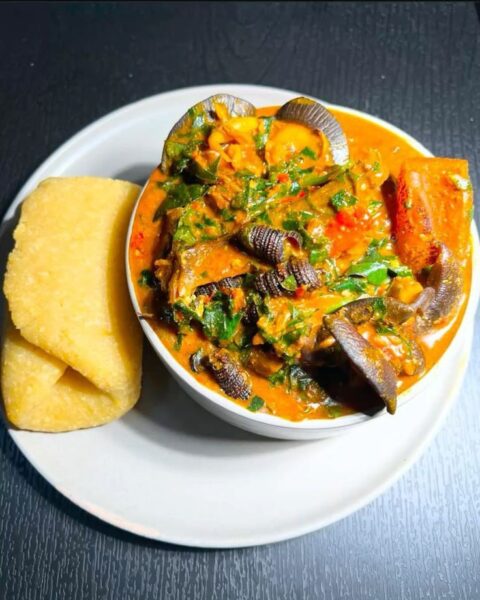
Atukom, also known as plantain pottage in recent times, is simple yet powerful. Boiled in palm oil with vegetables and spices, it is an unpretentious meal that offers farmers, traders, and workers enduring energy. The plantain is the preferred source of complex carbohydrates, potassium, and fiber in the pottage for stamina and digestive balance. The stew’s one-pot, slow-cooked format addresses sustainability and efficiency, with nothing wasted, and only flavors developing over time. Atukom speaks to a culinary pragmatism found in Africa, where simple ingredients are used to deliver maximum nourishment. It is a recipe that resists excess, leaning into adequacy. This might be the lesson the rest of the world needs as overconsumption becomes less sustainable.
Often made in riverine communities, Fisherman’s soup is all about fresh fish, locally available spices, and a small amount of oil. Light yet tasty, it is generally recommended for people who are sick, elderly, or recovering. The lean protein and omega fatty acids in fish are complemented by spices and herbs that facilitate digestion and circulation. The lightness of the soup speaks to an intuition about the body’s states: where strength is weak, food should heal rather than burden. Fisherman’s soup also speaks to mobility and adjustment. Its ingredients vary according to the catch of the day and, as such, suggest one flexible food philosophy attentive to rather than commanding nature. Indeed, throughout Ibibio food culture and across Africa more generally, the boundary between food and medicine is porous. The kitchen is separated from the clinic by no sharp divide. Leaves treat fever, spices manage inflammation, soups restore blood, and pottages stabilize energy.
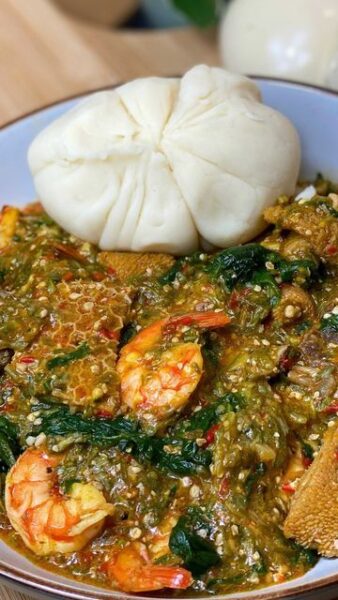
African cuisines are built around balance, moderation, variety, and seasonality, the four principles that nutritionists worldwide sing today. So, to hate African food as primitive is not just to be ignorant. It is to wilfully erase centuries of empirical knowledge tested on living bodies and passed down over generations. Globalization has transformed Ibibio cuisine in complex ways: on one hand, there is greater visibility: the soups of the Ibibio enter restaurants, cookbooks, and digital media; on the other hand, in the center, tinned foods, fast-food culture, and dietary dislocation have taken center stage. Younger generations are increasingly hooked on noodles at the expense of pottage, or soda at the expense of herbal drinks. The indigenous meals that take time are abandoned for convenience foods linked to rising cases of diabetes, hypertension, and obesity.
Globalization commodifies African food, extracts recipes out of context, and sells “exotic” flavors while keeping the people who produced them invisible. Culture becomes spectacle; knowledge becomes content. Reclaiming Ibibio cuisine is reclaiming history, health, and dignity. It is an act of making indigenous dishes and of resistance to cultural erasure. Teaching children how to make Atama or Afang is just as important as teaching them to read and write. Reclamation requires documentation, education, and pride. It calls for culinary archives, school curricula, community festivals, and media narratives that honor indigenous foodways. And it requires challenging the imposed shame of colonial and global hierarchies of taste. Ibibio cuisine reminds us that the future does not lie in abandoning the past but in reinterpreting it with confidence. In the pot, the past speaks. Culture survives in the soup.
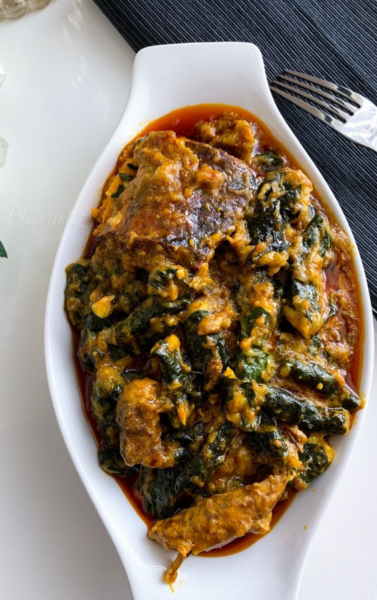
Consuming Ibibio food is to drink history. It is tasting the forest, the river, the labor of ancestors, and the wisdom of healers. With every spoon, a story about surviving the possibility of erasure shall be told. While globalization speeds up, the challenge is not to reject the world, but to confidently stand in one’s own self and face it. Ibibio cuisine teaches a model: adaptive and rooted, nourishing and meaningful. We reclaim ourselves when we reclaim our dishes. When we preserve indigenous cuisine, we make sure Africa speaks-along with the words, taste, and memory, a non-language through food.
Prof.,
This is a masterpiece from the TF Masterclass of excellent writing.
Even the photography is in a class of its own.
You served a delicious dish of philosophy, food science, and medicine, history, sights and sounds, and almost along with the taste (!) in an African love pot🍲 prepared over a smoky fireplace 🔥.
Mama Mia!
Now I have no choice but to follow in the pilgrims’ footsteps the next chance I get.
Wow! Entrancing and unputabledown!
This foods look absolutely inviting in a healthy way..
wonderful essay