
Toyin Falola
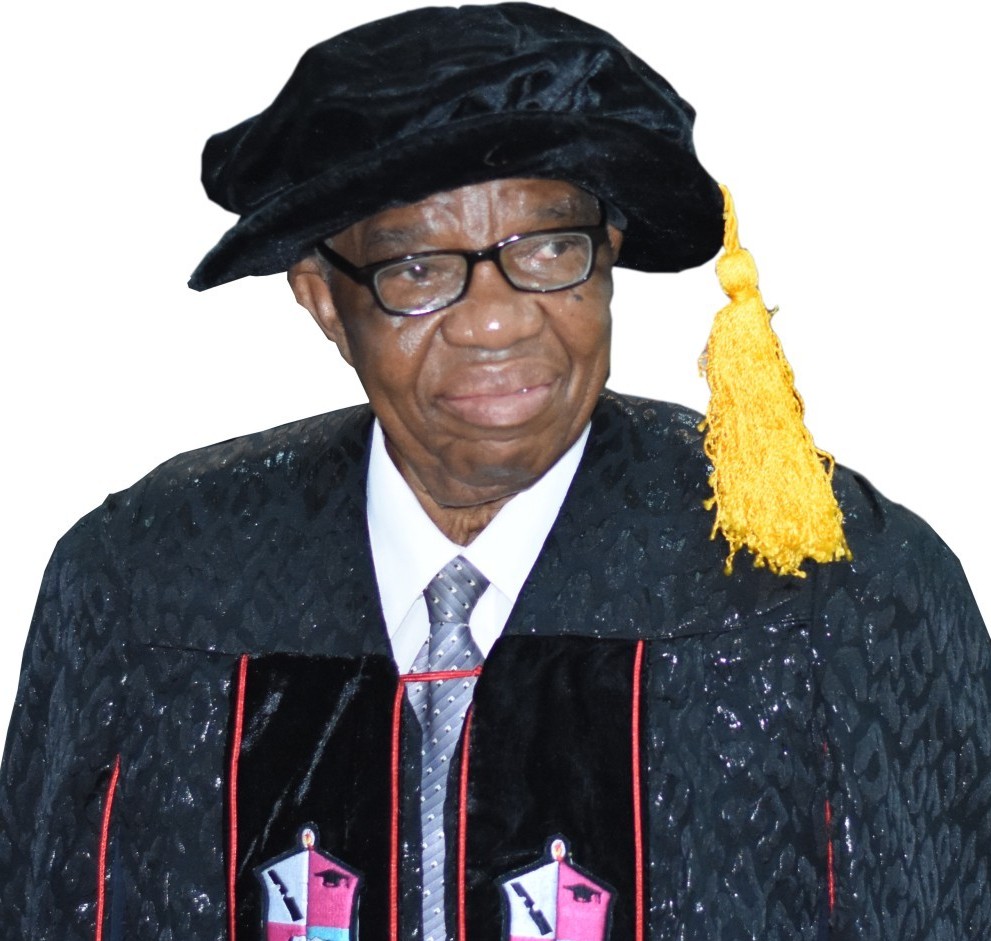
Professors Johnson Aladekomo and Kabiru Adeyemo
“The Lord is my shepherd; I shall not want” is one of the most popular metaphors in the scriptures, depicting the Lord as a leader who guides, protects, and sustains His flock. In this case, “shepherd” symbolizes leadership as care, direction, and even provision. In this series, I will refer to Baba Ogunmola and Aladekomo as the good shepherds, self-sacrificing and deeply committed to the well-being of those under their care. The leadership of Lead City University, under the influence of Ogunmola, the Chancellor, and Aladekomo, Chairman of the Board of Trustees, functions as modern-day Shepherds charged with grooming an academic community and steering the ship toward excellence and relevance. In this series, my focus is on Professors Aladekomo and Adeyemo.

Vice Chancellor, Lead City University, Ibadan
As the biblical shepherd began his calling among the flock, the amiable Vice-Chancellor, Professor Kabiru Aderemi Adeyemo, has also embarked on a sojourn into academic leadership, reflecting a deeper level of selflessness and an acceptance of responsibility. While serving as a teacher at Ife Anglican Grammar School, Ile-Ife, his beginning encapsulates a total familiarity with the grassroots. This experience served as the template for his understanding of the psychology of learning, discipline, and mentorship. His engagements with institutions such as Osun State College of Technology and Ladoke Akintola University of Technology demonstrated the genius and range of this academic’s prolific contributions across Management and Accounting, Strategic Management, Entrepreneurship, Law, and Governance. Engagements of this kind have established Adeyemo as a shepherd whose impact can be measured by the development and stability achieved across all the areas he oversees. He has been an excellent Vice-Chancellor.
One of his initiatives to facilitate the evolution of higher education in Nigeria upon his emergence as the Vice-Chancellor of Lead City University is the recent call for elevating academic standards. This is perhaps a wake-up call for the nation’s educational system to be up to date and ready to compete globally. One of his genuine points that stood out is that Nigerian universities are beginning to produce graduates with impressive intellectual capabilities, as evidenced by positive industry reports on internship performance. With respect to this development, he announced his intention to network with top accredited private secondary schools and private university officials. The forum’s sole mission is to enable universities to gain first-hand experience on the caliber of students required to meet international academic standards. The program also addressed the recent JAMB policy changes. It provided universities with a platform to demonstrate their readiness to equip students with the knowledge, skills, and competencies needed for academic and professional success. Professor Adeyemo’s appeal highlights the imperative for private universities not only to maintain but also to raise academic benchmarks to meet international standards consistently.
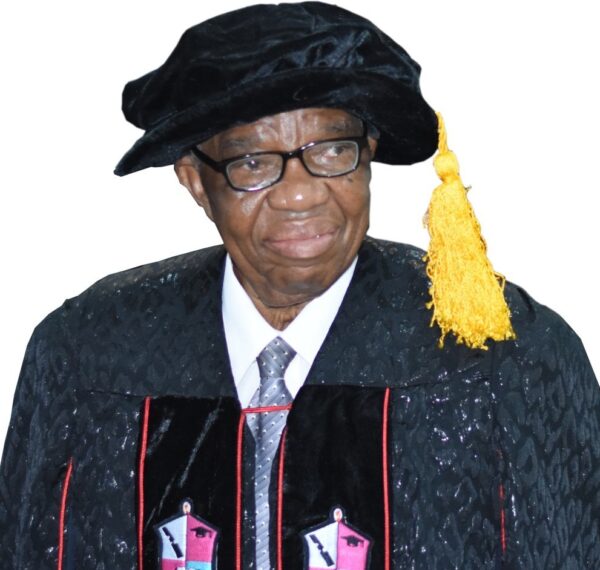
Chancellor, Lead City University, Ibadan
For his contributions to higher education and the development of private universities in Nigeria, Professor Kabiru Adeyemo was honoured with a prestigious international appointment as a Council Member and Trustee of the Association of Commonwealth Universities (ACU). For clarity, the ACU represents “a global network of over 500 universities across more than 50 Commonwealth countries that fosters collaboration and shared knowledge among higher education institutions to confront common challenges and build common solutions.” His selection to serve as the continuation of the voice of Constituency 3, covering the Eastern, Western, and Southern African regions, puts him among the most revered leadership figures in the global academia fraternity, aiming to forge the future directions of the organization and strive to see it harness the best of the ideas of excellence in learning and international collaboration. This appointment may well prove to be the most significant recognition of his personal capacity and doggedness as an individual and, at the same time, bring Lead City University to the global platform through prospective avenues of innumerable collaborative projects.
It is noteworthy to mention the significant roles played by Professor Kabiru Adeyemo, the Vice-Chancellor of Lead City University, in distinctive areas. His experience has brought remarkable growth and development to the institution, not only by expanding its program offerings from 40 to 120 over the past two decades. This was evident during the 20th-anniversary celebration of the institution when the Vice-Chancellor himself acknowledged the rapid growth as the result of “sheer determination, unity of purpose, cohesion, and dedicated leadership.” The reviewed curriculum spans many fields and faculties, including Medicine and Surgery, Pharmacy, Physiotherapy, Dentistry, Engineering, Urban and Regional Planning, and Geo-Informatics. Yet, the institution maintains its overall accreditation with the National Universities Commission (NUC). The rapid growth can be attributed to the institution’s institutionalized culture of governance, open-door policy, problem-solving capabilities, and an understanding council that recognizes the need for higher education offered by the institution.
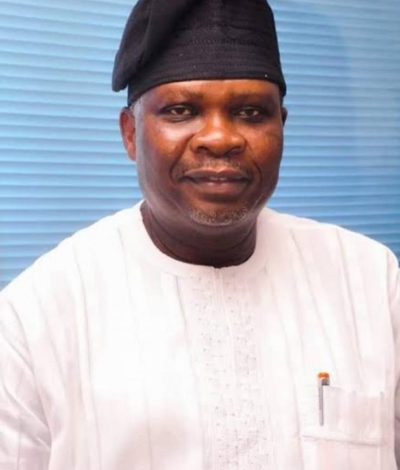
Pro-Chancellor & Chairman, Governing Council
Lead City University, Ibadan
On the other hand, the impact of Professor Emeritus J. B. Aladekomo as a preeminent leader for many years is derived not only from being a strong identification of a senior statesman in the institution’s governance structure but also from the cognitive and moral trajectory informed in its early stages. Being the Chairman of the Board of Trustees, a pillar of LCU’s governance, has been identified as a factor in stability and influence. His presence at paramount events at LCU, from receiving top-level visits, such as that of the United States Consulate, which reemphasized LCU’s international links, to symbolizing his role in carving LCU’s worldwide educational networks and in fostering its internal focus on quality. His administration has placed Lead City University on a foundation of scholarly integrity and resilience, rather than on the need for mere numerical expansion.
Professor Aladekomo offers a moral blueprint for Lead City University’s development. His leadership prioritizes the moral and intellectual formation of its graduates through his popular philosophy of producing principled graduates rather than merely learned ones. He has several times challenged the students to shun existential and familiar political pollutions, such as bribery, corruption, and fraud, which are predominantly disturbing the country’s ecosystem. In his opinion, because graduates embody the university’s reputation in society, they must therefore exude integrity and discipline. His exhortation to hard work, honesty, self-discipline, and charity is more than mere words; it is a strategic embodiment of the moral infrastructure he believes higher education must impart to its students. This is borne out by Lead City University’s emphasis on autonomous academic standards, research, and skills. These are what make him a transformative, not a transactional, leader, and it is through this moral and intellectual infrastructure that Aladekomo has imbued a university culture committed to defending academic excellence and societal relevance against moral decadence.

Anchored in the cumulative experiences of these two distinguished icons, Lead City University, as one of the faces of private universities in Nigeria, continues to uphold the vision of academic evolution and development, all thanks to the foundation laid by Professor Aladekomo and the experience of Professor Adeyemo who both metamorphosed the university’s convocation rituals from just a ceremonial rite of passage to a validation of the institution’s commitment to character and scholarly worthiness. Their leadership expanded the university physically, philosophically, and psychologically, and their deliberateness regarding standardized infrastructure and up-to-date facilities continues to facilitate rigorous scholarship and community engagement.