

Toyin Falola
The Distinguished Career of Professor Monday Yakiban Mangvwat
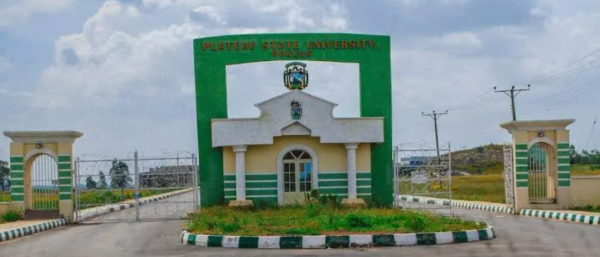
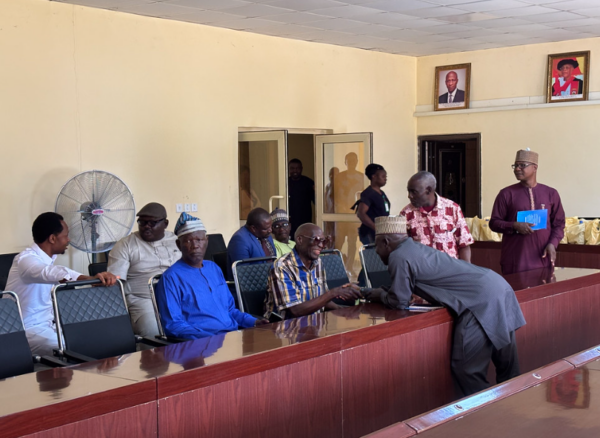
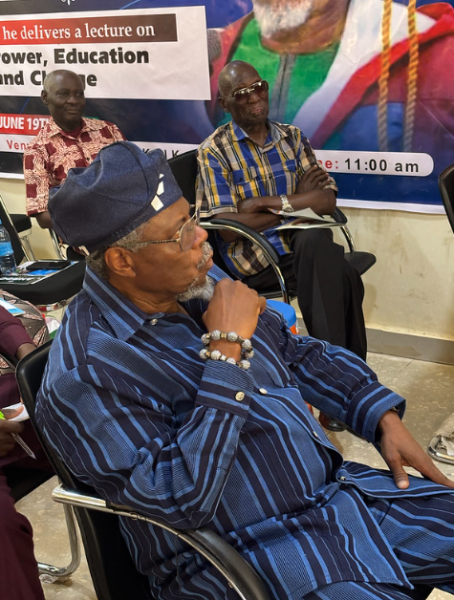
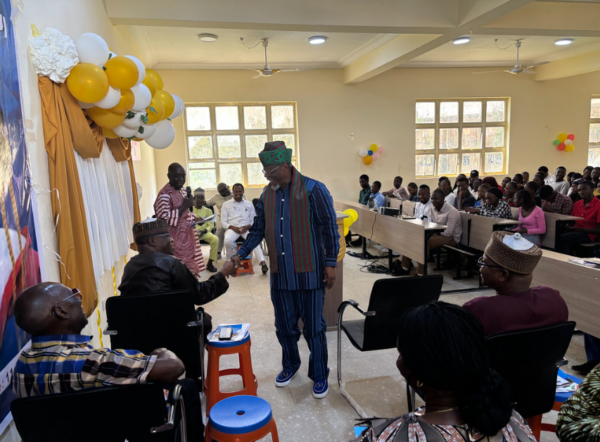
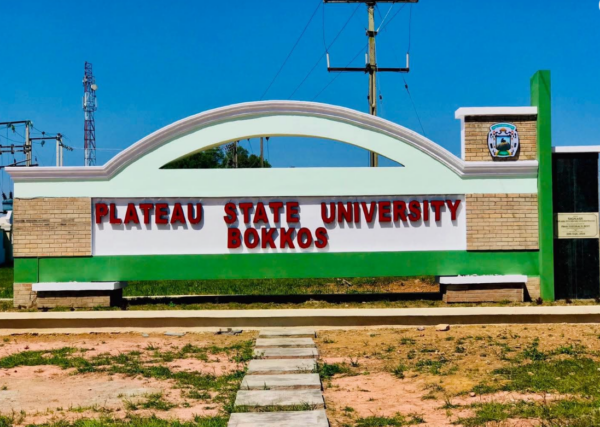
Plateau State University is convening its first Historical Conference in honor of Professor Mangvwat. I am privileged to deliver the Keynote Address on January 27, 2025. The conference has provided a moment to write about the honoree.
Professor Monday Yakiban Mangvwat’s illustrious academic career is a blend of dedication to scholarly works, administrative stewardship, and a sense of intellectual duty to the nation. For about four decades or more, Professor Mangvwat has walked the demanding worlds of academic research, lecturing, and institutional administration unlike any other. His sense of duty is informed by an academic depth and moral standards that define his day-to-day activities in the office. His teaching experience, which started from the confines of the lecture halls of Ahmadu Bello University, where he had his university education before moving to take on a lecturing job at the University of Jos, is inseparable in discussing the birth and evolution of historiography and the post-independence development in Nigeria, from a respected institute of learning in the country.
His entry into academia was historical and demanding. This was a time when academic discussions on history were heated and steeped in ideological debates across the country. It was a time when mere assumptions held no water in the field of historiography. The study of history at that point in time was excruciatingly demanding, as there was the understanding to put forward credible and factual work in engagement with colonial archives that often tell the Nigerian story from different narratives. This was at a time when departments across Northern Nigeria universities were taken to the rigours of scholars who emphasized methodological discipline and authenticity. After successful undergraduate and postgraduate studies at Ahmadu Bello University, Professor Mangvwat quickly attracted attention peculiar to distinguished personalities. His initial enrollment in a Master’s programme produced a dissertation of commendable value that was upgraded into a doctoral thesis upon recommendations by the examining panel.
The result of the recommendation became the foundation for a scholarly contribution on a detailed study of class formation in the Plateau Province under British rule. The study examined how colonial elements such as economic practices, administration, and institutional structures shaped the emergence of social hierarchies. The thesis, published in later years by Carolina Academic Press, is reputedly one of the most detailed in-house examinations of how colonial interventions redesigned societies in Middle Belt Nigeria.
At the end of his doctoral work, he became a member of the academic staff at ABU, with a full-time career as a university lecturer. This was at a moment when historical works required a careful interrogation of sources and a commitment to nuanced narratives under colonialism on pertinent African-related issues like identity, governance, amongst others. Professor Mangvwat, from his very first day in the university, showed remarkable work ethics and grasped the ropes of the university system immediately. His students and colleagues will always remember him for his intellectual lucidity, disciplined explanation of facts, especially as it relates to history, and his willingness to assist the younger generation. Professor Mangvwat’s move to the University of Jos, which became his academic home in many ways, marked the beginning of increasing responsibility as teacher, researcher, and administrator. He taught Colonial history to the development of politics in Africa and mentored students who have become professors, administrators, and ministers of state. Professor Mangvwat’s style in the lecture theater employs analysis through contextual and structural critiques.
His postgraduate classes were never boring. It was a common practice to dive into deep analyses of colonial governance and how its legacies continued to shape administrative cultures in modern Nigeria. As a researcher, he maintained a focused interest in historical and contemporary social history concerns within northern Nigeria. His interests are more pronounced through his works on the historical foundations of class, governance, and development challenges in the Middle Belt. His publications, though not flamboyant, are deeply rooted in primary sources and analytical rigour and are solid contributions to Nigerian historiography.
Beyond the lecture rooms and research, Professor Mangvwat was a steady institutional player in UNIJOS. To his long list of meritorious services are a series of appointments and administrative roles before the eventual appointment as Vice-Chancellor. He heads a couple of units of the department, overseeing departmental development, partaking in defined roles as members of the university senate committees to ensure the smooth running of academic programmes.
One major point in his administrative journey was in January 2000, when the University community was engulfed in crisis. He emerged as Acting Vice-Chancellor at a time when his predecessor was forced to retire by the university. A crisis, especially a crisis of this nature that submerged the university community, needs calmer heads to pilot the ship. That was when Mangvwat was summoned to serve, ensuring a smooth transition. When he resumed, the university didn’t take long before it was hit with another crisis, probably the deadliest crisis the institution has ever experienced. A violent crisis struck Jos and engulfed the university, shattering academic activities as students’ andstaff’sf lives were no longer guaranteed. This was perhaps his leadership quality tested on a larger scale, as this occasion needed more than administrative skill. He worked tirelessly with security agencies to ensure prompt actions that consumed much of his time and energy as he stayed days and nights, ensuring students were evacuated or guarded where necessary. The emotional toll was profound. However, his calm demeanor and quick decision-making helped see the university through a season of uncertainty. His coordinated efforts with concerned parties within and outside the university avoided prolonged closure or mass casualties. In recognition of his outstanding performance, his acting appointment was promoted to substantive Vice-Chancellorship on May 5, 2001, for a tenure that lasted till 2006.
As Vice-Chancellor, he pursued an agenda that merged efforts on strengthening academics, improving infrastructure, and collaborations for international partnerships. His tenure saw UNIJOS secure major support from the Carnegie Corporation of New York for grants extended towards faculty development, research capacity, institutional training, and the establishment of academic centres.
As the Vice-Chancellor, he preached and promoted harmony for institutional stability. Labour disputes, student agitations, and political tensions were mediated calmly through dialogue and reasoning. Although some of his decisions and stances were not popular, his dedication to the truth earned him respect. His leadership was vital in bridging the gap between university conflicts and external crises.
At the end of his tenure, he returned to the classroom instead of seeking political appointments of permanency in government offices, as was the norm. Professor Mangvwat’s career is significant in telling the stories of resilience and true scholarship in Nigerian higher education. Without doubt, he is of the generation that bridged the expectations of the early post-independence high hopes for Nigerian universities alongside the complexities of the early 2000s. His professional life is characterized by servitude, steadiness, and dedication to institutional development and scholarship, not by the flamboyance or political drama and self-promotion that is observed within the public service.
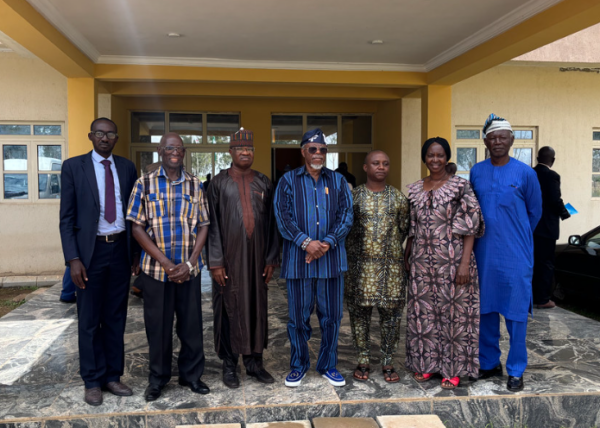
To pay tribute to the career of this unassuming scholar is to celebrate a distinguished career marked by diligence, perseverance, and a sense of scholarly responsibility. His scholarship has added to the knowledge of Nigerian history; his stewardship, particularly at a time of crisis steadied nerves in our community; his administrative competence restored the meaning of UNIJOS as a University we can be proud of in Nigeria; but above all, his brand of mentoring and teaching gently transformed generations of students who had the privilege of coming under his tutelage. For four decades, Professor Monday Yakiban Mangvwat has marched to the beat of scholarship, commitment to knowledge, and investment in our collective growth.