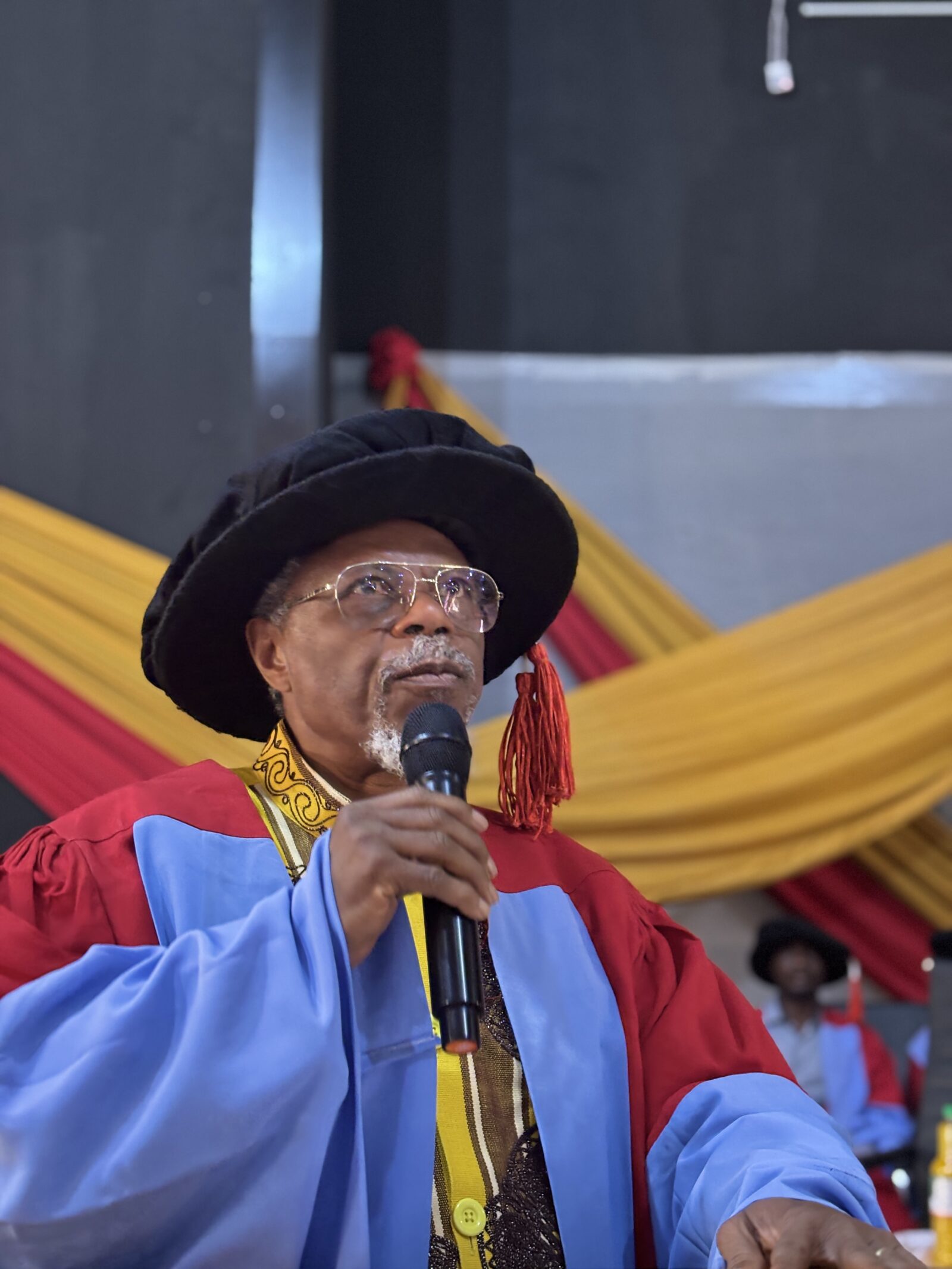

Toyin Falola
Speech delivered at the
Induction Ceremony by the Historical Society of Nigeria
University of Jos, January 26, 2026
OPENING SPEECH
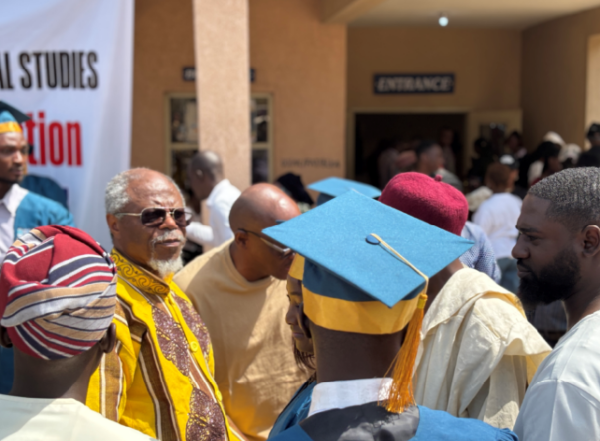
My dear students and fellow historians, today’s induction ceremony is no ordinary event. You are being officially admitted to the Historical Society of Nigeria (HSN) – an academic institution founded in 1955 by great scholars, such as Kenneth Onwuka Dike and Abdullahi Smith, of which I am a proud member. The birth of this association coincided with a period when Nigeria was traversing the storm of political independence, amid doubts about its intellectual freedom. Your induction into this great society requires you to inherit an ethic that is embedded in intellectual freedom, integrity, and responsibility to society.
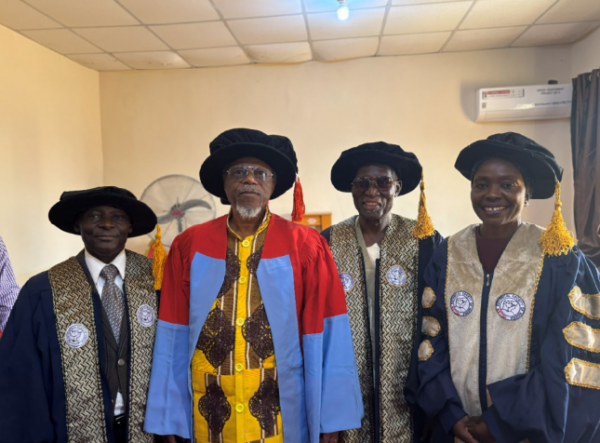
My speech today is to prepare your mind for the ethics you are about to inherit. At this point, you are no longer just students; you have become apprentices of truth in a society where distortion, manipulation, and amnesia all hold a dominant place. As an emissary of the Historical Society of Nigeria, I present history to you as a rigorous practice that requires critical inquiry, interpretation, and civic responsibility. I present history to you as a powerful tool for negotiating power, amplifying marginalized voices, and shaping society’s consciousness.
My charge to you today emphasizes your intellectual seriousness and commitment to this discipline, which demands the utmost patience, courage, and honesty. This subtly tells you that history as a discipline cannot coexist with academic laxity and other forms of anti-intellectualism. The society you are being inducted into has been well known for defining intellectual standards of academic prowess through its publications, curricula interventions, and hosting of intellectual conferences for decades – all habits that would not thrive under a lazy ideology.
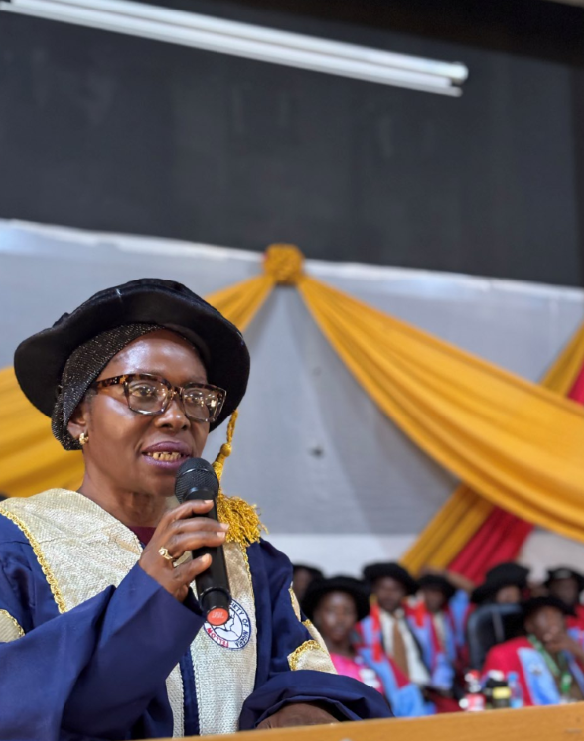
The founders of the Historical Society of Nigeria have shown that historical consciousness is like a compass that guides a nation forward. They have proven that with history, societies can retain their memory, epistemology, and ethics. As we welcome you into the society, my advice is to strive to maintain the association’s culture. You are charged to vigorously study the past with honesty, critically navigate the present, and make truthful and just contributions to the future of African intellectual freedom.
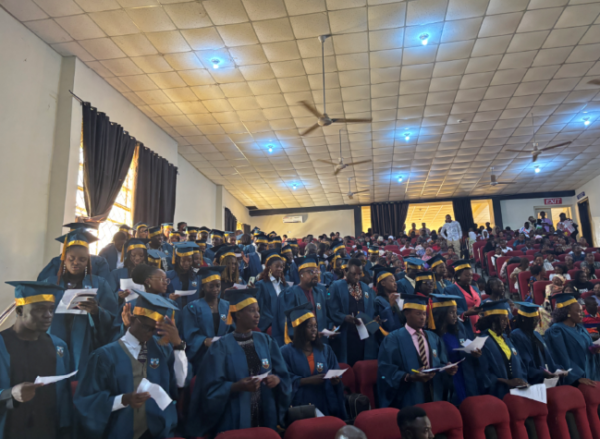
INTRODUCTION TO THE HISTORICAL SOCIETY OF NIGERIA
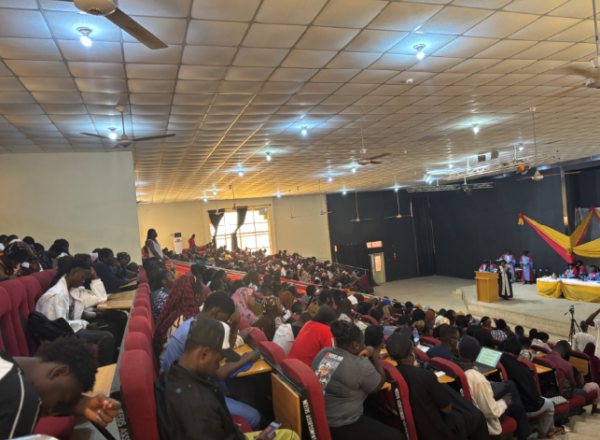
My dear students, today you are being drafted, like soldiers, into the Historical Society of Nigeria. As earlier noted, this association was established in the year 1955 at the University College of Ibadan by our pioneer historians. The establishment of this association is a result of the post-colonial theme, a dominant force of that era, in which nationalists negotiated the independence of their states with vigor, leaving intellectual sovereignty to be determined. The Historical Society of Nigeria was therefore established to carry out this task, thereby enabling epistemic freedom.
It stood in stiff defiance of Eurocentric African historiography that presents Africa as an ahistorical society before European incursion and domination. With every precolonial African data regarded as anthropology, myths, or folklore, the founders of this great society understood that history as a discipline was weaponized against Africa; therefore, without reclaiming African history through Afrocentric methodology, the African states that would emerge in the postcolonial era would be developed on distorted and manipulated memories.
Therefore, they established the Historical Society of Nigeria to promote intellectual freedom in African societies. This association established the Journal of the Historical Society of Nigeria in 1956 as a platform for conducting Afrocentric historical research. By the following year, the association had garnered up to 350 members and provided spaces for debates that nurtured a professional historical community. Gradually, the association gained prominence as one of the most energetic scholarly associations in Africa. According to earlier descriptions, the Historical Society of Nigeria has been noted to pursue knowledge, but not through colonial perspectives or methodologies. Through its research, teaching, and advocacy, the society posited that nation-building, social unity, and moral reconstruction are embedded in the nation’s historical consciousness.
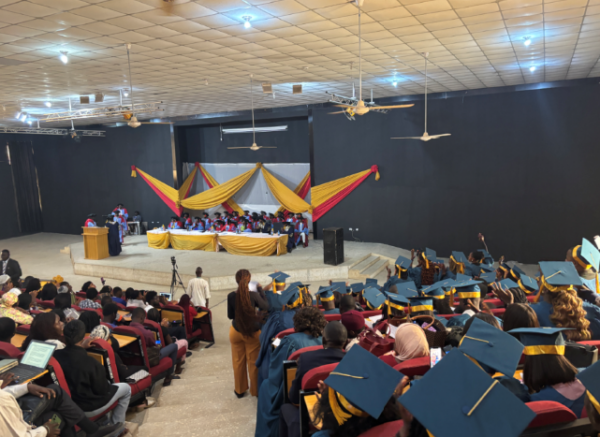
Every society needs historians because they are among those who can insist on context, complexity, and facts when society faces political instability, ideological manipulation, and cultural disorientation. As historians, it would be your duty to identify the root causes of problems by providing evidence from similar past scenarios. You will not operate like the average man who views past occurrences as just myths. Society also needs the Historical Society of Nigeria to persist, because you, as scholars, may come and go as you wish; the institution must remain and retain its potency to continue its duty of preserving standards, defending history as a discipline, and transferring knowledge across generations.
This association has been around for seven decades, and over those years, it has restructured academic curricula, contributed to policy developments, and aided the reinstatement of history as a discipline in Nigerian schools after its initial removal. This association has survived military coups, economic upheavals, and academic erosions, demonstrating how a purposeful intellectual institution can stand the test of time. Your induction into this society is not the beginning of something new; it is a rite of joining an institution with a culture that perceives history as a calling.
CHARGE FOR YOUNG HISTORIANS
My young colleagues, students of history, I stand before you today as a professor and as an individual who conversed with history in literal terms and as a discipline. The works of great historians like Kenneth Onwuka Dike, Abdullahi Smith, J.F. Ade Ajayi, Bolanle Awe, Monday Mangvwat, myself, and several other prominent scholars, through the Historical Society of Nigeria, were intended to create a weapon for intellectual freedom. The goal is to create a moral compass for a people emerging from centuries of colonialism and decades of neo-colonialism. Many of these historians are no longer with us, while some of us still hold the fort for now; you, my young colleagues, will inherit the helm for several decades to come and ensure the survival of this legacy.
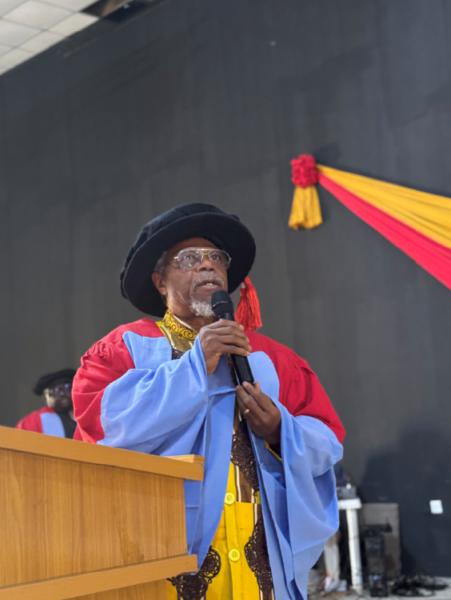
One of the attributes you must acquire on your journey is intellectual honesty. Kenneth Onwuka Dike rewrote the history of the Niger Delta based on evidence rather than convenience; Ade Ajayi focused on methodological rigor; Bolanle Awe challenged the repression of gender and power; and Monday Mangvwat engaged in a deep analysis of the peasants in the Middle Belt through scholarly discipline. These are some of the responsibilities that you must internalize. Plagiarism, falsified facts, and recycled narratives are greatly frowned upon in our line of work. This is easier to do in this age, when the world is digitalized, and technology has provided many artificial shortcuts that can undermine our integrity. My colleagues, when the truth is compromised, history withers.
Although I warn about taking shortcuts and the dangers digital technology poses, please note that I am not asking you to refrain from digital advancements. We as historians must live through time, and this time is for digital technology; you have to keep pace. The establishment of the National Artificial Intelligence Centre of Excellence at your institution is not a threat to your intellectualism. As a matter of fact, you, as history students, are uniquely positioned to become the moral backbone of Nigeria’s relationship with AI through your interaction with the NAI. AI is a powerful tool that can shape history, power, values, and so on. Thus, your expertise as historians is needed to embed this technology with content to insist on complexity in areas where technology seeks efficiency, and to address ethics when prioritizing speed over reflection.

This NAI claims that it would work out with inclusive research, local data, and contextual intelligence – these align with your natural duties as historians, and you must ensure that you research whose histories are preserved, whose languages are represented in the database, and what realities are visible through this technology. There must be strong synergy between you and the scientists in charge of this technology to ensure that the AI being developed incorporates precolonial, colonial, and postcolonial Nigerian history, culture, conflicts, and lessons. Take note that if you shy away from this responsibility, Nigeria is at risk of repeating the era where our history was dominated by foreign distortions through foreign mechanisms – before the establishment of HSN.
You can use AI responsibly in your activities. With AI, you can set up personal libraries and digital archives by using Artificial Intelligence as storage for collected materials, and you can also use it to preserve transcribed knowledge from oral traditions. Technology can also be used to reach large numbers of people; therefore, the transmission of knowledge, whether in book or journal form, has become easier and faster. The implementation of digital tools alongside intellectual honesty and methodological discipline helps you to bridge the gap between humans and computers. The world is evolving; the rise of AI and the establishment of the National Artificial Intelligence Centre of Excellence here at UniJos do not hinder your discipline in any way. Instead, both serve as platforms for you to amplify the values taught by history and use them to protect Nigeria’s digital future.
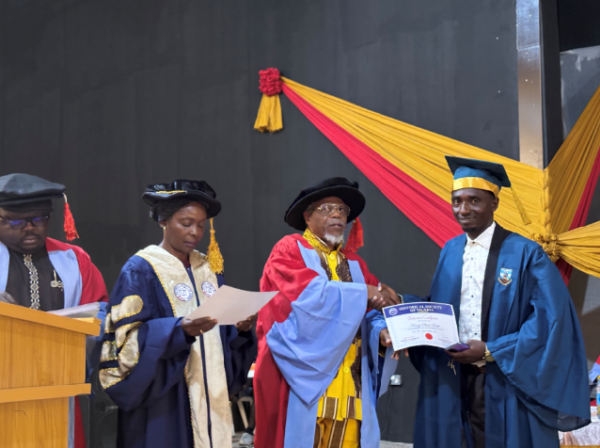
Another attribute you must acquire is courage. As a historian, you must inculcate the habit of fearlessness, the habit of speaking the truth or putting it on paper when it is comfortable and when it is not. The pioneers of Afrocentric historiography openly resisted the distorted Eurocentric perceptions of Africa. We are in the post-colonial era, although many of us firmly believe we are also in the neo-colonial era. You are charged to be courageous enough to write on the present nature of nationalism, neo-colonialism, dictatorship, corruption, elite capture of national resources, and others. You must channel the same fearlessness deployed against colonial propaganda against the current powers that be. If your work romanticizes power instead of questioning it, you have failed your duty.
You must also be disciplined. Being a historian is almost synonymous with continuous learning and the perusal of academic materials, whether from archives, archaeology, linguistics, oral tradition, anthropology, or other fields. A historian writes a lot and studies a lot more. Your disposition toward study must be strengthened, and you must develop patience when writing. The discipline of the progenitors of the Historical Society of Nigeria and the contributors to the Journal of the Historical Society of Nigeria has brought global respect to the organization and the platform. It is your duty to continue on this path and help history occupy the foremost position in Nigerian Academia.
This discipline must be complemented with utmost humility. The sources of history are mostly incomplete – they depend on one another to fill specific gaps. Knowledge missing from the archives may be found in oral tradition. We must discard the toga of arrogance and acknowledge the gaps, contradictions, and limitations of our sources. No historian can ever tell the final story; there will always be new perspectives to assess and the latest information to evaluate.
Finally, you owe a responsibility to the public. The founders of HSN viewed history as an engine of nation-building. For decades, they have pushed this narrative through conferences and policy engagements, which have yielded results like the restoration of the history discipline to Nigeria’s academic curriculum, securing a slot for historians to be represented at the 2014-2015 national conference, and several others. These responsibilities are for the betterment of society, and you must continue this trend. You must write for the public, challenge misconceptions, and correct distortions with facts. This is your duty as historians, mainly because the knowledge of history has been repressed for a long time in our country.
However, in carrying out this duty, be careful to avoid ethnic, religious, and political bias – as historians, you must be unbiased. When you embody these principles, HSN will remain relevant, your scholarship will inspire future generations, and History as a discipline will be restored to its rightful place in the Nigerian academic setting.
ADDRESSING FEARS
My young historians, I know you have fears, and I understand them. There are questions over your choice of discipline even from your homes. There are questions about what job you take to fend for yourself after studying history. These questions are especially justified given the small, heavily contested employment pool in Nigeria and the fact that the roles of a historian are hardly recognized or designated. This situation has led many promising minds away from this discipline, and those currently studying it treat it as a fallback course. I want to assure you that your fears about your future as historians are not new; they have existed since the time of Professor Ayandele, the historian and the first head of Jos, when scientific disciplines became prominent in the Nigerian academic scene and the humanities faltered. History survived this period because it produced thinkers who remain relevant across generations and professions.
To put it in plain terms, history is a discipline that is largely misunderstood, and society often fails to recognize the value of historians. However, there is glaring evidence that historians who take their craft seriously can become influential, mobilize, and be employable at home and abroad. I currently lecture at the University of Texas at Austin, but I find myself moving away from myself and talking about other scholars. They owe their global relevance to the discipline of history. Their scholarship activities earned them international research grants. Historians in Nigeria have recorded many recent successes. Their success was borne of their intellectual prowess, which is valued and rewarded worldwide. Therefore, if you fulfill your duties well here, History will open doors for you beyond Nigeria.
Also, many of you have little idea of what job fits your knowledge. Historians are not restricted to classrooms or libraries; you can also easily play the role of a policy analyst – the job requires your expertise as a historian to interpret conflicts, developments, and institutions. Journalists are trained to conduct investigations, dismiss falsehoods, and state the facts – a duty like that of a historian, which is why it is another field you can pursue for employment. The job of a diplomat or an ambassador is also an avenue of employment suited to the skills of a historian – you have the skill of cross-cultural understanding, which is needed here. Also, a historian can find employment in an archive as an archivist or in a museum as a curator. Finally, you can choose to remain a historian-cum-writer. In this state, you become a problem solver through research and academic submissions that transfer knowledge and counter distortions.
Allow me to reiterate that the discipline of history is a hub for training problem solvers; therefore, its training prepares you for relevance in a fast-evolving world. Now more than ever, with the propagation of misinformation and distortion through technology, society needs historians, and the governments, foundations, and academic institutions must fund historical activities to secure their country. As young historians, you should remain steadfast, practice your craft until you achieve excellence, and watch as opportunities and purpose follow you.
Even as undergraduates, you are custodians of the truth on behalf of society. History is not just the collection of facts; it is humanity’s repository of morals. Thus, your works, whether the ones you preserve or the ones you submit, will outlive you; they will remain to be interpreted in classrooms or public spaces for several generations to come and implemented to shape policies or identities, even when your name might have lost relevance.
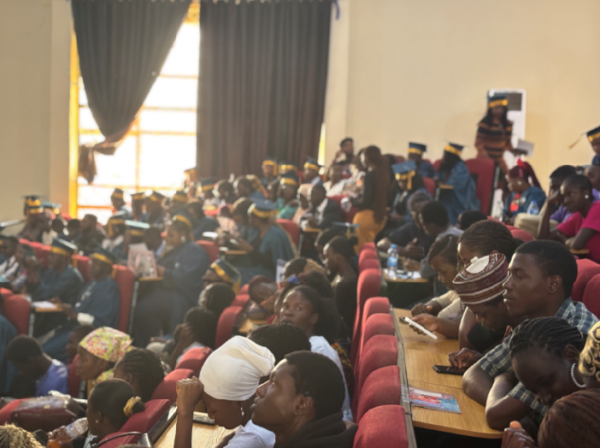
I warn you against pitfalls that may obstruct your journey. You must first reject anti-intellectualism; you must shun ethnic or religious bigotry because when you weaponize history out of hatred, your work becomes falsified and jaundiced. Your scholarship should not be for mercenary purposes – no certificate can restore your integrity once it is lost. Most importantly, do not think of history as a fallback course – that is, regardless of what fate has brought you here. You are here now; as the cliché goes, “whatever is worth doing at all is worth doing well.” From you. history demands passion, humility, and courage, and in exchange, it will instill in you discipline and character that will ensure you are employable and invaluable to society.
CLOSING REMARKS
My dear students and fellow disciples of history, as I bring my charge to you to a close, permit me to affirm that history is a noble discipline that embodies the truth, dignity, and the moral trajectory of humanity. Historians remain the conscience of every society; through rise and fall, they ensure that power is tempered by memory and that the future engages with the past on honest terms.
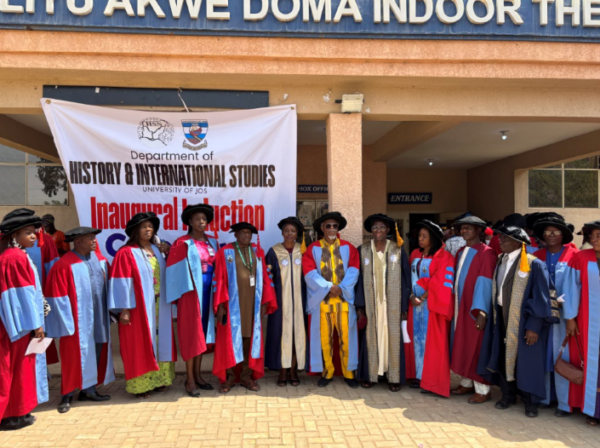
Your induction into the Historical Society of Nigeria today grants you a revered place as inheritors of the intellectual tradition that history’s Greats forged. That tradition asks for your utmost dedication to study, to think critically, to shun shortcuts and convenient lies, and to live ethically with the mindset that you contribute credibility to scholarship. Without ethics, you are no more than a mere storyteller at the service of distortions.
You must remember that your work is for today. In the future, your intellectual engagements with archives and oral traditions, and your scholarly submissions, will further shape how Africa is perceived in the global village after your demise. On this note, you must understand that this discipline is not about your personal glory but about the collective responsibility assigned to historians.
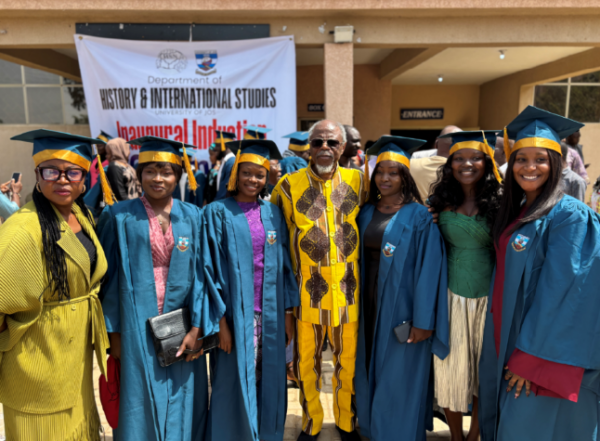
We are needed by society now more than ever due to the growing influence of digital technology, which has sparked an unprecedented culture of misinformation and historical distortion. Your commitment to the truth will earn you the rewards of relevance, social mobility, and dignity. It will also allow you serve Africa with pride and honor. I offer you hearty congratulations and felicitations for coming this far. This is a milestone you will remember in a few years to come, and I charge you to go forth as thinkers, ethical citizens, developers, and sustainers of African intellectual sovereignty. The past leaders are entrusting you with their voice, and the future leaders are waiting for your integrity and selflessness. Welcome to the Historical Society of Nigeria. The most excellent academic organization from the shores of Nigeria.
Let us depart with these key takeaways.
- Always remember that history is a noble discipline anchored on truth, ethics, and responsibility. Therefore, it creates thinkers and not workers. Your ability to excel in the profession will play a key role in how valuable you become to society and how employable you are to employers.
- Your study habits must be top-notch. This is non-negotiable for you as students of history and as historians. You must become living repositories of knowledge for you to be able to dispense wisdom.
- Whatever you document, teach, or preserve will live after you. As a historian, you must ensure that your works depict the values embedded in the discipline of history so that this subject may be kind to you.
- For the sake of Africa, Afrocentric historiography is needed to dispel all distorted narratives propagated by colonial powers. We need you all to rise through the ranks and join us in the intellectual battle. Africa must succeed against all odds.
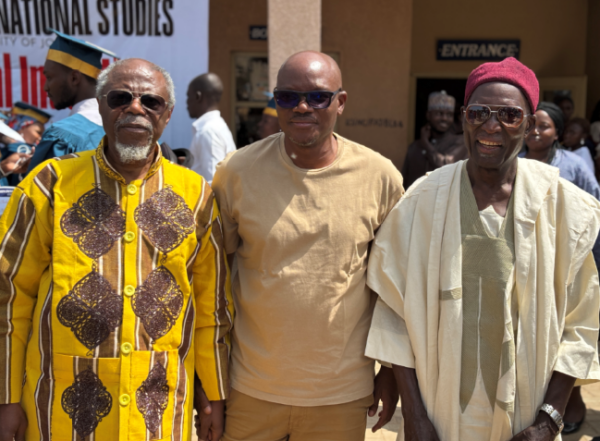
Young scholars, time is far spent, so let me leave you with these words. First, you have chosen a hard path. Your discipline relates more to consequentiality than it does to comfort. The men and women who have stood at the forefront of this discipline for decades have faced epistemic colonialism, dictatorship, repression, corruption, and many other maladies. Yet, they persevered to see to the transformation of this discipline, this great association and society. They serve as examples that position history as vital to the awakening and upliftment of Africa. Therefore, you must understand that the knowledge you derive from this discipline is not just for self-advancement but also for the development of collective capacity. When you can help your society, remember to do so; it is then that you can empower it against any form of manipulation and help it develop the culture of seeking accountability. From this point onwards, the imagination of a great future and its attainment cannot be far away.

Second, I want you to keep in mind that the system is most likely rigged against you. Lately, society seems to reward mediocrity whilst ignoring thoughtfulness – you must look away from rewards and focus more on impact. As students of history, you must understand that impacting transformations always begin with unfriendly situations. Your predecessors have sailed these kinds of waters; they developed African historiography whilst they faced intellectual exclusion. Their continuous effort is what has created several institutions and intellectual platforms that have remained in existence till now. You are here as beneficiaries of their struggles. What legacy will your generation leave behind for the upcoming crop of scholars? Brainstorm on this question and work towards its actualization
You must balance the knowledge of Ancestral Intelligence with that of Artificial Intelligence. Never ignore the knowledge of the past. Never ignore the knowledge of the present. Blend knowledge of different eras to navigate the future. You, as historians, have been trained not just as recorders of events but as thinkers. Your ability is needed to steer AI to a path where Africa’s episteme is not marginalized and make it a tool that is ethically guided. If you serve history with dignity, it will never fail you. Therefore, I want you to leave this venue with renewed confidence in yourself, your discipline, and this association. Go forth and pursue excellence, question power, and correct distortions. The past has called on you, the present expects your courage on this tough path, and the future awaits the results of your integrity. Be bold in inquiry, mix methodology with humility, let ethics form the basis of your practice, and let your works be evidence of your commitment to a liberated African intellectualism.
A
Memorable lecture and historical homily.
Aw, this was a very nice post. In thought I wish to put in writing like this additionally – taking time and actual effort to make an excellent article… however what can I say… I procrastinate alot and by no means appear to get something done.