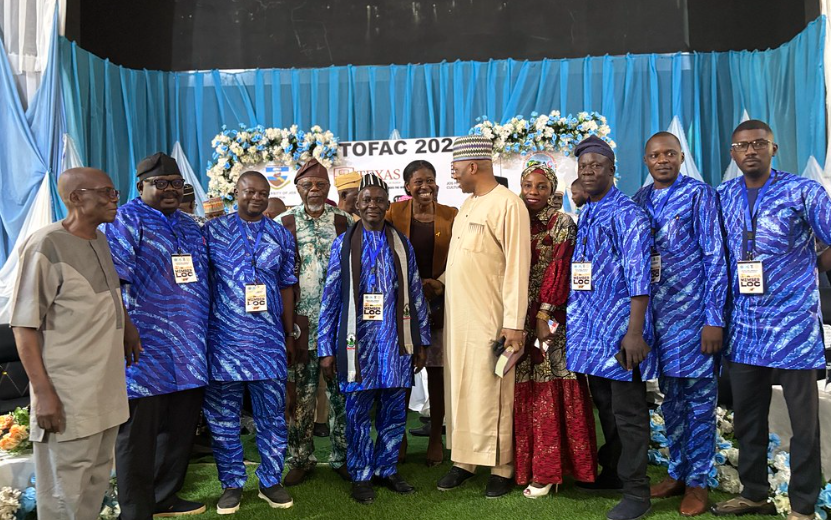

15th TOFAC 2026 Organizing Committee
HELD FROM 7–10 JULY 2026 AT THE UNIVERSITY OF JOS, JOS, NIGERIA
1.0 Preamble
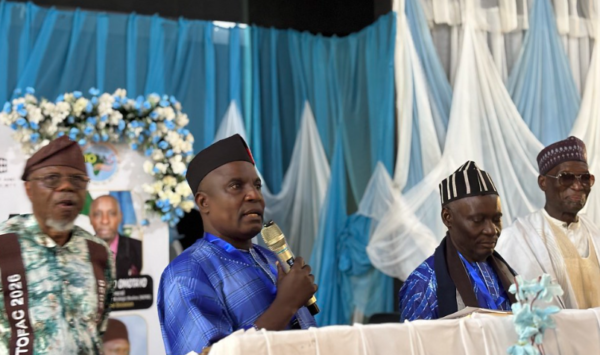
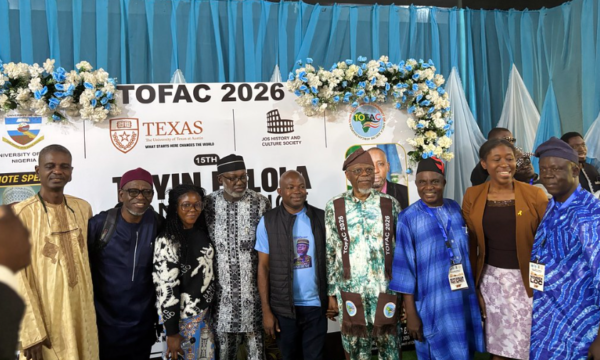
The Jos History and Culture Society and the Department of History and International Studies, University of Jos, in collaboration with the University of Texas at Austin, convened the 15th Toyin Falola Annual Conference on Africa and the African Diaspora (TOFAC) from Tuesday, 7 July to Friday, 10 July 2026 at the Aliyu Akwe Doma Indoor Theatre, Naraguta Campus, University of Jos, Jos, Nigeria.
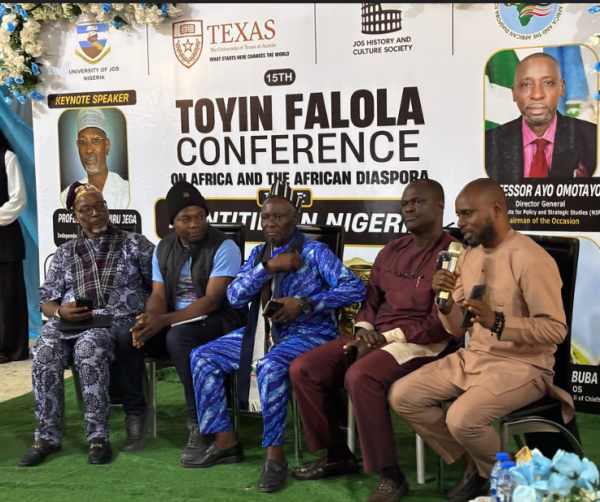
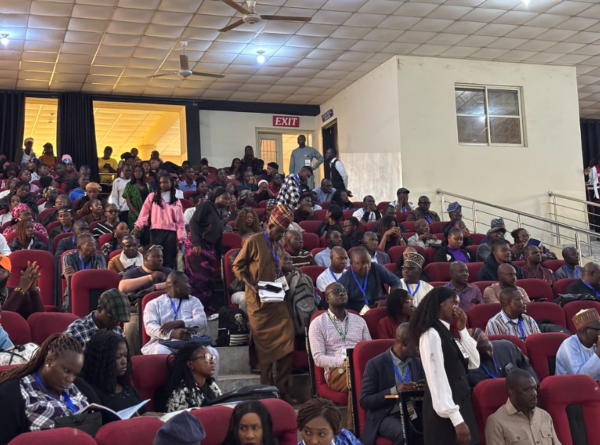
The Conference, themed “Identities in Nigeria,” brought together scholars, researchers, policymakers, traditional rulers, practitioners, students, and other stakeholders from Nigeria and abroad, in on-site and virtual attendance, to interrogate the varied sub-themes under which identities have been studied or practiced in Nigeria.
The objectives of the Conference were to:
- deepen understanding of Nigeria’s diversity through identity markers including ethnicity, language, religion, gender, generation, urban-rural location, occupation, politics, migration and origin, food, dress, festivals, and other cultural expressions;
- examine how these identities have shaped and continue to shape intergroup relations, power-sharing and access, livelihood practices, belonging, exclusion, and national development.
The Conference was attended by over 150 participants, physically and virtually, from Nigeria and abroad.
2.0 Distinguished Personalities
The Conference attracted distinguished personalities, including:
- Professor Ayo Omotayo, Director-General, National Institute for Policy and Strategic Studies (NIPSS), Kuru, who was Chairman of the Opening Ceremony and was represented by Professor Olayemi Akinwumi, immediate past Vice-Chancellor, Federal University, Lokoja;
- Professor Attahiru M. Jega, former Chairman of the Independent National Electoral Commission (INEC), who delivered the Keynote Address;
- Professor Toyin Falola, who was honoured with the Professor Elizabeth Isichei Honorary Professorship of African History, University of Jos;
- Professor Tor Joseph Iorapuu, immediate past Vice-Chancellor of Rev. Fr. Moses Orshio Adasu University (formerly Benue State University), Makurdi;
- Da Jacob Gyang Buba, Gbong Gwom Jos and Chairman, Plateau State Council of Chiefs and Emirs, the Royal Father of the Day, who was represented by His Royal Highness, Atar Aten of Ganawuri, Da Yakubu Chaimang;
- Professor Tanko Ishaya, Vice-Chancellor, University of Jos, Chief Host;
- Professor Chentu Dauda Nguvugher, Dean, Faculty of Arts, University of Jos, Host; and
- Professor Sati Umaru Fwatshak, Convenor of the Conference and Chairman, Local Organising Committee.
Also in attendance were Principal Officers, Deans and Directors, Heads of Departments, representatives of Campus Unions, staff and students of the University of Jos, the President of the University of Jos Alumni Association, Dr Gad Shamaki, Heads of Security Services in Plateau State, and other distinguished guests.
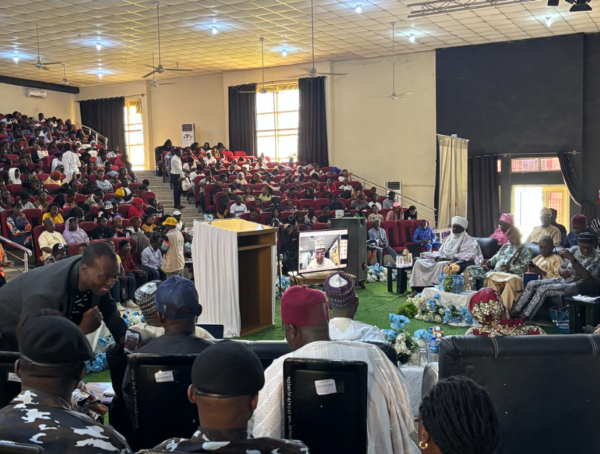
3.0 Highlights of the Opening Ceremony
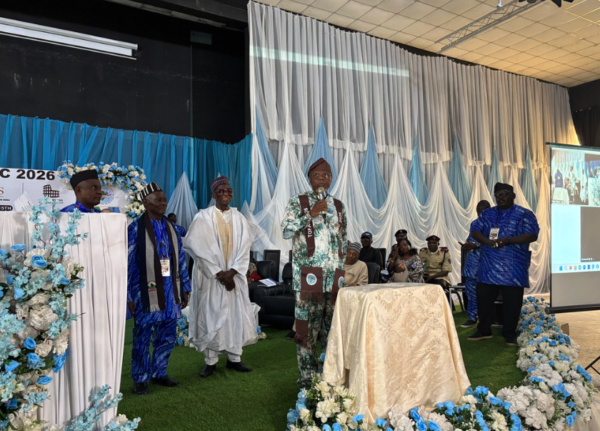
The major highlights of the Opening Ceremony included the Keynote Address, Goodwill Messages, a Special Roundtable in honour of Professor Tor Joseph Iorapuu, and the conferment of the Professor Elizabeth Isichei Honorary Professorship of African History on Professor Toyin Falola.
Professor Attahiru M. Jega delivered the Keynote Address titled “Identities, Politics and Governance in Nigeria: Challenges and the Way Forward.” The address examined the complex intersection of identity, politics, and governance in Nigeria’s democratic development. It highlighted the ways in which Nigeria’s diversity has been variously harnessed, manipulated, and misused by political elites in their pursuit and exercise of power. The address stimulated critical reflection on the need to build a transparent, accountable, equitable, inclusive, and just governance system capable of transforming Nigeria’s diversity into an asset for national development.
4.0 Major Observations
Following extensive presentations, discussions, and deliberations across the Conference sub-themes, participants made the following observations:
4.1 Identities in Nigeria are Multiple and Dynamic
Participants observed that Nigeria is characterised by multiple and overlapping identities which have evolved through historical and contemporary processes. These include ethnic, linguistic, religious, gender, generational, occupational, political, regional, urban-rural, migrant, and cultural identities. Such identities are neither fixed nor homogeneous but are continuously negotiated in response to migration, education, technology, economic change, political developments, and social interaction.
4.2 Ethnic and Linguistic Identities
Participants noted that Nigeria’s more than 200 ethnic, linguistic, and cultural groups constitute an important dimension of the country’s diversity. Ethnic identities are expressed through shared histories of origin and migration, language, cultural practices, political institutions, livelihoods, and systems of belonging.
It was further observed that ethnic identities have simultaneously fostered solidarity and generated processes of inclusion and exclusion. Inter-ethnic relations have been strengthened through marriage, trade, migration, political alliances, and cultural exchange, but have also been strained or disrupted by conflict.
4.3 Religious Identities
Participants recognised Nigeria as a multi-religious society in which Christianity, Islam, African Indigenous Religious traditions, and other faiths coexist. Religion has historically played both constructive and destructive roles. It has contributed to peacebuilding, social welfare, education, and community development, while its politicisation and mobilisation for conflict, as well as non-implementation of religious freedom have also contributed to conflict, insecurity and social division.
Participants therefore stressed the importance of protecting religious freedom and promoting interfaith dialogue.
4.4 Occupational Identities and Resource Competition
The Conference observed the growing importance of occupational and professional identities, particularly since the emergence of labour unions during the colonial period. The proliferation of occupational associations has provided mechanisms for collective bargaining and professional representation but have also fragmented collective interests.
Participants further noted that the occupations of farmers and herders has generated competition over land, water, and other natural resources, leading to conflicts in which ethnic and religious identities are mobilized, thereby transforming resource disputes into broader identity conflicts.
4.5 Gender Identities
Participants observed that deeply rooted patriarchal structures continue to constrain women’s access to political office, education, certain occupations, and other opportunities. At the same time, women have demonstrated considerable agency and resilience in agriculture, commerce, professional practice, leadership, climate action, and other spheres of public life.
Participants also noted the need for greater scholarly attention to forms of male marginalisation, while recognising that such experiences do not occur at the same scale or in the same manner as the marginalisation experienced by women.
4.6 Globalisation, ICTs and Emerging Identities
Participants observed that globalization and information and communication technologies have created new forms of identity and social interaction. Digital platforms have enabled Nigerians to maintain connections across ethnic, religious, national, and diasporic boundaries and have facilitated the documentation and dissemination of indigenous languages, music, dance, festivals, and knowledge systems.
At the same time, participants expressed concern about misinformation, cybercrime, online social divisions, harmful digital content, excessive dependence on artificial intelligence, and the potential erosion of critical thinking, creativity, indigenous languages, and family values.
The Conference recognised the emergence of hybrid or glocalized identities, particularly in Nigerian music, fashion, language, and popular culture, as evidence of Nigeria’s growing cultural influence and soft power.
4.7 Identity Politics
Participants observed that identity politics remains a significant feature of Nigeria’s political landscape. Ethnic, religious, regional, gender, and minority identities are often mobilized in political competition and have sometimes generated exclusion, tension, and conflict.
However, identity politics has also served constructive purposes, including power-sharing, political representation, advocacy, and the mobilization of historically marginalized groups. Participants therefore called for political institutions that transform identity differences from sources of division into instruments of inclusive representation.
4.8 Majority-Minority Relations
Participants noted that relations between majority and minority groups have historically been characterized by both cooperation and contestation, particularly over political representation, access to resources, and power-sharing.
Although mechanisms such as the Federal Character principle and political zoning have sought to mitigate these inequalities, participants observed that substantial challenges remain in achieving equitable representation and inclusion.
4.9 Indigene-Settler Relations
The Conference recognised the indigene-settler question as one of Nigeria’s enduring sources of exclusion and conflict. Participants noted that the distinction has assumed ethnic, religious, regional, and political forms in different parts of the country and continues to affect access to political office, land, employment, education, and other opportunities.
4.10 Traditional Institutions and Political Identities
Participants observed that traditional institutions remain important repositories of cultural identity, historical memory, social authority, and community leadership. However, succession disputes, politicization, governmental control, and struggles over legitimacy have weakened some traditional institutions.
The Conference recognized the continuing potential of traditional institutions in peacebuilding, local governance, cultural preservation, and community development.
4.11 Politics of Place Names
Participants observed that place names frequently embody claims concerning ancestry, autochthony, settlement, ownership, and belonging. The contestation of indigenous and migrant-derived place names can therefore become a source of identity politics, tension, and conflict.
4.12 Identities and Nigeria’s Security Architecture
Participants noted a strong intersection between identity politics and Nigeria’s changing security architecture. Ethnic, religious, and regional conflicts have contributed to the emergence and proliferation of formal and informal security arrangements.
In areas characterised by weak state presence and difficult rural terrain, community defence groups, vigilantes, militias, traditional authorities, and other local actors have emerged to provide security, administer justice, and maintain social order. These structures may complement the state but may also contest state authority or become implicated in criminality.
Participants consequently stressed the need for stronger security institutions, improved resource governance, climate adaptation, community-based peacebuilding, and effective local mediation mechanisms.
4.13 Urban-Rural Identities
Participants observed the emergence of distinct urban identities shaped by migration, multilingualism, youth culture, socioeconomic inequalities, and changing forms of belonging. The phenomenon of Sara-suka in Jos was cited as an example of how marginalised youth may develop subcultures through which they negotiate identity, recognition, belonging, and symbolic power.
Participants noted that urban multilingualism—including English, Nigerian Pidgin, regional languages, and indigenous languages—also serves as an important mechanism for negotiating ethnicity, religion, class, and generational identity.
4.14 Food and Material Culture
Participants observed that food, dress, festivals, and other forms of material culture constitute important markers of identity, heritage, belonging, and social cohesion. Food production, preparation, distribution, and consumption reflect historical experiences, ecological conditions, religious beliefs, social values, and economic practices.
Food and material culture also perform important social functions, including hospitality, intergenerational transmission, the maintenance of social hierarchies, gender relations, rituals, payment of fines, libation, and marriage transactions.
4.15 Festivals and Cultural Expressions
Participants recognized festivals as important performative spaces through which communities express and reproduce identity. Festivals reinforce social bonds, preserve cultural memory, strengthen intergroup relations, and facilitate cultural continuity.
The Conference further observed that digital platforms have expanded the reach of festivals through online documentation, participation, and dissemination via platforms such as Facebook, Instagram, YouTube, and TikTok.
4.16 Origins, Migration and Identity
Participants observed that traditions of origin, migration histories, linguistic affiliations, kinship systems, religious beliefs, political structures, and economic practices have significantly shaped Nigerian identities.
Oral traditions, archaeology, and historical research remain important in reconstructing migration histories and understanding early settlements. Cross-border migration has also produced forms of cultural continuity and new identities that transcend contemporary national boundaries.
4.17 Cultural Appropriation and Hybrid Identities
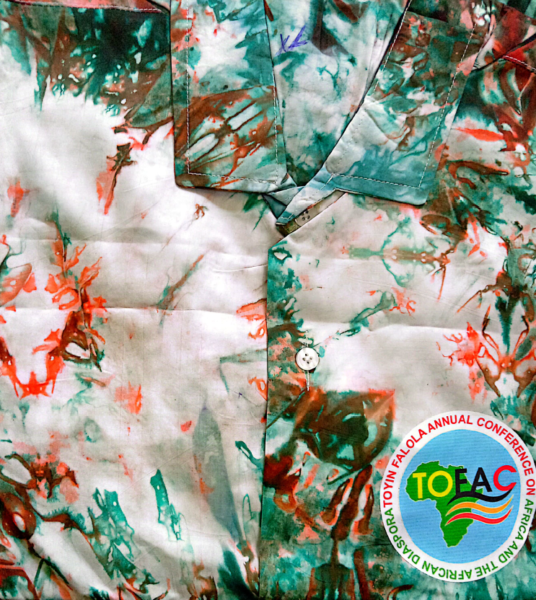
Participants observed that while many Nigerian ethno-cultural groups have unique dress patterns, in a general sense, Nigerian dress forms are increasingly crossing ethnic boundaries. Attires historically associated with particular ethnic communities are now worn across regions, thereby contributing both to cultural exchange and the emergence of broader Nigerian identities.
The Conference noted that such processes demonstrate that cultural identities are dynamic and subject to appropriation, adaptation, negotiation, and reinvention.
4.18 Language and Identity
Participants recognized language as a fundamental marker of identity in Nigeria. Indigenous languages remain important markers of ethnic and cultural identity, while English functions as an official language and an important marker of national and modern identity. Nigerian Pidgin also serves as a significant medium of communication and a marker of contemporary Nigerian identity.
However, participants expressed concern over the declining use and transmission of some indigenous languages, particularly among younger generations. The growing influence of social media and digital communication has simultaneously encouraged new forms of multilingualism, code-switching, and hybrid linguistic identities, especially among the younger generation.
5.0 Recommendations
In line with the foregoing observations, the Conference recommends the following:
- Inclusive Governance: Government at the Executive, Legislative, and Judicial levels should strengthen inclusive, transparent, accountable, and equitable governance systems that recognize Nigeria’s diversity as an asset rather than a source of division.
- Identity-Sensitive Policy: National and subnational policy planners and implementers should consider and incorporate policy, particularly in the areas of security, education, development, political representation, and resource allocation into their frameworks.
- Peacebuilding: Government, communities, and relevant stakeholders such as Non-Governmental Organizations, should strengthen community-based peacebuilding, interfaith dialogue, traditional mediation mechanisms, and other locally grounded approaches to conflict prevention and resolution.
- Security Reform: Government and communities should collaboratively strengthen Nigeria’s security architecture through improved intelligence, legal frameworks, community engagement, institutional coordination, accountability, and appropriate integration of legitimate community-based security mechanisms.
- Resource Governance and Climate Adaptation: Government should work with communities and land-based occupational groups to prioritize effective and equitable management of land, water, forests, and other natural resources to reduce competition and conflict, especially among farmers and herders. Climate-resilient agricultural and pastoral policies should be developed by government and implemented by communities to mitigate the effects of environmental degradation and climate change on livelihoods and intergroup relations.
- Gender Inclusion: The legislature should enact laws to remove structural and cultural barriers to women’s participation in governance, education, economic activity, and leadership. The Executive should implement such legislations, and the judiciary should protect them.
- Protection of Minority Rights: Existing mechanisms for equitable political representation and resource distribution should be strengthened and implemented by people in power to address the concerns of minority and marginalised communities.
- Indigene-Settler Question: The Nigerian legislature should treat the indigene-settler question as a national issue, not an isolated one for each state to tackle; promote citizenship rights and equitable opportunities for all Nigerians bearing in mind the country’s federal structure.
- Traditional Institutions: Government at all levels should strengthen the role of traditional institutions in cultural preservation, peacebuilding, mediation, and local development and also ensure transparency, accountability, and internal stability within the system.
- Cultural Preservation: Communities and government should make greater investments in the documentation, preservation, teaching, and transmission of Nigeria’s indigenous languages, histories, food cultures, festivals, dress forms, arts, and other forms of intangible and material heritage.
- Digital Literacy: Educational institutions should promote responsible and critical use of ICT and artificial intelligence while safeguarding critical thinking, creativity, indigenous knowledge, and cultural values.
- Youth Development: Government and the private sector should address the structural drivers of youth marginalisation, unemployment, insecurity, and exclusion through employment, skills development, entrepreneurship, education, and inclusive urban development.
- Research and Documentation: Universities and research institutions should intensify interdisciplinary research on Nigeria’s multiple identities and make the findings available to policymakers and communities.
- National Cohesion: Government should promote initiatives that encourage Nigerians to recognize the coexistence of multiple identities and develop an inclusive conception of Nigerian citizenship that accommodates ethnic, religious, linguistic, gender, occupational, and regional differences.
6.0 Conclusion
The Conference concluded that identity is central to understanding Nigeria’s historical experience, contemporary politics, social relations, cultural expressions, and security challenges, and nation building processes in general. Nigerian identities are multiple, overlapping, dynamic, and continually reconstructed through historical experiences, migration, intermarriage, political competition, economic/livelihood activities, technology, religion, language, gender, age, and cultural exchange.
Participants affirmed that identity should not be treated merely as a source of conflict. Rather, it should be properly understood and inclusively managed, as a major resource for social cohesion, democratic development, cultural vitality, peace, innovation, and national transformation.
The Conference therefore called on government, academic institutions, traditional and religious authorities, civil society organisations, the private sector, and communities to promote and sustain an inclusive national framework in which diversity is recognized, protected, and harnessed for sustainable development.
Issued at the University of Jos, Jos, Nigeria, this 10th day of July 2026.
For:
Jos History and Culture Society
Department of History and International Studies, University of Jos
University of Texas at Austin
Professor Sati Umaru Fwatshak
Convenor, 15th TOFAC / Chairman, Local Organising Committee