
Toyin Falola

A PANEL DISCUSSION ON JASON ARDAY AND RACE IN THE ACADEMY

(This is the second report on a panel on Jason Arday and Race in the Academy, September 6, 2026. For the transcript, see: https://www.youtube.com/live/yBcCf2eOcbY?si=poIIXytvmqpU9Sqe)
The controversy surrounding Jason Arday becomes harder to understand when we remove it from the focus on one individual and place it against the institutional environment that shapes academic careers. The TFI centralized issues around the academy in the context of Arday’s case. Universities often describe themselves as spaces governed by merit, evidence, reason, and procedure. Their authority depends heavily on this self-image. They are expected to distinguish knowledge from opinion, scholarship from assertion, and achievement from identity. Yet the discussion around Arday raises a more uncomfortable possibility: that the academy may apply apparently neutral standards through structures and cultures that are anything but neutral. Thus, the issue is not only whether any given scholar has lived up to the criteria demanded of them. It also raises questions about where these criteria come from, who makes sense of them, how consistently they are enforced, and what happens to individuals in an institution whose definitions of excellence have never considered them.

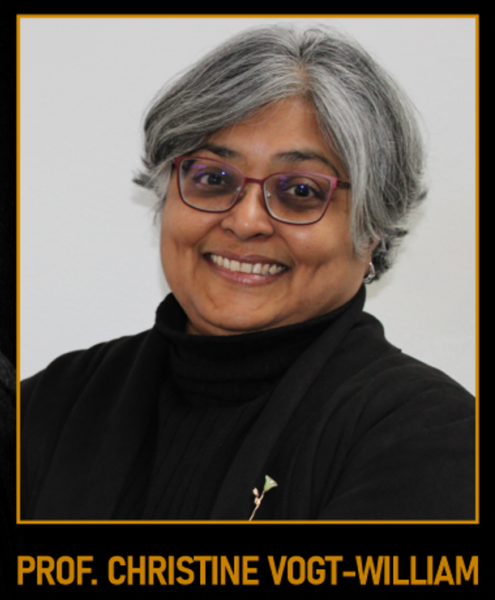
This was another important shift during the TFI. After discussing Arday as an individual who became the focus of extraordinary public attention, the conversation also moved toward the structures that make certain academic bodies unusually visible and unusually vulnerable. For Dr. Christine Vogt-Williams, the lived experience of Black and minority ethnic academics can best be expressed in terms of invisibility and hype surveillance, where the individual is both made invisible as a scholar and hyper-visible as a racialized body. Within such an environment, a mistake becomes proof of incompetence, whereas success can be attributed to mere chance or an act of kindness on the part of the institution. This contradiction is striking. The Black academic may be made invisible when recognition is distributed, yet hyper-visible when failure is being interpreted. What looks like an ordinary professional environment from the outside can therefore feel different to the person moving through it.
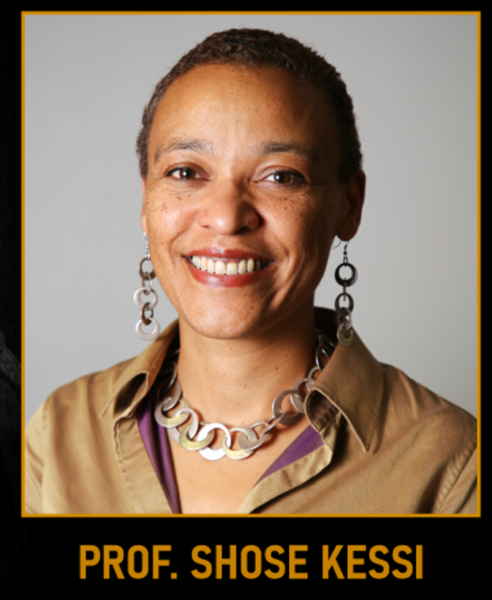
Prof. Shose Kessi gave the discussion a concrete institutional dimension by drawing on her research into Black students’ experiences at the University of Cape Town. The examples she presented were not primarily about spectacular incidents. They were about the ordinary mechanisms through which belonging can be communicated or withdrawn. A Eurocentric curriculum where their histories and experiences are not well-represented was identified. They experienced greater scrutiny in assessments, including suspicion about receiving high grades and doubt about the authenticity of their performance. They experienced others’ reluctance to engage with them in group activities, segregation in institutional settings, the dominance of certain historical identities in visual culture, and demands to change their language and accents to conform to institutional expectations. Together, these factors produced something beyond individual experiences of discomfort: the feeling that the institution was not one they belonged to. This is crucial because institutional exclusion is rarely stated explicitly. The university does not necessarily have a policy that excludes Black students from equality. This can be done through the collective effect of everyday expectations, whose accent sounds educated, whose research seems scholarly, whose confidence looks like authority, whose dissent is regarded as an academic freedom, whose opinion is treated as an aggression, and whose mistakes are taken as human error.
Professor Kessi made a crucial distinction between institutional policies and their application. The way in which the policy is written may not itself be discriminatory. Still, it may lead to inequities through the policy’s implementation. She pointed out that Black scholars experienced increased teaching obligations, reduced access to research funds and other research resources, additional scrutiny of their research funding, discipline, and even barriers to career advancement. The problem, as she understood it, was not so much the university’s policies; it was what happened when the policies encountered living people. This means that fairness has different dimensions. If fairness means treating all persons uniformly and objectively under a rule of practice, the institution can remain neutral despite unequal outcomes. Academic misconduct, then, relates to whether there were any allegations of dishonesty or plagiarism.
Kessi once again emphasized that she was not claiming that academic misconduct should be tolerated simply because someone is marginalized. On the other hand, she maintained that any such claims be properly investigated according to procedures established by the university. Kessi raised another related issue: who investigates the matter, how they investigate it, how complaints are processed, and what results those complaints produce. If complaints against someone keep coming from the same group, the university is obligated to take a second look at itself. This is perhaps where the Arday controversy becomes more revealing than the question of Arday himself. The instinct in a controversy is usually to identify who is right and who is wrong. But institutions are more complicated than individual verdicts. There are committees, selection panels, systems of disciplinary proceedings, funding, promotion criteria, editorial practices, social networks, professional hierarchies. Decisions are made by those who act within histories they did not create but still deal with. The question is not simply whether a committee followed the rules. It is also whether the rules themselves are historically situated, whether their interpretation is consistent, and whether the same standards produce the same expectations for everyone.
Vogt-William pushed this question further by asking who gets to define academic excellence in the first place. Meritocracy often presents its criteria as objective, neutral, and universal. But standards do not emerge from nowhere. Institutional histories and professional cultures produce them. The supposedly neutral definition of a “good scholar” may contain assumptions about language, intellectual style, disciplinary traditions, institutional pedigree, publication practices, and forms of authority. Vogt-Williams noted that, as important as these criteria were, the people interpreting them were just as important. Committees play an essential role in hiring, funding, and assessment, and they are made up of people who judge whose knowledge is credible, whose career path is sensible, and whose presence is an asset to the institution. This leads us to an uncomfortable truth about the merit system of academia; it is never a mere number. Whether universities try to measure accomplishment through publications, citations, grants, degrees, awards, or appointments, people must decide how to weigh the importance of different accomplishments. This does not mean that standards are meaningless or that every assessment is discriminatory. It means that standards themselves require historical and institutional examination. The question is not whether excellence exists. It is whose definition of excellence becomes authoritative.
For Black scholars, the problem can become more complicated because excellence itself can acquire a racial meaning. Alan Lester described what he called the particular burden of Black exceptionalism. When a Black scholar succeeds at an elite institution, the achievement can be celebrated not just as an individual talent but as evidence of the institution’s diversity, openness, or anti-racist credentials. The scholar becomes proof that the system works. Yet that symbolic elevation can carry a dangerous consequence: the individual is no longer allowed the ordinary imperfections of professional life. Success becomes representative, and failure can become representative as well. Lester argued that the exceptionalism of Black scholars is therefore treated differently from the exceptionalism of white scholars, because the Black scholar carries the burden of representing a much broader community.

There is an important institutional contradiction here. An institution can celebrate the presence of a Black scholar without changing the conditions that Black scholars encounter. Representation then becomes a substitute for transformation. The appointment itself becomes evidence of progress, even if the structures surrounding the appointment remain largely untouched. Professor Kessi described this as one danger of individualistic affirmative action and diversity, equity, and inclusion initiatives. Such programs may expand access while simultaneously placing the responsibility for proving that access was justified upon the individual who has entered. The Black scholar is expected to demonstrate that they deserve to be there, while the institution is relieved of having to ask whether its own definition of deservingness needs to change.
This produces a particularly cruel logic: the institution lets someone in through the door and then asks them to prove they should be let in. If the individual succeeds, the institution can congratulate itself on its diversity policy. If they fail, the institution can assume that the individual is not good enough. If the individual struggles, the institution can conclude that the person is not the right fit. In either case, the structural question disappears. Kessi’s formulation is sharp because it identifies how institutions can absolve themselves of responsibility by converting structural problems into individual deficiencies.
The deeper problem, however, goes beyond who occupies university positions. It concerns what universities themselves have historically produced as knowledge. Professor Kessi argued that institutional racism is deeply connected to knowledge production and cannot be dismantled simply by changing demographic representation. She pointed to the history of race science and the role academic disciplines played in producing claims about racial difference. In her account, scientific traditions were historically used to make assertions about Black intelligence, brain size, morality, criminality, and sexuality, helping to give racial hierarchy the appearance of scientific legitimacy. The significance of this history is not just that universities were once wrong. It is that knowledge produced within institutions can travel beyond them and become ordinary social knowledge.
Once an idea acquires the authority of science, it can survive long after the original study has been forgotten. What began as a claim within a laboratory, university, or scholarly discipline can eventually become common sense. Kessi therefore made an important connection between academic knowledge and social attitudes towards Black people. If institutions produce knowledge that portrays Blackness through deficiency, those ideas can become embedded in the wider culture. The university is then not simply reflecting society’s prejudices; it can help manufacture the intellectual frameworks through which those prejudices are understood. It is for this reason that the issue of race on campus cannot be simplified down to the number of black faculty members photographed on a university campus. Demographic change does indeed play a role in addressing institutional racism, Kessi noted, and she stressed the significance of the action and demands made by people of color in institutions.
However, representation alone cannot address institutional racism if the structures of knowledge, evaluation, and authority in an institution are left intact. An institution can increase its demographic diversity while teaching a curriculum that marginalizes some histories, evaluating students with practices that produce suspicion unequally, and rewarding scholarship based on existing hierarchies of knowledge. The South African experience Kessi drew on to illustrate the discussion offered an example of institutional transformation that goes beyond representation. She described the Rhodes Must Fall movement at the University of Cape Town as a trigger for changes to the curricula, the institution itself, and the demographics of students and teachers. However, Kessi stressed that the transformation is still far from complete because of the deep historical and structural nature of institutional racism. Decolonial reform, in her formulation, requires intervention at several levels simultaneously: ideological, structural, bureaucratic, and interpersonal.
The significance of this argument reaches beyond South Africa. It challenges the comforting assumption that the academy becomes neutral simply by becoming diverse. A university can recruit people from different backgrounds and still reproduce an inherited hierarchy of knowledge. It can establish a diversity office while leaving its promotion structures untouched. It can celebrate a Black scholar while making that scholar carry the symbolic weight of institutional progress. It can invite marginalized voices into the room while retaining the authority to decide which of those voices count as serious knowledge. Diversity, in this sense, can become decorative if a redistribution of intellectual and institutional power does not accompany it.
Dr. Vogt-William described this tension precisely through her discussion of DEI within neoliberal higher education. She argued that diversity initiatives can operate at the surface level as exercises in institutional image-making while leaving deeper relations of power intact. She linked this to the devaluation of Black and Global South scholarship as too much about ideology and identity politics, even when it provides a rigorous theoretical framework for institutional transformation. The irony is obvious: the institution lets its scholars talk about race but gets nervous about scholarship that suggests the institution itself needs to change. This also explains why the controversy surrounding Arday cannot be understood simply as a disagreement over academic integrity. The panel did not deny the legitimacy of academic standards. It questioned the assumption that standards operate in a social vacuum. Why should academic integrity be of such importance? Because academic institutions claim to hold legitimate knowledge. However, if academic integrity can be selectively applied, or if the apparatus that defends it is built within an institutional setting of inequalities, the problem goes beyond academic misconduct.
Once a debate among academics goes beyond campus into the broader world, questions of academic judgment become issues of political ideology, media bias, and popular mistrust. While the university may be looking for answers to one set of questions, the public may be seeking to answer an entirely different one. A citation mistake becomes a poll on character; a controversial biography becomes proof of academic incompetence; a professional difference becomes a race drama. This is where the ideal of institutional neutrality gets its greatest test. A university can’t control what happens in the pages of every newspaper. But it can control its response when a member of its academic community faces exceptional public scrutiny. It can insist that due process is being respected. It can distinguish legitimate criticism from malicious harassment. It can examine whether similar cases have been treated the same way. And it can ask whether the pressure placed on one individual reveals a broader institutional problem.
The academy, then, is never just a collection of buildings where knowledge is produced. It is a system of selection, recognition and authority. It controls entry into, movement through, and funding of research projects by certain scholars; what counts as legitimate knowledge; and whose errors carry serious consequences. The case of Jason Arday made one Black academic prominent, yet the debate around his case revealed the mechanisms that underpin that prominence—the criteria for excellence, those who interpret them, the cultural affiliations that create the conditions for belonging, and the knowledge traditions that have legitimized racial hierarchy intellectually throughout history.