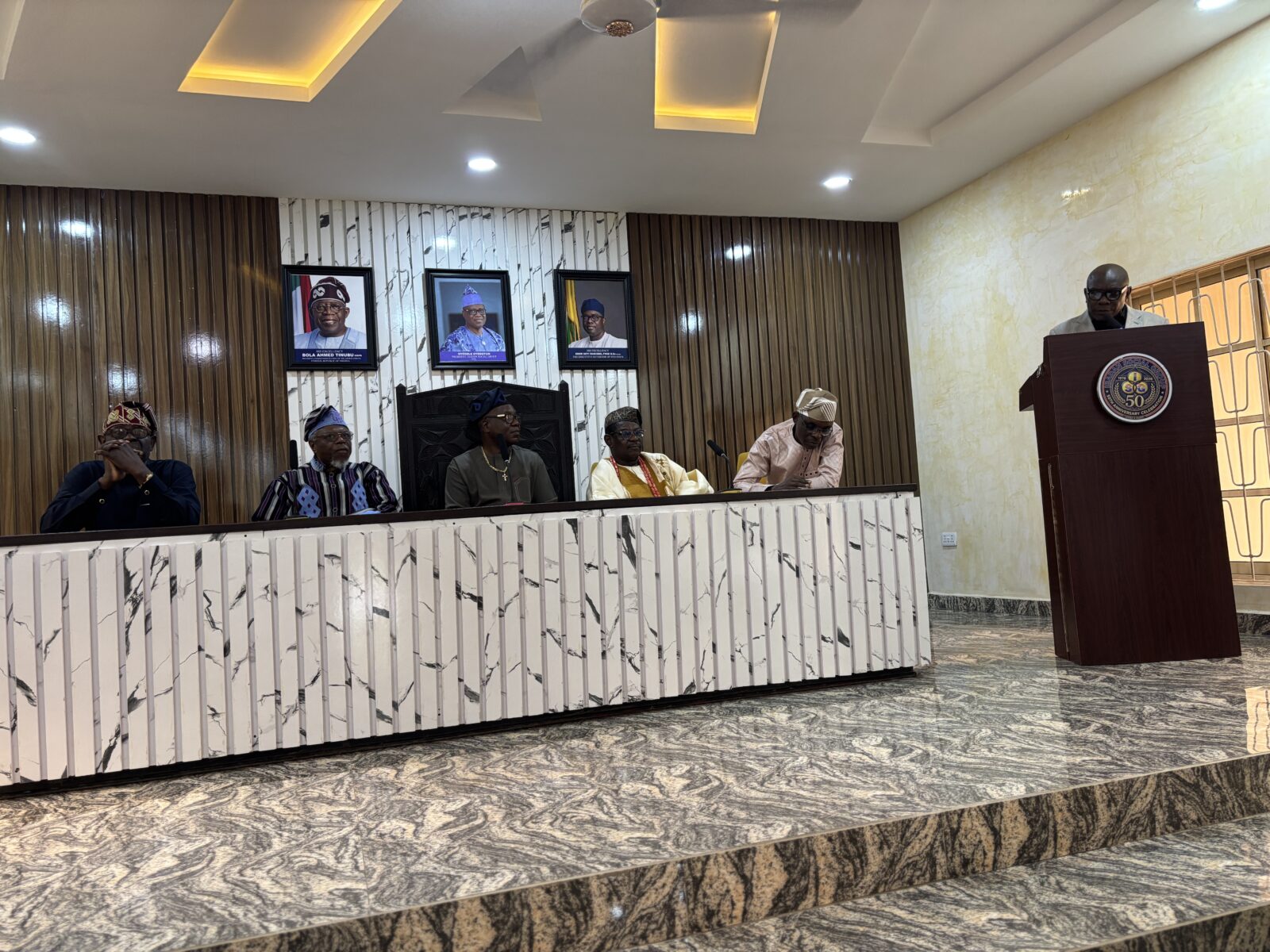

Sir Tokunbo James, JP, KSC, MNIIA.
Past President, Ibadan Social Group (ISG 1976)
A Reflection:
Professor Toyin Falola’s thought-provoking lecture invites us to examine one of the greatest contradictions of modern civilisation. We live in an extraordinary age. Technology has conquered distance, communication has become instantaneous, and humanity has achieved a level of global interconnectedness unimaginable to previous generations. Yet, paradoxically, while we are increasingly connected electronically, we appear to be drifting apart emotionally and socially.
We have more contacts but fewer confidants,
more followers but fewer dependable friends;
more communication but sometimes less understanding.
In traditional African society, human relationships were not measured by the number of people we knew but by the depth of our obligations to one another. Our neighbourhoods were extensions of our families. Our friends became our brothers. Our elders were custodians of collective wisdom, and our communities provided a sense of identity and belonging.
Among the Yoruba, we say, “Ènìyàn l’áṣọ mi” — people are my clothing. This profound expression reminds us that our dignity, security and fulfilment are inseparable from our relationships with others.
Today, however, technological advancement has introduced a different social reality.
We can communicate with someone thousands of kilometres away while remaining strangers to the person living next door.
We may belong to numerous WhatsApp groups without belonging meaningfully to any community.
This raises an important philosophical question: Has technological progress necessarily translated into human progress?
Marrying Ancient Intelligence with Artificial Intelligence
One particularly profound observation attributed to Professor Toyin Falola deserves special emphasis: “Ancient Intelligence (AI) should be married to Artificial Intelligence (AI).” — Professor Toyin Falola
To my mind, this statement captures the very essence of the challenge confronting modern civilisation.
Ancient Intelligence represents the accumulated wisdom of humanity: our cultural heritage, moral values, traditional knowledge, communal responsibilities, historical experiences and the lessons passed from one generation to another. Artificial Intelligence, on the other hand, represents humanity’s extraordinary capacity for technological innovation, information processing and the transformation of knowledge into new possibilities.
The former teaches us how to live together; the latter provides increasingly sophisticated tools for accomplishing our objectives. Ancient Intelligence gives us wisdom; Artificial Intelligence gives us technological capability. One provides direction, while the other accelerates our journey.
But speed without direction can be dangerous, just as knowledge without wisdom can become destructive. Therefore, the marriage of these two forms of intelligence is not merely desirable; it is essential to achieving balanced human development.
We must not allow the advancement of machines to diminish the humanity of mankind. Neither should we permit the pursuit of technological sophistication to erode the traditional values of compassion, fellowship, respect and collective responsibility.
The ISG 1976 Experience
For me, this discussion carries particular significance as Ibadan Social Group celebrates its Golden Jubilee. Founded in 1976, our association has survived five decades of political changes, economic uncertainties, technological revolutions and generational transitions.
What has sustained us?
Not technology. Not material possessions. Not even our social standing.
It has been the enduring spirit of friendship, fellowship, mutual respect and collective responsibility.
Our founding fathers understood something that modern civilisation risks forgetting:
Relationships must be cultivated, institutions must be sustained, and friendship requires commitment beyond convenience.
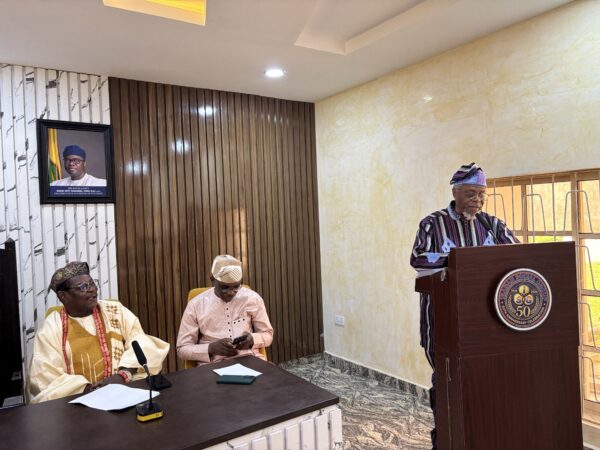
Indeed, ISG 1976 represents a practical expression of Ancient Intelligence: the wisdom of building enduring human relationships through shared experiences, trust, loyalty and communal identity.
Today, Artificial Intelligence and modern communication technologies offer us opportunities to preserve our history, strengthen our institutional memory, reconnect generations and project our collective heritage into the future. The challenge is to ensure that technology strengthens these values rather than replaces them.
Conclusion
As we reflect on Professor Falola’s lecture, I believe the essential lesson is that civilisation should not be judged solely by its technological sophistication, economic prosperity or scientific accomplishments.
It must equally be judged by the quality of human relationships it preserves and the sense of belonging it creates.
A society that connects millions electronically but leaves individuals emotionally isolated has achieved technological progress without necessarily achieving corresponding social advancement.
We must therefore embrace Artificial Intelligence without abandoning Ancient Intelligence.
We must preserve the wisdom of yesterday while deploying the innovations of tomorrow. As we celebrate fifty years of ISG 1976, let us recommit ourselves to the values that brought our founding fathers together: genuine friendship, fellowship, compassion, and shared responsibility.
I conclude with two reflections:
“Ancient Intelligence must provide the moral compass by which Artificial Intelligence navigates the future of humanity.”
And:
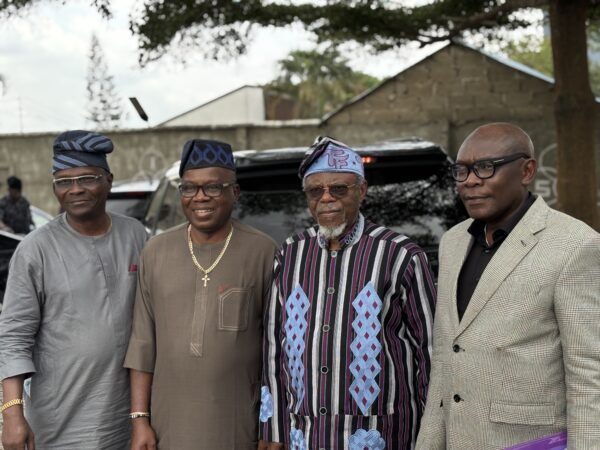
“We have succeeded in bringing the world closer to our fingertips; our next responsibility is to bring humanity closer to our hearts.”
Thank you.
a fine response