
Toyin Falola
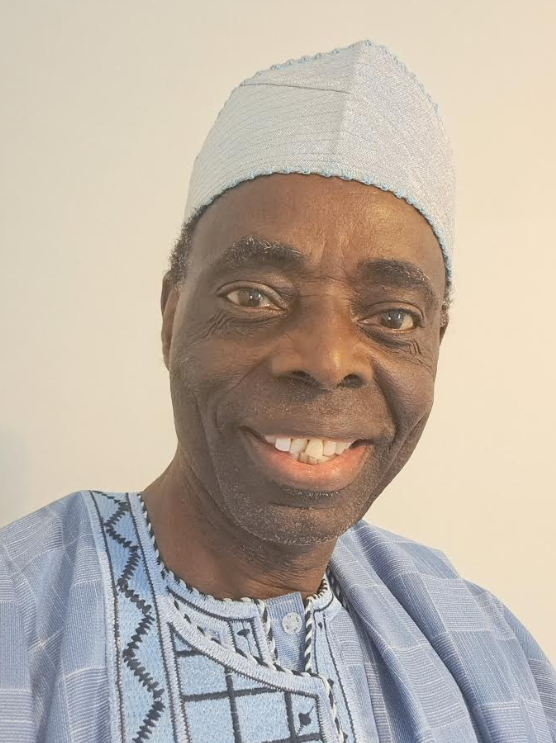
Dr. Julius O. Adekunle has retired as a professor of history. He has drawn the curtains on a “remarkable academic career”. He is a mind that has impacted many generations of students. I have known him since around 1973. A great man.
His journey spans countries, decades and fields of study. Retirement for him means closing the chapter on a lifetime of creating, sharing, and conserving learning about Africa and its place in the world. He began his post-secondary education in Nigeria at Obafemi Awolowo University, then known as University of Ife. After demonstrating his intellectual ability at this institution, he refined his skills at the University of Ibadan, where he earned a master’s degree, and at Dalhousie University, where he earned his Doctorate in African History.

Through these intellectual journeys, he was able to develop himself and his knowledge to the point of being able to situate African history within the broader global frameworks and beyond. Thus, he was already an expert before his time at Monmouth University, which began in 1996, where he started his lengthened journey with American academia. At this institution, he was able to rise through the ranks first as an Assistant Professor before his transition to full Professor. His career was a gradual development that emerged through years of consistency, excellence, and hard work from his early beginnings in Nigeria to his peak years in the United States.
The evidence of the essence of his scholarly contributions can be cited from many sources. For example, he has been awarded multiple teaching awards and has been a recipient of several fellowships for pedagogical improvement. His commitment to intellectual affairs and development can be cited from his numerous trips to historical sites in Africa for research purposes. In this context, it can be said that Professor Adekunle served as a bridge between archived knowledge and reality.
He has made several scholarly contributions that interrogated themes like identity, bureaucracy, ethnicity, and religion. His work on the relationship between the Borgu and the Middle Belt in Nigeria revealed another aspect of African historiography with its attention to relatively marginalized societies and the revelation of their peculiarities. For example, the political identity of the Borgu people was revealed in this submission, where the complexities of ethnicity, state formation, and local agency were all investigated to challenge the monolithic narratives embedded in Nigerian history. His constant reliance on the use of oral traditions as a legitimate and important source of information for his scholarly works can be regarded as his way of decolonizing knowledge – a feature that is present in African scholars.
He has also carried out research to interrogate identity from the frameworks of ethnicity and nationalism in Africa. Through submissions of this nature, he provides explanations as to how identity can become a source of unity and a source of conflict. He has had engagements with the religious aspect of intellectualism, too, where he treated spirituality as a dynamic force that has been intertwined with culture, politics, and identity. His overall conclusion on religion is the need for a deeper understanding of religions and the roots of religious tensions because, just like identity, Professor Adekunle states that religion can be used to corral unity in society or make society become a site for contestation, especially for political benefits. Some of his academic contributions are centered on the African race and its diasporic communities. Through collaborative efforts, Professor Adekunle has made vital contributions to the meaning of race in the contemporary world, and his submissions have become linkages between migration, colonialism, and cultural exchange.

He is a professor of high acclaim, and the credibility of his works is evidenced through the referencing of his works by veritable outlets like the encyclopedias. His active participation in the correction of distorted African agency through contributions on Rwanda, the Oyo empire, the Yoruba culture, and many others has also become archives for many young scholars to learn from and build their interrogation and interpretations from.
In addition to his academic contributions, Professor Adekunle is a man of repute in society, and his contributions to the University and its immediate environment cannot be overlooked. He has served on various committees, led several developing academic programs, and participated in conferences and public lectures. His vibrant participation does not exclude religious society and community organizations, as he has also taken leadership roles upon himself in these aspects.
Moving further away from his scholarly achievements, Professor Adekunle is a man in tune with his emotional persona. He is a lover of motivational pieces and poetry. These reveal that beneath his intelligence is a person who takes the pristine and psychological aspects of life seriously. Taking these into consideration, it would perhaps be less surprising to understand the foundations of his brilliance and humanity.
He does not retire into vacancy. Retirement leaves a legacy of his sizable accomplishments that will continue to impact generations to come. So, while Professor Adekunle has retired, his work still lives on and will teach those who learn from it. Thus, we cannot say Professor Adekunle has retired from scholarship, we can only say that he has moved on. That is, a movement from institutional engagement to a kind of passion that allows deeper reflections and creativity on a different plane for the professor and his students. This engagement will be developed on his decades of experience and his legacy, and it will lead to the creation of novel expressions and interpretations.

As we celebrate the transitioning of an illustrious career, it becomes important for us to remember that a scholar is not measured only by their number of publications or their number of years in service. He is instead adjudged a ‘Great Scholar’ in accordance with the number of ideas he has presented and the number of lives he has impacted. Professor Julius O. Adekunle has satisfied these categories largely through activities that enabled him to impart knowledge, advance knowledge, and serve the community. His retirement thus becomes an opportunity to celebrate and acknowledge these achievements whilst amplifying them for the younger generations to have a template to follow for a successful career.
Congratulations!
Beautiful piece. Congratulations on your retirement and all the best for the freedom that comes with retirement.