
Toyin Falola
Nsịbịdị: Victor Ekpuk and Contemporary African Art
Nsibidi is one of Africa’s most misunderstood indigenous communication systems. It is often regarded as a decorative motif rather than the repository of culture that it is. The nsibidi culture has existed long before the creation of Nigeria or the standardization of the European alphabet. It developed among the people of Cross-River as a complex system of visual communication that can stand alongside those of Egypt, Mesopotamia, and China. Its emergence can be traced back to 2000 B.C., with evidence of its markings found on bodies, textiles, shrines, ritual objects, and other artifacts. It served as an effort by early humans to codify their thoughts, law, morality, metaphysics, and so on. Eventually, it evolved into a tool of mass education amongst the Ibibio, Efik, and Ejagham ethnic groups. This can be regarded as evidence of the sophistication and longevity of African epistemology.
The nsibidi writing system operates through visual condensation, gesture, context, and performance; therefore, it differs starkly from Eurocentric alphabetic writing systems. It is rooted in Afrocentric perspectives of philosophy, morality, power, and ritual practice, among others. Therefore, it is a regulator of communal life through secret societies like the Ekpe. Its symbols are inscribed on human bodies like tattoos, on textiles like the Ukara, as shrine decorations, and so on; and as warnings, sanctions, instructions, or reconciliations. To this end, the fluid nature of nsibidi can be perceived: it takes the form of decorations for non-initiates or outsiders but carries deep meanings for the indigenes.
Colonial incursion into these regions came with a new religion and a new educational system that displaced the indigenous systems. Nsibidi thence became one of the cultures displaced by the ignorance of the European overlords, who regarded it as a primitive or inferior form of writing, failing to appreciate its philosophical undertones and social functions. The Christian Missionaries also undermined nsibidi’s popularity by antagonizing the secret groups that served as its principal supporters. These disruptions, therefore, led to a disconnect between indigenous African societies and their age-long communication systems that housed their history.
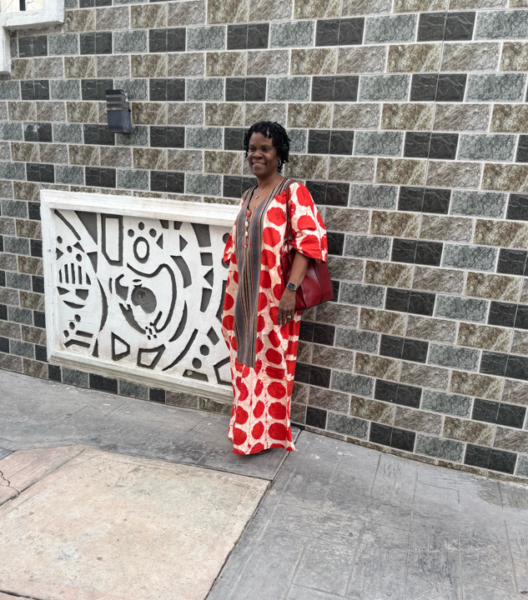
Nsibidi, however, persists due to its nature: neither alphabetical nor pictorial, but rather a gestural system inclined toward philosophy, performance, and abstraction. Its complex ideas are compressed into fluid meanings that can change depending on intent, audience, or situation. Therefore, this system continues to communicate even under repression, challenging the notion that legitimate knowledge must be written, read, and standardized. It positions itself as evidence that African societies invented epistemic systems that incorporate ethics. Even amid heavy marginalization, nsibidi continues to thrive and evolve. In recent times, it has moved on from secret societies to modern visual culture – in contemporary African murals, fashion, tattoos, graffiti, and others. Nsibidi demonstrates the tenacity of our knowledge system and its ability to endure across different eras.
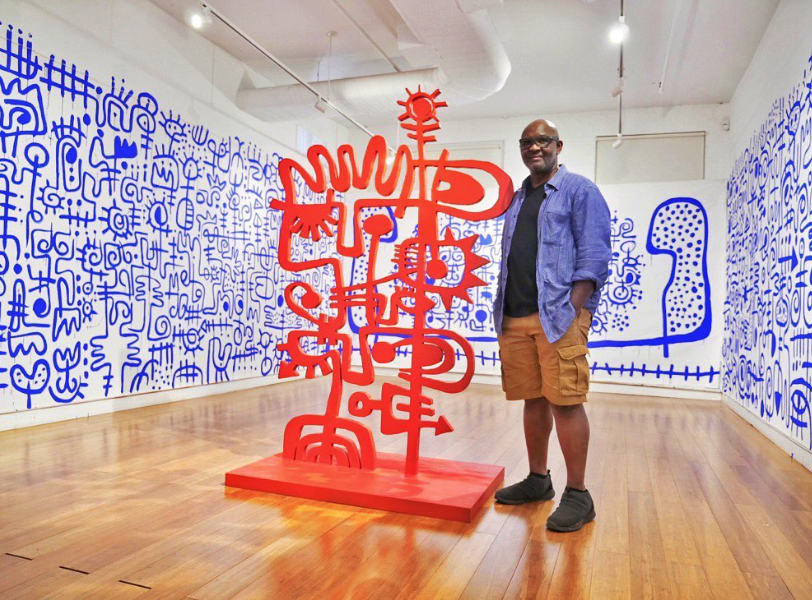
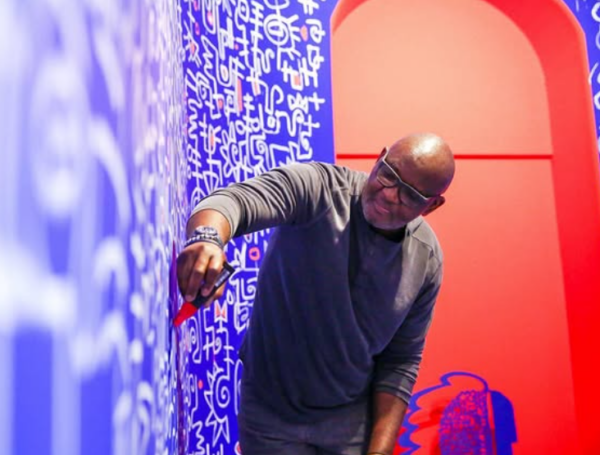
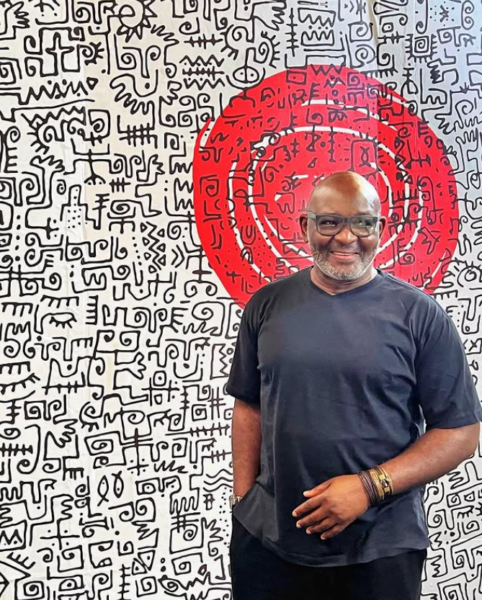
A discussion of the reemergence of nsibidi in contemporary art would be incomplete without mention of Victor Ekpuk. He is a Nigerian American-based artist of Ibibio origin whose artworks reimagine nsibidi as an aesthetic and philosophical language. He uses this system to renegotiate African identity, history, and connection to the spiritual realm through nsibidi-infused abstract art. His audience feels his undecipherable text-infused arts rather than trying to read meaning into them; therefore, in a society where art is conditioned to seek explanation or have fixed meaning, Ekpuk’s works are rebels that provide no closure. This feature of his artwork continues the indigenous nature of nsibidi, in which context, meaning, and knowledge are reserved for initiates. Also, by drawing inspiration from this system, his artwork can break linguistic barriers, functioning as visual thoughts rather than text. To this end, Ekpuk’s art becomes an investigation of the past to enquire into the future.

The central theme of Ekpuk’s work includes Africa and its diasporic history. His works connect with migrations and demonstrate how African cultures persisted through adaptation and reinterpretation amid displacement. In 2015, he created the “Mediation on Memory” for the Havana Biennial. He collaborated with the Abakua society (Ekpe migrants) in Cuba to interrogate the persisting spiritual and aesthetic connections between West Africa and the Caribbean. Ekpuk also affirms that several nsibidi-infused cultures persist within diasporic cultures and thus created a contemporary shrine in attestation to this fact to honor his Ibibio, Efik, and Ejagham roots.
It is evident, primarily through Ekpuk’s many works, that nsibidi can still retain its philosophical properties even when expressed through contemporary means. Several of Ekpuk’s works, ranging from murals in galleries and museums to other public spaces, demonstrate that African culture will continue to thrive amid disruptions, marginalization, and repression, only to reappear in spaces that have historically dismissed it. Their resurgence in these spaces, however, is not without the critical questions of how they preserve or reactivate the essence of nsibidi and other African cultures. The nsibidi arts, for example, should not be presented as mere relics but as repositories of knowledge. As Africans, we must begin to widen the net of education to incorporate African epistemology systems.

Nsibidi is not fixed or eternally marginalized. It is an epistemology rooted in culture, history, art, and re-imagination. Its fluidity has enabled it to thrive in contemporary African arts and has shown that African cultures can be flexible without losing their authenticity. Its reimagination by Ekpuk makes it a futuristic mode of communication that speaks from a place of spirituality, abstraction, and global interconnectedness, and its recognition restructures how we understand language, knowledge, and the arts. Akwa Ibom State needs to give prominence to nsibidi and honor Ekpuk as its iconic figure. Its successful stadium and elaborate modern hospital should rank Ekpuk’s work, thereby honoring its successful past and flowing this to the definition of its postcolonial moment. The nsibidi‘s past is alive!
Ibibio drums, do not fall into silence
Once, the moon learned our names
from the lips of elders,
And the night bent low
To hear stories carried by fire.
Utom beat the earth awake,
Ekombi answered with circling feet,
and the ancestors—unseen, unforgotten—
Sat among us like breath.
Now the drums are shy,
Their skins stretched thin by silence.
Their voices hide in museums,
Behind glass that does not remember heat.
Our tongues stumble.
Words once strong as iroko roots
Fade into borrowed sounds,
Pronounced with apology.
Mbiam no longer trembles in greetings,
Names arrive shortened,
Clipped like wings for easy travel.
A child asks, Who are we?
And the answer arrives late,
Translated.
The river still flows,
But it does not hear its old praise-names.
Fish swim through memories
They no longer recognize.
Elders depart carrying libraries
No one thought to copy.
Graves close over proverbs,
And wisdom sleeps without witnesses.
Yet beneath the dust of forgetting,
Something listens.
A rhythm taps softly in the blood,
A story refuses burial.
If one child learns again to listen,
If one drum is fed fire and skin,
The night will lean closer,
And the ancestors will answer—
not in mourning,
But in return.
Will Favor accept that Mfon is a better name?
So beautiful and beautifully written! One man I would love to meet is this Victor Ekpuk. The geometric pattern of his work gives it a mystic configuration, an image that often baffles me. It’s stylistics gives it a superior form of art that eludes the analysis of the Western thinker! Thanks for doing this exposé!