
Toyin Falola
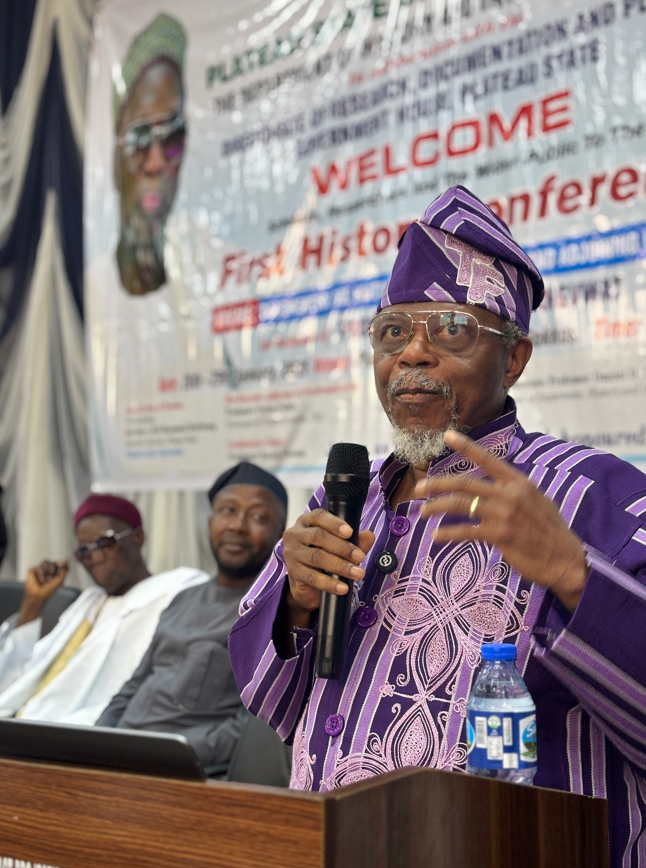
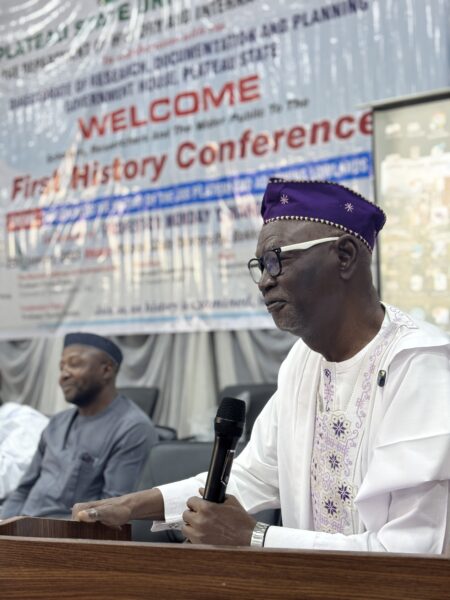
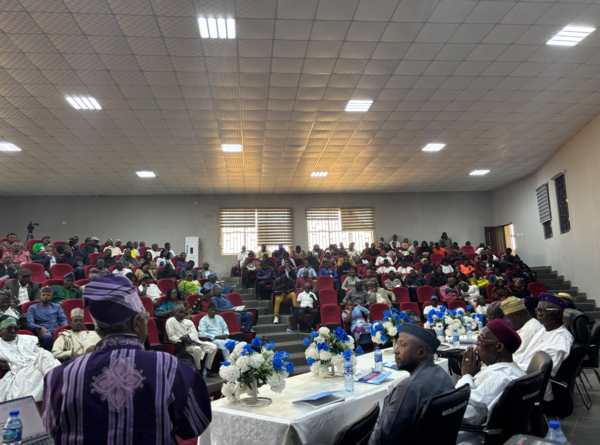
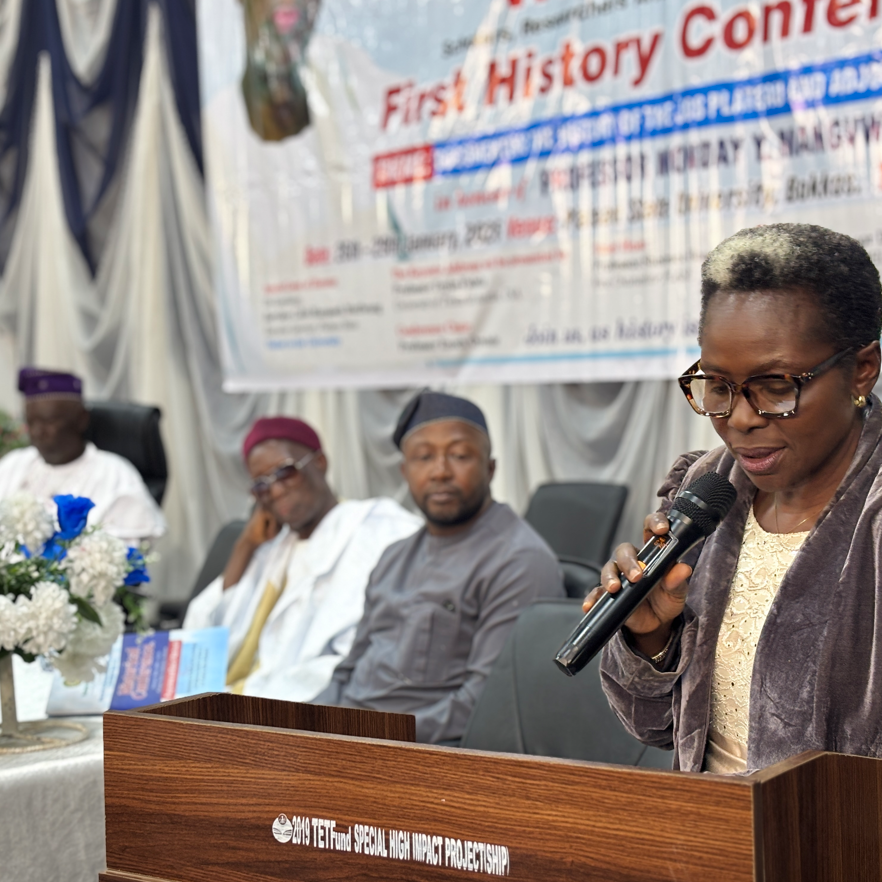
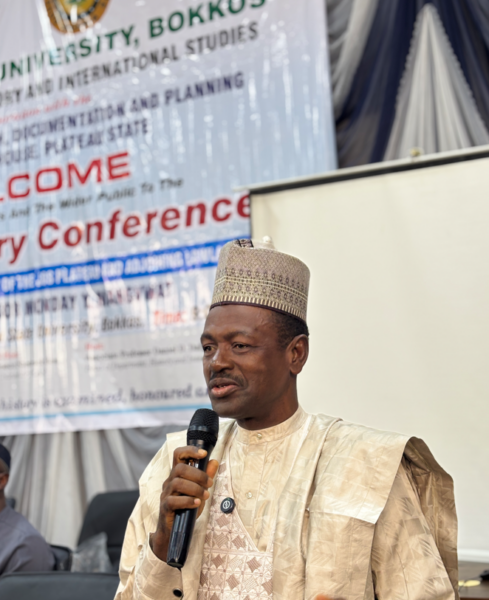
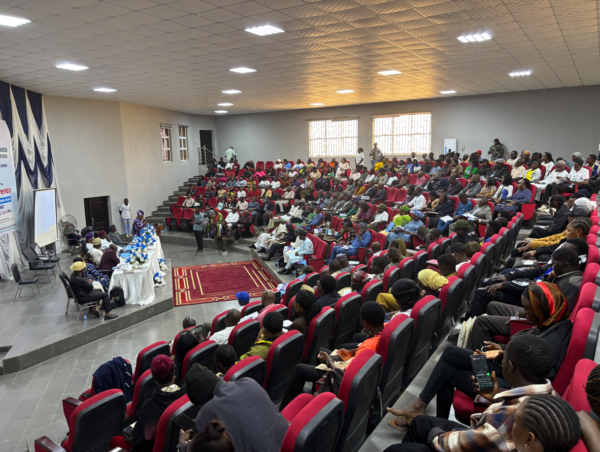
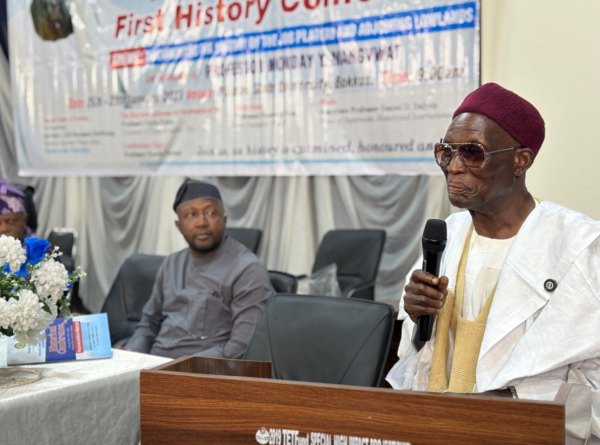
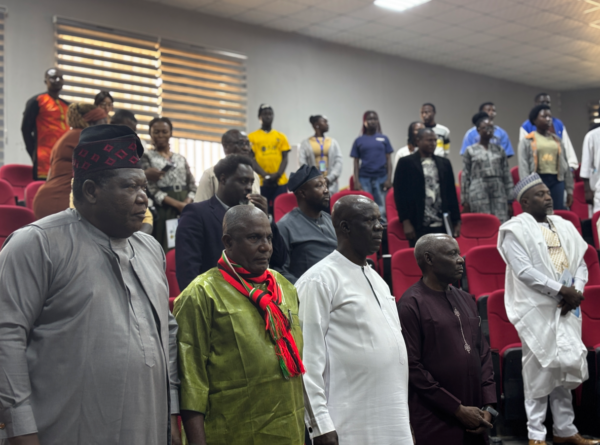
The first historical conference by the Plateau State University, from January 26th to 29th, was a huge success. It was a privilege for me to have given the Keynote Address to a major audience. Professor Enoch Oyedele, the Chair of the Conference, was enthusiastic in his presentation, pouring eulogies on Professor Monday Mangwat, who received the main attention and dedicated honor. The organizing team was impressive, and the Vice-Chancellor, Professor Shedrack Best, offered commendable leadership.
The Jos Plateau and the adjoining lowlands are a weighty part of Nigeria’s collective heritage, a misunderstood region that comes to the fore mostly in times of crisis, a region whose stratification, complexities, and narratives etched on its terrain are just set aside. But history is a gateway that only opens through understanding. It is through understanding that our humanity is not abstract. The history of the Jos Plateau is part of Nigeria’s dialogue between past and future to make a point about its understanding of its diversities and its power dynamics. It is important to acknowledge that history is not simply about yesterday; it is also about choices made today. It is into this area that we have had access through the works of Professor Monday Mangvwat.
The Jos Plateau is not simply a mountain range, but a crossroads steeped in meaning, in which the environment, the cultures, and the politics intermingle. This is a geographical space in which the land influenced the way of living of the inhabitants, their struggle, their food, and their traditions. The surrounding lowlands are not simply boundary zones. They have always been vital hubs of movement and interaction. Throughout African history, space is a powerful and unneutral agent, a zone quite entwined with the historical narrative. Space is not some external force operating on society; it is active within society. I have written so much about how land forms actively participate in society. The Jos Plateau and the surrounding lowlands are part of a single thread.
Prior to colonialism, the Plateau regions were a complex fabric of organized politics, kinship, and religious practice. There were societies like the Berom, Anaguta, Afizere, Mwaghavul, Goemai, Ron, Tarok, among others, who created politico-organizational patterns that centered on council-based politics, age-grades, spiritual dominance, as well as equitable land allocation. There was order in the movement of people. Identity was layered, not rigid. Belonging was negotiated through marriage, labor, and ritual incorporation. These systems challenge the simplistic binaries, indigene versus settler, that later hardened under colonial and postcolonial regimes. Professor Mangvwat understood this deeply. His scholarship consistently emphasized historical nuance, resisting narratives that flatten complexity or weaponize identity.
Much of Plateau history lives outside written archives. It survives in oral traditions, praise songs, clan genealogies, and ritual performances. These are not inferior sources; they are different epistemologies. In my writings on African knowledge systems, I have argued that oral tradition is not the absence of history but a different way of remembering it. Professor Mangvwat’s work exemplified this principle. He treated elders not merely as informants but as custodians of historical consciousness. Documenting Plateau history, therefore, requires listening patiently and respectfully to voices long marginalized by colonial and metropolitan scholarship.
Colonial rule transformed the Jos Plateau in profound ways. The introduction of tin mining, missionary activity, indirect rule, and new administrative boundaries reordered older patterns of coexistence. Colonial ethnography entailed a fixation of identities where identities were fluid. For instance, African history scholars have argued that colonialism did not produce conflict but impacted its scale and terminology. The Plateau became integrated into global capitalism, while local communities bore the social and environmental costs.
Crises in Jos are not isolated incidents of the past; they are repetitive. They are not random moments of history, but persistent questions about who belongs within the community of citizenship and who belongs within the land itself. History can’t answer for an outbreak of violence. But history explains the reason for the group’s boldness in an outbreak. I have argued elsewhere that Nigeria’s tragedy lies not in its diversity but in its failure to manage it ethically. The Jos Plateau mirrors this national dilemma. Documentation illuminates pathways toward dialogue rather than deepen divisions. Professor Mangvwat has advocated scholarship that clarifies rather than inflames, that contextualizes rather than condemns.
The future of documenting Plateau history lies in collaboration. Archaeology can illuminate early settlement patterns. Linguistics can trace migration and interaction. Environmental history can explain land pressure and resource competition. African history has always been interdisciplinary by necessity. To isolate history from ecology, culture, or economics is to misunderstand Africa itself. This holistic vision was central to Mangvwat’s intellectual practice and teaching. In Africa, the historian cannot afford to be detached. Silence is also a position. To document the Plateau is to intervene in public discourse, to insist on complexity in a world that prefers slogans. I have always argued that African scholars must speak beyond academia. Professor Mangvwat did precisely that, through teaching, mentorship, and community engagement. His legacy reminds us that history has civic obligations.
Documentation is never objective. What we choose to remember determines how we forget. In traumatised societies, historical research must be guided by ethics—that is, a commitment to accuracy, empathy, and restraint. The Jos Plateau needs histories that remember the suffering without exploiting it, that differentiate without threatening. This is not an easy task, but it is a necessary one.
To honor Professor Mangvwat is to continue his life-long passion for research, his reverence for indigenous knowledge, and his passion for viewing people and society as part and parcel of one another. He was a connector, not only a bridge that linked academia to the people and past knowledge to the present reality. In this sense, the writing of history becomes a shining hope. A proper writing and discussion of the history of the Jos Plateau region and its hinterland is not only an honor for a great historian such as Mangvwat, but also a form of reverence for the people from whom the full story must be obtained. In contemporary African society today, the problem is not the lack of history but the selective amnesia that quite often attends this knowledge. The history of the Jos Plateau region demonstrates that every location has a history that is full of significant meaning. Historians of the stature of Monday Yakiban Mangvwat challenge us that when history is history, it comes filled with the mark of extraordinary transformative justice.
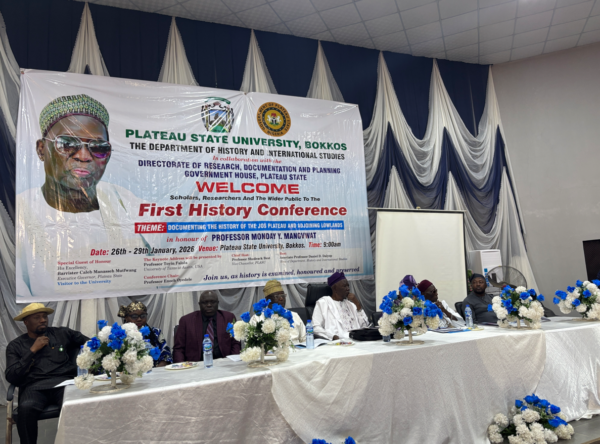
The Plateau State Government should be congratulated for supporting this initiative. The documentation of the history of the Jos Plateau and the Adjoining Lowlands is needed to decolonize history, expand the frontier of knowledge, and motivate a new generation to greatness.
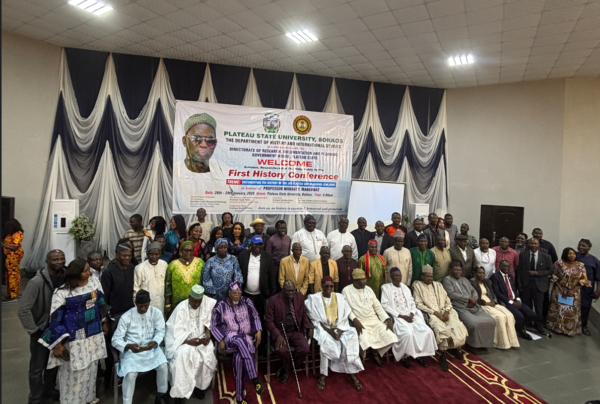
Photos: Historical Conference in honour of Professor Monday Y. Mangvwat, Plateau State University, Bokkos, Part 1, Jan. 27, 2026
https://www.flickr.com/photos/toyinfalola/albums/72177720331717389
Photos: Historical Conference in honour of Professor Monday Y. Mangvwat, Plateau State University, Bokkos, Part 2, Jan. 27, 2026
https://www.flickr.com/photos/toyinfalola/albums/72177720331688527
Photos: Historical Conference in honour of Professor Monday Y. Mangvwat, Plateau State University, Bokkos, Part 3, Jan. 27, 2026
https://www.flickr.com/photos/toyinfalola/albums/72177720331694626