
Toyin Falola
Marching Without Shadows: Sharpeville’s Silent Screams
(for Sharpeville, 1960)
The day Sharpeville bled, no one knew the morning would bleed.
No one knew how placards fluttered like birds with no sky
in the hands of men who only wanted to be counted as humans.
Men who marched the eyes of the earth with courage,
while the burns of their skin endured the torment of the sun
that had long stopped forgiving.
They came without knives. No sheaths, just rusted hope
folded into cold pockets. They came with papers in trembling
hands, but freedom was not sold in ink.
Later, the ground trembled by swallowing their silence.
And bullets rained like verdicts on children whose laughter
was floating like torn kites above the dust. And the sky
watched as soil consumed the remains of their bodies.
In the evening, a woman screamed at the top of her voice,
but her strength could not outpace that of a bullet. She knelt over
her son’s body, gathering her husband’s blood in a garment of exile.
The people no longer drink, only Sharpeville drank
until the earth was drunk with mourning. Dead bodies hanging like
punctuations, bullets putting a period on every mouth that dared speak.
Somewhere, a clerk wrote: “69 dead. Many more injured.”
Some faced the sun, others faced home. No paper could hold
the echo of a scream.
The world looks briefly like a man glancing at a trainwreck,
then returning to his newspaper. I say, freedom will someday wear
the faces of martyrs, and the wind that only carried dust will begin to carry names.
Those whose spines were split for standing do not rest in peace. They
march in chants. In struggle songs. In textbooks, children now open
without knowing they walk on ashes.
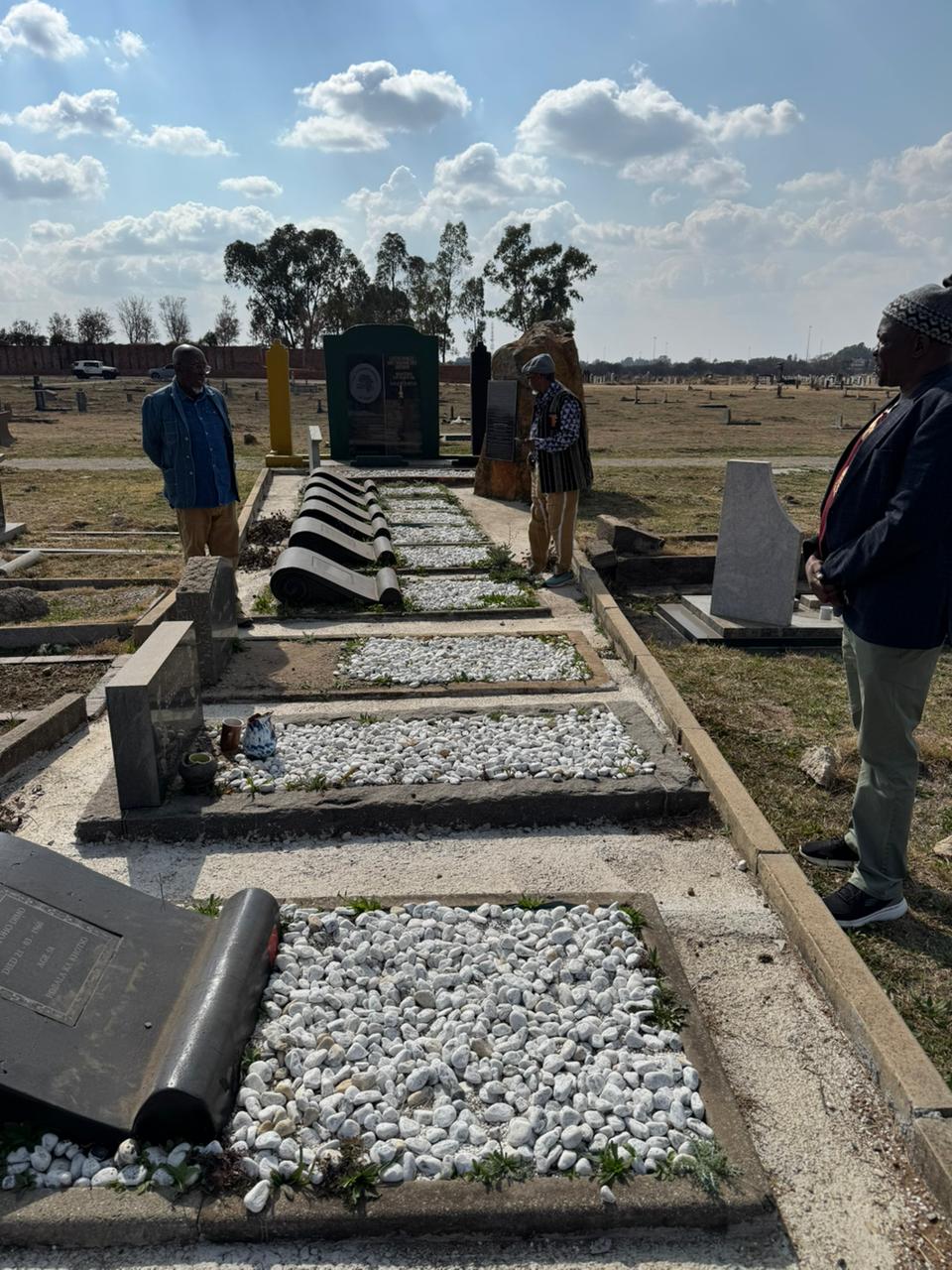
In Sharpeville town, south of Johannesburg, there was a horrific violence that made waves in South Africa and the world on March 21st, 1960. This monumental crisis began from a peaceful protest of the Sharpeville people against the apartheid system and its laws, but ended in a massacre that saw the dead of sixty-nine unarmed Black South African civilians at the hands of the police. More than a hundred of the Sharpeville people were also injured, and it was recorded that many people dead or injured were shot in the back as they fled the wrath of the police. This development went down in the annals of South Africa’s history to depict the lengths the apartheid system would go to cling on to power. Maybe 91 were killed, as three memory activists—Dr. Joseph Ngoaketsi, Zizwe Makaba, and Nicho Ntema contested the official figure of 69.
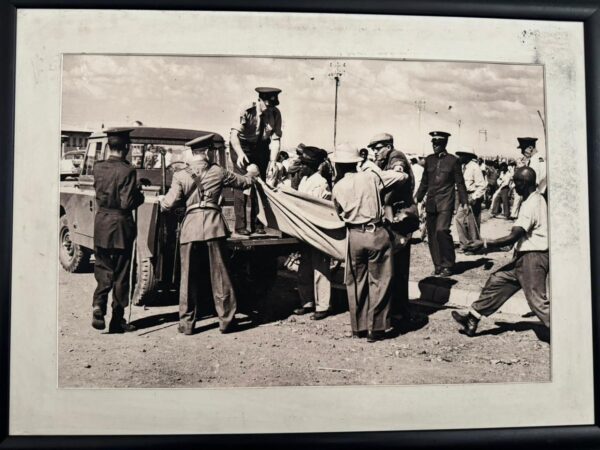
The protest and the avoidable massacre of Sharpeville did not spring up out of nothingness. It was precipitated by several decades of economic marginalization, racial oppression, and the resistance of the people. After the National Party began the Apartheid System of government in South Africa in 1948, it implemented racial segregation into every sector of living. Blacks were not allowed to vote; they had their movements and labor opportunities controlled by “pass laws,” and they were forcibly denied or removed from their homes.
The pass laws maintained that every Black South African must carry a passbook from the age of sixteen. In this passbook, there were details of where they could live, work, and travel. Laws like this have been noted to be a tool of humiliation, as made clear in South African History Online, as the failure to provide this document at the point of asking would result in an arrest and, consequently, imprisonment.
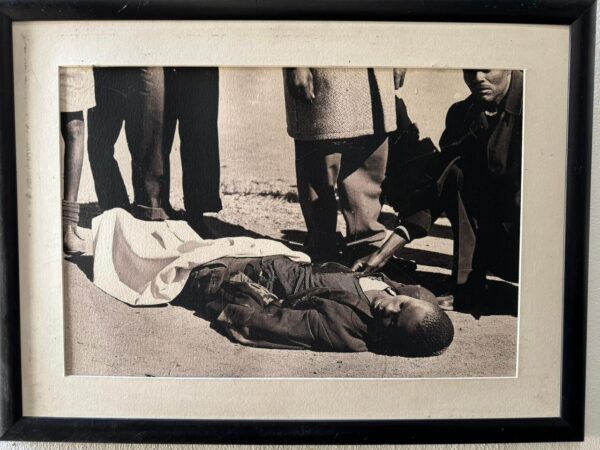
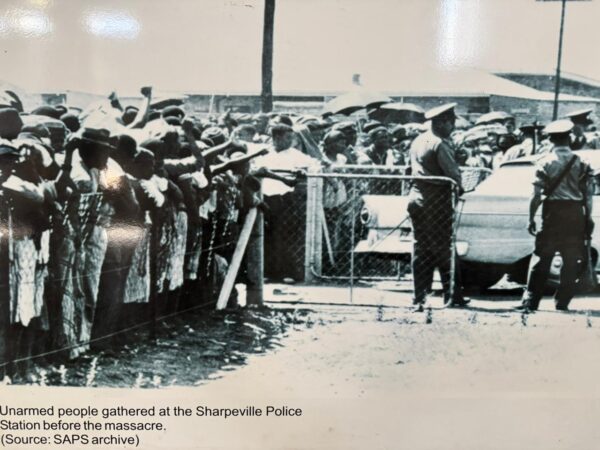
When the Pan Africanist Congress (PAC), led by Robert Mangaliso Sobukwe, broke away from the African National Congress (ANC) in 1959, citing that the party had become too inclusive of non-African members, their motive was to repeal the pass laws and other oppressive laws. Sharpeville was central to their plans to cancel the pass laws. They encouraged their supporters to come out without their passbooks and present themselves for arrest in an effort to flood the police stations and make the law unenforceable. More than five thousand protesters, many of them young, gathered near the Sharpeville Police station on the 21st of March 1960 in a calm mood, chanting songs of freedom and asking the police to arrest them, as noted by Peter Walshe’s Sharpeville 1960: A Turning Point in South African History.
The situation, however, soon escalated as the police started to shoot. There have been several reasons attached to the shooting. Some sources claimed the protesters threw stones at the police, and some others claimed that the shootings started unprovoked. The fact, however, remains that the police gave the most savage response to the protesters. In Reverend Ambrose Reeves’ work, “The Sharpeville Massacre: Its Historic Significance in the Struggle Against Apartheid,” it was recorded that the shootings lasted for a few minutes, about 705 rounds were expended, and many of the 69 people who died were shot in the back, evidence that they were trying to flee this onslaught.
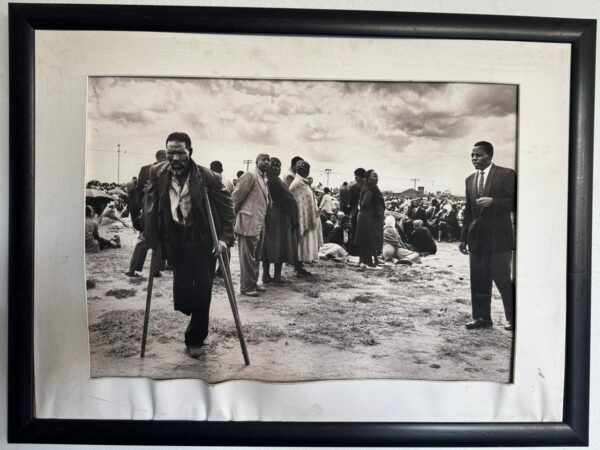
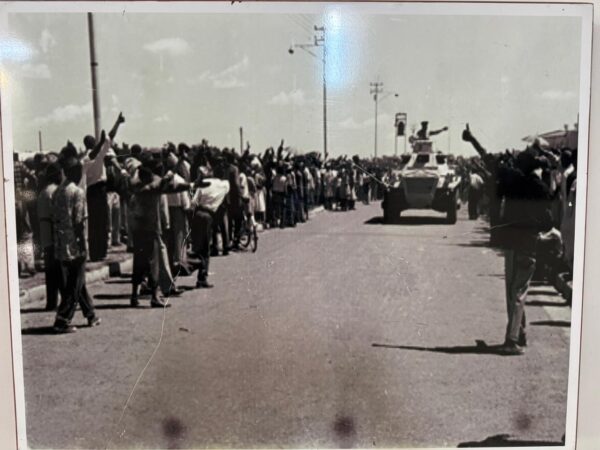
Eyewitnesses have discussed the result of this massacre, and also by Gail Gerhart in “The Sharpeville Massacre and Its Aftermath”. They described the scene as looking like a battleground with dead bodies on the floor, over a hundred injured people crying for help, and mothers crying over the corpse of their children. This massacre sent shockwaves around the world as it made headlines, drew widespread criticisms and rebukes from foreign governments and the United Nations. The South African government, however, amidst the global outrage, continued its stride to maintain its system by declaring a state of emergency, arresting the activists from the PAC and ANC, and placing both organizations under a ban by the end of March. In summary, rather than use the outrage from the massacre as a tool to reform the government, it was used as an opportunity to crush political opposition. According to Leonard Thompson’s “State Repression and Political Order in South Africa after Sharpeville,” the aftermath of the massacre was used to usher in an era of dictatorship and state violence.
According to Alex Lichtenstein in “The Impact of the Sharpeville Massacre on the Anti-Apartheid Movement,” the people responded to these repressions in another manner. The ANC, which had long advocated for peaceful resistance, and the PAC all shifted to an armed form of resistance. The massacre and the activities of the government immediately after it led to the disappearance of hopes of liberation or reform through peaceful resolution, as the South African liberation movements changed their strategy toward the anti-apartheid struggle.
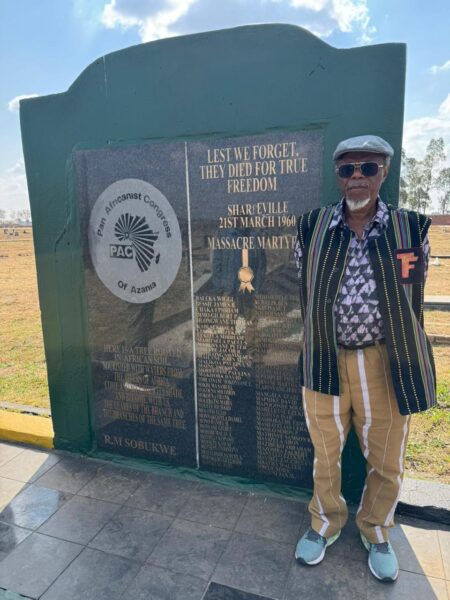
There have been several articles to depict the psychological and emotional trauma of the massacre. Gary Baines’ “Memory, Trauma, and the Sharpeville Massacre,” and Rita Barnard’s “Remembering Sharpeville: Trauma and Mourning in South African Political Memory” both examine the trauma endured by survivors of the massacre and the families of the dead for the decades that followed. Charles Villa-Vicencio, in “Violence, Protest and Change in South Africa: The Case of Sharpeville,” however, explains the lessons of the massacre as an exposure of the brutality of the apartheid system and how nonviolent resistance methods would only yield limited results in the face of systemic violence. There was a psychological change toward the dictatorial system of government.
The massacre became a symbol of collective pain and resistance. It has also been memorialized in political speeches, poems, and songs. The democratic consciousness of South Africa maintains the importance of the Sharpeville massacre. The 21st of March has been named “Human Rights Day” for people to recommit themselves to the philosophies of equality and justice, and to mourn the victims of the Sharpeville massacre. The significance of this massacre continues to spiral into other monumental results for the Apartheid system of government as it marked the isolation of the apartheid system on an international scale as the anti-apartheid activism movement gained international attention in London and New York and led to the philosophies of future leaders like Nelson Mandela whose ideologies for armed resistance drew largely on the Sharpeville Massacre.
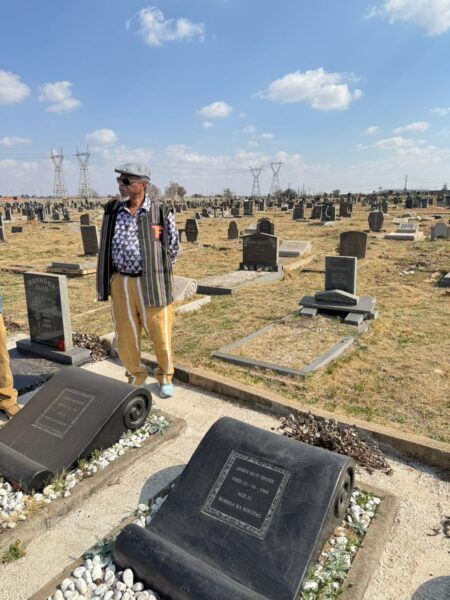
To date, the massacre in Sharpeville remains a dark period in the history of South Africa. This period also remains a testament to the courage of people who had nothing but their dignity, used to stand against a tyrant administrative system. Even though their protest was responded to with bullets and their courage and sacrifice prepared the ground for a more active anti-apartheid struggle that eventually ended in victory. The loss of lives in the Sharpeville massacre was not in vain; it put the apartheid system of government under the scope of foreign governments and organizations and exposed the brutality meted out to the Black majority by the White minority. In the words of Reverend Ambrose Reeves, who was exiled from South Africa to the United Kingdom for speaking out against the Sharpeville massacre,
“The dead of Sharpeville have spoken more eloquently than we ever could. Their silence has become our cry.”
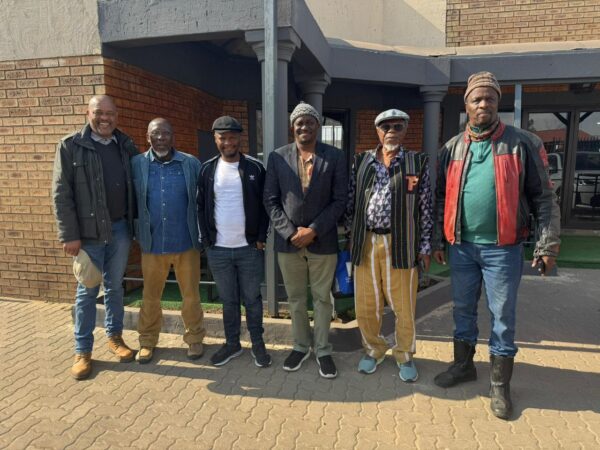
PS: This is the first of two reports on Sharpeville following a trip on July 24, 2025. I am grateful to Professor Sifiso Ndlovu and Montanye Mohapi, who facilitated the trip. I thank our “boss”, Professor Edith Phaswana, the spirit who hangs around.
Photos: Falola’s Visit to Sharpeville, South Africa, July 24, 2025
https://www.flickr.com/photos/toyinfalola/albums/72177720327770774
What a history! What a story! What an innocent street turned into a killing field! What a show of courage! What a write-up! Never again indeed, AMEN!
Beautifully captured Prof! Thos freedom was hard earned. We dare not reverse the gains of the past with this increasingly polarized political landscape we see today.