
Toyin Falola
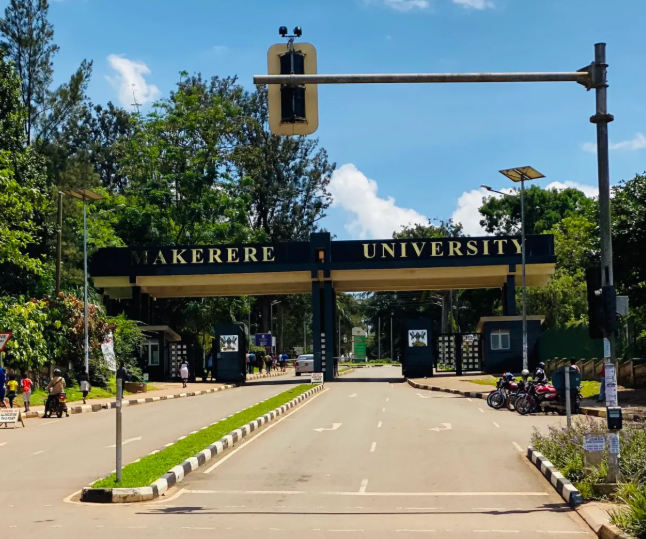
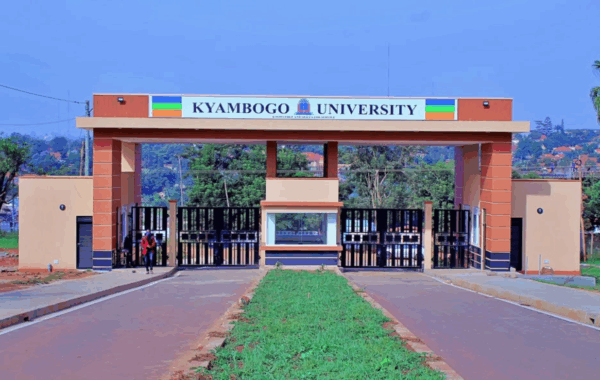
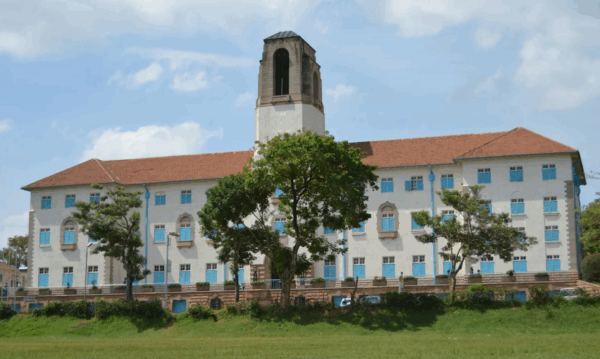
This trilogy, set within the format of public lectures across four countries, begins with a focus on power, then explores changes, and concludes with the limitations of power and the shifts occurring in Africa. I feel privileged to discuss these limitations at four universities in Uganda.
Throughout postcolonial African history, an intellectual contradiction appears when Africans are told they are free through borrowed frameworks that define this freedom. They are urged to modernize, yet the modern tools they use distort elements of the African past. Although rich in ideas and resources, Africa remains limited not because it lacks ideologies, but because it is still suffocated by inherited philosophies. Colonial legacies have embedded these philosophies and are maintained through global norms that now act as barriers to Africa’s potential growth.
This is more evident in the structure of African democracy, where the constitution is ignored, elections are manipulated, and parliaments meet to make democracy look good instead of genuinely functioning. In Gabon, for example, political succession resembles that of monarchical dynasties; in Uganda, elections have become tools for the ruling elites to stay in power rather than a way to bring change or reflect the will of the people. Therefore, in Africa, even though democracy exists in form, its spirit is missing.
Some European countries praise Africa for its political transitions, even though these transitions are only the repetition of the same faces with different slogans. As a result, the African people have planted the seeds of democracy but cannot reap its harvest because their votes do not count and their voices go unheard. The intellectual limitation in this area stems from the foreign systems of governance that Africa has adopted without connecting them to African social contracts. This political model originates from abroad, as does its purpose, and it has created a strained relationship between the governed and those in power. To make things worse, political actors around the world support regimes that go against the principles of democracy, claiming stability as their justification.
Democracy for Africa must be experienced and not just performed. It should stem from reviving indigenous practices like consensus, rotational leadership, and community dialogue rather than mimicking the activities of global centers of power like Washington or Westminster. Africa needs to return to governance rooted in its ancestral philosophies by adapting them to modern frameworks that prioritize the people over the elites.
The importation of current political practices in Africa also leads to the importation of education as a derivative. The learning institutions in Africa are remnants of colonial designs, created to train interpreters for colonial authorities to communicate with the indigenous populations. These institutions produce graduates who are unaware of Cheik Anta Diop but can quote Rene Descartes, who revere Isaac Newton’s theories but are ignorant of the Dogon peoples’ astronomical knowledge. This setup creates a ladder of knowledge where European ideas, histories, and languages are at the top.
The apartheid of knowledge is, therefore, allowed to thrive as African students are educated to abandon indigenous contexts in favor of progress, and the African knowledge system is unfairly and intellectually dismissed as backward; socially acceptable behaviors are dismissed as primitive, superstitious, and irrelevant. However, continuing on this path would erase Africa’s genius from its future, as the continent has built unique spiritual philosophies, political structures, agricultural, and medicinal systems for centuries that reflect its society and knowledge.
This intellectual exclusion is costly to Africa because the continent continues to produce graduates who can cite foreign theories but cannot apply them to solve local problems. Over time, the education systems in place become a driver of brain drain, as educated individuals use them as pathways to leave Africa rather than to help transform it, and seek Western approval instead of solutions for Africa. To address this issue, Africa needs a revolution in the knowledge sector—one that not only updates its curriculum but also fundamentally reorients African realities, philosophies, and history, and reclaims Africa’s knowledge for its true home.
The colonization of knowledge is also clear in the state, and the post-colonial African state arose from the desire to unify and uplift its people. However, it was built in the image of its colonial masters, viewing its citizens as subjects. It remains centralized, extractive, and hierarchical, a space where police brutalize and courts exploit. Civil servants serve the party rather than the people.
The question of why the state exists is one we must ask ourselves. Citizens no longer see the government as legitimate; many leaders do not fear their people and pay less attention to governance failures. African states need to be reformed to serve the good of their people rather than to hold authority. There is morality in decentralization; communities should be governed by systems they trust and traditions they understand. Power should no longer be used as a weapon but as a channel for the collective good.
The state is legal, political, and most importantly, cultural. Culture is the thread that connects memory to identity. However, in modern times, it has become a battleground. Globalization has pushed African knowledge into resistance and endangerment. Many Africans sing in a foreign language, pray in foreign temples, and wear clothes that do not suit the African climate. The colonization of Africa has gone beyond land and has moved into the African imagination.
The African culture, however, continues to survive through “hybridity,” as African religious creativity has been able to blend Islamic, Christian, and ancestral cosmologies to create unique religions, such as the Aladura Churches in Nigeria and the Zionist Churches in South Africa, serving as evidence of the African spiritual reinvention. Africans have not only received foreign religions but have also reshaped them, demonstrating ingenuity. However, this resistance alone is not enough. Culture must advance from a stage of resistance to one of sovereignty by revitalizing African languages, philosophies, education, economics, and arts as the foundation of governance. Culture is the cornerstone of development, and those who forget their history are unable to build their future.
Cultural revitalization, however, requires elevating Indigenous Knowledge Systems that have long been dismissed as folklore. These Knowledge Systems are not merely remnants of the past but are foundational for the future. They encompass knowledge in ecology, medicine, ethics, agriculture, and more, potentially offering solutions for Africa during this era when climate change has become a global concern. Instead of seeking answers from Silicon Valley, Africa may find solutions in the rainforests of Congo. Nonetheless, ethics must play a crucial role in integrating these systems. African healers and custodians should be recognized as co-creators of knowledge, with their intellectual property safeguarded by law. The development of these systems must be inclusive and avoid exploitation, embracing inter-epistemic dialogues while rejecting the arrogance of technocratic fixes.
Africa is on the verge of a technological revolution, catching up with various applications, from cell phones to solar panels and more. However, it’s important to note that Africa isn’t creating these technologies but mainly consuming them. This situation is now enabling the mining of African data, silencing African voices through algorithms, and shaping its history with foreign technology platforms. They control the African economy as colonial rulers once did; they are not in chains but in code.

For these freedoms to become reality, Africa must invest in intellectual infrastructure, focus on research that is locally relevant, and prioritize digital literacy and open-source technologies. These efforts will help African universities evolve into centers of creativity and innovation, rather than merely degree-producing machines. A decolonized African future is one where Africans are not just online but truly in control. Africa needs to ask moral questions to determine who has access to technology and who owns it. Who built the platforms? Who are the gatekeepers of the narratives? Who is profiting from the data?
The most heartbreaking symptom of these intellectual limitations, perhaps, is that of migration. Year after year, millions of young, talented Africans are desperate to leave their home countries for abroad in search of jobs and dignity. Globally, this is seen as a crisis. Still, in truth, it is evidence of Africa’s failure because these migrations are caused not only by ambition but also by abandonment, unemployment, global inequality, climate change, and poor governance. We can then find silent answers to the question of why our best minds flee and why Africa exports bodies and imports hope. Although these migrations help with remittances, their true cost—fractured families, wasted potential, and the erosion of trust in Africa’s future—stands as incalculable.
The solution to this emigration problem does not lie in border control but in nation-building. African countries must become societies where jobs, justice, and joy are local commodities. Africa must also confront and change the global system—financial, legal, and diplomatic—that it operates within. The exploitation of African resources and the rejection of African people must end.
To overcome intellectual limitations, African countries must harness radical imagination. The future of Africa is written in Lagos, Dakar, Accra, within the equations of African scientists, the chants of protesters, the prayers of farmers, and even in the poetry of griots. Africa must become the creators of knowledge rather than passive receivers; its democracy must speak its indigenous languages, its education must unveil African histories, its development must respect its environment, and the migration of its people must become more of a choice than merely a statement.

The issue with Africa isn’t a lack of intelligence but the inability to surpass the limits placed upon it. We face a tough challenge in decolonizing both our systems and our ways of thinking. We must break free from constraints and dismantle old molds to achieve liberation. In doing so, Africa won’t just rise; it will redefine what growth truly means.
I’m so glad to know about all these sincerely. Thank you so much sir and thanks to my professor Odukoya Adelaja to unveiling such reality to me