
Toyin Falola
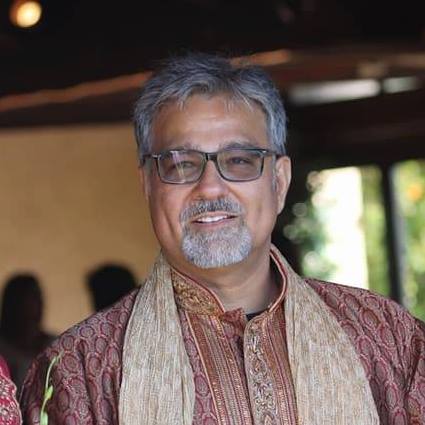
Where do I start this write-up if not by saying that I have been greatly inspired by the kind of career Professor Vik Bahl has built? He has operated for more than 25 years with a prototype of what education should and shouldn’t be like in our current age. He strongly believes that the work of the academic should not be limited to the classroom alone but must include organizing faculty and staff to transform institutions of higher education to be more responsive and accountable to underrepresented students and communities. This is crucial to understanding how colleges and universities can engage with communities and participate in social movements on behalf of justice and equity. To that extent, I can say for certain that Professor Bahl is an exemplar of academic integrity, courage, and truthfulness for his lifelong devotion and work towards empowering those who have been historically denied access to spaces of higher education.
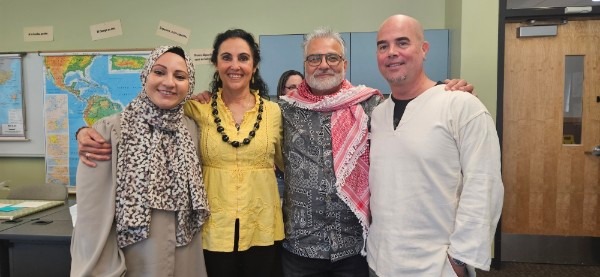
His voyage as an intellectual activist crying out for reform not only in his immediate community but also around the world began with his entry into Literary Studies, along with the interdisciplinary fields of Ethnic Studies, Postcolonialism, and Cultural Studies, where his contributions have produced a significant impact on teaching and research agendas. Coupled with his teaching and scholarship has been his unrelenting innovation in convening multiple stakeholders both within Green River College (in the Seattle area) as well as across the entire college system in Washington state to transform policies and practices that govern hiring practices, curriculum, and community relations. His creation of new and vibrant spaces for collaborative dialogue and action have exceedingly unveiled and reconfigured the consequences of ethnic, racial, and national identities in the context of ongoing colonialism and structural marginalization. He has been ceaselessly instrumental in institutional transformation through his outspokenness and unpretentiousness as a visionary, dreamer, and advocate. If there is any one academic who advocates for the expansion of inclusive education in the twenty-first century, then it is Professor Bahl.
His appeal and his accessibility to students from various axes of marginality have been expressed in his efforts to diversify the curriculum at Green River College. His courses on American Ethnic Literature, Cultures of Desire, Prisoner Art and Literature, and Humanities in Communities are unique and thoughtfully designed frameworks that sensitize students to the most urgent social questions of the day and the nature of power in the contemporary world. In the long term, the goal of his pedagogy is to educate and instill in students a civic sense of responsibility and awareness to prepare them not only for school requirements but for the tests of real life as global citizens.
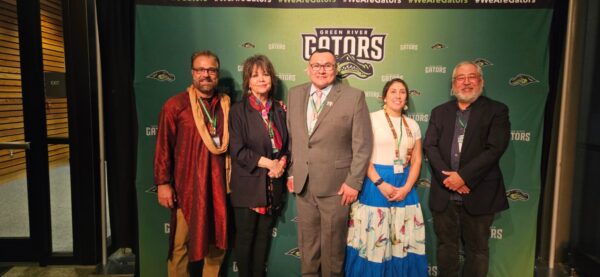
Professor Bahl has embodied the cause of diversity, equality, and inclusion (DEI) throughout his life and career. He has led the transformation of community college education and made the academic environment more inclusive with his pedagogy, leadership, scholarship, and activism. The good news is that this work extends beyond what our students are taught in American classrooms; it reverberates globally and sparks dialogues on decolonial education, postcolonialism, and Indigenous studies.
Professor Bahl has overseen a wide range of DEI initiatives and projects outside the classroom, testifying to the quality of his leadership. He co-founded the Diversity and Equity in Hiring and Professional Development (DEHPD) collective; conceptualized the DEI Faculty Fellows Program for the WA State Board for Community and Technical Colleges (SBCTC); serves on the executive committee of the WA Community College American Indian Advisory Board (WCAAB); and is currently organizing to expand Ethnic Studies and American Indian and Indigenous Studies (ES-AIIS) within WA colleges and beyond. Throughout these initiatives he has insisted upon hiring practices as central to a politics of inclusion and indeed as the magic wand for the systemic transformation of higher education.
Decolonial reforms were already a worldwide trend after the popular Rhodes Must Fall campaign in South Africa as well as the protests demanding the decolonization of curriculum in the UK. Professor Bahl’s work adds unique value to these movements by using the American community colleges as a site for study and mobilization. His contributions and strategies are extremely relevant as colleges and universities continue to adjust, resist, or reinforce the legacies of colonialism and persistent institutional inequalities. His work in expanding Indigenous studies and strengthening government-to-government (G2G) relations between colleges and Tribal nations provides further evidence of his essential contributions that resonate with efforts around the globe, including those of the First Nations in Canada.
Professor Bahl is among those who have dared to oppose the relegation of the humanities and social sciences to the margins. Humanities and social sciences departments have always played a major role in the life of any school as well as in the wider society; however, as we know, these departments have remained underappreciated and overshadowed by other disciplines based on narrow and misguided economic calculations and priorities, thereby creating a major crisis in the academic community. Students of these departments also suffered as they were provided fewer platforms to demonstrate their agency and value to society. Professor Bahl’s co-authored article, “Minorities and Mentoring in the Postcolonial Borderlands,” is a kind of gospel that describes and analyzes the complex forms of academic exclusion and erasure for students and scholars of color, as well as how they can respond boldly and strategically.
Professor Bahl has been eager to emphasize radical mentorship based on his experiences in Mexico and the United States, informed by the Zapatistas and his participation in the Center for Convivial Research and Autonomy (CCRA) and Universidad de la Tierra-Oaxaca. Providing students of color opportunities and convening faculty and staff of color have allowed for the flourishing of collective analysis and concrete projects for educational and institutional transformation. Intentional mentorship in these spaces allows for mutual support and development as students, faculty, and staff formulate and express critical ideas on social, political, and economic issues, interrogating and superseding the most harmful and hegemonic discourses and arrangements. Strategic, principled mentorship also gives students, faculty, and staff a chance to voice their inchoate and sometimes quite challenging ideas, which are the foundation for political action and the struggles for justice. After all, the primary goal of radical mentorship is to achieve societal change.
Three things I have learnt from Professor Bahl’s propositions on radical mentorship are: First, students who fail to become independent critical thinkers and serve their communities after graduation do so because of a degraded educational system and a broken curriculum. Second, teaching and mentoring must help students realize and engage with social issues, concerns, and justice in all of their complexity, which requires critical tools to understand and fight oppressive systems, urgent because of the alarming gravity of the threat they present to humanity. Third, mentorship transcends the four walls of the classroom; mentors must train their mentees to apply the theories of their learning from school to practical real-world challenges rooted in communities.
In fact, there are various ways in which academics make a difference, as can be gathered from Professor Bahl’s legacy. But then what else can society ask from a man who has sacrificed over 25 years of his life to the cause of upending the inequitable approaches to community college education in terms of academics, hiring practices, and other aspects of institutional culture? Not only has he helped bring about inclusive and diverse education, he has also been an undisputed frontrunner in creating institutional and system-wide changes that have shown what education is meant to be and how it must confront the injustices within its own institutions and more broadly in society.
Professor Bahl is the embodiment of a true scholar-teacher-activist, driven to make a difference. His work over the past 25 years has not only been driven by his desire to be a good practitioner, but to be an agent for social change. This work is significant in terms of having an impact on the daily work of administrators, staff, fellow faculty, and students, but in this case also for society at large. The institutional culture that Professor Bahl helped to shape in higher education, with a focus on institutional practices and faculty shared governance, helped to improve both access to and the quality of education for more than one generation of community college students. We can extend the impact of his work by appealing to colleges to develop and launch “centers for undergraduate community research.” These centers should be tasked with supporting faculty to develop curriculum and projects that will allow students to co-develop and showcase community knowledges, which can be the basis for educational trajectories and careers that can meaningfully serve community needs and aspirations.
Vik, may you live long!
In a room where chalk lingers on the floor with dust
and silence folds over forgotten names,
You named what was missing
and built a syllabus of remembrance.
You did not only teach with chalk,
You taught with patience
by turning the classroom into a campfire of history,
reworking the grammar of power.
In your classroom,
novels danced like masquerades
each word wearing its masks.
Your voice built a home,
where the exiled may find fire.
And in the quietude of their eyes, an epic dwells.
PS: This piece was written on July 23, 2025, in Pretoria, South Africa.
Beautiful tribute to a dedicated professional educator. Just as important—one I am honored to call a friend.
Thank you for this beautiful tribute to a dear friend. Vik´s wisdom and activism has inspired students, teachers, administrators, friends, and people all over the world. The teachings and poetry of Dr. Falola have been central to Vik´s development and all of his friends have benefited indirectly from Dr. Falola´s guidance. I am honored to have been part of Vik´s journey for 27 years. His endless energy, clarity of mind, and dedication to making our messy world better have pushed all us, fortunate enough to work with him, to be better, to consider other angles, to think and act better. Thank you Dr. Falola.