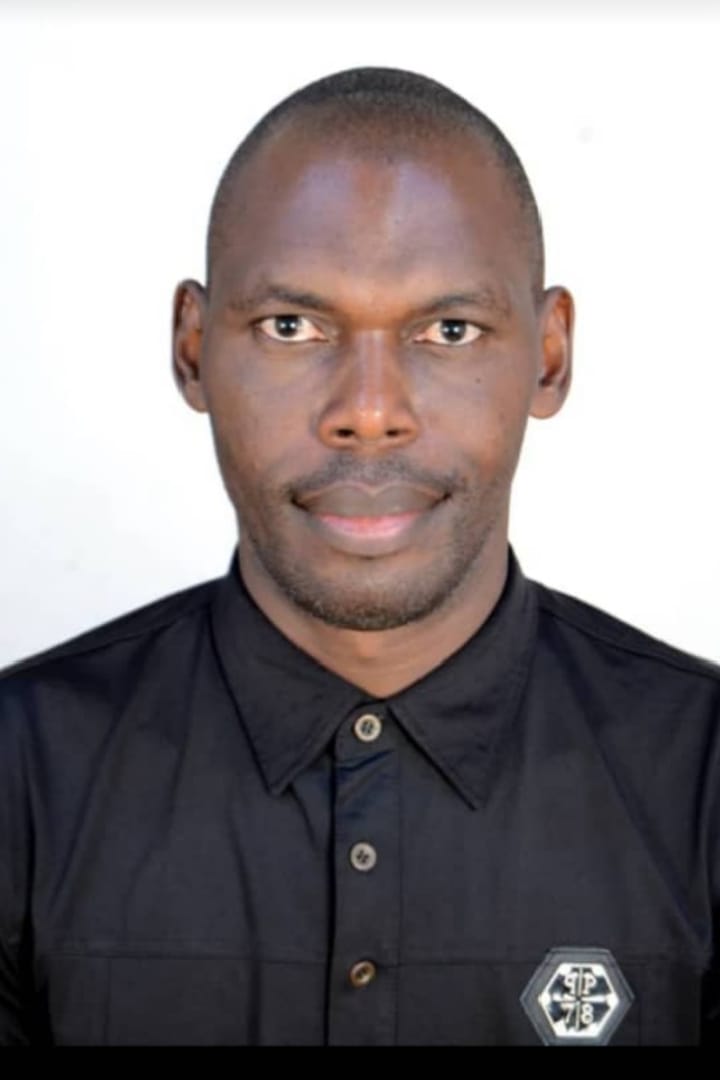

Godwin Onuh Odeh, PhD
This concise piece is inspired by the striking point and remarks made by one of the respected African and Nigerian elderly statesman, President, Chief Olusegun Obasanjo, the president of the Federal Republic of Nigeria,(1999-2007), and Military Head of State of Nigeria (1976-1979), a colossus in African and Nigerian leadership affairs. The patriotic point was courtesy of the celebrated Conversation usually organised by Distinguished Professor Toyin Falola , FHSN, the foremost Professor of History and the leading Africanist Scholar globally, at the University of Texas Austin, United States. The conversation had eminent , Rev. Dr. Bishop Mathew Hassan Kukah of Sokoto Diocese and Chief. Kingsley Chiedu Moghalu, former deputy governor of the Central Bank of Nigeria as panelist. The conversation which held on December 7, 2025 drew members across academic and leadership circles globally. The argument of the former president that insecurity has lasted more than the civil war, is timely and a patriotic call for the federal government, saddled with the responsibility of protecting life and property of the citizens to rise up to the occasion and save the country for imminent torpidity.
But then, before laying credence to Chief Obasanjo’s remarks, it is interesting to throw more light on some concepts, since one of the basic requirements to debate a course is to in the first place understand the actual concept or thing(s) being talked about. Thus, a cursory look at the concept of terrorism, banditry and civil war becomes germane.
The concept or the term terrorism came into forceful application after the popular French Revolution of 1789. After the revolution, French society experienced the period known in its history as the “Reign of Terror” (régime de la terreur), 1793-1794, during which the Robespierre and Jacobin gangs captured and executed about 12,000 persons considered to be enemies of the revolution (Olowu, Odeh, Sifawa, Terrorism and Insecurity in Nigeria: A Historical Criminology Analysis, 2022). Consequently, the English and other Western societies borrowed and began to apply the word and term terrorism. Terrorism is English, borrowed from the French, meaning French and English and other affiliate societies appeared to be the first terrorists in contemporary history. The idea here is simple, society can’t name what is unknown to it. Between 1936 and 1981 alone, about 109 definitions of terrorism were offered, underscoring how fluid the concept is and the difficulty encountered by scholars in tying it to a single tree of definition. Thus, Ludwikowski, cited in Olowu, Odeh, and Sifawa, argued that: “one man’s hooligan is another man’s human rights fighter; one man’s terrorist is another man’s comrade in the struggle for freedom.” However, acts of intimidation, disruption, general insurrection, fear, injuries, death, damage to public, private, natural, environmental, or cultural heritage that are premeditated qualify as criminal acts of terrorism and are punishable worldwide. Terrorism therefore is a criminal act and there is no such thing like “not all terrorist are criminals”.
Related to the above concept is the concept of ” banditry”. Bandit is derived from Italian, “bandito”, meaning ” outlaw” and from the vulgar Latin, “bannire”, meaning, to proclaim or proscribed, and ban, in German. In 1885, bandit, or banditry came to be applied to desperate maurauders, brigandage and it’s modern usage connotes a thief or robbers including cattle rustlers and even killer herdsmen (M F. Usman and G O. Odeh, ” Implications of Contemporary Armed Banditry and Cattle Rustling on Intergroup Relations in Zamfara State” in Satiru International Journal of Peace and Security Studies, 2023). From the historical development of the concept, and it’s application, this treatise is overwhelmingly shocked by the alleged statement made by the Honorable Minister of State for defense that ” not all bandit are criminals” in a video in circulation on social media and formal media outlets. Bandits are of course, full time criminals, no more no less.
Finally, there is the concept of civil war. War on its own , according to the famous Prussian General, Carl Von Clausewitz, is” the continuation of politics by other means”.This means among other things politicization prolonged insecurity. Put in other way, wars lingers because of politicization of it. It also suggests all wars are political, while politics must not be war. It underscores while wars often ends at negotiation table. This shall be expanded later. There are various kinds of wars based on motives, resources deployed and the scale of it. Thus, we have cold war, colonial war, insurgency, faultline war, invasion, proxy war, range war, religious war, total war, limited war, war of words, world wars, range war, among others. Essentially, in the typology of wars, civil war fall within the purview of insurgency, which is the violent armed rebellion against constituted authority and those participating are not recognized as belligerent. Insurgency is fought through counter- insurgency.
The Nigerian civil war, according to Obasanjo, “… unlike other wars across international boundaries, was a war of unification, a war of reintegration. It was therefore a much more difficult war for the field commanders to prosecute with the objectives of unification in mind than wars fought against aggressors on foreign land. The human aspect was paramount. It was a contradiction and complication not easy to resolve -how to fight causing only limited destruction, how to inflict wounds and heal at the same time, how to subdue without fatal and permanent injuries, how to feed and house the civilian populations without exposing our troops to danger and risk of sabatours and infiltrators , how to achieve surrender without inflicting permanent or long lasting psychological humiliation ” ( O. Obasanjo, My Command: An Account of the Nigerian Civil War, 1967-1970, 1981, p.159).
From the observation, the carefulness and caution exercised while prosecuting the Nigerian war underscores the fact that it should had lasted longer than the ongoing fighting against terrorism, banditry, the former which has been on since 2009, but the reverse is the case here. While civil war, terrorism and even banditry becomes much more a difficult war unlike convectional wars and warfare is the tactics, which appears guerrilla in nature. Insurgents most times do not wear recognizable uniforms. This made their identification very hard. The surreptitious external supports insurgents receives in forms of moral boosting, military hardwares , among others makes it sometimes look like proxy war. Thus, the geography and theatre, and tactics appear complex , diffused and murky. The conscious and deliberate politicization of the war or insurgency by internal collaborators and enemies makes it like any other wars in history a very hazardous enterprise and venture. Moreso, the economy of war is presently one of the biggest enterprises globally, thus there are alleged and ready financiers and supporters of it even amongst the political class and elites and military echelon as well.
Arising from the above, the general insecurity defined as terrorism, banditry and war, is not essentially different from the earlier civil war conceptually, contextually and historically ,but contrast sharply in motives as the “Biafrans” made their interest of secession known, while the Boko Haram and ISWAP insurgents in the north east and banditry in the north west, are largely religious deviants roaming the country side causing mayhem without a clear cut agenda and demand. This does not mean terrorism and banditry are objectiveless enterprise, they have objectives but a sinister one. Above all , the Nigerian Armed Forces that has been a formidable threat and a power to reckon with in the continent and globally appeared strongly humiliated by insurgents and bandits due to complexity of issues and vested interest in the prosecution of the war against insurgency. Analyts, keen observers of Nigerian affairs and strategists therefore, are wondering if it is the same armed forces that perform creditably during the civil war, peace keeping operations in Chad, Congo, Liberia, Sierra Leone, among other foreign missions that has been dragging the war against insurgents frequently resorting to defeatist and defensive strategy rather than offensive tactics. The masses are wondering too, if it is the same forces which cherished life of its men so much, that the community lives in to fear and panic if a soldier is killed within or in a near by community. In short, unjustifiable death of a soldier or soldiers often results in a punitive measure from the federal government and the military corp. The classic example of this was the epic and colossal murder and maiming of several Zaki-Biam people of Benue State Nigeria during Chief Olusegun Obasanjo administration in October , 2001 after 19 soldiers were held to have been killed by some suspected Tiv militia near the Tiv town of Zaki-Biam ( C S. Orngu, ” The Contradiction of the Military Option in the Management of Inter-Ethnic Conflicts in Nigeria :The Zaki-Biam Genocide Revisited ” in The Military Invasion of Zaki-Biam , T. Wuam and E. T. Ikpanoor (eds), 2013, p. 96).
On the contrary, today Generals, officers and soldiers are killed by ISWAP , Boko Haram, bandits and killer herdsmen without any comprehensive, reasonable and proportionate response from the military to the satisfaction of ordinary Nigerians or the so called bloody civilians. The military camouflage is fast loosing the intimidation it produces in civilian circle and community, which is the glory of the army. The question is , is Nigerian State a culprit in the general insecurity ravaging it for over a decade? Certainly not, and it shouldn’t be, because states in history do not consciously vote for self immolation.
On the final note, rather than taking Obasanjo’s remark as political, the piece advises the party in power , the ruling All Progressives Congress ( APC ) and the presidency, to reflect on the remark by the former president, Chief Olusegun Obasanjo and sit up to do the needful, by bringing the insecurity in Nigeria to abrupt end; either by kinetic or non kinect means as the engagement demands.But the kinect now appear and appeal most appropriate given the time already wasted and the international disrepute the unnecessarily prolonged war against insurgency and banditry has brought to the nation, even the United States redesignation of Nigeria as a country of particular concern. Since security engagement is not a one-man show, everyone including traditional rulers and local community should join hands, provide credible intelligence to law enforcement agencies, while they embark on operational synergies and the president exercise the long expected political will to rescue the country from the firm grip of insecurity to redeem the international image of the country. Dr. Godwin Onuh Odeh, public affairs analyst and commentator, tutor, Department of History and International Studies, Sokoto State University, Sokoto Nigeria.
Fantastically and intellectually excellent!
Scholarly structured piece.
Such a great read. Tracing origin of the words is also an essential one.