
Toyin Falola

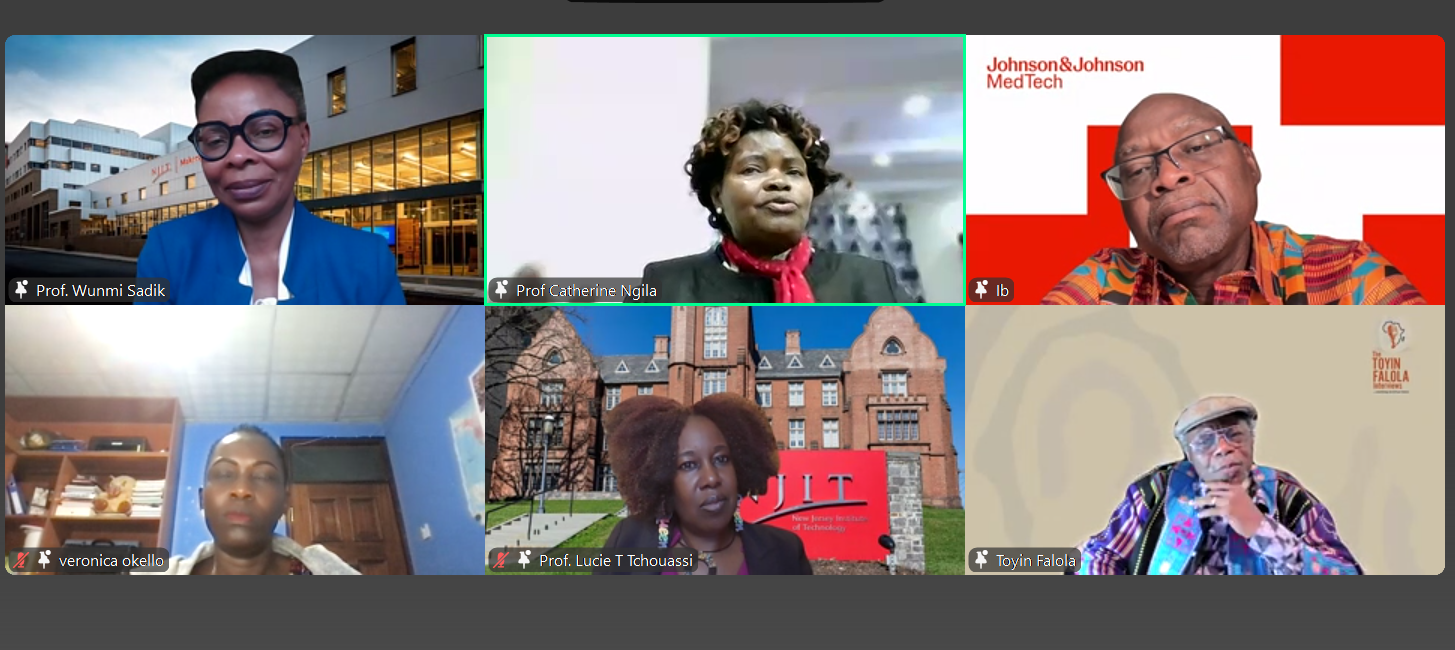
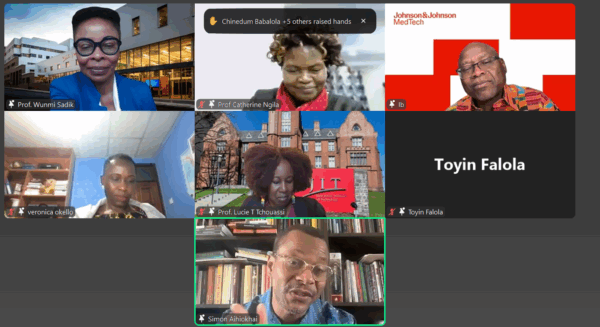
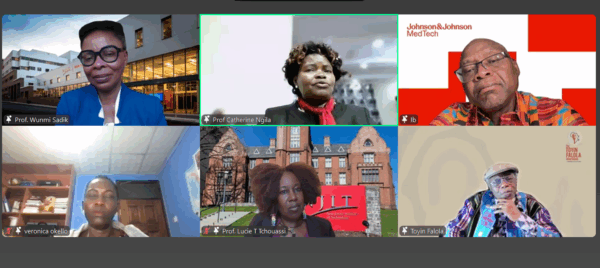
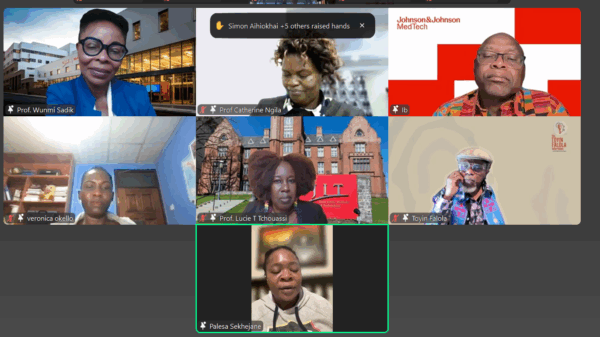
A PANEL DISCUSSION ON AFRICAN WOMEN IN STEM, PART 2
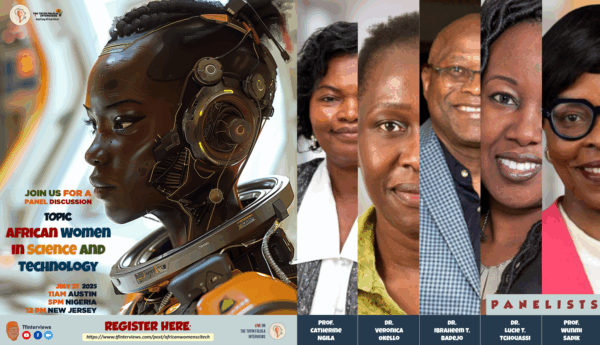
For the transcript of the conversation on Sunday, July 27, 2025:
https://m.youtube.com/watch?v=WKZdLGnjgGM&pp=0gcJCfwAo7VqN5tD
For decades on end, the African woman has lingered on the margins of the crease; long-lived on the verge of the pages of recorded time, not for lack of wit or genius for more memorable exploits but for inordinate period on account of some civilizations needing them in the wilderness far from the spotlight, which by design of power only seldom blinds their eyes. From the far Northern to the Western, Central, Eastern, and Southern countries of the continent to its island nations, African women have always been there, been present as thinkers, makers, problem-solvers, and hushed revolutionaries. The gift of history, short-lived or as long as it may seem, records the hand of women, from the market squares to inner court subterfuge, and of innovations.
However, they are rarely recognized or mentioned in many formal advancements. It is as if they never existed. Their involvement in political proclamations, scientific discoveries, and health revolutions was either undermined, diminished, or omitted, with their roles being completely forgotten or ignored. Well, those days are over. The tide is turning. History is being made once again in the contemporary world. Giant leaps and strides have been made through boardrooms, classrooms, research laboratories, rural clinics, and even tech hubs. African women are no longer on the periphery of modern issues; they are at the forefront of these global, regional, and local movements, taking on leading roles in developing, directing, and implementing new programs. The many centuries they had to wait to be invited are far behind them now. They are constructing new chambers, enacting new policies, and rewriting history itself.
The full appreciation of the significance of this new record amounts to the revival of the long-dead stories of women in Africa. This would mean resurrecting the memories of women like Merit-Ptah and Peseshet, women physicians in ancient Egypt famous for the medical treatises they wrote during their lifetime. The anonymous/unknown women of medieval Timbuktu who invented, preserved, and passed down medical and mathematical knowledge in their families and communities should equally be remembered. The historical absence of African women from the formal citadels of science has never been based on their non-existence in these fields of human endeavor. It is an act of deliberate erasure of their footprints, facilitated by institutionalized patriarchy, colonialism, and narrow notions of knowledge.

One of the most important fields I see in this awakening that deserves to be amplified and truly celebrated is that of science, technology, and medicine in Africa. Here, in this realism, the women of the current generation are silently (but not so quietly) leading a revolution to strengthen the foundation of our future here on this continent. You may not have your names splashed across headlines around the world yet, but make no mistake, there is no question about your capability. You are the ones truly mapping a new path for the continent and the world.
To fully grasp the magnitude of this new milestone is to resurrect the long-buried history of women’s participation in Africa. With the resurgence of calls for recognition of Africa as the cradle of human civilization, and with it, scientific knowledge, the place of women as producers of human civilization should equally be recognized. This would translate to bringing up discussion of women from ancient times, like in ancient Egypt. The exclusion of African women from formal scientific recognition has never been attributed to their absence in these fields. Instead, it is a systematic erasure of their footprints reinforced by patriarchy, colonialism, and a parochial notion of what knowledge is. The list of achievers is inexhaustible. The legacy lives on with renewed urgency and visibility.
Women across Africa are equally reimagining science, not just as a tool for innovation, but as a tool for liberation and relevance. Standing tall in this space is the Nigerian-born public health physician and epidemiologist Dr. Tolullah Oni, whose past work on the correlation between urban design and disease prevention is redefining the health care narrative and how African cities can be designed for health. In her trail is South African-born Dr. Nox Makunga, whose work on the intersection of biotechnology and traditional plant medicine has helped build the bridges between ancestral knowledge and modern scientific facts. Dr. Catherine Nakalembe’s use of satellite data to support food security in Uganda has been celebrated. Dr. Tebello Nyokong (Lesotho/South Africa) has done cutting-edge scholarship in nanotechnology and medicine. She is known for her work on photodynamic therapy to treat cancer without harmful side effects
These women are not only in the corners, making research publications. They are frontliners, creating frameworks, influencing policies, and mentoring younger scholars with a set goal to redefine what African science should look and sound like. These women did not let failure get them down; even when the finish line was not in view, they persisted. In wars, plagues, migrations, and cultural defiance, despite significant losses, African women became healers, resourceful within their reach, and resolved with logic, stubbornness, and real creativity. In recent history, this tenacity is represented by the stellar life and career of Dr. Stella Adadevoh, the Nigerian physician who endangered her own life to quarantine the Ebola virus in 2014. Her quick thinking, speedy action, and peerless bravery saved thousands of lives in Lagos and across the country. Another shining example was Wangari Maathai, the late Kenyan environmental biologist, whose Green Belt Movement championed environmental restoration as well as women’s empowerment. The Nobel Peace Prize she won in 2004 was not only a personal honor. It was a torch and a platform for every African female child with a scientific mind and an activist heart.
In the world of technology, women’s participation and transformation have never been more electric. With the internet and mobile devices serving as a gateway to possibilities, African women have fully tapped into their functionalities, fully immersed, leveraging digital tools to solve local problems of global implications. Trailblazers like Ghanaian Regina Honu, a tech innovator and social entrepreneur, founded Soronko Solutions with an academy to teach coding to girls and women at the grassroots. Her academy is not just about software but a space of confidence-building and future-shaping for young women.
Closely related to her is Ethiopian Betelhem Dessie, who began her coding journey at the age of ten after initial interactions with computer devices in her father’s shop at age nine. She had initially requested money for her ninth birthday celebration and chose to work for it when her father could not come through. She worked in the shop, sending audio and visual files, and became used to computers. By her early twenties, she had been named the youngest pioneer in Ethiopia with several parent companies. She had helped train a large number of young Africans in robotics, AI, and software development. Their stories are not tales of token success. They are testimonies to a cultural shift where technology is no longer seen as an import but as an African language, spoken fluently by its women.
The emergence of female founders who have led tech startups across Nigeria, Kenya, Tunisia, and Senegal shows a new generation rewriting women’s narrative. From health tech platforms for monitoring menstrual flow, to reducing maternal mortality, and software apps solving logistics problems for farmers, shows how history is being altered with finesse. Their innovations are grounded in lived experience and designed with empathy. Interestingly, these innovations are driven more by the need for them rather than the hype to become a founder, giving them an enduring perspective. Take, for example, apps made to monitor and reduce maternity mortality. Its invention is more a result of lived experience and the need to find solutions to maternal mortality than a need for a mobile app. It is true to say that technology for women is more about survival, dignity, and transformation on compassionate grounds.
The presence of African women in medicine is felt most deeply and thoroughly. The work of African women in rural clinics, urban hospitals, and international research labs across the world is far-reaching, beyond mending broken bodies. Their presence serves as an upheaval of structural injustices, a challenge to stereotypical narratives of women as caregivers, advocacy for vulnerable groups, and creates more equitable health care systems. During the COVID-19 pandemic, women were leading responses, running diagnostics, and providing care at the front lines of overstretched systems. Women were also present on the front lines in conflict areas, as well as in under-resourced communities within the continents, volunteering to make a difference. They have made a substantial impact in redefining what medical leadership should look like in Africa.
Even with these feats and challenges, there remain issues of cultural expectations, stereotypical attitudes, unequal funding, underrepresentation in leadership, and gendered gatekeeping, which continue to limit women’s access and recognition when a feat is accomplished. The only solace here, if recent scenarios are factored in, is that the African women are gradually reconstructing the architecture of opportunity itself.
No doubt, the continent is experiencing a shift from the invisibility of women to influence. In the foreseeable future, it will become increasingly common to see African girls in rural Uganda, for instance, growing up idolizing biomedical engineers the same way people in the past would idolize pop stars. We are gradually entering a time when young women in Kano will see quantum computing as an attainable path within a rigid cultural system. We are looking at a future very close where maternal deaths will be cut in half or almost totally eradicated by homegrown solutions designed by our women who understand both the science and the stakes. This is not a lost cause in Africa. It is not a desperate wish. It is not a deferred dream. This is a reality that is taking shape in classrooms, laboratories, workshops, and field stations across the continent. It needs structural changes and conscious, consistent efforts. Not just roads and cables, but an enabling ecosystem of encouragement, policy frameworks, and mentorship networks that say with one voice, ‘The girl child is here.’
The aim is not to have a numbers game or forms of tokenism. The goal is to empower African women to hold more positions in science, technology, and medicine. To be more than mere spectators or participants in STEM events. To be the speakers, the policymakers, the leaders who set the agendas and the research priorities, and drive solutions with impact. To invest in African women in STEM is to invest in the most under-leveraged high-impact force for Africa’s sustainable development. It is to celebrate a legacy that has, for too long, been swept under the carpet. It is to build an enabling culture in which African solutions are co-created without bias for the good of all. African women have always had the fire. Now is the time to fan that flame and ensure it thrives and illuminates beyond barriers across the continent and the world at large. Gender can no longer be used as a barrier because the past has shown that in Africa, women thrived as scientists.