
Toyin Falola

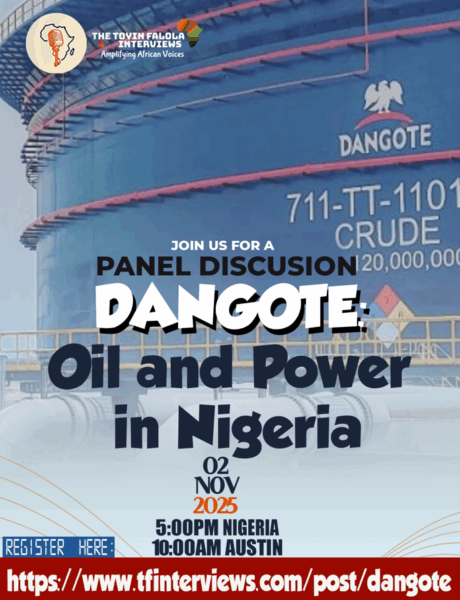
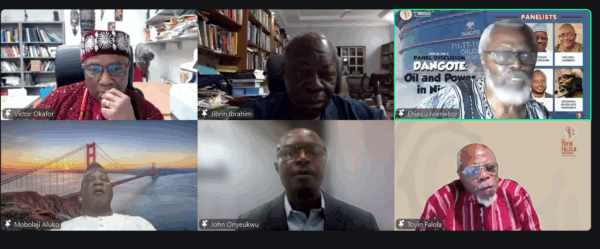
A PANEL DISCUSSION ON DANGOTE, OIL AND POWER IN NIGERIA, PART 2
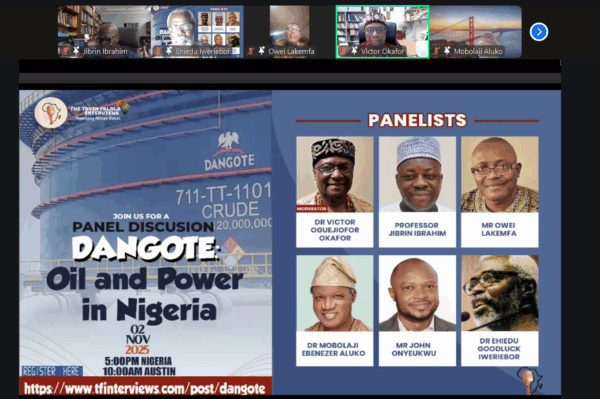
(This is the first report on a panel on the Dangote refinery. For the transcript, see https://www.youtube.com/live/x2jiK24xRYo?si=m5CVmrlAthLi2ubG)
One of the takeaways from these successful conversations is that the Dangote story has become that of a dog eating its own kind. Economic challenges that confronted ex-colonized countries reached their peak after independence, when the affairs of the people were run by their politicians, a development that showed a crack in the walls of leadership. This crack was slow to be noticed. At that time, the euphoria of independence, combined with the bliss of ignorance, prevented many people, including analysts and experts, from understanding the enormity of Africa’s problems. Since the Europeans who earlier occupied different positions in Africa’s leadership were the easiest blame carriers, everyone blamed them for all the atrocities. The neocolonial leaders, who were obviously benefiting from such undeserving ignorance, joined the expedition to share blame until the attention shifted away from them.

For that reason, the misappropriation of Africa’s immeasurable wealth continued unabated, and the members of the political class did not find anything strange about their uneventful involvement in the destruction of the African future, an abyss of penury and suffering. Among these countries is Nigeria, whose independence marked a twilight of hope but was an instrument in the hands of financially undisciplined leaders who did not know how to utilize the resources. I mean, there was a time when Nigerian leaders confessed that the country’s problem was not a lack of money, but rather how to spend it. After saying this, more than four decades later, the government found itself deeply entangled in economic woes.
Although the discovery of oil occurred later, in the days following independence, the economic mainstay at the time was not actually the crude oil. Nigeria thrived on agricultural activities, becoming the breadbasket of the world, as its fertile land produced admirable results that paved the way for its economic wonders. It was considered a blessing beyond belief when it was eventually discovered that Nigeria, in addition to its immense agricultural wealth, possessed an unimaginable amount of crude oil. After realizing this, any reasonable individual would have guessed that the country’s days of being immersed in poverty were numbered.
However, the Nigerian political class of the period did not fully understand the importance of fulfilling dreams that would benefit generations to come. Once their bellies were filled and their desires were accomplished, the talk of tomorrow does not really bother the average Nigerian politician. Well, except for a few, looking into the future with dreams of transforming generations was not something within their intellectual pay grade. Then, Nigeria’s economic management problems can be likened to the parable of a child who was severely hungry and, by some stroke of luck, was given seven pieces of akara (a type of bean cake). The starved child hastily consumed about three of them, and his belly was immediately filled. He threw away the reminder in the thought that he had had enough to make him live for days. He was wrong.
Nigeria’s oil became almost a tragedy for the country due to the underlying greed of its leaders, who were content with harvesting their agricultural and mineral resources to have them refined elsewhere, only to purchase them at a very high price. Remember, when Nigeria’s elites discovered cocoa, they realized that they had struck gold. The only thing that came to their minds was how they could sell these products to the countries that had industrialized and, in return, buy these processed materials from them for consumption. From cocoa came beverages, chocolate bars, among others, the things that earn the refiners much more money than the producers of the raw content would ever get. Enter the crude oil.
The Nigerian government has been unable to install a functioning refinery. For more than three decades, it has continued to export its crude oil for refinement abroad, only to repurchase it at prices that contribute to the country’s financial crisis. But the mentality of the average Nigerian politician is that once they can afford it, it is not costly. It does not matter what manner of traumatic experiences and economic despondency are evident in the community; once they are exempted, God is good. This mentality has therefore become a collective philosophy, which has inevitably become the overriding behavior of people who now view the exploitation of others as the primary principle of survival. In Nigeria, people are not blamed for taking advantage of the system. Anyone who does it is said to have been a lucky beneficiary of grace.
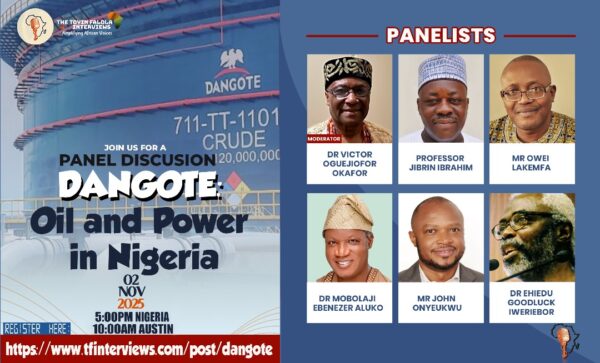
And then, when Dangote came up with the refinery project, something serious seemed to have happened within the Nigerian economic space. Suddenly, it became apparent that the prolonged suffering that the people have suffered is artificial and not necessarily a divine design. The Nigerian government began to reposition itself in the economic and financial markets, laying the groundwork for sustainable prosperity for itself and the continent of Africa as a whole. Instead of going through the process of exporting their products to different Western countries for refinement, they began to solve their problems from within. That arrangement was intended to reach a level where it would ruffle the feathers of the world’s economic giants.
Gradually, the processing of oil in Nigeria is a code that cracks the economic puzzle that has long bewitched Nigeria’s financial ecosystem. Immediately, Nigeria’s future began to receive its due respite as people now began to reap greater benefits from various economic activities. For one, having a refinery within the country means another chain of employment will be open to people. By that alone, it would immediately transform the country’s economy by penetrating all the nooks and crannies of its economic networks. There was the initially indifferent international community, which had long experienced Africa’s near success syndrome and then believed that the seemingly economic progress recorded through Nigeria’s refinery was momentary and short-lived.
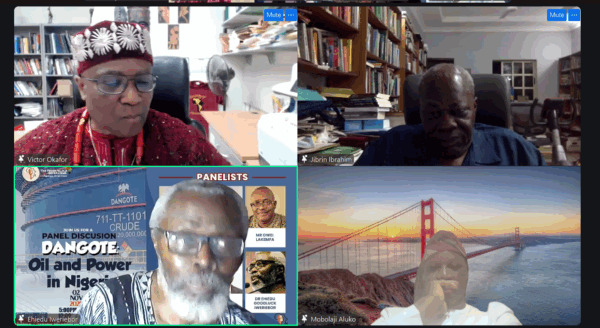
Ironically, the highest form of sabotage that would confront the Dangote refinery was one that came from within, a problem that was intractable and politically induced. As international labor laws provide, the interests and integrity of workers worldwide must be maintained by corporate entities in which they work. However, Nigeria’s labor unions, as their critics argue, do stretch this privilege a bit further. The moment Dangote refinery began its operational functions, as alleged without proof, the Petroleum and Natural Gas Senior Staff Association of Nigeria (PENGASSAN) started devising ways to exploit the company, allowing it to continue extracting money from the establishment, regardless of the impact on Nigeria’s economic system.
They pressured the workers into becoming members of their association with an underlying motive to use them as the cannon fodder to achieve their provincial, yet provocative, intentions. To the critics of labor, the weaponization of labor rights has therefore become a means by which union leaders are leading the country’s economic potential for personal gain. This not only has immediate consequences for the country’s economy, but it also poses a significant threat to its economic future, which we will address later. Labor, as Owei Lamkefa said in his contribution, has never sought the means to destroy Dangote and his business.
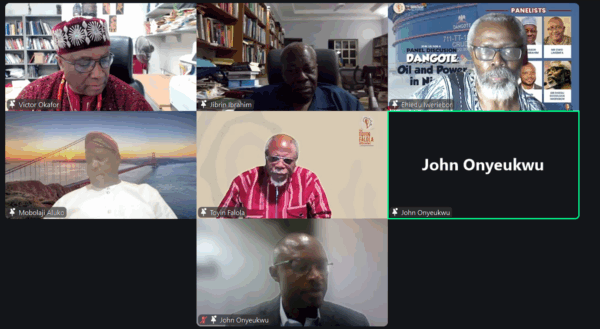
In the current era, countries are built not exclusively by the government’s efforts through the establishment of companies and enterprises. In many cases, the government is unable to do so. However, investors have the ability and the necessary financial muscle to establish enterprises and companies that would employ labor and transform the human conditions of the country. There are many international players in this respect. Many of them claim that they refuse to invest in Africa due to issues related to the weaponization of labor, as exemplified by Nigerian labor unions, as seen in the case of PENGASSAN. While the interests of the workers should be appropriately considered, the panelists suggest that they should, however, not be at the detriment of the nation’s collective growth. The rights of workers, the needs of citizens, the interests of the country, and the profit for entrepreneurs must all be considered as the country moves forward.