
Toyin Falola

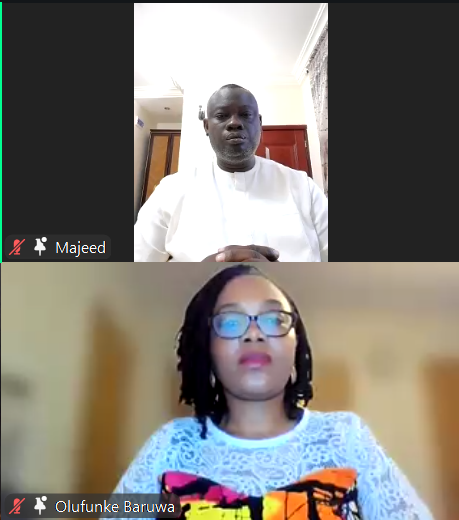
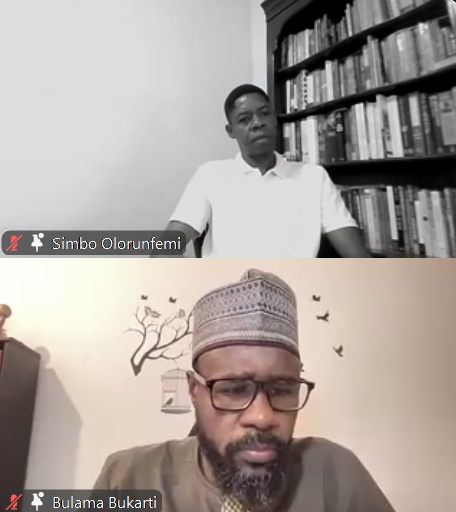
A PANEL DISCUSSION ON TRUMP AND NIGERIA, PART 3

(This is the third report on a panel discussion on Trump and Nigeria, November 16, 2025. For the transcript, see https://www.youtube.com/live/CrClIrWeJ6k?si=Sgd4rEafZbGc2x8A)
Insecurity is one of the most consistent problems of the Nigerian state. Particularly in the fourth republic, some of the first indicators of insecurity include land disputes, chieftaincy issues, religious riots, and politicking-induced fights. How they became normalized over time projected how a weak state that could neither effectively manage conflicts nor guarantee people’s safety would metamorphose. As the economy nosedives by the day, the citizens’ faiths have been neutralized, and violence seems to have taken over the land. It can be argued that criminal networks emerge because of years of unemployment and penury. The resulting social climate has opened the door to all sorts of opportunistic and survivalist formations to prey on people’s anger. From one spate of violence (criminality and banditry) to the other (insurgency), government reaction became more reactive than proactive, and insecurity became a self-perpetuating phenomenon in the country.
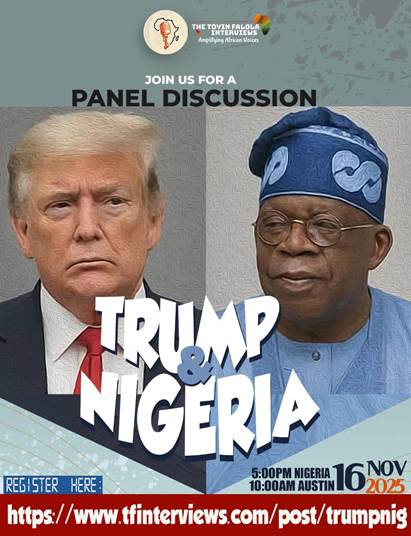
Donald Trump’s designation of Nigeria as a “country of particular concern” has supercharged the political rhetoric in the country. It now appears that the country’s problems of insecurity and structural defects have been internationalized with Trump’s allegations of Christian genocide and persecution in the country. It is no longer news that the country has been plagued by insecurity for years now, with dimensions in varied forms from the Boko Haram and ISWAP insurgency in the North-East, to rural banditry in the North-West and North-Central. These menaces have taken the form of farmer-herder clashes, increasingly instigated by desertification and pressure of migration from the far North, as well as separatist agitations in the South-East and Niger Delta. The American intervention, however, has introduced American geopolitical framing to the complexity of the problem. It is slightly hypocritical to reduce a country’s germane problem to a religious war. From Trump’s language, one can thus infer that his comments had less to do with Nigeria than with how great powers frame African emergencies through their own perceptions. Herein, maybe, the Nigerian state might see an occasion to address its internal paradoxes by facing unpalatable realities and speaking its own piece before others say it for it from a distance.
The controversy over Trump’s comment also highlights how the insecurity crisis in Nigeria has morphed into a clash of narratives. While the US president presents it as a near-exclusively religious persecution of Christians, the situation on the ground is much more complex. Nigeria’s security issues did not start today, and in fact, they get worse by the day. Lately, organized criminal groups, such as the kidnappers and bandits, have exploited the country’s weak structures in both urban and rural areas. But while it is true that some Christians in some of these regions have suffered attacks from these terrorist groups, Muslim communities have also endured catastrophic losses. From the deteriorated security crisis of the nation to a religious war, the shift is not the best at this moment, when insurgency is at an alarming rate.
The risk in Trump’s narrative is that it elevates one aspect of the violence to a grand theory, and that it raises the level of distrust in a society already deeply divided by ethnicity and religion. The gap between these two responses is the lack of a typical national story about what is happening and why. And without that, effective solutions remain elusive.
One of the most troubling consequences of Trump’s reaction is the media’s heightened sensitivity. Since his comments focused more on Christian genocide, the media have only focused on the dramatic angles. News outlets highlight “Christian persecution” because emotional and attention-grabbing stories like these get engagements, and this trivializes the weight of Nigeria’s insecurity issues. Issues such as rural poverty, youth unemployment, climate change, farmer-herder conflicts, weak institutions, and land disputes are barely mentioned. The complex, intertwined drivers of violence are reduced to a single, often sensational narrative that fails to capture the whole picture. The media’s framing of insecurity in Nigeria shapes how policymakers and international audiences understand the complex situation. It also shapes how we view the country locally when the overemphasis on sensational stories distorts public debate, making us more fearful and suspicious of other communities.
Trump’s intervention also highlights the urgent question of how other powers construe the security crisis in Nigeria through their ideological and geopolitical lenses. For example, in the US, the religious freedom narrative resonates with great political currency among evangelical communities. This, for one, has led to a tendency for renderings of Nigeria to be read through a very narrow Christian persecution frame that tends to magnify certain events and ignore or deny others outside the frame. This is how Nigeria, a symbol and a symptom, becomes a theater in the US culture war, where domestic forces seek foreign stages to express their own fears and desires. The Nigerian reality has seldom been made to the scale of these interventions: the conjoined uneven development born with its creation, the weight of its military past, the brittle and disputed federal arrangements, and the environmental contradictions of its rural transformation.
Since the issue of insecurity in Nigeria has become a talking point for foreign politicians, Nigeria must react. Oftentimes, these reactions are devoid of real solutions; they only raise arguments over who is right or wrong. Domestically, comments such as this expose the (in)authenticity of residents’ knowledge when outsiders seem to understand the country’s problems better than residents do. However, beyond these political dynamics, the real problem is that Nigeria does not control how the world perceives it, leaving others to define what the country looks like to the outside world.
Without doubt, Trump’s utterance only brought to the fore the reality that Nigeria, as a country, struggles to define what constitutes insecurity and how to respond to it. The truth is that everywhere in Nigeria, security issues are different, just like various kinds of violence are at work. Thus, no single explanation befits the whole country. Large parts of the North-East suffer from extremist terrorism. Bandits attack travelers and communities in the North-West and North-Central. The Southeast was grievously afflicted with political violence and crime, which muddied the waters between legitimate political demands and the violence of opportunism. Similar violence is experienced in the Niger Delta over oil and its effects on the environment, along with demands for resource control. For every society feeling targeted by religious persecution, another is targeted by economic marginalization. Some people believe that these acts of violence indicate a form of racial hatred, while to others, it is a land or mineral war. Given the diverse nature of such incidents, people may have different ideas about what makes the country unsafe.
This long history indicates that insecurity is not an event but a system in evolution, driven by historical neglect, inadequate institutions, and the absence of a recognized, systematic national approach to resolving conflicts. From a holistic perspective, Trump’s comments opened our eyes to the obvious truth: Nigeria can’t solve its insecurity problems without fixing the deeper governance problems that allow violence to thrive. The government’s presence in many areas is so light that communities are very vulnerable. And because the state is weak, residents protect themselves with little or no help from official security forces. Sometimes they take matters into their hands through jungle justice and vigilantism when cases take too long in courts or offenders face no consequences, which only aggravates the situation. In all of this, Nigerians want a federal system that manages diversity, with fair resource distribution and local government autonomy to at least manage local conflicts.