
Toyin Falola

A PANEL DISCUSSION ON WOMEN IN AFRICA, PART 2
(This is the second report on a panel on Women in Africa, September 14, 2025. For the transcript, see https://www.youtube.com/live/ivFIgBuEoxY?si=NQ6h_PEKnVR18OtW
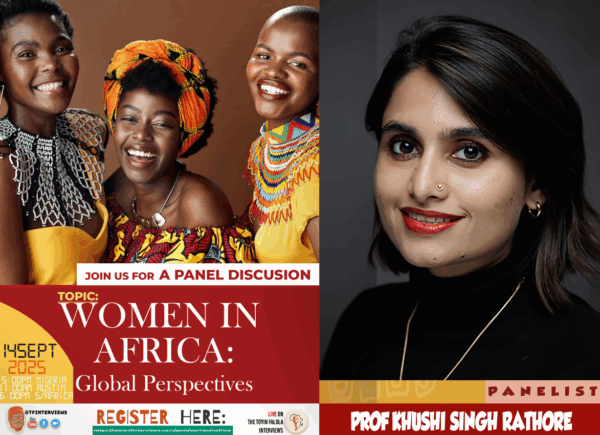
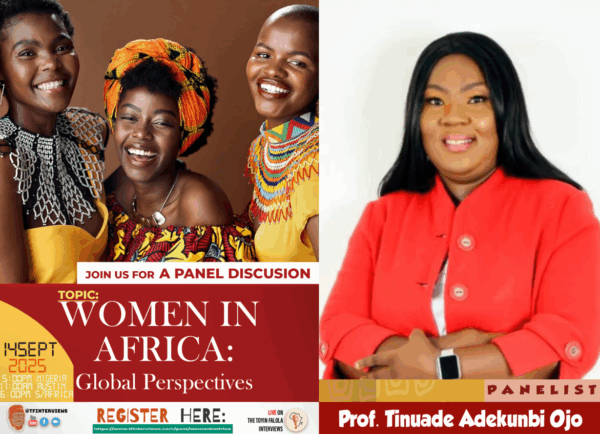
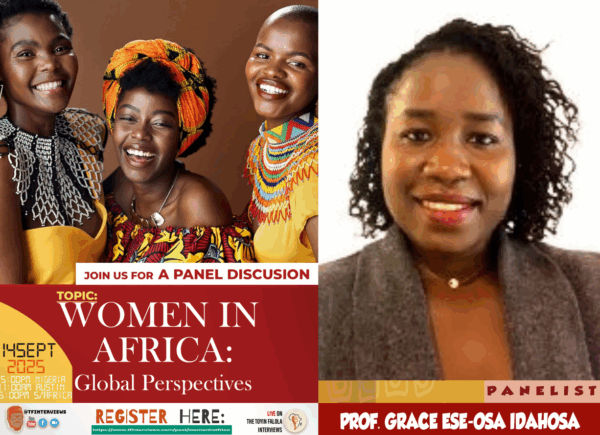
I was highly fascinated listening to Professors Abimbola Adelakun, Mary Owusu, Damilola Agbalajobi, Grace Ese-Osa Idahosa, Khusi Singh Rathore, Christine Vogt-William, and Tinuade Ojo discussing Women in Africa. They all regard the book as a significant scholarly contribution to the study of African women. They offered substantial summaries. The book examines the lives of African women from multiple dimensions: their history, their victories, and their challenges across a vast chronological and thematic terrain. The book begins with the roles assigned to African women in the precolonial African settings and connects with how these roles were distorted with the advent of colonialism. It also connects these with the realities of African women in the contemporary era as they continue to negotiate their identity, culture, and power.
The scholars see the book as offering corrections to previous misleading views, as it reclaims female histories repressed by the patriarchal frameworks of the precolonial and colonial eras. They said that the book provides innovative ideas as it creates engagement with new frontiers of knowledge in science, technology, and digital culture to examine further the presence and evolution of women in Africa (Toyin Falola and Olajumoke Yacob-Haliso, eds. Women in Africa (Abingdon, Oxon; New York: Routledge, 2025).
The book reimagines the place of women in precolonial Africa, taking a position to dispel the popular myth that women were always marginalized in precolonial African societies. It provides evidence that the precolonial African women were present at the center of their society’s government, economy, dispute resolution, spirituality, arts and crafts, and healthcare. Some precolonial African states, like the Bantu, Egypt, Dahomey, Kush, Nok, and Nubia, were examples of places where women took on active roles in leadership, warfare, and custody of knowledge. The assessment of societies like these in the book plays a significant role in historical reclamation and the correction of European narratives that have opined that African women were peripheral entities, as it highlights the enduring power of women as builders of institutions and guardians of culture and traditions, as stated in Women, Gender, and Sexualities in Africa, published in 2018.
From Women in Africa, we can see how the roles of women in African societies were reconfigured with the advent of colonialism. The book analyzes colonialism not only as a political conquest but also from the perspectives of cultural and gendered conquests that removed women from their authoritative positions and redrew the social ladder to privilege men in their novel power systems. Panelists discussed how the colonial system often excluded African women from its schools; it pushed women into marginal labor as subordinates in patriarchal-religious structures ushered by the colonial missionaries. The damage done remains persistent and continues to create gender inequalities to date, as fully developed in my Understanding Colonial Nigeria: British Rule and Its Impact.
Women in Africa notes the exploration of specific events like Apartheid in South Africa from the perspective of the challenges faced by the African women under the system of government that robbed them of their land, labor, citizenship, and dignity as their bodies became exploited resources in households and their labor in the farmlands. The panelists note the convergence of racial, gender, and class oppression during this period. They analyze how African women did not take the position of passive victims as they mobilized through protests, sustained secret networks, and actively engaged this oppressive system in a battle for their survival. This history is significant for the representation of African women as valiant individuals who devised the means to reassert their dignity and portray their resilient nature.
The panelists’ current evaluation of African society focuses on some of the readily apparent contradictions in many African cultures. They dissected the manner through which structural inequalities, including gender-based violence, discriminatory labor systems, and disparities in access to health and education, were institutionalized into the fabric of postcolonial African societies and how women have marked impressive milestones by ascending to leadership roles at national and global levels, and emerging as household names in arts, literature, academia, and politics. In this way, the distinguished scholars further the effort to challenge the victim narrative that is often ascribed to the African women, for they argue that though there are adversities, there are also progress and breakthroughs. They thus provide a much-needed balance between the narratives, and in so doing, allow the readers to understand the magnitude of history and the fortitude of the African women.
Feminism has been a concept rejected by some African critics as a European construct and unsuitable for the customs and traditions of African societies. The book under review reconsiders feminism from the African context and convincingly details how, for a long time, African women’s opposition to oppression through mobilizations and curated philosophies have both coincided and differed from Western feminism. The book discusses an African type of feminism as an ideology firmly embedded in the struggles of African women as they opposed dictatorships and challenged customs that obstructed their freedom. According to my work on The Power of Gender, The Gender of Power: Women’s Labor, Rights and Responsibilities in Africa, this age-long practice of activism by African women places them at the center of global feminist ideas.
In its assessment of motherhood, the book analyzes a subject that is deeply entrenched in African culture, from the modern perspectives of the pressures of urbanization, the evolving familial structure, and debates on reproductive rights. These ideas have shifted motherhood away from being the center of community life, and to changes that have created new practices. This book, therefore, challenges the notion of limiting women to just maternal roles by examining motherhood within broader conversations of agency.
Marriage is another core institution, analyzed just like motherhood. The panelists allow the audience to experience how African women navigate complex marital expectations as marriage in Africa over time continues to be influenced by factors like religion, acculturation, polygamy, and so on. It maintains that marriage in African societies has never been uniform nor static. The tradition has been constantly reimagined across eras and religions. Through the different reimaginations of marriage, African women have continued to remain important in the sustainment of families and the power dynamic within marital life.
Women in Africa also emphasize colonial exclusion of African women from intellectual and economic initiatives by documenting the precolonial activities of women in these fields. In this era, African women were traders, craftswomen, and farmers who became the spine of African economies. Still, they were displaced by the advent of colonialism, which stunted their progress. In the contemporary era, African women have bypassed this challenge by reclaiming space in education and even making their mark in the STEM fields. They have also begun to reshape African economies from the position of innovators and entrepreneurs. This study speaks of the further and urgent destruction of obstacles faced by women whilst recognizing the creativity of women in forging economic survival and prosperity, as developed in Women, Gender, and Sexualities in Africa.
Religion and literature are two major themes in Women in Africa. Although foreign religions like Christianity and Islam have suppressed African women’s activities in many areas, African women have continued to reimagine religious practices to empower themselves. African women have become prominent in music, film, and the arts, which now serve as platforms for questioning gender norms and promoting feminist voices. Early African female writers such as Mariama Bâ and Buchi Emecheta, along with contemporary authors like Chimamanda Ngozi Adichie, have used their works to challenge patriarchy and reimagine African womanhood. The key points of the discussion on September 24 centered on the migration of African women, science and technology, politics, and peacebuilding. Through these stories, the speakers emphasize that African women faced challenges not only in their home countries but also abroad—as migrants navigating foreign cultures, as scientists advancing Africa’s development, or as political leaders confronting male opposition. The speakers illustrate how African women are redefining what it means to be African and global simultaneously through their ongoing acts of mobilization and resilience.
The cast of talented panelists presents Women in Africa as an academic text that calls for the reimagination of the past, present, and future of Africa through the lens of its women’s stories. Their position maintains that Africa’s history remains incomplete without the addition of women’s struggles, contributions, and victories. The crucial roles of women were reaffirmed in the conversation through assessments of African politics, economics, and structures. In conclusion, the panelists regard this book as essential for anyone seeking a more accurate understanding of Africa. The scholars compel the audience to view African women as historical actors, creators and custodians of knowledge, and extraordinary visionaries in shaping Africa’s destiny.