
Toyin Falola
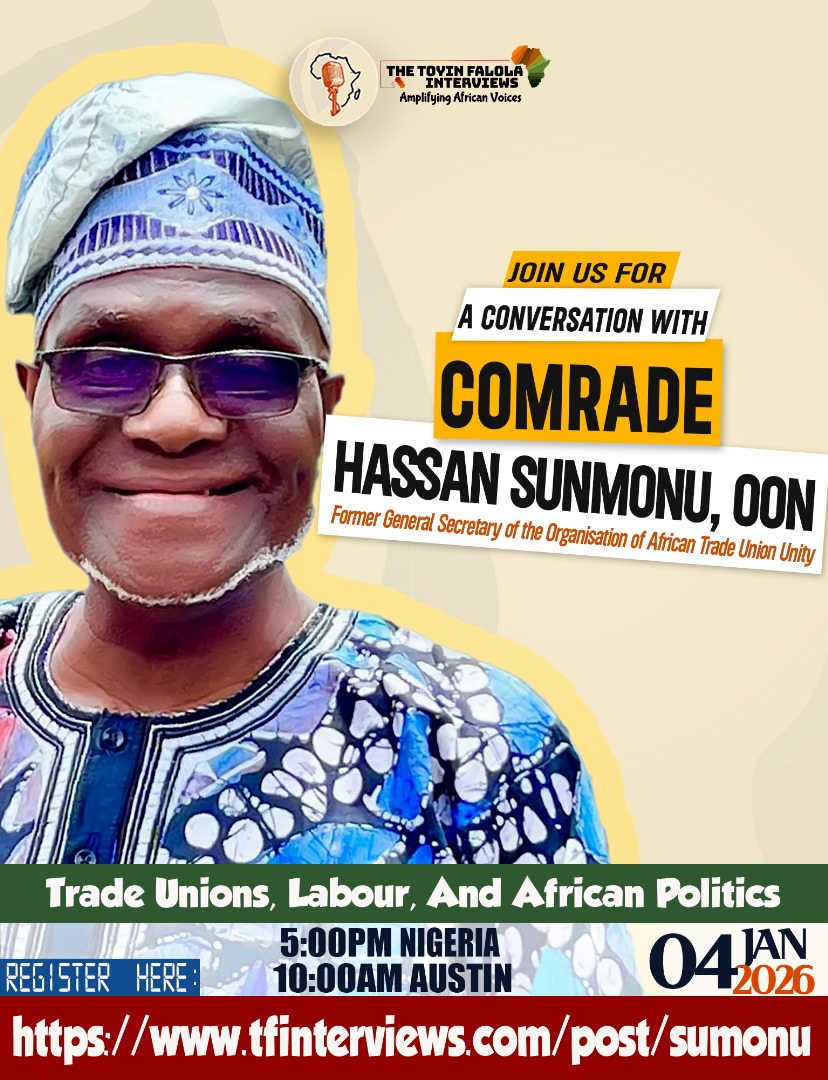
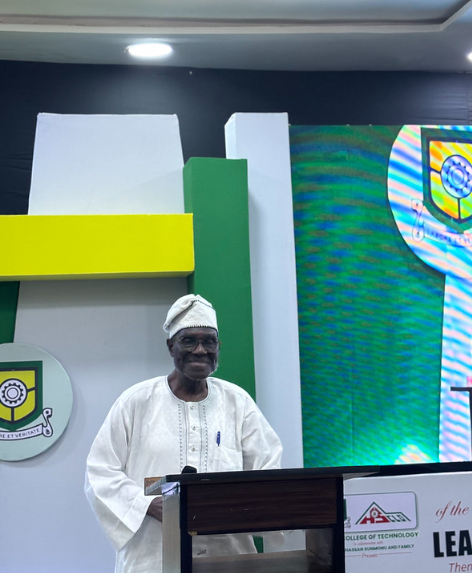
On January 4, 2026, we will open the year’s Toyin Falola Interviews with a conversation with Alhaji Hassan A. Sunmonu, former President of NLC and Secretary-General of Organization of African Trade Unions. On January 7 in Abuja, Dr. Sunmonu will present his memoir, Organise, Don’t Agonise: Tactics, Trials and Triumphs from Six Decades in the Trenches, to the public. Thus, this piece is written to put these two critical events in their proper context.
General Murtala Mohammed, in 1976, set up the Adebiyi Tribunal that led to the eventual breakup of the four Nigerian trade unions then existing; these were the Nigeria Trade Union Congress (NTUC), Labour Unity Front (LUF), the United Labour Congress (ULC), and the Nigeria Workers’ Council (NWC). Congress also opposed legislative and policy actions that seek to whittle down workers’ rights. It also opposed any move to amend the NSITF and the Employees’ Compensation Act. The above positions have proven that NLC is not only a champion of workers’ rights in labour disputes but also in safeguarding their social and economic rights in line with international labour standards. This Tribunal suggested that trade union restructuring be a precondition for the formation of the Nigeria Labour Congress (NLC). Hence, the NLC was formed in 1978 through the merger of the preceding trade unions that had competed with one another in the history of trade unionism in Nigeria. Since this fusion was permanently incorporated into the Trade Union Amendment Decree, it was intended to ensure that trade unions were consolidated into a unified organisation representing 42 industries. It should be noted that NLC’s establishment was undoubtedly shaped by the turbulent history of trade union relations in Nigeria, in the context of economic problems.
President
Nigeria Labour Congress (NLC)
Unifying trade union activities in Nigeria and developing collective bargaining as a basic means by which workers can call the shots regarding their service conditions are among the basic tasks the NLC has been charged with. The constitution of the NLC focuses more on uniting trade unions and strengthening collective bargaining across all sectors, with a view that acting as a single representative gives unions greater power in negotiations with employers and the government. These policy objectives aim to curb the unilateral actions of employers and the government that could endanger trade unions’ rights. It further claims that the extension of collective bargaining is extremely imperative within the promotion of industrial democracy and industrial relations in the Nigerian setting. This explicitly explains the role of the NLC as an institution that also assists affiliates to develop research and information for negotiations, strengthening unions’ bargaining capacity, reviewing national labour standards such as the minimum wage, promoting the acceptance of collective agreements across sectors, applying a balanced approach that considers gender perspectives, and protecting workers’ rights. In all of these, one thing is constant: the NLC supports the coordination of unions to develop in ways that make use of the principle of bargaining to promote union solidarity.
An essential objective of the Nigeria Labour Congress is to supervise the promotion and protection of workers’ rights. The objectives include promoting their economic, political, and social rights, with an emphasis on enhancing their incomes and well-being in the workplace. Their affiliation does this with various organisations, such as the Nigeria Social Insurance Trust Fund (NSITF). The organisation aims to enhance its participation in social welfare programs. This partnership has been affirmed by the NSITF, which recently described the NLC as “a veritable partner in this respect.”
In addition to its partnerships, the NLC focuses on making demands that improve the workers’ lifestyles. For instance, during International Workers’ Day (May Day) in 2025, the NLC and TUC presented 20 demands that highlighted various aspects of workers’ welfare. This shows the never-ending struggle of workers for adequate wage payments and satisfactory working conditions, which relate to the problem of economic change. The Congress is also opposed to all legislative and policy actions that curtail workers’ rights, as well as any amendment to the NSITF and the Employees’ Compensation Act. This therefore shows that the NLC is not just an advocate for workers in labour disputes, but also guards the social and economic rights of workers as guaranteed by international labour standards.
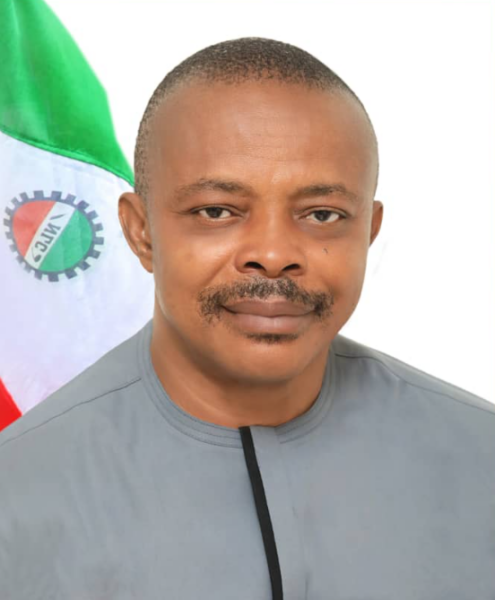
One of the outstanding functions of the NLC is to provide leadership in setting wages, including the living wage, through tripartite negotiations on the national minimum wage. The minimum wage panel represents the labour union, the state, and the employer. During the talks, the NLC and the TUC presented employees’ demands for a report on the study of indicators on the cost of living, poverty levels, and the inflation rate in the country to support living wage demands. No doubt, the current NLC leadership under Joe Ajaero has been waging an aggressive campaign on cost-of-living pressures and the minimum wage. For instance, the NLC and the TUC have submitted a report of a N615,000 minimum wage during the ongoing 2024 minimum wage negotiations. Ideally, in the past, the Congress should have covered the whole negotiation of wage issues not just on the technical stand as is strictly required of it, but also on the stand of a collective struggle for the dignity and economic rights of workers, appealing to all Nigerian workers to stand in solidarity with the demand for a living wage under the prevailing circumstance of political and economic change. Following the conclusion of such agreements, the NLC has been proactively canvassing for subsequent implementation and consequential adjustments in the public and private sectors. In the past, the Congress has ideally covered the negotiation of wage issues not only on the technical stand, as would be required, but also based on the stand of a collective struggle for the dignity and economic rights of workers, appealing to all Nigerian workers to stand in solidarity with the demand for a living wage under the circumstances of political and economic change. After the agreements are concluded, the NLC is aggressively facilitating subsequent implementation and resulting modifications across the public and private sectors. Now, it has condemned the administrations of the states that failed to implement the agreement on wage increase, as well as those that are making nominal adjustments in defiance of the agreement negotiated. The NLC is also passionate about the national, centralised wage structure rather than the trend toward decentralising the minimum wage to the states, as this would weaken workers’ position and exacerbate differences in workers’ quality across states.
Another area of recognition for the Nigerian Labour Congress is social movement unionism, which focuses not only on conventional collective bargaining but also involves the whole of civil society in socio-economic and political campaigns. In the Nigerian context, social movement unionism is carried out by coordinating massive nationwide protests, strikes, and marches to compel both the state and business organisations to adopt policies and reforms that improve working conditions and advance broader socio-reform efforts for the benefit of society at large. For example, during the protests against the removal of fuel subsidies in 2012, the NLC coordinated nationwide strikes across different states, effectively grinding the country to a halt, drawing international attention, and securing partial concessions from the government.
In the same vein, the NLC has also conducted May Day rallies and national demonstrations as means for workers to express their concerns in the socio-political sphere and hold the government accountable. On the other hand, social movement unionism can be attributed to NLC’s development of networks with broader social associations and a wide range of stakeholder groups. The NLC, in the process, gains the flexibility to go beyond the factory gate and even advocate national reforms in areas such as better healthcare, increased education expenditures, improved pensions, and protection of the country’s natural resources, thus solidifying its position as a multi-dimensional force in the pursuit of social justice. The NLC strongly argues that, in Nigeria, trade unions play a larger role than simply settling disputes and, in fact, serve as democratic agents of transformation in the broader social context.
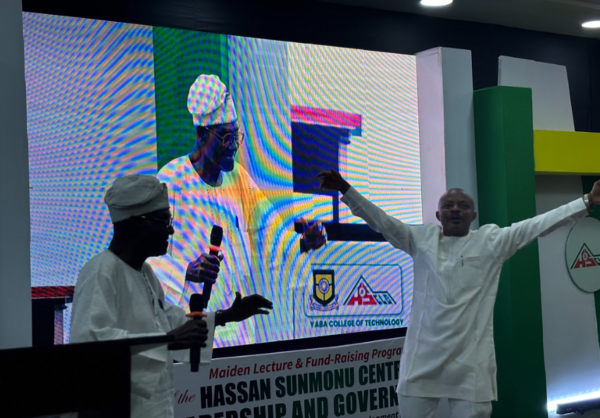
Please join us for a Conversation with Comrade Hassan Sunmonu, OON, Former General Secretary of the Organisation of African Trade Union Unity.
Sunday, January 4, 2026
5 PM Nigeria
4 PM Ghana
6 PM South Africa
10 AM Austin
Register Here:
https://www.tfinterviews.com/post/sunmonu
Join Zoom Meeting:
https://us02web.zoom.us/j/81844729198