
by Toyin Falola
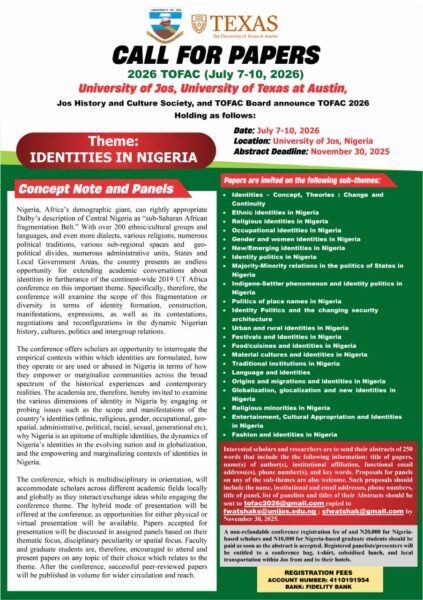
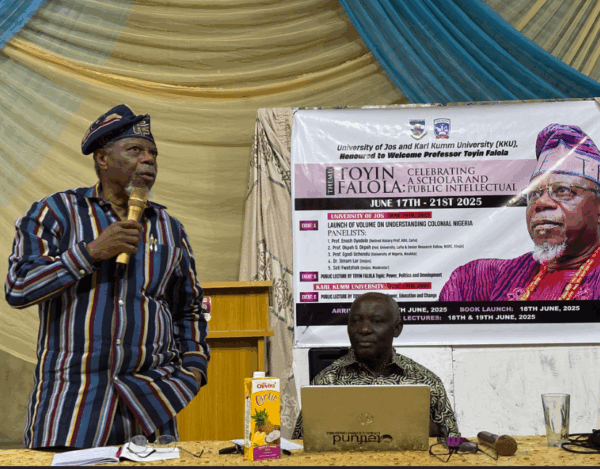
The University of Jos has chosen an excellent theme for the TOFAC 2026 conference. Over the years, TOFAC has refused to become a jamboree and instead focused on a theme that brings together leading minds on the subject. The conference papers are then developed into a series of books.
Identity is more than a name in Nigeria. It is beyond mere birthplace or any form of ancestral memory that people within the society hold. It is an existing element with life, capable of shaping lived perception, power, belonging, and the very architecture of everyday experience. To understand Nigeria’s complex social webs is to appreciate the lenses through which the individuals and communities view, define, and interpret their existence as a key component of the bigger world. Identity is sacrosanct to human life. It matters not because it influences and mediates everything, but because it serves as the compass by which people locate themselves within a wider historical evolution. It informs how humans form alliances, defend their dignity, and navigate the intricate nature of a country where multiplicity holds sway.
Nigeria is a large country with a vast cultural topography. Within it are ethnic groups in their hundreds, multiple languages, diverse religions, and socio-political traditions that cumulatively ensure that identity remains visible. The prevalence of these multiples in the country is responsible for the palpable presence felt every day, from encounters within the intimate scope of family histories to the vast domain of national politics.
Significantly, identity in Nigeria holds weight because it serves as a pivotal repository of historical memory. Peculiar to each ethnic group in the country are stories of migration, displacement, settlement, spiritual experiences, and generational trials that shaped how its people understood themselves. These narratives of preservation are then encoded in indigenous proverbs, religious rites, idioms, and myths that have stood the test of time and endured countless indigenous wars, colonial expeditions, and modern culture.
This reinforces the idea that identity is judged as a vital way to keep history alive. Its evolution and survival are not as a static cultural element but of a constantly renegotiated set of meanings that inform how communities relate to themselves and others. Agreed, it can be confirmed that identities matter because they serve as cultural archives, preserving knowledge systems long before colonial boundaries were enacted, and are key elements in resisting homogenization. They are the vessels in safeguarding cultural heritage, morals, and philosophy.
Within the Nigerian landscape, the essence of identity transcends cultural preservation and memory. Substantially, identity in Nigeria is also about power. Politically, the country is deeply influenced by the ways groups imagine their place within the federation. For decades, different vocabularies to suggest hierarchy, ownership, and privileges have been thrown around without remorse. The language of “indigene” and “settler,” and the persistent debates over marginalization, the equal distribution of resources and opportunities, and ongoing struggles for representation at all levels, point to the extent to which identities shape access to opportunities.
It is no surprise that, for many Nigerians, identity is perceived and determined by whether they feel at home or are perpetually questioned, with doors slammed in their faces in their home country. The practice, if the average Nigerian is asked, is that power is distributed through networks of kinship, ethnicity, religion, and regional affiliation, not on merit. This is the reality for millions of people across the country. This is not a political issue but a reflection of the systems the nation is built on. In this context, identity matters because it is a tool, a shield, and the currency with which people protect their interests and will in a volatile, competitive socio-political environment.
But identity does not only divide; it also binds. The practice in Nigeria, particularly within its cultural groups, involves strong internal solidarities that serve as an anchor for individual members of the group in an ever-dynamic world. In reality, the average Nigerian finds a sense of belonging and a home within their ethnic groups. These groups also serve as spaces for psychological familiarity, where norms, values, and expectations are predictable.
Religious identity, in turn, provides a matching form of belonging through moral orientation and spiritual guidance. This culture, over time, has helped sustain millions through life’s uncertainties. Shared languages, festivals, and ancestral rites create intimate bonds, build collective pride, and a sense of meaning to transitions in human life like childbirth, marriage and death. As such, identity in this spectrum matters primarily to nurture emotional stability, a sense of continuity, and social grounding. Without these identities, the individual risks estrangement and is lost in the thrills of the modern world.
However, identity in Nigeria is not limited to inheritance. It is a dynamic renegotiation between old experience and modern realities. This intertwined nature is made possible by urbanization, which allows the old and the new to mix. For example, major cities like Lagos, Abuja, Port Harcourt, and Kano are hotspots that have attracted countless young people seeking opportunities. The influx of youth into these cities overshadows existing ancestral distinctions, forming new solidarities rooted in shared urban experiences.
Music, fashion, language, innovation, digital activism, and social media cultures have given rise to generational identities that are neither strictly ethnic nor purely religious but expressive of a new Nigerian cosmopolitanism. For very good reasons, these emergent identities matter because they reveal cultural adaptation as people learn to negotiate their place in a fast-paced world. Based on this, identity becomes not just a relic of the past but an ongoing creative process in response to contemporary pressures and aspirations.
Despite these creative evolutions, identities in Nigeria presently carry the weight of conflict. The same forces that unify communities ostracize outsiders. Identity in many parts of Nigeria is overly rigid. By implication, rigidity breeds a culture of mistrust, exclusion, and violence. Nigeria’s history is rich with stories of events and moments when differences led to separation, undermining the possibilities for coexistence. And in this moment, there is another reason why identity matters.
Conflict in the real sense is often less about primordial hatred and more about contested rights, unequal access, disputed narratives, and fears of extinction. In this case, the only way for concerned parties to communicate their concerns and aspirations is through identity. The unending list of insurgent and activist groups, amongst others, is a confirmation of this point. Many groups have announced the weight of their grievances. To listen to them and address their concerns will heal and secure a better future.
Another reason identities matter in Nigeria is their role in shaping the national imagination. Nigeria is yet to realize a shared identity. Yet, there are moments where many identities are left out. Many times, sporting victories, national tragedies, and cultural breakthroughs are moments when Nigerians feel connected and united. Pidgin English, Nollywood, Afrobeats, and national festivals demonstrate how artistic creativity can produce shared symbols of belonging. The emergence of these national symbols significantly helped the nation harmonize its multiple identities while not outrightly dissolving them. Globally, Nigerians have redefined identity with the emergence of indigenous diaspora communities in foreign countries. These communities serve as placeholders for Nigerians overseas, helping them stay connected to their heritage.
In conclusion, identities are important in Nigeria because they influence history and communities. Identities have multiple layers. They can divide, heal, harden lines of separation, and equally inspire enviable solidarities. The nation’s challenge is not to disrupt or suppress its identities but to understand them deeply enough to appreciate the histories they bear, the cultural wealth they protect, and the social energies they can radiate.