
Toyin Falola
Gratitude to Dr. Samson Oluwatope Ijaola
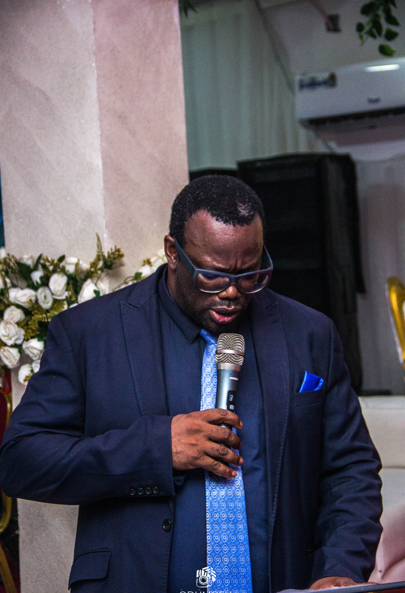
I want to share my takeaways from the celebration and conference held by Lead City University in my honor on January 5 and 6, 2025. Celebrating a scholar is always an opportunity to mark the passage of time and to interrogate the journey of ideas, institutions, and values that shape human life. This celebration, organized by Lead City University to honor me on my 73rd birthday, goes beyond celebrating my person and serves as a reminder of my responsibilities as a scholar – to provide more insight into the meaning of scholarship and the roles of tertiary institutions in shaping society. On this note, I must give kudos to Dr. Samson Oluwatope Ijaola, who chaired the organizing committee for this conference. His vision, dedication, and general ethics shone throughout the event, which has the potential to positively affect the Nigerian academic realm for many years to come.

For this event, Dr. Ijaola, a humanities scholar whose career represents a rare synergy of theology and administrative competence, takes on the role of organizer. He is an Associate Professor of Religious Studies and the Head of the Department of Religious and Intercultural Studies at Leeds City University. In an age when the humanities face institutional marginalization, he stands as a symbol of hope for this field of knowledge. His educational trajectory reflects his intellectual perseverance, as he views knowledge as a vocation and service. With this understanding, he has navigated disciplinary boundaries, mentored the next generation of scholars, and envisioned the university as an integrated intellectual ecosystem.
Beyond this, Dr. Ijaola has received several recognitions across academic fields. He was recognized by the Faraday Institute of Science and Theology in 2009 and 2010. He is a pioneer of Religious Studies at the Glorious Vision University in 2011. He also pioneered and coordinated SAU Diploma Study Centers in Kogi, Lagos, and Akwa-Ibom between 2014 and 2017. He has facilitated over 1,500 books in Humanities and cognate disciplines to the University Library in 2023. Also, he continues to participate in administrative roles in both Leads City University and Glorious Vision University.
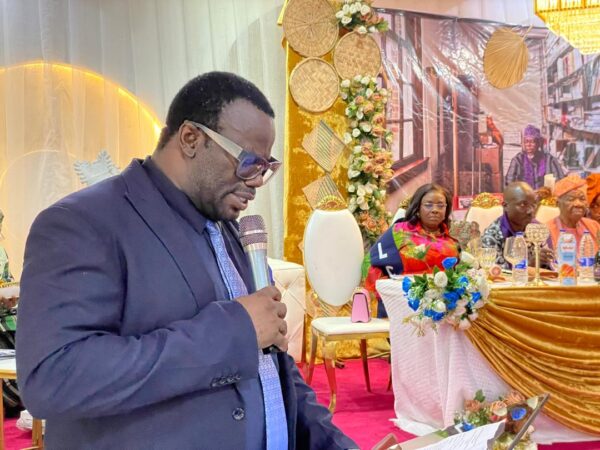
His intellect and administrative prowess were on display at the TF @73 conference, where social and intellectual interventions took place in an enclosed area, especially at a time when Nigerian tertiary institutions are riddled with a lack of funds and motivation. Lead City University, under the supervision of Dr. Ijaola and his hardworking team, convened scholars across disciplines, generations, and institutions, a statement that Nigerian private universities can also redefine the country’s academic culture. It also confirms that the humanities cannot be relegated when it comes to understanding political instability, cultural disunity, ethical erosion, and epistemic dependency – especially in the contemporary age. Finally, it places African scholarship within global discourse and insists on African methods of epistemology to aid the shaping of public discourse, inspire younger scholars, and reinforce the idea that intellectual excellence can also exist in Africa.
An intellectually captivating moment of the conference was the welcome address delivered by His Royal Majesty, Aláyélúvà, Ọba Dr. Adédayọ̀ Olúṣínọ̀ Adékọ̀yà, who provided what can be termed an epistemological manifesto, advancing the Dimef Institute/Adekoya 54-letter alphabet, which he used as a premise to argue for decolonizing the legacy of colonial domination, namely, the imposition of a foreign lingua on African society. The Address portrays language as an entity imbued with power and memory and thus not neutral. Alphabets were said to hold cognition, the transfer of belief, and cultural continuity, and African languages were said to have been held captive by a foreign alphabet system that could not incorporate the tonal and phonetic complexities associated with African languages.
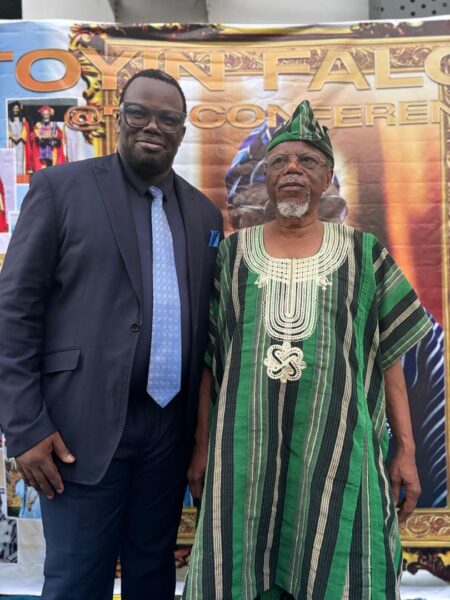
The lecture advocates implementing an alphabetic system that complements African languages by articulating a philosophy of language that cannot be detached from sound, meaning, spirit, and society. The lecture’s significance lies more in its practical features. The proposed system has been implemented for about two decades, with over 1,500 trainees, and is also being integrated into vocational education to demonstrate how indigenous knowledge can help transform society. The Kabiyesi’s lecture aligns well with my intellectual approach, in which Africa takes charge of its epistemology and gains the right to name, write, and theorize itself.
Another aspect of the conference that moved me deeply was the poetic performance by Dr. Yemi Ijaola. As a man of letters, I value poetry as a part of the African intellectual tradition, a vessel of memory, and one of the purest forms of expression. Dr. Ijaola’s performance added color and philosophical context to the conference with a well-crafted poem that, through metaphors and similes, conveyed scholarship, sentiment, and appraisal in piecemeal fashion – reminding everyone present that an intellectual life is built on arguments but sustained by imagination.
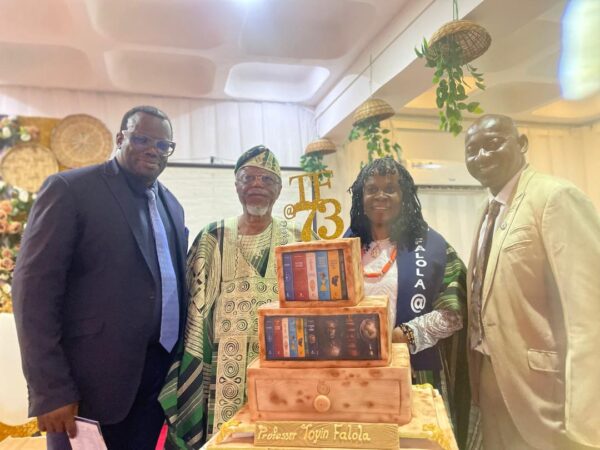
For a job well done, his exemplary leadership, intellectual commitment, and tireless efforts, I appreciate Dr. Ijaola and his team. Organizing an event of this magnitude is no small feat. Negotiating with institutions, coordinating with minds, and deliberating on ideas for this project must have been taxing, yet he carried out these roles effortlessly with dignity, vision, and proper ethics on behalf of Lead City University. The result is a conference that displays the possibilities inherent in scholarship—guided intellectualism. I am profoundly grateful for this.