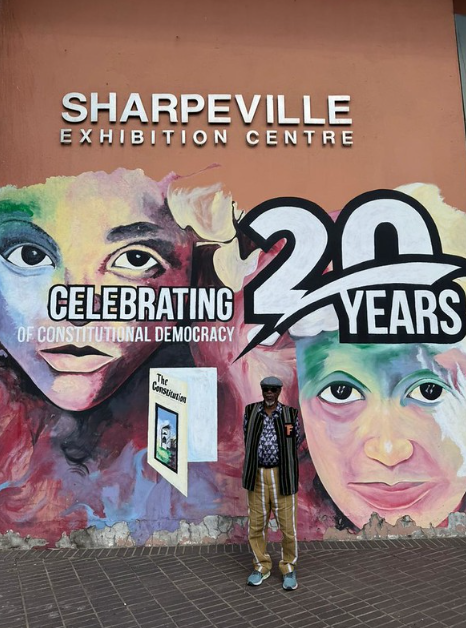

Toyin Falola
They said the morning was ordinary—
sun climbing gently over the veld,
dust lifting like prayer from the feet of workers,
mothers tying hope into the cloth of their children.
But history knows—
No morning that carries injustice
is ever ordinary.
In the long shadow of the Sharpeville massacre,
The air was already trembling,
heavy with passbooks—
those small prisons of paper
that tried to measure Black breath.
They gathered not with weapons,
but with presence—
with the stubborn dignity of the living.
They came as the river comes:
not to ask permission,
but to flow.
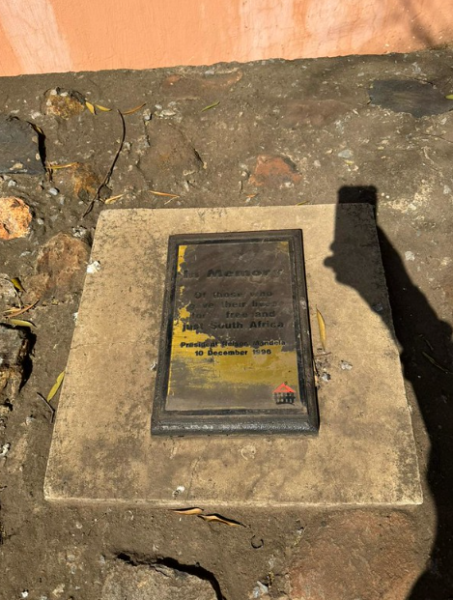
“Here,” they said,
“Take these passes—
Take your chains of ink and humiliation.”
But power does not speak softly.
When it is afraid.
The guns answered—
sharp, unreasoning thunder.
Not warning,
not mercy—
but a language of empire
written in bullets.
Bodies fell
like torn pages from the book of a people,
each one a name,
each one a future interrupted,
each one a universe
refusing to disappear.
And the ground—
Oh, the African ground—
did not forget.
It drank their blood.
not as a loss,
But as a covenant.
For in the soil of Sharpeville
grew something terrible and sacred:
memory.
Not the quiet kind
that sleeps in archives,
but the fierce memory
that walks barefoot through generations,
that drums in the chest of children
who never saw that day
Yet carry its fire.
Listen—
You can still hear them.
In the whistle of township winds,
in the chants that broke apartheid’s spine,
In the long road to freedom walked giants like Nelson Mandela,
in every voice that says
“No more.”
Sharpeville did not end in death.
It became a question.
the world could no longer ignore:
How long can people be told?
They are less than human.
before the earth itself rises to testify?
And Africa answered—
not in silence,
but in struggle,
not in fear,
but in becoming.
So we remember—
not to reopen wounds,
But to keep truth alive.
We remember
because forgetting
It is the last victory of oppression.
And the fallen—
They are not gone.
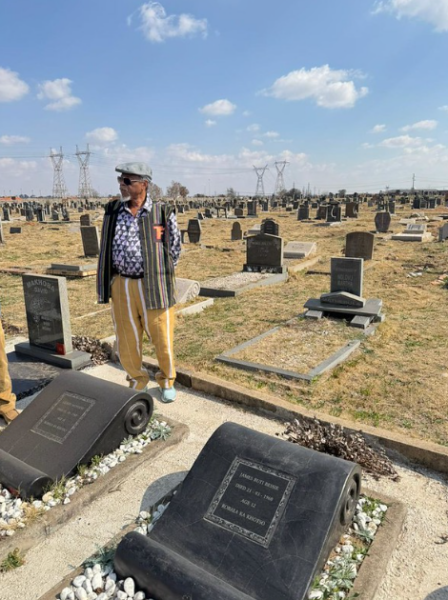
They have become
the ancestors of resistance,
standing at the edge of time,
whispering:
Walk forward.
Break what must be broken.
Carry us with you.
For Sharpeville
is not only a place—
It is a drumbeat.
It is a warning.
It is a promise.
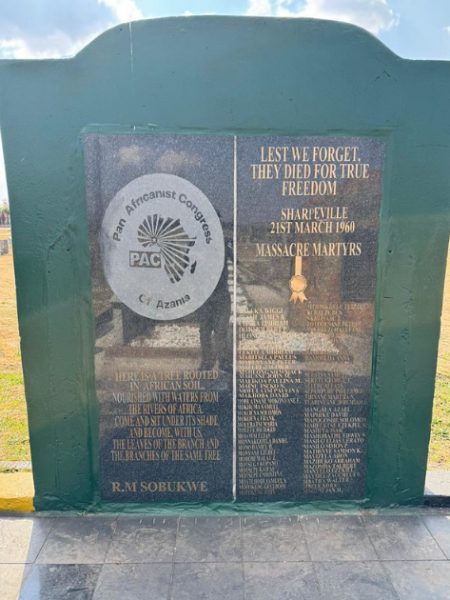
The name “Sharpeville” evokes pain, resilience, and symbolism that only a few can rival in the South African struggle for liberation. Sharpeville town, located in the Vaal Triangle, southern part of Johannesburg, is a place that can never be forgotten due to the event that happened in March 1960 when peaceful protesters were fired upon by the police, resulting in the death of 69 people and different degrees of injuries to over a hundred. Sharpeville remains to exist as a town that has continued to house oppressed people and not just a name written down in history books. The reality of the present-day Sharpeville community portrays the promises made, promises kept, and promises broken to the community. And even though the Sharpeville community name remains a symbol of resistance in South African history, there are underlying questions about the reality of its people and what kind of changes they have experienced in the years that followed the Massacre of 1960 and the change of administrative governance.
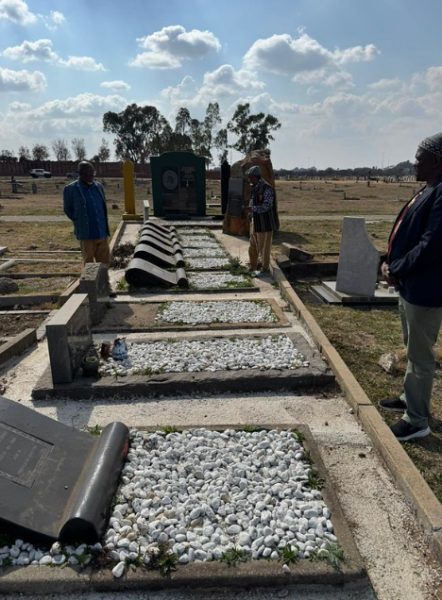
To fully understand the present-day Sharpeville society, we must first understand what the society was or looked like in the past. Before the massacre championed by the indiscriminate opening of fire of 705 live rounds by the police, on civil protesters, most of whom fled the violent scene in what Reverend Ambrose Reeves, in “The Sharpeville Massacre: Its Historic Significance in the Struggle Against Apartheid,” went on to describe as a scene of bloodbath that shook the conscience of the world. What did Sharpeville look like, or what was the community made up of?
Natasha Vally, in her M.A. thesis “The ‘Model Township’ of Sharpeville: The Absence of Political Action and Organisation, 1960–1984,” states that the Apartheid system created the Sharpeville community as a commune toward the housing of Black laborers who worked in nearby industrial zones. The commune had a tidy and regimented layout with strict curfews and constant surveillance as the state government aimed to keep the population there under its control and create an obedient community. As stated by George W. Bush, “The desire for freedom resides in every human heart,”The oppressed people of Sharpeville desired to be free and therefore beneath the controlled society created by the government, there was a growing discontent embedded in the everyday suffering of the people who were racially marginalized, politically and economically disenfranchised, harassed by the police and laws of the state, and received lesser funding for education and healthcare.
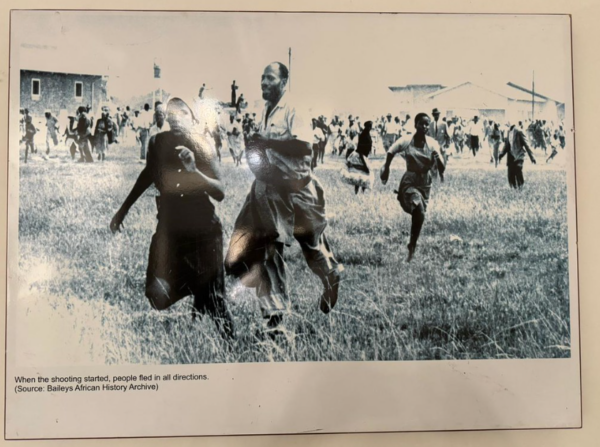
The situation of this community worsened immediately after the massacre as the South African Apartheid administration imposed harsher repressions on the people by arresting thousands, declaring a state of emergency, and placing a ban on political organizations of the PAC and ANC. The Sharpeville Massacre, however, gained the attention of the world toward the plight of the Black majority and their sufferings in the hands of the White minority of South Africa, and also diversified the resistance movement in South Africa by making armed struggle a viable option of resistance to apartheid. Although the Sharpeville situation drew global attention in the past and became a global symbol of resistance, it can be said that the livelihood of the residents is yet to go through the kind of changes befitting the sacrifice of 1960 decades after this event. All kinds of marginalization, police brutality, and poverty are largely defining the daily life of these people. The question to ask then is, “Has democracy given justice, dignity, and development denied by Apartheid to this community that fought Apartheid for Democracy?”
With recent news articles like “Sharpeville Residents Are Neglected by Government: EFF,” by SABC News, the question begins to bring an answer that would paint a picture of the failed sacrifice of the Sharpeville massacre victims. This report states that according to the leaders of the Economic Freedom Fighters (EFF), the government has remained largely unfair to their predicament, as the unemployment rate remains high, there is no provision of basic services and amenities like roads, healthcare facilities, and schools. With all these troubles, politicians still visit Sharpeville but only to pay tributes to the lost souls, lay wreaths, make political speeches, and nothing more. According to a report from AllAfrica, the people’s opinion is that politicians just come to act to the gallery in Sharpeville, whereas the people want more action and fewer speeches. The opinion of the people is that “These Politicians Just Come and Create a Spectacle.”
Another article that paints the reality of the Sharpeville people in present times is that of Times News Global with a report on “Tensions Rise in Sharpeville as Community Protests Against Foreign-Owned Businesses” in 2024. The people of Sharpeville accused the foreign shop owners of exploiting the local economy while the community’s economy remained stagnant. Their frustrations were expressed through protests and the shutdown of foreign-owned businesses in the area, as corroborated by follow-up reports by Eyewitness News. Although the protests of the Sharpeville people reflect their socioeconomic frustration, their bitterness is easily misaligned with the same philosophies of justice they once fought for, as the area has become a space for rising Xenophobia as explored in the article, “Scapegoating in Sharpeville Highlights SA’s Ongoing Battle with Xenophobia,” by the Mail & Guardian in 2024.
Although there are also positive news reports on Sharpeville, like that of the North-West University’s NWU News, which published “Sharpeville 2020: Action Research Inspires Change for the Better.” This article explains how the residents, local schools, and university researchers are making collaborative efforts to improve education, entrepreneurship, and youth-led initiatives. These projects may be small, local, and underfunded, but is no doubt a step in the right direction by the people of Sharpeville in their quest to create a brighter future for their community.
The situation of the current Sharpeville community echoes contradictions of the past in many ways. The victims of the 1960 incidents have not been forgotten, their memories have been etched in murals, monuments, and most importantly, the memory of the survivors and passed from one generation to the next. As stated by Gary Baines, Sharpeville has been a place of both trauma and resistance. Rita Barnard also describes the massacre as a symbol that has become the collective identity of South Africans, even though the people tend to pay homage to the events of the past and ignore the current situation of the Sharpeville people.
In the political scenes, Sharpeville remains in the shadow of national debates. Its political situation is not receiving much positive change under democracy, and maintaining some of the maladies of the apartheid system. Charles Villa-Vicencio, in “Violence, Protest and Change in South Africa: The Case of Sharpeville,” describes the community as a testing ground for National policies and a mirror of its failures. The memories and the realities of Sharpeville continue to be a paradox. The government glorifies the community with declarations and ceremonies, and even celebrates Human Rights Day on the 21st of March to honor the community and its victims. Yet, the struggles that people died for are not being enjoyed by the survivors. The community lacks quality education, jobs, water, healthcare, and roads, among many other basic provisions. The society receives its honor in name, but that honor is denied in practice.
In the past and in the present, Sharpeville’s story is more than a local history but a topic for national interest that should bring us face to face with the harsh truths of life that, suffering can be masked by symbolism, attainment of liberty is not equal to attainment of justice, and that memory can lose meaning when we fail to implement it toward finding solution. The Sharpeville story is far from over. Its people still cry, hope, and protest just like they did in 1960. Their current situation demands more than remembrance; it demands positive transformation. The injuries of the Sharpeville people will only heal when Sharpeville begins to exhibit the changes their forebears pioneered and died for, not by celebrations.
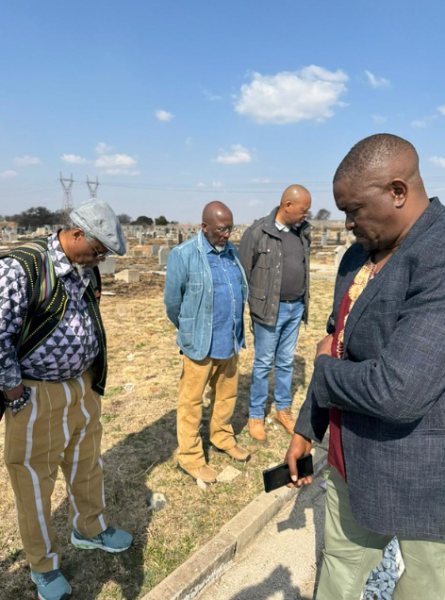
PS: This is the second of two reports on Sharpeville following a trip on July 24, 2025. I am grateful to Professor Sifiso Ndlovu and Montanye Mohapi, who facilitated the trip. I thank our “boss”, Professor Edith Phaswana, the spirit who hangs around. This closing report is to mark Human Rights Day in South Africa every March. March 21st commemorates the 1960 Sharpeville Massacre when 69 individuals lost their lives during peaceful protests against apartheid pass laws. This is a powerful reminder of the fight for human rights and democracy.
Photos: Falola’s Visit to Sharpeville, South Africa, July 24, 2025
https://www.flickr.com/photos/toyinfalola/albums/72177720327770774
A moment of leaving tragedy that resonates, not in rewarding but empty memory revelling, celebration without recompense. Sharpeville therefore reaches in Soweto, in hate stories and yearnings of unfilled dreams and promises.