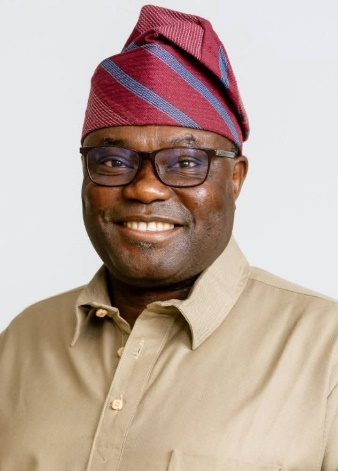

Toyin Falola
Every time I pen a portrait for an individual, my mind races through the moments that made the individual one befitting of my words. Over the years, I have not faltered or failed in giving the right persons the support for the valuable contributions they have made to make our societies better. I see this as a duty to one who has dedicated time, energy, and effort towards a greater cause. Hence, it is with this deep sense of intellectual responsibility and unparalleled scholarly conviction that I pen this to congratulate Professor Nosiru Oyedele Ashiru. Dr Ashiru is an accomplished academic whose rigorous thinking and commitment as a custodian of knowledge in the discipline of Political Science have birthed valuable contributions through an enduring but transformative pursuit. I have known him through Professor Tunde Babawale since the 1990s.
Very typical of the academic community to have many who pass through the corridors of universities without impact. They are just the onlookers and cheerleaders who lord over others while they make progress. And on the other hand, there are those few who emerge as architects of thoughts. They are the individuals who question norms, socially accepted wisdom, lead discourses, and leave behind a body of work that calls for reflection and action. Of the two categories, Dr. Ashiru belongs firmly to the latter. He started from the fertile grounds of the University of Lagos as an undergraduate, and through other degrees progressed through the academic ranks— from Assistant Lecturer to Associate Professor and recently a Professor. His ascent through the ladders also reflects the maturation of ideas that began a long time ago, ideas that sought answers to some of the most pressing issues on governance, democracy, political Islam, and the enduring contradictions of the postcolonial state.
As an adept scholar, Dr. Ashiru is enviably distinguished by his academic output and the philosophical depth and moral urgency that characterize his works. His work on contentious and sensitive subjects such as Political Islam research and democratization research in Nigeria tells you that he is not afraid of complexity or confrontation. He demands nuance and does not tolerate black and white thinking.
He understands and recognizes, for instance, that the challenges impeding Nigeria’s democratic experiment cannot be understood outside the historical and sociocultural textures that define the nation. His invocation of the Shura system as a framework for democratic engagement did not emerge out of futility. It was a deliberate intellectual intervention, one that seeks harmony between indigenous political systems and modern governance structures.
Conflicting works of this nature demand courage. Not that the idea was bad, but the unwilling social attitudes towards matters of this nature. To achieve this requires a willingness to stand at the intersection of competing ideologies and to speak with clarity and a refusal to ambiguity. To the best of my knowledge, Dr. Ashiru lives well. His anti-terrorism writings including his forensic dissection of Boko Haram explain the mind of a scholar who thinks issues from the root perspective. Here, he knows violence which is common with the sect is reactionary to injustice that was not addressed.
More significantly, Dr. Ashiru does not blindly subscribe to popular world narratives that polarize issues into simple binaries. With every work, he seeks to delve deeper and highlight the socio-economic and political realities that have led to the proliferation of such extremism. He is humane and clinical in his approach. His works bear the signature of one who gets it ethically. Beyond research, Dr. Ashiru’s teaching commitments are equally noteworthy. For decades, he has taught a wide range of courses, from introductory concepts in political science to advanced concepts across various levels. As a university lecturer, he demonstrates an ability to transmit knowledge and lead the call for critical thinking in his classrooms. His teaching style does not permit passive learning. No wonder students enjoy the class atmosphere that encourages them to question, debate, and imagine alternative futures. Dr. Ashiru has excelled as a teacher. He has successfully built students with the ability to own independent thoughts and draw intellectual insights as young scholars. He has mentored several undergraduate and graduate students. Many of these students have gone on to careers where they have made significant contributions themselves, which speaks to his lasting impact.
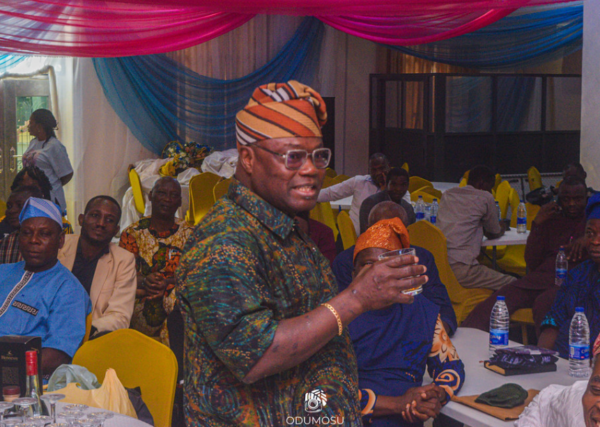
Dr. Ashiru is not defined by the classroom or research only. He is a community-oriented scholar with significant service to the university and the wider academic community. He is a man with many hats, having served in key university committees, various external roles at reputable institutions, participated in national and international conferences, and is a committed contributor to professional associations.
He is an activist. He was once Chairman of Academic Staff Union of Universities (ASUU), University of Lagos branch. He led ASUU UNILAG chapter purposefully and responsibly. He fought with a lot of wisdom, tact and diplomacy. While leading he exuded true leadership qualities and expected nothing less from his colleagues. Outside his official roles, Dr. Ashiru is a recognized active player across every committee and platform he works with. He works with graceful balance and navigates his responsibilities with distinction.

His engagement outside the ivory tower is also commendable. He had engagements with electoral processes through service with the Independent National Electoral Commission (INEC), playing a vital role as a scholar who brings theory into the field. His role with INEC was tasking and critical. It involved the fate of the masses in the nation’s electoral body, and to the best of his abilities, Dr. Ashiru maintained the mandate given and contributed his best within his area of responsibility.
Holistically, one must look beyond the conventional metrics in considering Dr. Ashiru’s suitability for any position, professional engagement, or fellowship. Even when there are no doubts that he possesses the requisite qualifications vis-à-vis the numerous publications, the teaching experience, and the administrative acumen, his embodiment as a scholar-citizen should equally be taken into consideration. He is an individual who recognizes that the pursuit of knowledge carries with it a responsibility to society. He is committed, critical, and principled without the usual cynics or dogmatic followership.
In an era where higher education faces unprecedented challenges from declining public trust to the pressures of globalization, there appears to be no better time to seek scholars of integrity, depth, and vision in the likes of Dr. Ashiru. His work invites us and the next generation to rethink established paradigms and seek service that strengthens the institutions upon which intellectual life depends.
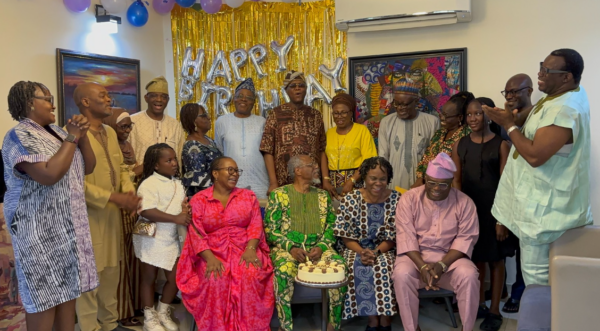
On this note, I offer my strongest congratulations to our new Professor and Dean. I am confident that wherever he is called to serve, he will bring to bear not only his considerable intellect but also a sense of purpose that elevates both the institution and the community it seeks to serve.
Onward!
For Dr. Dele Ashiru
In halls where silence is often purchased
And truth is bartered in cautious whispers,
Dele stands unyielding
A voice sharpened by conviction.
Not for you the comfort of folded arms,
Nor the diplomacy of convenient forgetting.
You choose the harder road instead—
Where ideas are weapons
And words, insurgent fire.
University corridors remember Ashiru’s footsteps,
Echoing not in retreat but resistance;
Each lecture is a summons,
Each argument is a call to awaken.
You write not to decorate the page.
But to trouble it—
To unsettle the sleeping conscience of a nation
And demand that knowledge serve the people.
An intellectual, yes—
But more, a sentinel of justice,
Guarding the fragile bridge
Between thought and action.
Your pen does not tremble before power;
It interrogates it.
Your voice does not echo authority.
It questions, disrupts, and rebuilds.

In a time when many trade courage for comfort,
You remain an unquiet mind—
An activist not of slogans alone
But of sustained, principled struggle.
So may your fire endure—
Unextinguished by fatigue,
Unsoftened by compromise—
A beacon in the memory of forgetting.
For in your defiance,
In your relentless insistence on truth,
You remind us:
That the university is not merely a place of learning—
But a battleground for the soul of society.
Congratulations. More Grace
Congratulations! Very well deserved.
I am so happy to read this piece. Interactions with him prove most of the points made here. Congratulations.
I concur with the flowery epithets and epistemic encomium showered “Dele Ashiru”. He is courageous, bold, articulate, organic intellectual and a word-smith. An eminent political theorist and a committed scholar- activist. Congratulations on your elevation to the rank of a professor.