
Toyin Falola
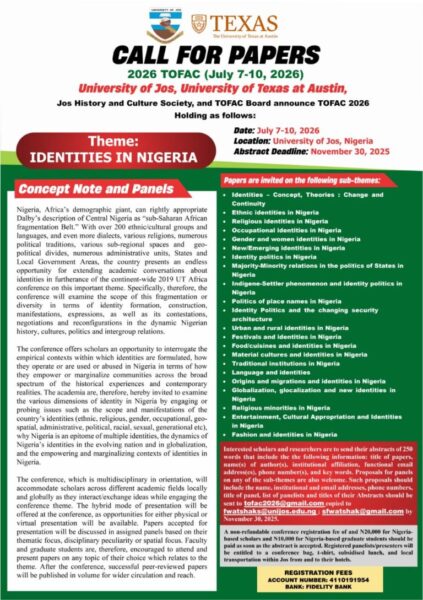
The idea behind TOFAC 2026 is based on a recurring question in the history of intellectual Africa. The foundation of TOFAC is laid on this premise to examine the “origins” of people, particularly when every other thing around them changes. This year’s theme, “Identities: Concepts, Theories—Change and Continuity,” approaches this question of origins from divergent positions with a singular concern. For emphasis, identity, as we know, is a concept in motion. It is an unfinished conversation in our society between human memory and modernity. It is the line between traditional inheritances and modern-day disruptions. Identity still, is the bridge between the continuity we expect and daring attempts at reinvention. On this note, the idea may be incoherent in the shared recognition that identities, whether cultural, religious, ethnic, political, or gendered, are constantly negotiated rather than permanently secured.
At the forefront, the opening studies of this concept centers on burial rites, marriage customs and communal rituals to reinforce and establish that identity begins from human lived experiences first, before it becomes theory. Illustratively among the Ham people of Southern Kaduna, burial rites are not mere disposal of dead ones. They are significant moral statements of life, death, ancestry and social status. The Ham believe that the dead do not cease to exist. Rather, they relocate within an ancestral continuum that binds the living and the departed.
Ironically, this belief in continuity does not survive the touch of alien cultures. Christianity, Islam, and colonial intervention entered subtly and checked older structures. They forced the community to choose acceptance between inherited spiritual obligations and new religious frameworks with modern perks. This negotiation led to the same selective adaptation visible in marriage ceremonies in North Central Ilorin. In Ilorin, Yoruba, Fulani, Nupe and other traditions meet within a single urban space. Yet, marriage ceremonies within this group are more performative than “original”. The selective adaptation to Islamic practices where dominant, has led to cultural continuity through reinvention rather than being preserved in its purest form.
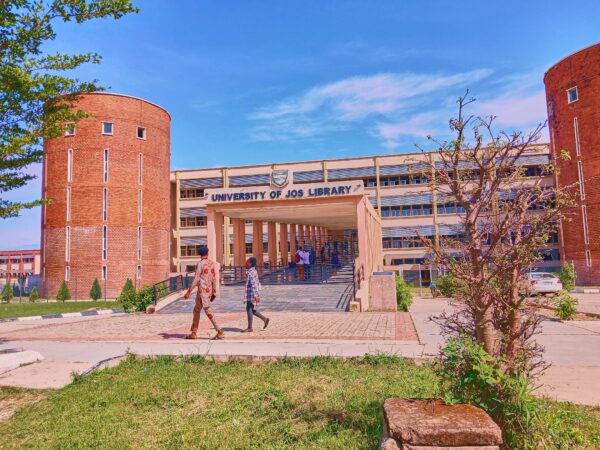
In further discussions, experiences moved from ritual life to colonial encounter. The shift from ritual routes to colonial encounters was a deliberate chronological flow because colonialism remains one of the deepest fractures in African identity formation. Several papers to be presented have adjudged these facts through returning different points of views pointing to similar conclusions. Colonialists did not just conquer territories; they reorganized what these territories stood for. For reference, Christianity came into the Jos Plateau alongside British authority. This arrival brought about faith, racial hierarchy, administrative classification, and cultural ranking. It was an all-out reorganization. Communities that were relabeled and restratified by colonial structures had to redefine themselves within those imposed categories. Over time, the local populace appropriated the religion and language for dignity and legitimacy, changing the narrative as one of passive acceptance. In the end, what was imposed became a resource for resistance.
The Tiv experience reflects a dynamic narrative. In this case, colonial rule sought to absorb Tiv society into a centralized political order unknown to its decentralized system. These attempts brought about resistance to colonial control and foreign rule. The Tiv community championed what would be known as a defense of self-definition. Ironically, the colonial pressure that threatened Tiv identity became a source of strength for Tiv ethnic consciousness.
This same struggle manifests in the sphere of knowledge. The paper on “Criticology and African “Negative” Science” are perhaps the compelling parts of the to have raised one of the most uncomfortable questions on the subject matter. For one, the paper questions what it means to define valid knowledge and who has the authority to do so. Colonial education did not just introduce school, it facilitated an intellectual hierarchy that places Western positivism at the center while African epistemologies were pushed off the list or at best, described as primitive or irrational.
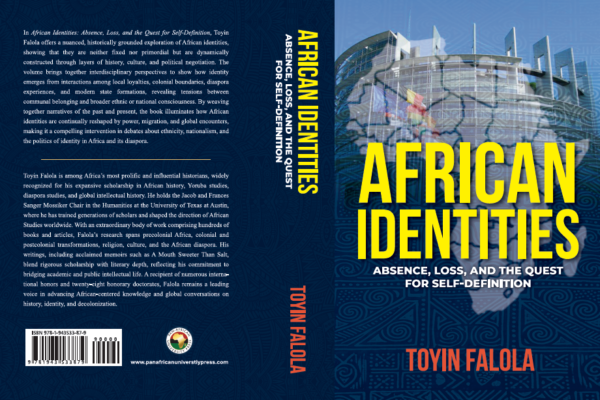
As formal education becomes yet another site for identity reconstruction, the intervention of “Criticology” is therefore significant because it insists that African knowledge systems are not failed versions of Western science but viable alternatives with their own internal logic. As the demand for intellectual justice persists, laudable attempts have been made towards postcolonial curriculum development. However, the efforts have been marred with deeper problems. Unfortunately, a society that cannot trust its own ways of knowing eventually struggles to trust its own image of itself.
It is a popular knowledge that there is nowhere this crisis is more visible in Nigeria than the quest for national identity. Many of the abstracts confirm a singular truth. Nigeria is a state yet to attain nationhood. Ethnic and religious loyalties remain stronger for decades after independence than civic sense amongst the population. There is no strength in diversity as institutions reward exclusion and political elites weaponize difference for chances at the polls.
North Central parts of the country, like Kafanchan in Plateau and other neighboring communities, are examples of places where ethnic and religious identities operate with double standards. Without batting an eye, these elements can be weaponized for violence and for solidarity and survival. Political actors and the elites play these cards well to cause divisions during elections and resource struggles, even though the local populace unconsciously demonstrates harmony through shared markets, interfaith youth associations, and community peace initiatives. This contradiction suggests that identity is not naturally violent unless it is attached to power struggles, uneven representation, social rights.
Religious identity occupies an uneasy space in the proposed presentations. Christianity, Islam, and the constitutional management of religion in Nigeria are treated less as private beliefs and more as public institutions of power. One paper describes Christian identity in Nigeria as a “wobbling phenomenon,” weakened by prosperity preaching, manipulation, and the commercialization of faith. Another question is the essence of religion for or against humanity to expose the contradiction of a secular constitutional order that allows strong religious opinions in governance and legal structures.
The 2023 presidential election portrayed this fragility. Religious clerics now play advocate roles for political parties, presenting electoral preferences as divine instruction. A contradiction from what these institutions were made for. To ensure sanity, neutrality and cooperation must be emphasized for Nigerian democracy to survive.
Another inherited assumption that needs to be corrected is the generational identity seen among Yoruba Gen-Z. The anxiety around youth culture is not new. It is louder and more intensified, courtesy of global trends, digital life, and the flexibility of postmodern identity. Traditional concepts like “Omoluabi” no longer amount to unquestioned loyalty. Young people now seek belonging across digital cultures that stretch far beyond local inheritance. As a solution, the paper on this proposes an approach that seems nostalgic but is not. Irrespective of one’s stand, culture only survives by remaining persuasive in the present.
The above tension between personal transformation and communal roots is illustratively captured in the study of Toyin Falola and Ode Aje in Ibadan. Falola’s rise as a global intellectual does not erase the formative power of the neighborhood that shaped him. Neither does Ode Aje remain frozen in the memory of childhood. Both scholars and community in play have evolved but traces of “origin” remain visible. Identity here is represented by the ability to carry on from one point into another.
In discussing identity in terms of displacement and environmental degradation, it can be understood that internally displaced persons in Nigeria across the country lose more than physical shelter. They lose the social architecture of identity: land, lineage, ritual space, and inherited belonging during flight. Yet, they often find a form of solace in the new settlement through new forms of solidarity and hybrid identity. Speaking of degradation, the Urhobo communities in Nigeria have watched their land polluted over oil spillage. They have watched environmental destruction reshape their livelihoods and the meaning of the place itself. Identity for Urhoboland is, therefore, represented symbolically in the lands they cannot cultivate on, the rivers they cannot fetch from.
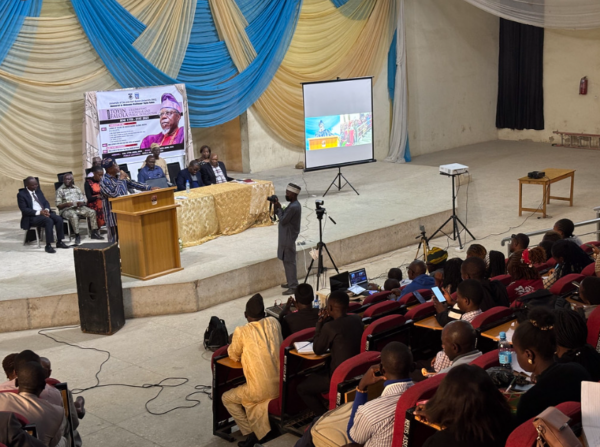
Taken together, these abstracts refuse simplistic conclusions. They show that identity is neither sacred permanence nor endless fluidity. They prove the relationship between continuity and change and the real intellectual achievement of TOFAC 2026 lies in showing that the two are inseparable. The deeper take away from TOFAC 2026 tells us how identity survives not through only resistance but also adaptation. Communities have endured because they have learnt to reinterpret themselves in the face of these disruptions.
Quite enlightening reflection. I really learned a lot. Cheers and thanks for sharing
I can’t wait to be part of this intellectual feast.
Prof. Falola is an institution.
Thanks for the privilege of being part of this conference
This is quite illuminative and a rare opportunity to tap from the wealth of experience of a historical ancestor that bridges the generational gaps in African historical discourse. You are indeed a gift to us Prof. Falola
Great to read this.
Quite inciteful and topical in nature because it address remote cause of ethnic chauvisim and religious strife currently plaguing our nation .
This is a good read. Quite insightful.