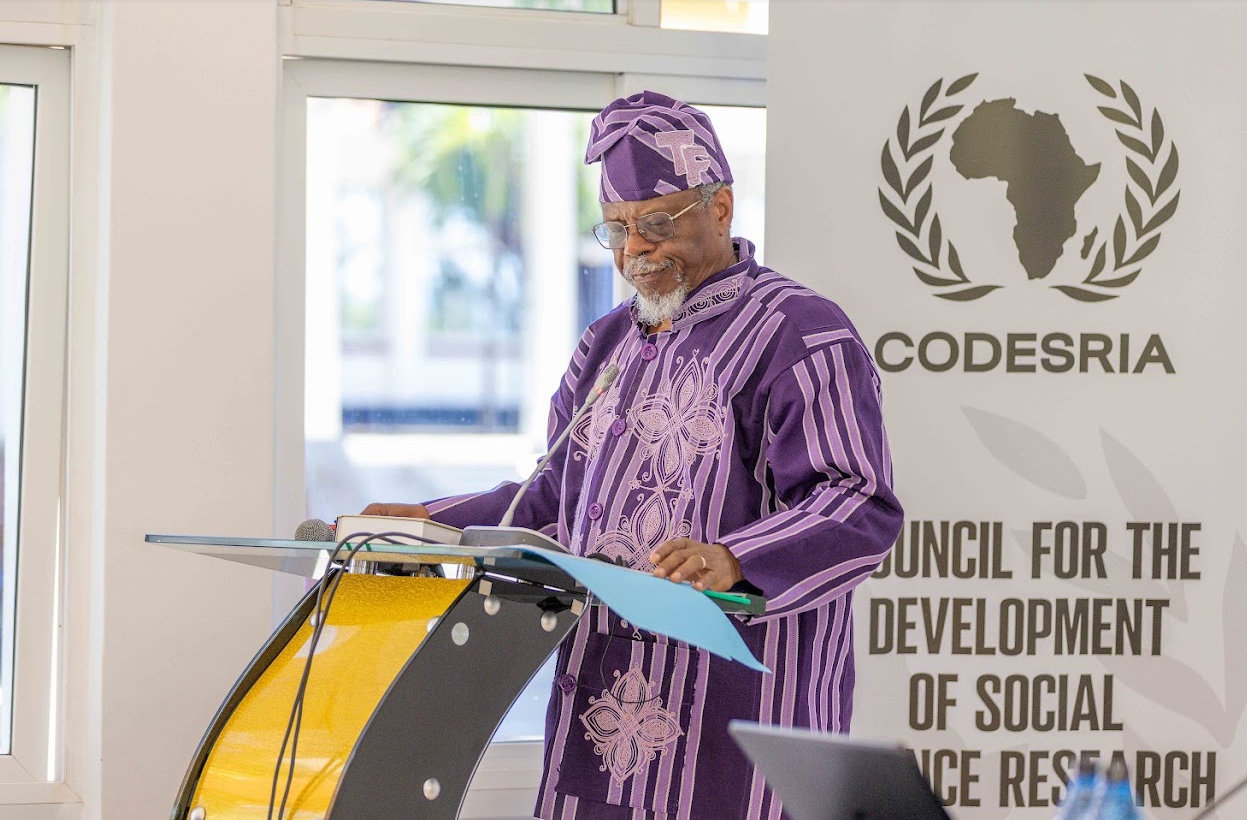

Toyin Falola
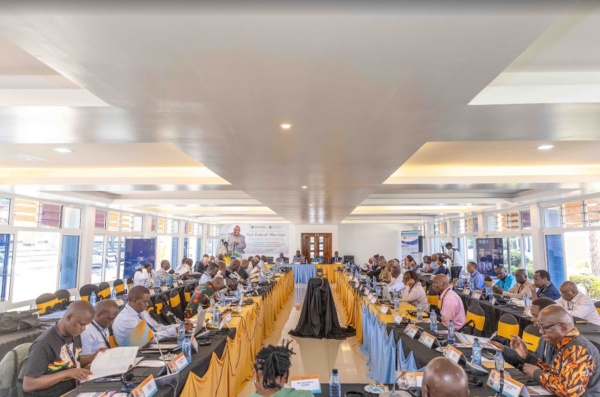
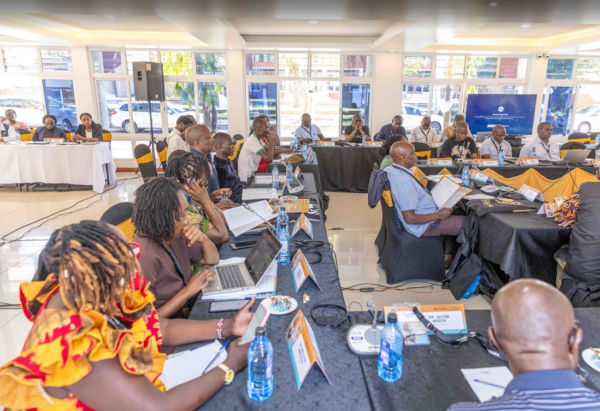
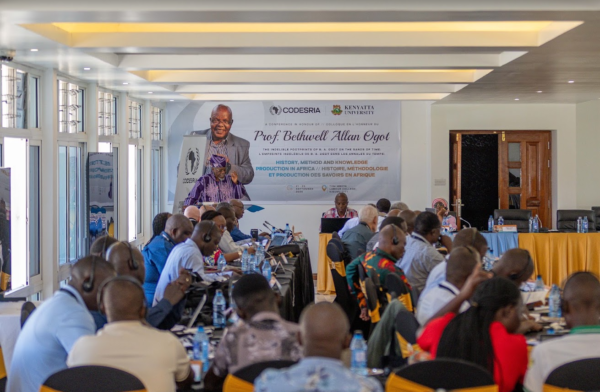
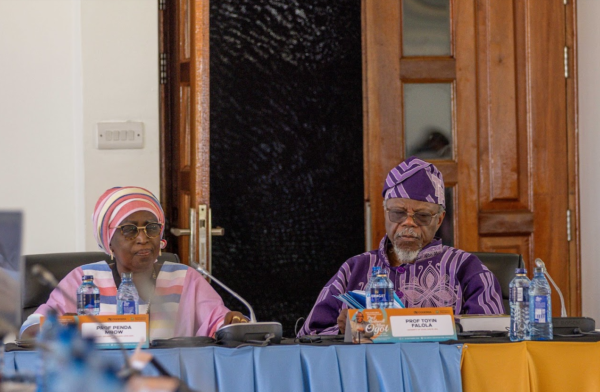
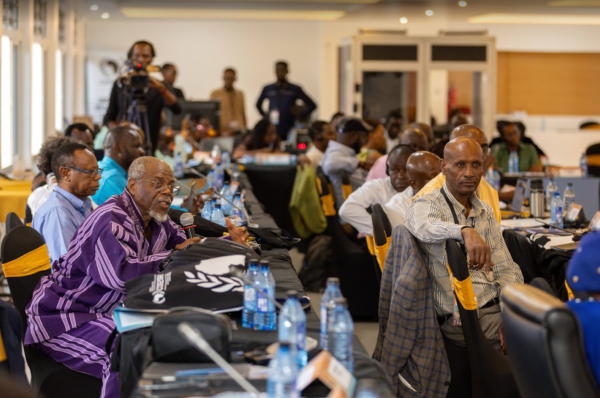
The city of Kisumu witnessed the residency of intellectual elephants for three days, September 21-23, welcomed by H.E. Professor Peter Anyang Nyong’o, the Governor of Kisumu City County. The presentations were rich and robust; older ideas opened the way to newer ones. The uniting thread is the scholarship and successes of Professor Bethwell Alan Ogot. Here, I reflect on the cumulative achievements of this major conference.
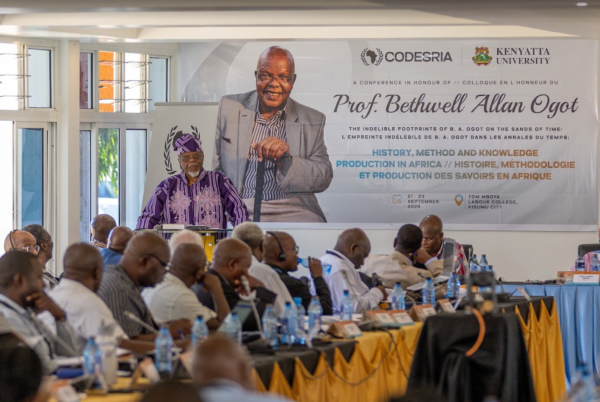
The passing of Professor Bethwell Allan Ogot on 30 January 2025 marked the end of a unique episode in the intellectual history of Africa, and the beginning of a dialogue on the unanswered questions that were the focus of his research, and which have since plagued African historians. Ogot was one of the pioneers of a new generation of African intellectuals who were entering the academic sphere during a period when colonial ideas still dominated the writing of the continent’s history. Ogot, along with the other pioneers of his generation, argued that African communities had histories that needed to be written with the same attention and dignity as European history. Their intervention was therefore much larger than that of a routine academic exercise. It was part of the broader intellectual transformation that accompanied African independence, a determination to recover the past from narratives that had marginalized African agency and to establish Africans themselves as authoritative participants in the production of knowledge about their societies.
This is why the appropriate response to Ogot’s death cannot be confined to mourning or commemoration. His death should serve as a call for African scholars to engage in a serious reflection on the intellectual enterprise that his generation initiated and to reflect on what has become of it after several decades.
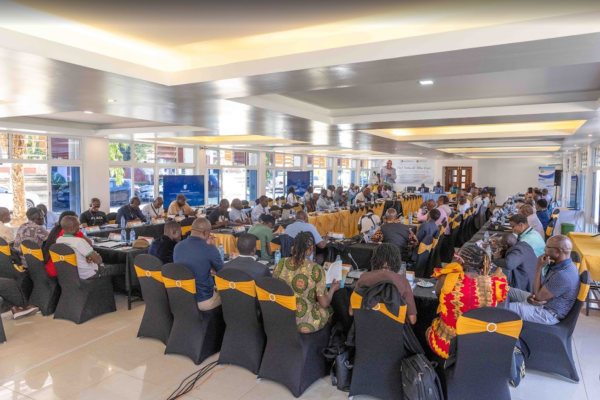
The International Memorial Conference in his memory, jointly organized by the Department of History, Archaeology and Political Studies of Kenyatta University and the Council for the Development of Social Science Research in Africa (CODESRIA), offers precisely such a chance. Focused on the theme, “The Indelible Footprints of B.A. Ogot on the Sands of Time: History, Method and Knowledge Production in Africa,” the conference is not only an opportunity to celebrate the life of one of Kenya’s finest historians; it is a way of thinking about the enduring impact of his methodological innovations, his institutional interventions and his general conception of the role of African scholars in the process of historical knowledge production. The importance of the conference lies not only in Ogot’s achievements during his lifetime, but also in the obligations that his intellectual legacy places on those who have taken forward his academic legacy.
Ogot belongs to a great generation of African historians whose research played a major role in the evolution of African historiography in the context of decolonization. Historians like Kenneth Onwuka Dike, J. F. Ade Ajayi, Adu Boahen, and Joseph Ki-Zerbo worked in an intellectual atmosphere where African societies were being defined in terms of colonial categorization and the lack of documents, as Europeans used as proof of the lack of history among Africans. However, their reaction to this was not just the fact of claiming a history for Africans, but showing that African societies were rich in politics, economics, society, and culture and could be studied by means of historical research. Ogot’s History of the Southern Luo (1967) is one of the classic works on this account as it showed how African history could be constructed using sources other than the conventional documentary sources and, indeed, oral traditions. His work contributed to a broader transformation in the discipline by demonstrating that the historian working on Africa had to expand the understanding of what constituted an archive without abandoning the critical standards through which historical evidence is assessed.
This methodological intervention is still pertinent in this day and age since the issue of evidence is inherently linked to the issue of power in the creation of knowledge. Indeed, for generations, African history would often be told through accounts provided by colonial officials, missionaries, explorers, and other outsiders, and this would mean that the experiences of African communities would often have to pass through frameworks of interpretation which did not necessarily come from those very same communities. It was thus not only about incorporating more evidence in the existing historical archive, but rather about questioning the whole structure of this archive and wondering whose voices had been recorded and interpreted within it. Ogot’s engagement with oral history demonstrated that African historical scholarship could draw from the knowledge systems of African communities while still subjecting those sources to critical examination, comparison and interpretation. His contribution was consequently not a rejection of historical method in favor of cultural affirmation, but an insistence that historical methodology had to respond to the particularities of African societies and the nature of the evidence through which their pasts could be reconstructed.
The intellectual environment has changed considerably since Ogot and his contemporaries began this work, and yet some of the fundamental problems they confronted have not disappeared. It is no longer contested that African history constitutes an accepted academic discipline, that Africans have become well-known figures in universities and research centers throughout the world, and that there has been a greater interest in Africa than during the early years of its independence. But with the increase in visibility, another irony has been brought forth by the fact that the importance of African history internationally does not mean control by Africans of those institutions that generate, fund, publish and disseminate knowledge on Africa.
The question confronting African historians today is therefore no longer simply whether Africa has a history worthy of study, since the intellectual struggles of Ogot’s generation contributed substantially to establishing that proposition; the more difficult question is who possesses the institutional and intellectual authority to determine which aspects of that history are researched, which questions are considered important, which archives receive investment, which languages are recognized as scholarly vehicles and which forms of African historical knowledge become visible to global audiences.
The matter becomes relevant when one takes into account the interaction between African scholarship and the global publishing system. Quite a lot of leading publications on the subject continue to be produced by international publishing companies and institutions whose centers of activity operate beyond the borders of Africa, whereas African universities usually face various limitations connected with research funding, library resources, preservation of documents, academic publishing, and scholar retention. Nothing in itself stands in the way of international cooperation or the worldwide dissemination of African scholarship; exchange of ideas across geographical boundaries has always been beneficial for the African intellectual tradition, but international cooperation becomes quite tricky when the institutions that have the greatest financial and publishing potential also control the questions asked about Africa, and the way in which answers to those questions are seen as authoritative on an international level. The issue is thus not in the construction of some artificial intellectual barrier between Africa and the rest of the world, but in ensuring the presence of adequate potential of African scholars and institutions to take part in global knowledge production on equal terms.
This concern brings Ogot’s institutional legacy into sharp focus. However, his contributions to African history cannot be quantified merely on the basis of the books and scholarly articles he published during his lifetime, as he was also actively engaged in institutionalizing the discipline, building intellectual communities and enabling historians to interact with one another in ways which would enable them to develop their research agenda, train young scholars and help strengthen the discipline. The significance of his work with the Historical Association of Kenya is even greater in this regard, as the association represented a forum for historians to organize themselves as a professional community of intellectuals. Thus, the issue of revitalizing the association should not be regarded merely as a managerial challenge related to resuscitation of a long-standing professional organization; rather, it is a much broader concern which relates to the ability of historians to organize their discipline, justify its significance, provide venues for intellectual interaction and bring academic history closer to society. Disciplines survive not because individual researchers publish papers.
The contemporary historian also operates in a radically different information environment from the one that shaped Ogot’s generation. Historical knowledge now circulates through social media platforms, podcasts, documentaries, digital archives, online classrooms, blogs, and other forms of public communication that did not exist when the foundations of modern African historiography were being established. This transformation has created enormous opportunities for the democratization of historical knowledge, but it has also created new challenges because historical claims can now acquire enormous public visibility without passing through the forms of scholarly scrutiny traditionally associated with academic publishing. Simplified narratives, selective memories, politically motivated interpretations and historically inaccurate claims can circulate rapidly, while carefully researched scholarship may struggle to reach audiences beyond the university. The historian therefore has a new responsibility to think not only about the production of knowledge but also about the public life of knowledge, because leaving digital and popular spaces entirely to non-specialists creates a vacuum in which historical interpretation can become detached from evidence and methodological discipline.
The question of language is equally central to this conversation. African historical scholarship has been shaped substantially by English, French and Portuguese, languages that have facilitated communication across national and international academic communities but that can also create a distance between scholarly production and the communities whose histories are being studied. When a community’s historical memory is generated in an African language, translated into another language for academic interpretation and eventually published for an international audience through a global publishing system, the process can create forms of intellectual mediation that deserve greater scrutiny. Translation is necessary and can be intellectually productive, but it also raises questions about what is preserved, what is transformed, and what becomes inaccessible in the movement between languages. A future African historiography that takes seriously the intellectual project represented by Ogot must therefore engage more deliberately with multilingual scholarship and with the preservation and use of African languages as vehicles of historical knowledge rather than treating them merely as sources from which information is extracted for publication in other languages.
There is also an important generational dimension to Ogot’s legacy. The founding generation of African historians created intellectual possibilities for those who came after them, and their influence extends beyond the scholars who directly studied under them. A scholar does not necessarily have to have sat in Ogot’s classroom to have been shaped by his intellectual legacy. His books, methodological arguments, institutional interventions, and debates became part of the intellectual environment within which subsequent generations of African scholars learned to think about history and knowledge. In this way, the intellectual heritage is not only a matter of direct mentoring, but of books, institutions, controversies, and questions that keep affecting scholars long after the author himself or herself leaves academia. In fact, one of the greatest legacies that an intellectual can leave behind him or her can well be the ability to pose questions which cannot be ignored by future generations, even if they do not agree with the answers given by their predecessors.
My intellectual journey has unfolded within this broader inheritance. Like many historians writing on Africa, my interest in history has developed from an awareness that the analysis of the continent involves a critical engagement with the scholarship as well as a critical reflection on the processes through which this scholarship has come into being. Thus, while the influence of the founding generation has been important in providing a body of established knowledge to be repeated, it has also shown that African historians can challenge existing paradigms, develop methods for addressing their specific realities, and create traditions of scholarship that have something to say both to local audiences and to the wider world. What makes Ogot’s contribution especially useful for us today is that he has made clear that intellectual autonomy is not achieved by distancing oneself from the scholarship of others and creating a kind of isolation of African history from global discussions; it is achieved by making sure that Africans are able to participate in such discussions as creators of knowledge.
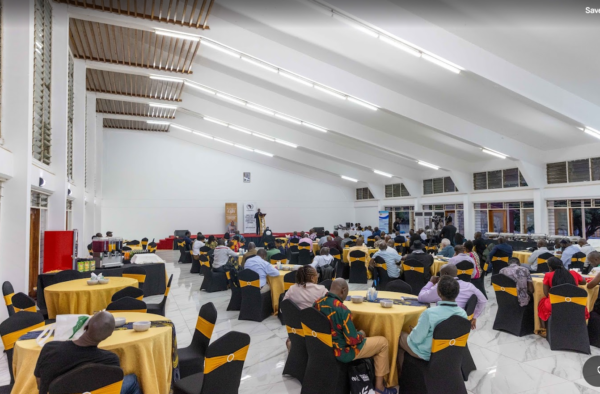
Many speakers at the Kisumu conference, from the Governor to Professors and emerging scholars, paid scholarly and emotional tributes to Ogot. An effective tribute to Ogot would be the reflection on the incomplete intellectual and institutional problems of that generation that we inherited. The generation of Ogot fought to establish Africa as a legitimate subject of history and demonstrated that African societies could be studied through methodologies that took their own sources, memories and experiences seriously. Our generation has a different task: that of building the institutions, technology, linguistic and intellectual infrastructure through which Africans can assert more control over the creation, storage and circulation of the historical knowledge of Africa. This involves improved African publishing infrastructure, well-funded archives, increased funding for historical research, more focus on African languages, better professional societies and closer ties between historians and the societies whose history they study.
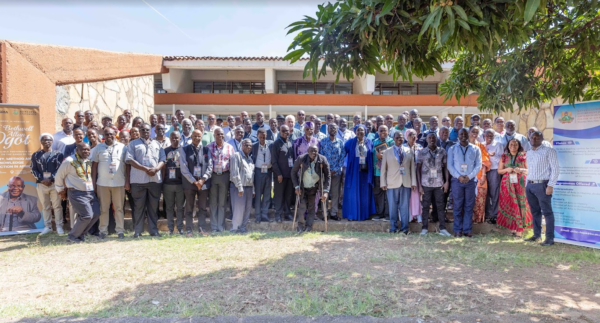
Ogot’s death should be understood not as the end of a particular intellectual tradition but as an opportunity to examine whether the foundations laid by his generation are strong enough to support the future of African historiography. The indelible footprint he leaves behind is not simply the collection of books, institutions and students associated with his name; it is the enduring proposition that Africans must have an authoritative voice in interpreting their own historical experiences and in determining the methods through which those experiences become knowledge. If Ogot’s generation asked whether Africa had a history, the intellectual responsibility of the present generation is to confront the more complicated question of who possesses the power to produce, preserve, interpret and circulate that history. The answer to that question will determine not only the future of African history as an academic discipline but also the extent to which Africa can shape the intellectual narratives through which the world understands the continent and through which Africans themselves understand their place in history.