
Toyin Falola
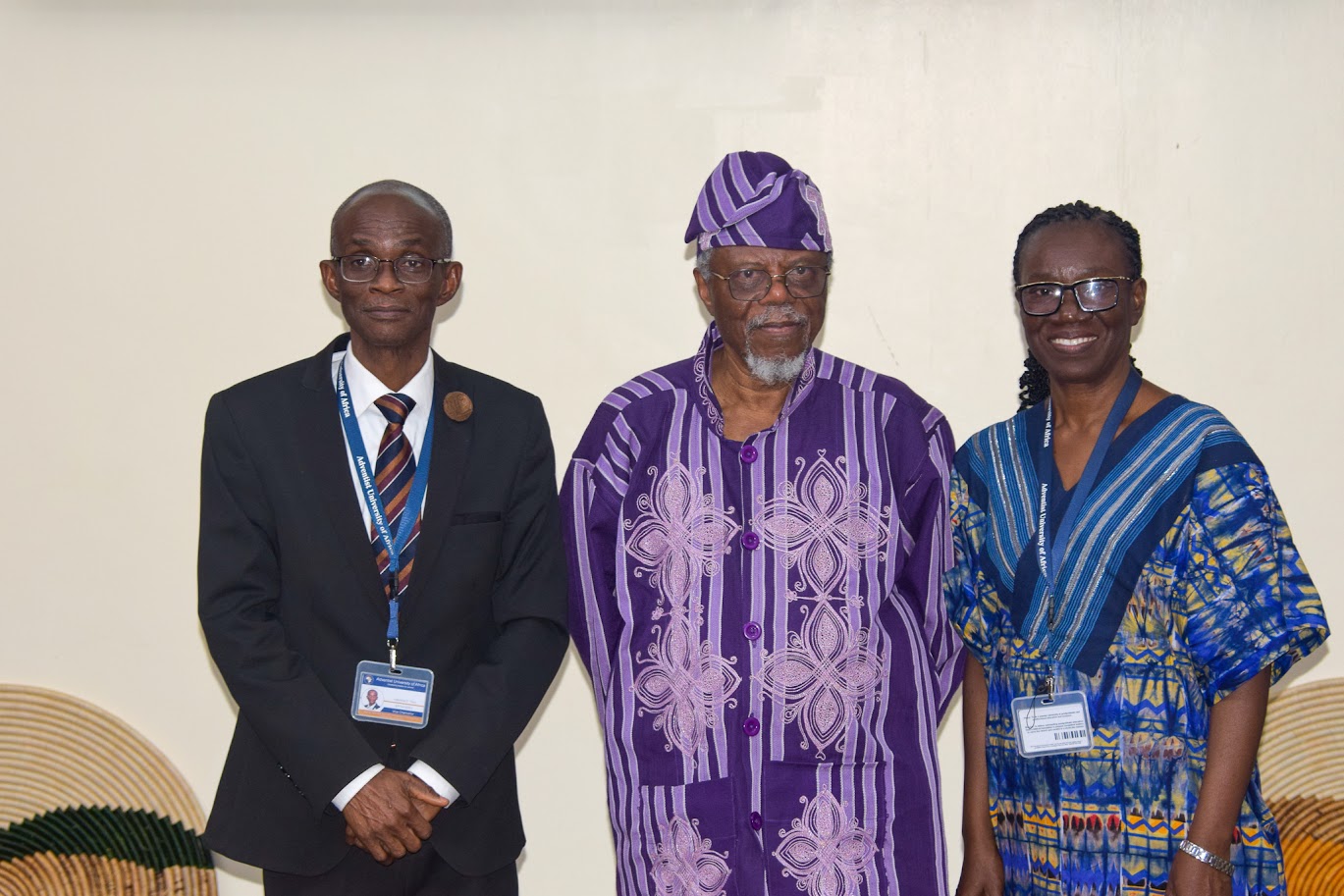
There are encounters that happen because circumstances bring people together, and there are encounters that seem to gather together the many strands of one’s intellectual and personal journeys. My recent experience of meeting Professor Grace and Ademola Tayo in Nairobi is an example of the latter. Unlike my encounters with other people during my travels in Kenya, which were a part of my tour of the country, this experience was one in which many factors converged – from friendship, memories and religion to education, institutional history, and the general possibilities of African intellectual endeavor. I admire the Tayo family to the point of adoration.
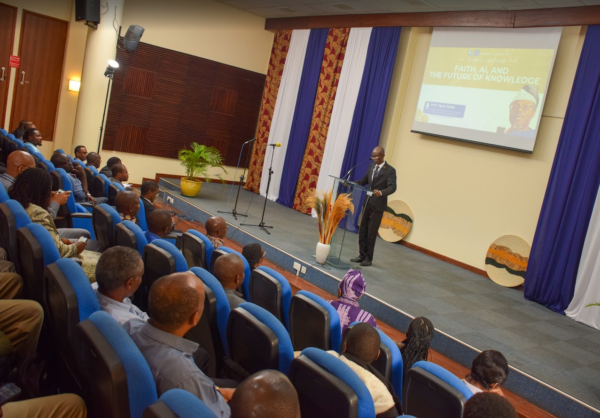
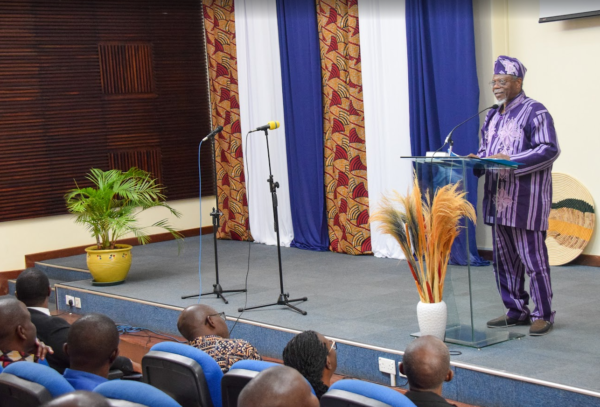
After all, Nairobi was indeed the location where this took place, but there was much more to it than that. Being there, sitting with Grace and Ademola Tayo, I was once again reminded of myself that universities are not only buildings of education and research. They are communities of memory. They are places through which people pass, leaving traces behind and carrying experiences forward. They are also bridges through which Africa may come into contact with itself. Grace contributed the graciousness and warmth that she has always brought to our meetings, while Ademola contributed the quiet generosity of spirit that has marked our scholarly encounters throughout the years. There was the comfort of familiarity, but there was also a freshness to the place where we met. No longer did we meet in the institutional setting of Babcock in Nigeria. We met in Nairobi, Kenya, in a setting that from the very beginning widened our conversation far beyond any personal memory. Suddenly both Nigeria and Kenya were in the room; West and East Africa talked to one another through friendship. The distance between the two nations somehow seemed not so much a geographical fact as an intellectual and human connection.
I could not help but reflect on Professor Tayo’s experience and the transition of institutions that had led him to Nairobi. For several years, he had been identified with Babcock University as Vice-Chancellor from 2015 till the end of 2025. This period had been marked by his experience in the difficult sphere of Nigerian higher education, where one should know how to balance scholarship, administration, development of the institution, religious convictions, expectations of the community, and the increasing requirements to be met by universities in the dynamic society. Add the experience of his staff being kidnapped, and I had to wake him up in the middle of the night!
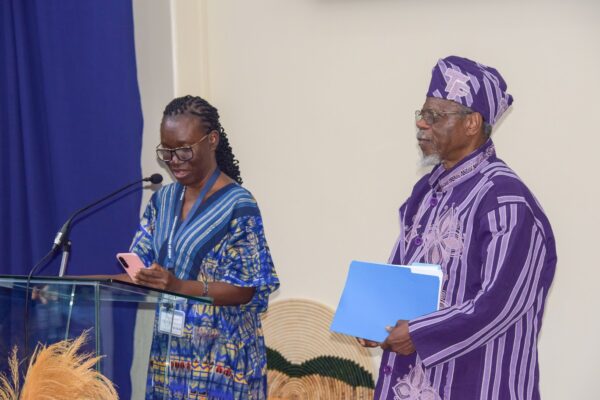
Tayo’s appointment as the Vice-Chancellor of the Adventist University of Africa in Nairobi, which came into effect on January 1, 2026, and his official inauguration as its fourth Vice-Chancellor in June 2026, thus meant much more than simply a change of institutions. It represented the continuation of an African academic journey across national borders.
That movement interests me because we often tell the story of African intellectual mobility in only one direction. It has been customary to discuss how many scholars in Africa have migrated away from their home continent to universities found in Europe, North America, and other parts of the globe. This is a very vital story, and the story of brain drain in Africa cannot be told without mentioning it. There is, however, another story that should be given much more importance, and that is migration within Africa. The movement from Nigeria to Kenya is part of this quieter but increasingly important story. It reminds us that the African university can become a destination for African expertise, rather than simply a point from which African expertise departs. Professor Tayo introduced me to his amiable management, comprising professors from Botswana, Uganda, and Ethiopia, places that I know intimately.
Tayo’s academic journey makes this movement particularly interesting. He began his academic formation in Nigeria, which includes his education in Agricultural Economics from the University of Ibadan, before going into other areas in postgraduate studies. His academic career was nurtured in teaching and academic planning, in postgraduate education and administration, as well as in his university-level experience. He had experiences outside of Nigeria as well, in the form of his connection to Adventist higher education in other parts of Africa. His appointment at AUA can therefore be seen not as an isolated episode but as another stage in a career that has progressively connected different parts of the African academic landscape. But the story becomes even more interesting when Grace’s academic journey is considered alongside his. Professor Oluwatoyin Grace Tayo is not simply accompanying a university administrator to a new location. She is herself a scholar and academic leader, with extensive experience in teaching, research, and research management. At the Adventist University of Africa, she serves as Director of Research and Grants Development. Her academic work in Animal Nutrition and her experience in research administration, grant development, mentorship, and research ethics bring another dimension to the Tayos’ presence in Nairobi. Their transition to Kenya therefore represents, in a broader sense, the movement of two experienced Nigerian academics into an institution whose intellectual mission extends across the African continent.
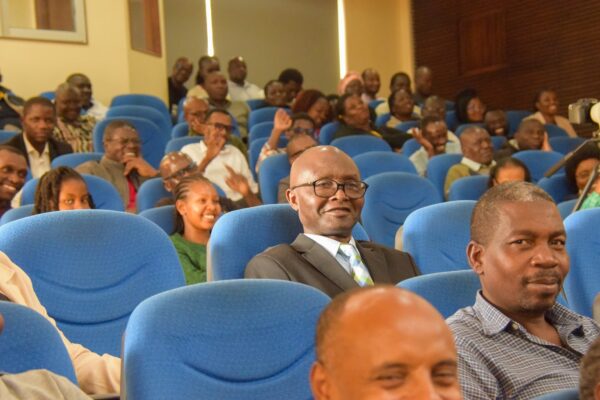
This was one of the things I found particularly striking about our encounter. The Tayos’ presence in Nairobi made visible a principle that we sometimes discuss abstractly: African institutions can draw upon African expertise from across national boundaries. The continent is endowed with huge reserves of academics, administrators, researchers, professionals, and intellectuals whose talents do not have to be constrained within the confines of the country where they received their training. The transfer of such talent does not necessarily make one country poor. Ideally, it creates another connection in an expanding continental network. It is even more fitting to do so in the case of the Adventist University of Africa due to the fact that the institution is broader in scope than the nation-state within which it operates. Being located in Nairobi, the AUA is an institution that caters to students from various nations in Africa and even beyond Africa. The Adventist University of Africa takes pride in having students hailing from more than thirty-four different nationalities. The vision of the university is postgraduate studies, research, leadership, Christianity, and service. In other words, it is easy to visualize the institution of the university not only as a Kenyan university but also as a member of the African intellectual community.
This is where my personal encounter began to assume a larger intellectual meaning. I have always been interested in the university as more than an educational institution. Universities are among the most important spaces in which societies imagine their futures. They train professionals, produce knowledge, preserve memories, question established assumptions, and create relationships that may last for decades. But in Africa, universities have an additional responsibility. They must help Africans understand one another. The colonial map divided the continent into political territories, and those territories subsequently developed different educational systems, intellectual traditions, professional networks, and national priorities. The borders became real, but they should never become intellectual walls; the university can help to prevent that.
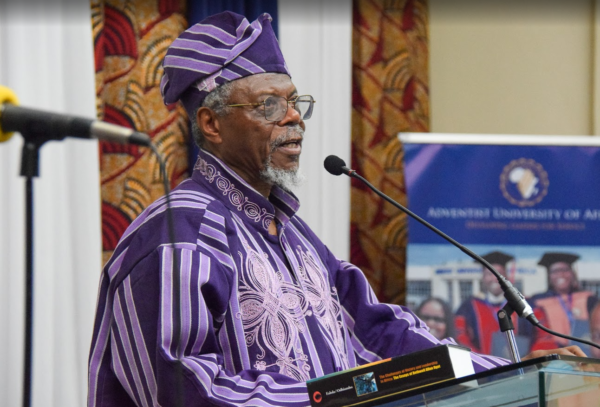
When a Nigerian scholar works in Kenya, when a Kenyan student studies with a Nigerian professor, when researchers from West and East Africa collaborate, or when postgraduate students from different African countries share a classroom, something more significant than academic exchange is taking place. They are learning Africa from one another. They are discovering differences that cannot be understood from textbooks alone, while also discovering similarities that national boundaries can conceal. The classroom becomes a small laboratory of continental encounter. Friendships formed there may eventually become research collaborations; research collaborations may become institutional partnerships; institutional partnerships may create new opportunities for the younger generations. This, to me, is one of the more practical meanings of Pan-Africanism in the twenty-first century.
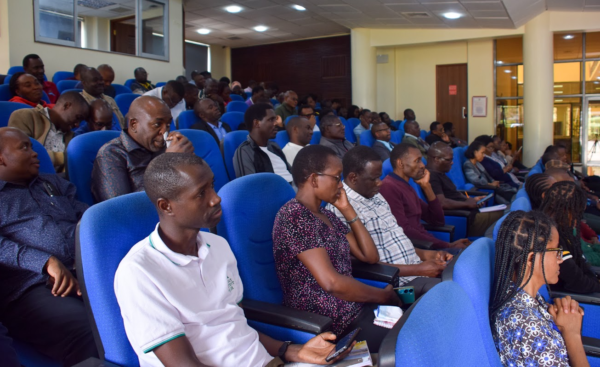
Pan-Africanism cannot remain only a historical vocabulary associated with political movements and the great figures of an earlier generation. It must also become a practice of intellectual cooperation. It must be visible in the movement of scholars, students, ideas, research, publications, technologies, and institutional innovations across the continent. It must be visible in African universities learning from one another and in African scholars recognizing that the intellectual problems of the continent cannot always be neatly divided according to national borders. Thus, my encounter with Grace and Ademola in Nairobi offered a small, almost intimate illustration of this possibility. It was not a conference, a diplomatic summit, or a formal Pan-African gathering. It was simply a meeting between friends and colleagues. Yet perhaps that is precisely where the most enduring forms of continental connection begin. Grand institutions are built through thousands of ordinary relationships, and intellectual communities are sustained by encounters that may initially appear too small to matter.
The significance of Ademola’s transition from Babcock University to AUA also lies in the continuity of institutional values. Both universities are situated within the Seventh-day Adventist educational tradition, where education is linked to questions of character, service, leadership, and responsibility. His movement from one institution to another therefore carries with it not only administrative experience but an accumulated understanding of what it means to lead a faith-based university. At AUA, this experience enters a postgraduate institution whose mandate places considerable emphasis on developing leaders and strengthening the intellectual and professional capacities needed by African societies.
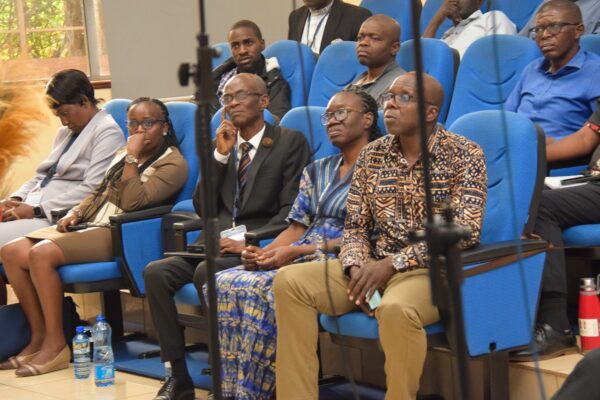
Leadership, on the other hand, must never be seen merely as occupying a position. The strength of a university does not depend on the fact that a Vice-Chancellor is holding that position. Leadership acquires meaning where it helps in building up institutions that will survive beyond individuals. This leadership is shown by the nature of the educational programs that are offered, the opportunities afforded to students, the conditions provided for researchers, the honesty of the institutional processes, the relations of the university with its surroundings, and the capacity to produce graduates who in turn will contribute to society. This is why Grace’s role at AUA is also important. A university cannot claim a serious intellectual future without investing in research. But research does not depend only on scholars who have ideas. Research requires systems that will enable the development of grants, ethics, collaborations, publications, mentoring, and knowledge transfer. Grace’s role in research and grants development is important as it touches on one of the most critical aspects of the future of the African university, which needs to develop the capacity to create knowledge rather than simply consuming it.
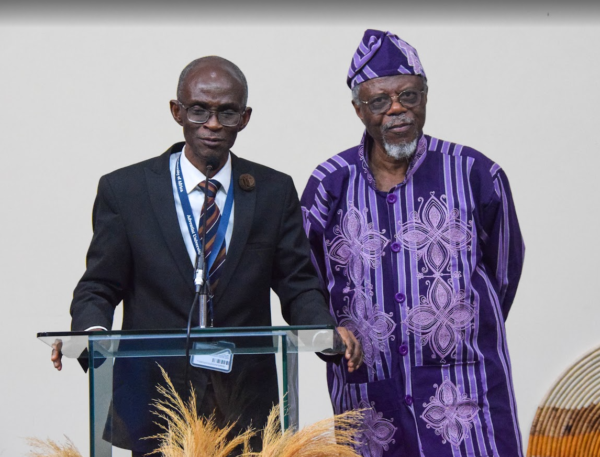
The conversation in Nairobi consequently made me think about the relationship between leadership and knowledge. Africa does not lack educated people. Nor is it bereft of capable academics, researchers, entrepreneurs, professionals, artists, and intellectuals. One of the persistent questions has been that of how these human resources could be systematized into sustainable structures of knowledge generation and transformation of society. The university plays a crucial role in this regard, as it brings together youth, who are only starting their professional careers, with seasoned scholars who have acquired decades of experience. The university, properly conceived, is thus an institution of intergenerational responsibility. Eventually, those of us who have been in universities for much of our lives come to realize that the greatest inheritance is not the office one has held. It lies in the students we have taught, the ideas we have generated, the institutions we have built, the younger scholars we have mentored, and the intellectual community we have fostered.
Perhaps this explains why meeting the Tayos in Nairobi felt so deeply personal. I was seeing, in a new geographical setting, another chapter of a journey that I had known primarily through Nigeria. I was seeing how an academic career can cross borders without abandoning its roots. I was seeing how one university can become connected to another through the movement of people. Most importantly, I was reminded that intellectual friendships have their own geography. Nor do they have to stay in their original location. It was also heartening for us to hear this story in Nairobi in a period when the debates around Africa’s future are getting more and more focused on Africa’s ability to create its own institutional structures. We discuss a great deal about infrastructure, technology, investment, trade, good governance, and economic development. These are all important issues, but at a deeper level is the issue of capacity building in humans. Universities have to be an important part of the answer and yet not fall into intellectual isolation.
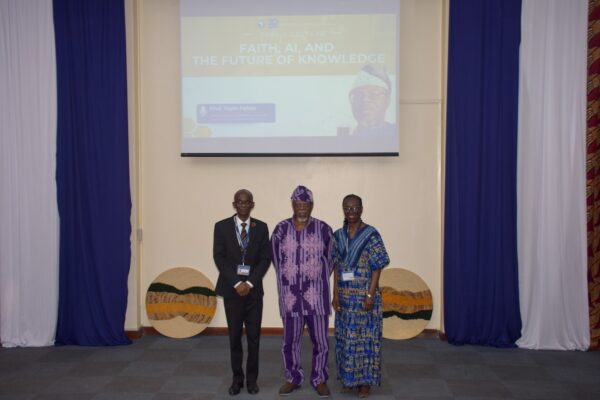
The university of the future in Africa must have its feet planted firmly on the ground in Africa while maintaining global connections. It will have to be familiar with the culture and history of its societies, but at the same time interact with global scholarship. This is why AUA’s continental orientation matters. Its location in Nairobi is Kenyan, but its intellectual ambition reaches beyond Kenya. Its students come from different parts of Africa; its programs engage professional and theological questions; its mission connects education with leadership and service. In such a setting, the arrival of a Nigerian academic leader is not an incidental development. It is part of the larger circulation of African intellectual capital. And so, when I think back on the meeting, I do not remember only the photographs, the conversation, or the pleasure of seeing familiar faces again. I remember the larger meaning that emerged almost imperceptibly from the encounter. Nigeria and Kenya seemed less like two distant national spaces and more like two points on a much larger intellectual map. Babcock and AUA became connected through a person whose career had passed through both. Grace’s research responsibilities added another dimension to the connection. Friendship became a bridge between institutions, and institutions became windows into the possibilities of a more connected Africa.
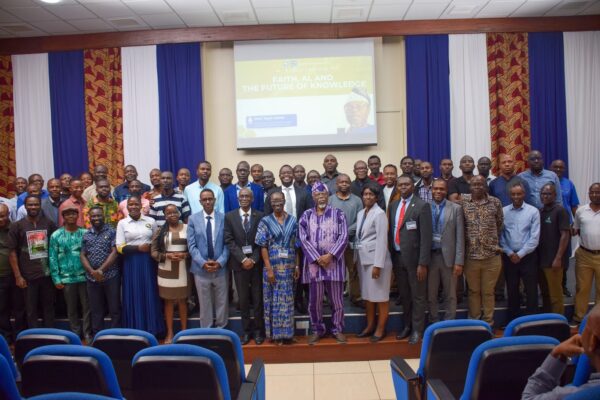
I left with gratitude—not only for the warmth of old relationships but for what the meeting represented. Africa’s intellectual future will be built in many places and through many kinds of people. It will be built in classrooms and laboratories, in libraries and research centers, in universities and communities. It will also be built through the movement of African scholars across African borders and through the relationships that make such movement meaningful. But perhaps, then, the value of such a gathering in Nairobi lies precisely in its not being a total picture of the future of higher learning in Africa. It certainly is not. It offers an insight into what that future may hold when Africans come to know each other as partners in a common quest for knowledge. That was, for me, the quiet grace of that meeting. A bond made in Nigeria had taken a different form in Kenya. A university experience that had been through Babcock University was now being lived out at the Adventist University of Africa. A scholar had brought his expertise beyond national boundaries, while another scholar was engaged in building up research capabilities. All of that amid an encounter between two old friends in Nairobi.
A very rich piece
Very insightful reflections on the seminar role of the African intellectual and the African university in promoting and deploying knowledge for cross-cultural, cross-national, and continental unity, cooperation, and development.
Wow. This is great. I appreciate your sharing of this experience, Prof., and the message it conveys. And I agree that Africa’s intellectual future will be built in many places and through many kinds of people. Thank you, Prof.