
Toyin Falola
The case of Nigeria since 1999 can be described as a paradox that requires deeper attention than the common glorification of elections, rivalry among political parties, and alternation in political power. Nigeria has had constitutional government, conducted elections, transferred political power, and sustained institutions of democracy. However, for most of its citizens, participation in politics does not lead to the ability to change the socioeconomic circumstances of their lives. People can vote, political parties are allowed to compete, the government is subject to change, and politicians can be removed from their positions. Yet, the basic organization responsible for allocating opportunities and economic power may remain unchanged.
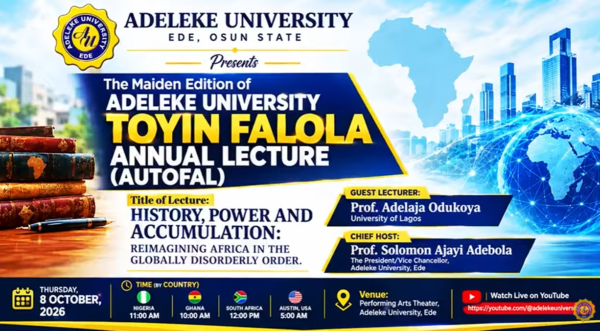
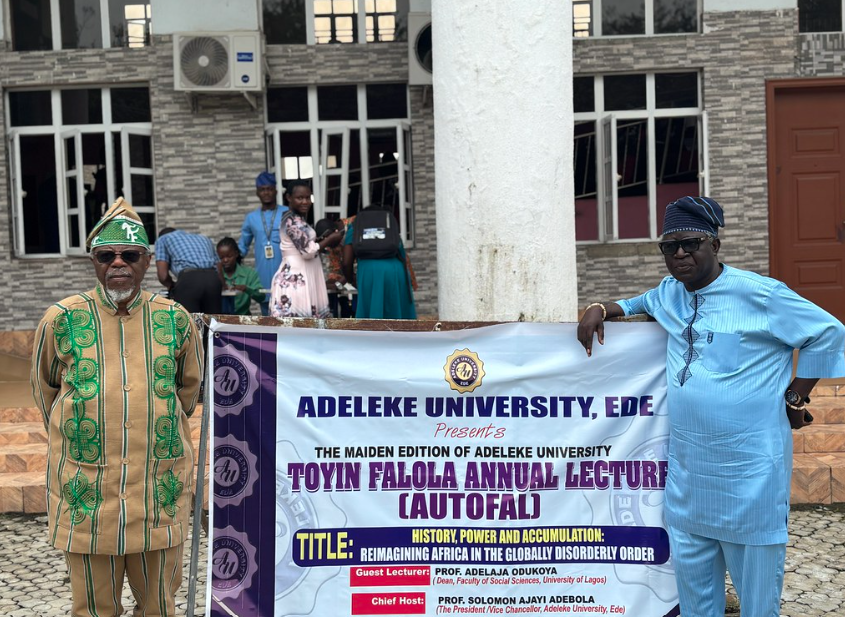
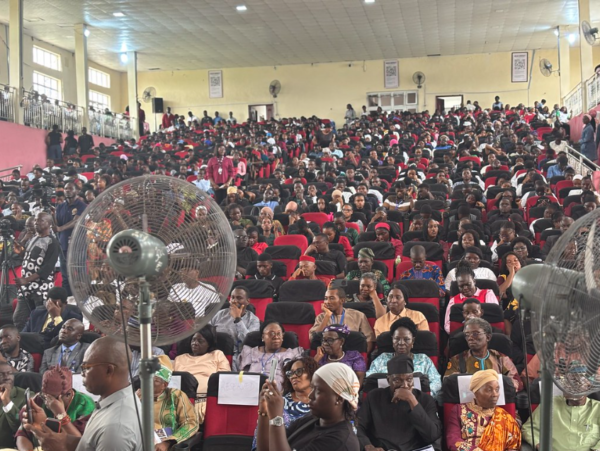
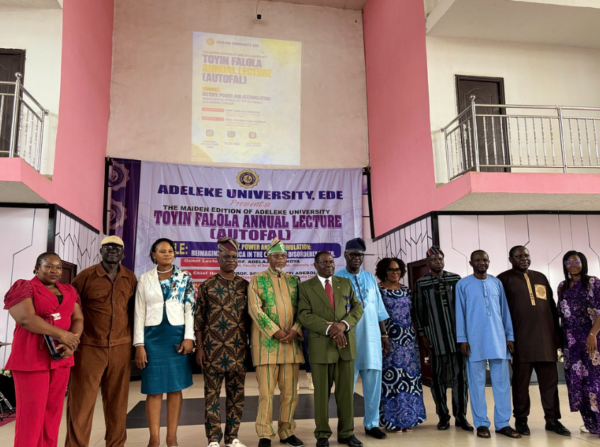
This problem forms the core of Professor Adelaja Odukoya’s argument, “democracy as disempowerment,” at the “History, Power and Accumulation” lecture. The concept does not discount the importance of elections or imply that electoral democracy holds no value whatsoever. On the contrary, it raises the question of whether political participation has taken on enough substantive form to empower the citizens in the process of influencing the socioeconomic processes that govern their lives. The individual citizen may be endowed with the constitutional power of voting but may not have much say over the creation of employment, financing of education, distribution of land, extraction of resources, or distribution of national wealth.
This differentiation is important due to the traditional perception of democracy, which focuses on institutional stability. People participate in election processes, political parties are registered, there is a government in place, and the constitution operates; these are integral parts of democratic rule. However, what is more important than institutional stability? Institutional stability shows how governments are changed and formed, but it does not show whether the people have benefited much from the system. Since participation in elections does not translate to participation in binding socioeconomic decisions, the presence of political freedom does not imply the presence of economic power.
Herein lies the significance of Nigeria’s experience of democracy. Since the transition to civil governance on 29 May 1999, the process of electoral competition has been entrenched as the means by which the government derives political legitimacy. Parties compete for office, the citizenry engages in elections, and governments are changed through the electoral process. However, the entrenchment of these formal democratic institutions does not imply an extension of popular control over the organization and distribution of social goods. Thus, the quest for “dividends of democracy” cannot only be viewed as the criticism of the performance of particular governments. This brings us to the more fundamental question regarding the interaction of democratic institutions and their political economy environment.
This issue is made clearer upon examination of the relationship between democracy and accumulation. In the lecture, the argument is that accumulation is not just wealth production but the organization of resources, institutions, productive forces, and political and social power. If one has any influence on this process, they will certainly have great influence over the development of society. Where citizens are allowed to vote but lack any means of influencing the process and distribution of wealth, there is definitely going to be a great distance between political and economic citizenship. In a democracy, citizens may have the opportunity to vote for political leaders without having influence on the system that determines their economic situation.
It is clear why there can be strong electoral competition without fundamental structural transformation taking place. When economic opportunities are tied to state resources, the element of economics will be inherently part of politics. Positions of power not only provide status and prestige but also access to contracts and opportunities. Thus, politics and economics become inseparable, and politics becomes a means of accumulating resources and power. Programs of parties and government will change, but the way in which economic opportunities are organized may remain the same. According to the lecture on “History, Power and Accumulation,” when democracy exists, but its ability to generate genuine people’s power is limited, such a situation is what Adelaja called the “Order of Organized Inversion.”
This theory provides a constructive break away from the approach of understanding Nigeria’s problems in terms of leadership alone. While leadership does matter and the kind of leadership that a country gets will definitely influence its policies, it is emphasized through the lecture that leadership occurs in the context of institutions and class relations. As such, a change in political leadership will definitely bring about a change in policy without necessarily bringing about a change in the organizational structure of accumulation. In other words, if the economic and institutional framework that determines political power is left untouched, changing from one government to another will not produce remarkable transformations.
Adelaja does not say that elections become meaningless in such cases. On the contrary, elections continue to be one of the major avenues by which citizens can choose their government and hold incumbent governments accountable for their actions. The problem is that there are limitations on electoral accountability because economic structures of power are largely inaccessible to the will of the people. A citizen can use electoral punishment against a government for its poor performance, but the ability of the government to change employment structures, productive capacities, educational opportunities, health care systems, infrastructure, and other economic structures is determined by the political and economic system of governance that existed before.
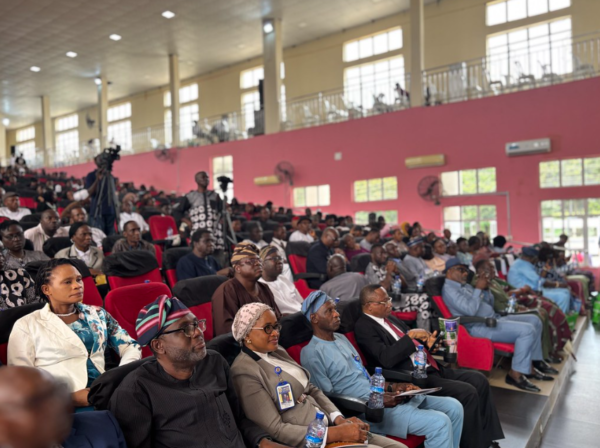
The implications become clear when considering the gap between political participation and economic reality. The citizen can be politically active through campaigning and voting whilst dealing with unemployment or underemployment. The citizen may have his or her constitutional rights but deal with unequal access to educational and health care services. The citizen can be politically active and lack economic opportunities. These contradictions generate the crisis of democratic expectations mentioned in the lecture.
Such frustrations must not be taken to mean political indifference. In this context, it is relevant that the lecture explained the #EndSARS protest because it proves that lack of empowerment can go together with political agency. Mobilization took place on account of certain concerns, but it also brought up more general problems about state power and citizens’ rights. Protest in such a case can highlight some inconsistencies that cannot be sorted out by the existing political institutions. Although protests reveal contradictions within society, pressure the public, and create political consciousness, they cannot individually reorder the political economy that gives rise to empowerment. For lasting change, there is a need for organization, institutions, and political programs that will connect individual concerns to transformation.
In a country like Nigeria, democracy tends to dissociate political citizenship from economic citizenship. Political citizenship may be defined as participation in elections, representation, and rights derived from the Constitution, whereas economic citizenship refers to the capacity of participating in the production and distribution of the means that make social life possible. These two dimensions cannot be entirely separated. A citizen with the right to vote but who does not have a say in how the conditions of his employment, education, health care, housing, or productivity will be determined is formally a political citizen but not a materially active one.
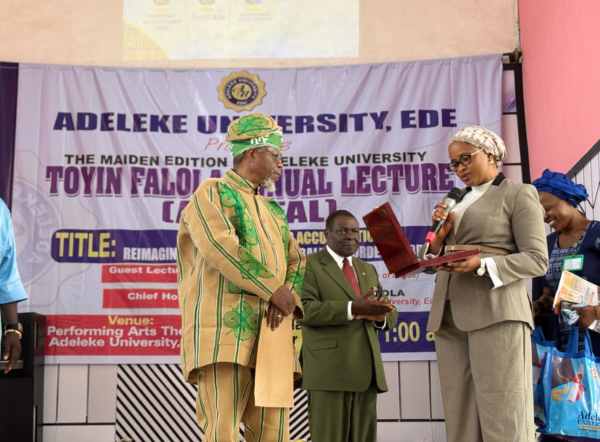
This is also the reason why the concept of “empowerment” needs further analysis. In the lecture, Prof. Adelaja is highly critical of the way people view the handing out of money, motorcycles, grinding machines, farming tools, etcetera, as empowerment. While such actions may help people in the short run, he argues that they do not create capabilities that would enable people to act as agents of change of their own accord. If people are still dependent on such actions carried out by political actors, then the basic relationship that exists between the people and the government will be that of dependency and not empowerment.
The difference between assistance and empowerment becomes particularly critical in the political setting where material poverty makes the citizenry prone to political patronage. Where economic opportunities depend on political contacts, government contracts, discretionary spending, and other state-managed opportunities, politics can take the form of a contest over access to state resources. The citizen is then not simply choosing among competing policy programs but operating within a system in which political authority has significant consequences for access to economic resources. Under such conditions, elections can become highly consequential while simultaneously failing to alter the deeper organization of accumulation.
This is where the lecture’s engagement with earlier African political economy scholarship becomes relevant. Richard Joseph’s analysis of prebendal politics draws attention to the ways in which public office can become embedded within networks of patronage through which access to state resources is organized. Peter Ekeh’s distinction between the primordial and civic publics provides another framework for understanding the historical and social complications surrounding relationships with state resources, while Claude Ake’s work emphasizes the relationship between political institutions and the economic structures within which they operate. Collectively, the above considerations imply that there is more to the democratic dilemma of Nigeria than electoral procedures. This dilemma is also about the context in which political institutions exist.
The problem, in effect, is not just that of improving elections, even though credible elections are a necessity. It is that of building on the connection between democracy and social power. Citizens must have institutions through which political participation makes a difference in the structuring of the economy, and the state must have institutions that can transform public power into productive change rather than reproduce existing processes of accumulation. Democracy must be judged not only by the extent to which people are able to choose political representatives but also by the degree to which people have institutions for influencing the circumstances under which wealth and productive capacities are produced and distributed.
It was argued at the lecture that development is not “accumulation” because accumulation by itself does not necessarily lead to productive change. An economy can attract investments, accumulate personal wealth, and conduct considerable economic activity even if it depends on borrowed technologies, international loans, and export of raw materials. Democracy can work within this accumulation model, but people can be deprived of any voice in organizing the process. The crisis is therefore simultaneously democratic and developmental because the limitations of political power are connected to the limitations of economic transformation.
Tertiary institutions become highly significant in the democratic equation. If citizens are to exercise meaningful influence over the structures that shape their lives, they require knowledge capable of explaining those structures and institutions capable of producing critical forms of citizenship. The university is therefore described as “organic” and connected to society without becoming subordinated to either the state or the market. Its responsibility extends beyond producing graduates for employment to producing knowledge capable of explaining social contradictions, developing productive capabilities and expanding society’s intellectual capacity to imagine alternatives.
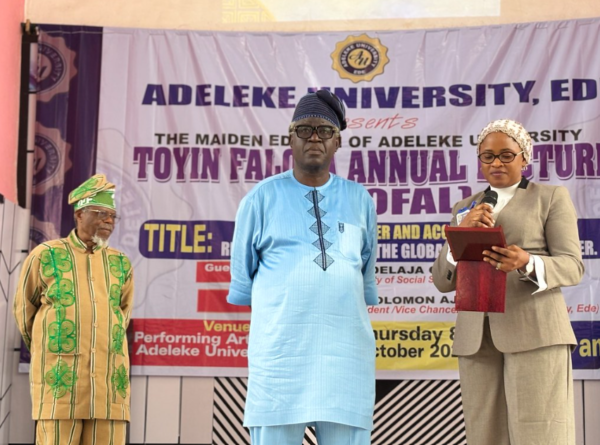
Democracy is about empowerment, not just through constant participation in politics. Empowerment means having citizens who have enough knowledge to understand what drives their lives and organize themselves based on common interest. This makes the university vital for democracy. It is that institution that provides citizens with certain qualifications; without asking questions about the structures that create the value of these qualifications in the economy, the institution falls short of its duty. The political system encouraging citizens to vote but failing to create institutions where their collective preferences would affect the organization of the economy faces the same peril.
The provision of infrastructure, electricity, schools, hospitals, jobs, and social services cannot be seen simply as the gifts of government to appreciative citizens. They are rather parts of the material context within which citizenship itself is realized. As long as citizens have the ability to lead productive lives, to acquire knowledge, engage in economic activities, and organize themselves along the lines of interest, then there will be substance to democracy. Where such abilities are lacking, political rights may yet persist without any real feeling of inclusion in the process of determining one’s material destiny.
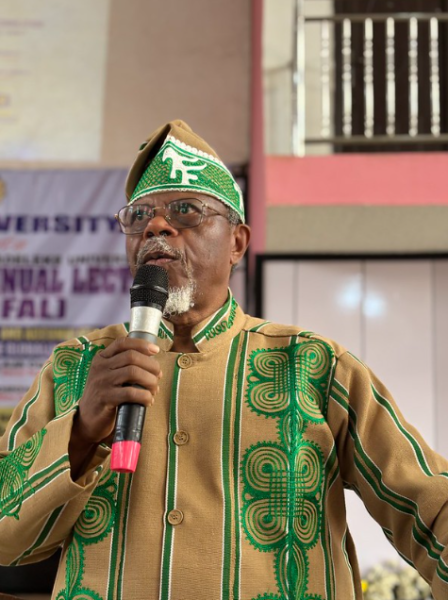
The task of democratization is further complicated since the process of democratic empowerment cannot be undertaken by the government alone. Hence, Professor Adelaja stresses that real change can only come through a critical and informed citizenry who are able to organize themselves collectively. In addition, there should also be an institution capable of converting political action into influence. Protest, voting, universities, civil society organizations, and other forms of civic organization can help in achieving this task, but none of them is individually enough.
Going further, the language of empowerment must rise above the presumption that there will always be provision of material incentives by the government. Although a beneficiary of intervention may feel relieved about the benefits offered at that very moment, true empowerment is only achieved when the capacity to produce and participate in the process of allocation of resources is gained. The distinction is ultimately between dependency and capacity. A democracy that repeatedly distributes relief without transforming the conditions that generate dependency may alleviate symptoms while leaving the underlying political economy substantially intact.
Nigeria’s democratic future should therefore be judged partly by whether political institutions can expand the capacity of citizens to influence the organization of social and economic life. This is a more demanding standard than simply asking whether elections are held or governments change. It requires attention to the distribution of productive opportunities, the organization of state power, the relationship between political office and economic accumulation, the capacity of citizens to organize, and the ability of public institutions to convert knowledge into productive and social capabilities.
The significance of this argument extends beyond Nigeria. Democratic institutions have gained a foothold in African economies, characterized by uneven inclusion in world capitalism, poor productive capacity, and great dependence on foreign inputs, technology, and capital. In light of this, the link between democracy and development is not purely an issue of institutions. The nature of democracy is defined by the economic context within which both the state and citizen act. Where citizens lack power over the process of accumulation, democratic institutions coexist with economic disempowerment.
That is precisely why the idea of “democracy as disempowerment” as raised in the lecture is worthy of consideration. There is an inherent contradiction in this idea which is easily overlooked when evaluating democracy on the basis of institutional continuity; individuals may partake in political institutions without having much say in the economic systems that define their lives. It is not the case that such a contradiction nullifies the importance of elections or leads us to discard democratic institutions; rather, it calls for the need to strengthen democracy.
The ultimate issue, thus, is not the legitimacy of the right to vote by Nigerians. The issue is what such a right allows them to affect. If citizens can vote for governments on a regular basis but yet lack the capacity to influence how jobs, education, resources, production and public goods are organized, then the gap between political citizenship and economic citizenship is considerable. The goal of democratic development lies in reducing that gap through creating institutions that would allow citizens to influence the circumstances of their collective life.
Nigeria’s experiences in the area of democracy must therefore be regarded as an incomplete project rather than a finished product in terms of institutions. The continuity of elections and constitutionalism is important, but democracy takes on greater meaning where the citizenry has the capacity to use their knowledge and organizational abilities to shape the systems that reproduce society. The political issue cannot therefore be divorced from the economic issue since political power has a lot to do with the organization of accumulation.
It is not merely about having better elections, nor can it be achieved simply through a change of personalities in politics. What it calls for is a deeper transformation in the way that citizens, the state, capital, and knowledge relate. In order to achieve this goal, citizens need to be transformed into something more than just voters – something that allows them to become an active part of organizing society. In addition, the state needs to go beyond selective protection of accumulation to develop productive capabilities, and knowledge institutions need to help citizens understand the structures that organize their material existence.
The country has done something noteworthy after 1999, but the fact that there is a gap between political participation and economic power proves that the process of developing democracy is far from over. Having elections gives citizens a tool to express their political will, but the real democratic task lies in the ability to translate that will into influence over the environment of people’s labor, learning, production, and life. Democracy is no longer just an occasional competition for political office once citizens become capable of shaping their future.
Therefore, the issue facing Nigeria is not one of failure of democracy based on citizen dissatisfaction with its results. A better question might be whether the country has made an adequate link between participation in democracy and empowerment. This can only be achieved through deepening the substantive element of democracy by empowering citizens to have greater say in matters of accumulation, development of tertiary institutions, and establishment of an economy where political citizenship goes together with economic citizenship. Unless this link is made, Nigeria will continue facing the same paradox whereby there is democracy in which the citizens have the right to select their leaders but lack greater say in determining how the resources of society will be organized.