
Toyin Falola
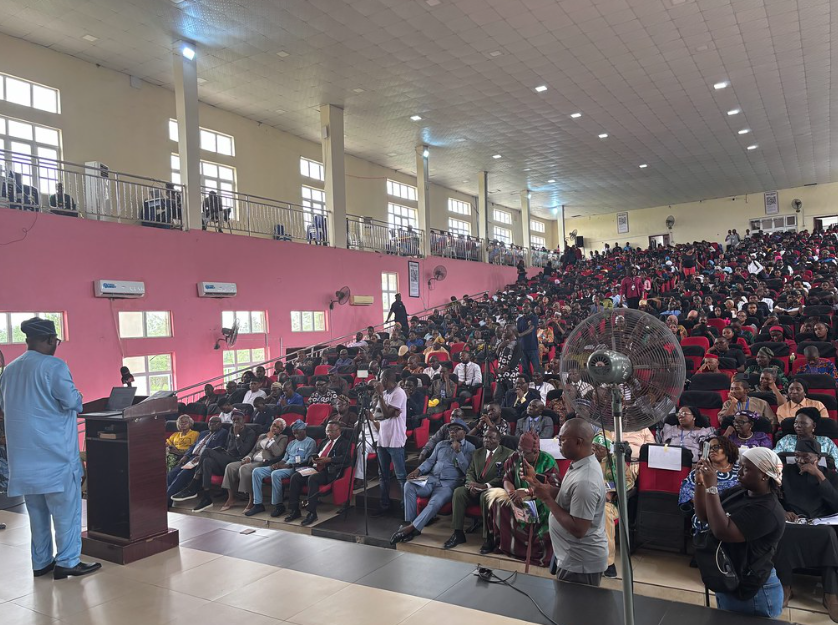
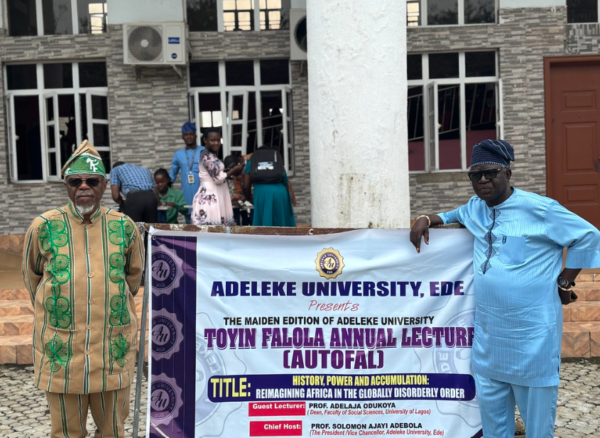
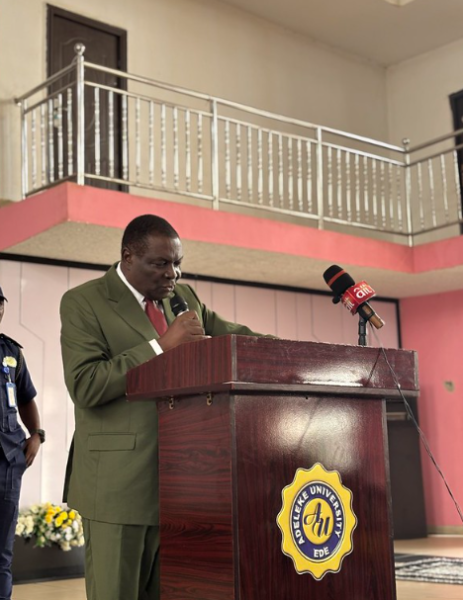
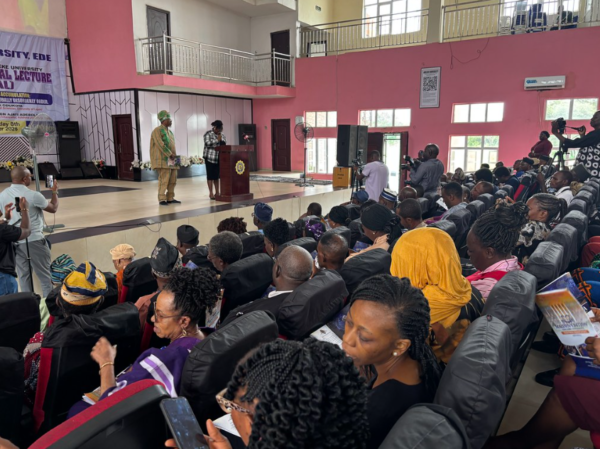
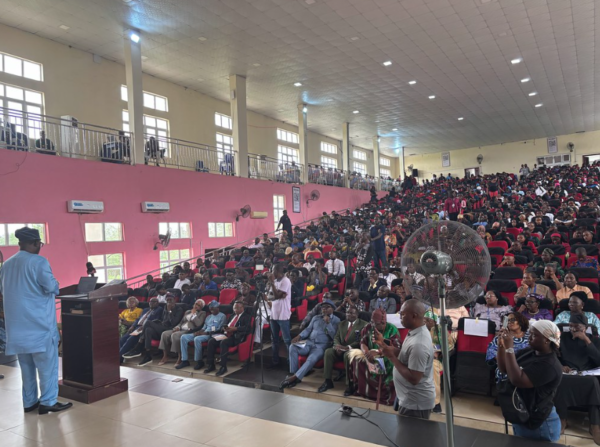
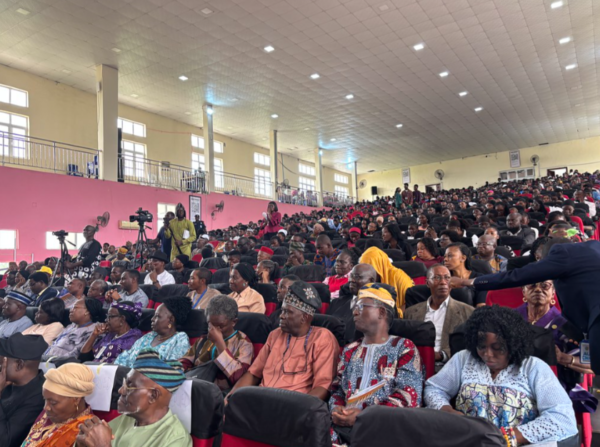
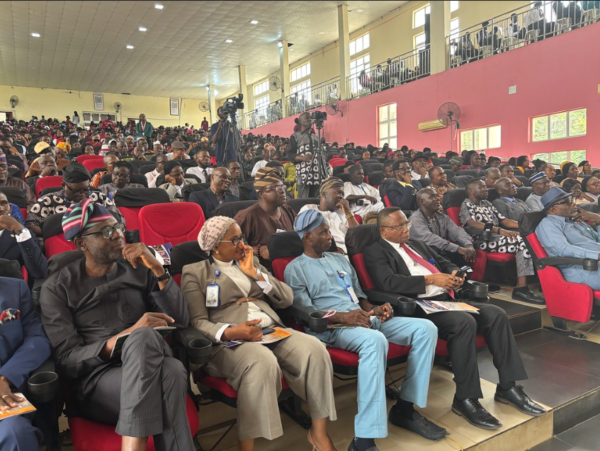
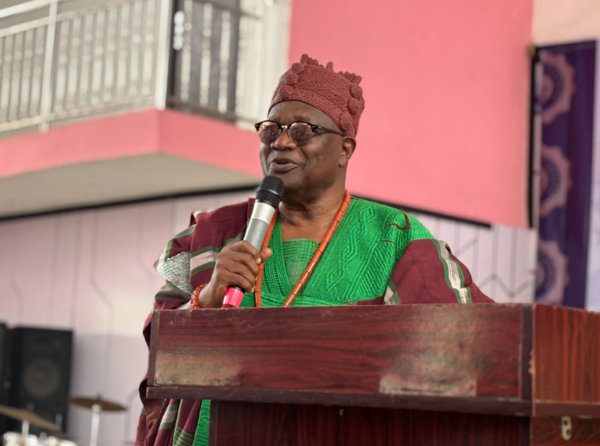
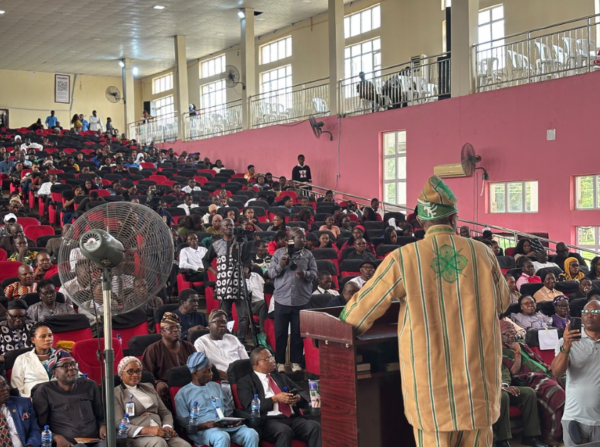
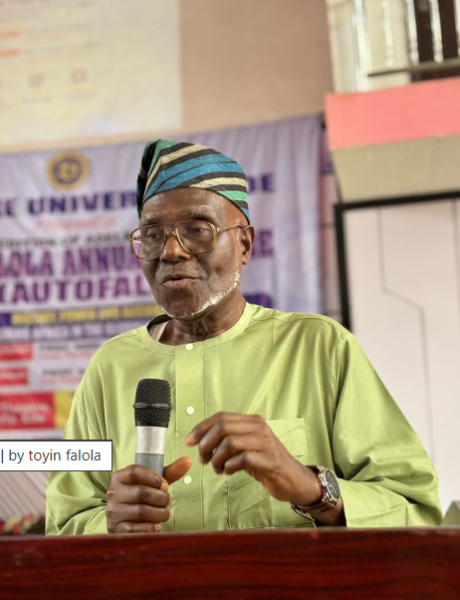
One of the central issues in the lecture delivered by Professor Adelaja Odukoya, Dean of the University of Lagos, at the inaugural Toyin Falola Annual Lecture at Adeleke University is structured around contradictions: a weak vs. powerful state; a weak and powerful continent; a rich vs. a poor continent; and poor citizens vs. wealthy leaders. In this piece, I broaden his epistemology within the frame of a global order.
The African continent is at another crucial juncture in its long history with the global political economy. In the international political economy, Africa is now receiving a lot of focus owing to the importance of its mineral resources, energy sources, agricultural resources, growing markets, and geographic position. Shifts in the energy sector, technological advances in industry, development of digital networks, and global value chains have made the resources in Africa more valuable, and geostrategic competition between world powers has increased the hunt for dependable access to them. While the continent, which has long been viewed as marginal to global power politics, is being integrated into the calculations of global power politics, this integration raises a question that Africa cannot ignore: ‘does being more valuable to the world mean being more powerful in the world?’
Africa’s historical experience reveals that these conditions are neither synonymous nor interconnected processes. This distinction is especially critical since the role of Africa in world accumulation has in the past been marked by an enormous asymmetry between Africa’s inherent value and its ability to decide how that value is acquired, appropriated and sustained. Although the current international context may differ vastly from those in the past, the political-economic problem at hand is discernible. Africa can have resources that are essential for production outside the continent yet remain dependent on foreign technology, money, and productive capacity. It can become increasingly important to global accumulation without acquiring a corresponding capacity to determine the terms of that accumulation. The challenge, therefore, is not simply for Africa to become more attractive to investors or more strategically relevant to competing global powers. The more fundamental challenge is to convert strategic relevance into productive capability and productive capability into a greater capacity for developmental autonomy.
This is a central argument of Professor Adelaja Odukoya’s lecture, History, Power and Accumulation: Reimagining Africa in the Globally Disorderly Order. The argument becomes clearer when situated within the lecture’s understanding of the contemporary international system as a “Globally Disorderly Order.” The phrase does not suggest that the international system has descended into complete chaos, since trade continues, international financial systems remain integrated, production networks continue to cross national boundaries, and international institutions retain considerable relevance. The debate is thus focused on the stability of the structure in which such relationships take place. Competition between states, wars, and sanctions, competition in technology, energy insecurities, and fights over strategic supply chains have destabilized the post-Cold War assumption of an international order that was stable to some degree. What this leads to is an international system in which relationships exist but power structures within them are contested. For Africa, this matters because the changing structure of global competition has increased the strategic significance of resources and geographical spaces that the continent possesses in considerable quantities.
The renewed attention directed towards Africa should therefore be understood with some caution. There is a natural tendency to view increasing attention to the continent’s resources as an indication of the continent finally gaining the geopolitical significance it deserves. It must be pointed out, though, that such an attitude may confuse the interests of outsiders with the interests of development of African societies. An African continent can indeed become vital to the strategies of others while lacking the ability to use its strategic resources as it sees fit. It is clear from historical experience that the demand for the continent’s resources does not necessarily lead to the continent developing productive independence. It is not a question of whether Africa has strategically valuable resources; it is a question of how African societies can organize their resources to create technology and industry.
It is at this point that the idea of the difference between accumulation and development raised in the lecture gains importance. The term accumulation does not simply mean the growth in wealth but organizing and reproducing resources, productive forces, institutions, knowledge, politics, and social power. Thus, a society could accumulate wealth without developing the productive capacities needed for development. Primary products can earn income and foreign exchange without need for processing, manufacturing and technological production elsewhere. Economic and financial activity can grow without much productive capacity. Private wealth can grow while public institutions decline, and investments can take place without the development of an internally productive economy. The crucial issue here is not whether there is accumulation or not; it is the nature of accumulation, its control and its surplus use for the future.
This distinction provides an important lens through which Africa’s present resource significance should be examined. The lecture argues the accumulation of primary products against productive capital, emphasizing the difference between the export and exploitation of natural resources and their use as an entry point for increasingly complex production processes. Accumulation of primary products does not have to be incapable of contributing to development because profits derived from oil, minerals, and agriculture can be invested in development infrastructure and technology. The problem is that when extraction and export become the end of accumulation, instead of just one step in the process, a developmental process is not taking place. If the extraction and export of resources is followed by imports of manufactured goods, then the continent will be caught in the trap of creating value somewhere else.
The contemporary competition over valuable minerals makes this distinction particularly urgent. An interesting example was provided during the lecture – a nation could have cobalt without manufacturing any batteries, in the same way that exporting lithium is not always accompanied by the creation of technologies related to battery production. The same challenge exists in the history of Nigeria’s experience with crude oil, where exporting oil has always been possible with an incomplete domestic industry in the oil sector, just like how nations can export agricultural commodities while relying on imported processed foods and agricultural inputs. Ownership of resources alone is not enough; what counts in terms of development is how much a resource helps a nation generate, capture, and add value through production.
The importance of the above argument goes beyond minerals or any other commodity, because the nature of world capitalism is making production itself central to geopolitical power. Major economies are starting to regard industrial policies, technological capacity, energy and strategic supply chains as issues of national security, not business as usual. In such a case, Africa’s interaction with the world economy cannot be limited to the standard language of trade, investment and access to markets. When production, technological capacity and the ability to organize supply chains are becoming tools of geopolitical power, it is imperative for African nations to view their own productive capacity as strategic power. Any nation endowed with resources yet lacking processing capacity, innovative technologies, or productive linkages remains vulnerable despite the growing demand for its resources.
This explains why the rise of a multipolar international system does not necessarily mean that African nations will be automatically liberated from the constraints of dependency. While the existence of various competing external players will allow the government in Africa more freedom of maneuver in diplomacy, the very fact of choice itself becomes significant if the ability to make that choice exists. A government may be able to choose between investors from different geopolitical centers and still lack the technology necessary to determine the terms of production. It may have access to several export markets while remaining dependent upon primary commodities. It may attract foreign direct investment from multiple partners while continuing to depend upon external technologies and finance. The crucial issue is therefore not whether Africa should align itself with one external power against another, but whether African states can develop the productive capacity that allows relationships with all external powers to be negotiated from a stronger position.
This brings the African state directly into the discussion. The State–Capital Model of Accumulation, as discussed in the lecture, challenges the assumption that markets operate independently of political authority. Accumulation depends on property rights, binding contracts, infrastructure, labor regulations, finance and law, all of which are dependent in some way on state power. The state is therefore not a mere bystander to accumulation, but a part of the construction of the environment within which accumulation occurs. The problem is that the exercise of state capacity becomes selective. It may be quite effective in the protection of property, the granting of concessions, the facilitation of investment and the safeguarding of certain forms of accumulation, yet quite ineffective in supplying electricity, education, healthcare and social security.
The point is that the issue of development in Africa cannot simply be posed as one of whether the government is business-friendly or unfriendly, interventionist or non-interventionist. The key issue here is rather the product that the state wants from the capital. Investments should not be measured simply in terms of the quantity of capital invested in a country, since the quantity of investments does not tell anything about its effects on the development process. It is necessary for a development-oriented state to know whether the investments help build productive linkages inside the economy, create engineering and technological capabilities, stimulate other industries, encourage scientific activity and preserve productive capabilities within the national economy.
In such an approach, there is no need for Africa to turn away foreign capital, nor is there a presupposition that domestic capital is development-oriented by default. It is important to understand that there is a distinction between the nationality of capital and the type of accumulation it is involved with. Domestic capital can produce a concentration- and dependence-based type of accumulation, whereas foreign capital may bring about productive transformation if the right institutional environment exists. What is important here is the interaction between capital, the state, technology, production, labor, and surplus distribution. In other words, the developmental state should have enough autonomy to be able to bargain with the capital but at the same time be accountable to society. Without accountability, state strength can become another instrument of elite accumulation.
Africa’s difficulty is compounded by the fragmentation of its own political economies. External capital increasingly operates across national borders, while African governments continue to negotiate largely within separate national frameworks. The outcome is a clear disparity in terms of the scale at which the capital operates and the scale at which African countries often wield economic power. The first country may have minerals, the second one energy, the third one the manufacturing capability, while the fourth one has specialized technological know-how, but their combined assets do not necessarily form part of an integrated production system in Africa.
This problem complicates the meaning of African integration. The African Continental Free Trade Area represents an important institutional framework for deeper economic integration, but the existence of a continental trade framework cannot by itself create continental developmental power. However, a bigger market could easily become a larger market of imports where production continues to be fragmented, and capacity is weak. The real integration needs organization of infrastructure, energy, finance, research, technology, and industrial capacity that cross national boundaries. Africa therefore confronts a condition in which markets can become integrated without production becoming sufficiently integrated to generate transformative effects.
The political obstacles to such integration are substantial because productive integration inevitably changes existing relationships of power. It can redistribute rents, expose protected industries to wider competition, alter relationships with foreign capital and reduce the discretionary control that national governments exercise over concessions and investment. National elites who benefit from existing accumulation structures may therefore have material reasons to resist deeper integration even when integration appears economically rational at the continental level. The problem is consequently not simply institutional inefficiency; it is the political economy of interests that has developed around national accumulation. Africa can remain deeply integrated into global capitalism while remaining insufficiently integrated within itself, thereby preserving a condition in which foreign capital can negotiate across the continent while African states bargain separately.
The implications for the contemporary resource era are far-reaching. If individual African nations react to the resurgence of global competition over strategic minerals and other resources, then they will perpetuate an old situation wherein the external players are able to negotiate from a more structurally powerful position, whereas the African nations negotiate among themselves to attract investment. But if African nations are able to generate integration methods for themselves, then their size could become a factor for negotiating leverage. The issue is not the abolition of national sovereignty, which the lecture explicitly rejects, but the development of continental productive and economic capacity through which national sovereignty can acquire greater collective substance and material power.
The stakes are therefore larger than the immediate question of who gains access to Africa’s resources. The deeper issue is what kind of African economy emerges from the current restructuring of global accumulation. As long as the continent continues to be mainly an exporter of its natural resources, it can become more significant without necessarily becoming more autonomous. If the extraction of resources is linked to the processing, production, learning, technology, and value chains, then the very same global demand that presently constitutes a threat could turn out to be an opportunity. The difference between these outcomes will not be determined by resource abundance itself but by the political organization of accumulation.
It is for this reason that Africa must be careful to avoid the temptation of seeing strategic relevance in terms of relevance being equal to power. It is one thing to be the object of solicitation from competing strategic actors, and quite another to have the means to negotiate on an equal footing with them. It is one thing to have access to resources which other countries need and another thing to be able to command the technology needed to process the resources. It is one thing to be able to attract investments and quite another to be able to industrialize; it is one thing to export and another to diversify.
The present moment nevertheless offers Africa a significant historical opening. Disruption of the existing global hierarchies leaves space for negotiations, while the increasing strategic importance of the continent gives African countries resources which are not to be easily traded away. The task is not only to utilize such resources but also to ensure that it happens on the basis of deliberate policy choices and not in response to the external demand determining the form of African production. The opportunity is real, but the argument from History, Power and Accumulation makes clear that opportunity alone cannot produce transformation. Africa must possess the institutional and productive capacity to act upon it.
In the end, the question of Africa’s role in the new global order brings us back to the issue of history, power and accumulation. History shows the continent that outside interests in its wealth have not always been associated with development in Africa. Knowledge allows for understanding of the system through which power is organized and wealth accumulated. Political power allows for the institutional ability to change this system. Finally, productive power determines if such opportunities can result in real changes in the conditions of life for African communities. All these elements should not be considered separately for Africa to avoid following the same pattern according to which increasing worthiness of Africa for the rest of the world leads to very little change inside Africa itself.
This is because Africa faces an interesting paradox. Resources needed by the rest of the world are available on the continent; there is global competition that will offer new chances of negotiation, and Africa is becoming strategically significant because of its markets and geography. However, all of these factors do not assure development. The task of Africa is to make sure that its importance does not just increase the chances of being exploited but rather makes itself better able to exploit, innovate, and accumulate.
Therefore, the critical question is not whether Africa has increased in value to the world, since changes in the international political economy have made that more obvious than ever before. Rather, the critical question is whether Africa is able to organize the political, economic, technological, and continental power necessary to decide what this value creates. If the resources of Africa result in the creation of processing plants, technology, job skills, regional production systems, and organizations to continue this transformation, then the existing global disorder will provide an opportunity for Africa to reshape its position in history. If they remain primarily objects of extraction and export, however, Africa may once again find itself occupying an increasingly important place within global accumulation without possessing a correspondingly greater capacity to shape the terms of that accumulation.
The task before African states and societies is therefore not simply to become more important in a world that increasingly recognizes the value of the continent. It is to build the productive and political capacity through which importance can be converted into bargaining power, bargaining power into technological and industrial capability, and capability into development. The historical opportunity lies in the changing structure of the global order, but the outcome will depend upon what Africa builds from that opportunity. Africa must move beyond possessing resources towards building productive capabilities, beyond economic activity towards development, and beyond being important to becoming powerful.
PS: The full lecture can be accessed at:
https://www.youtube.com/live/gkfIz5GcX4c?si=xeiwpFtt4adCpBec
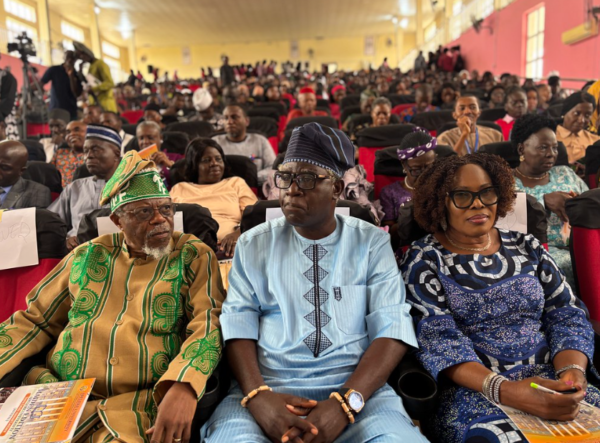
Photos: The Maiden Edition of Adeleke University Toyin Falola Annual Lecture (AUTOFAL), Part 1, 8 October 2026
https://www.flickr.com/photos/toyinfalola/albums/72177720336041762
Photos: The Maiden Edition of Adeleke University Toyin Falola Annual Lecture (AUTOFAL), Part 2, 8 October 2026
https://www.flickr.com/photos/toyinfalola/albums/72177720336072809/