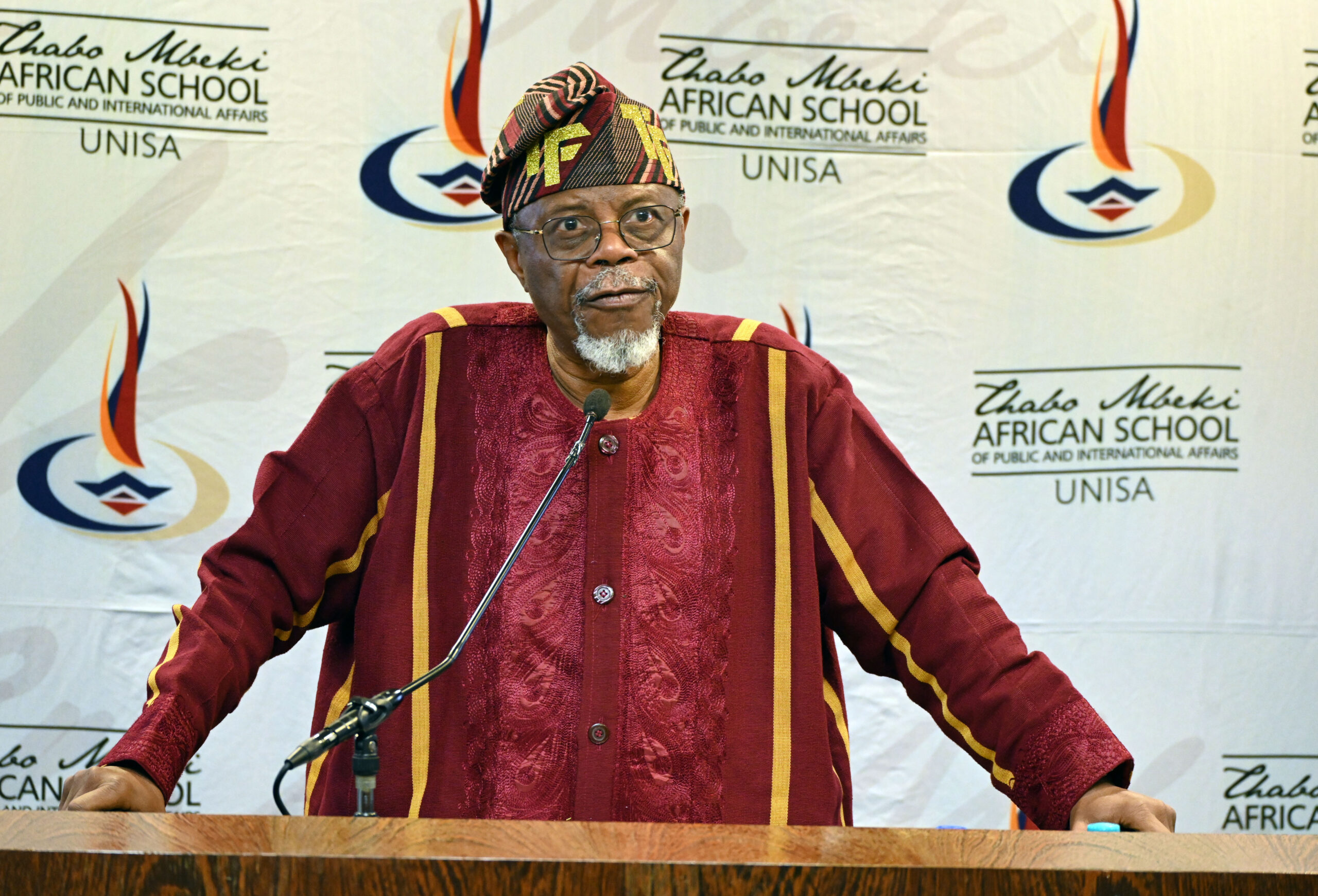

Toyin Falola
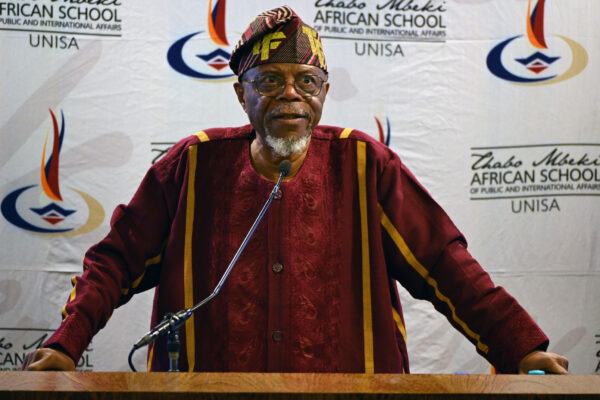
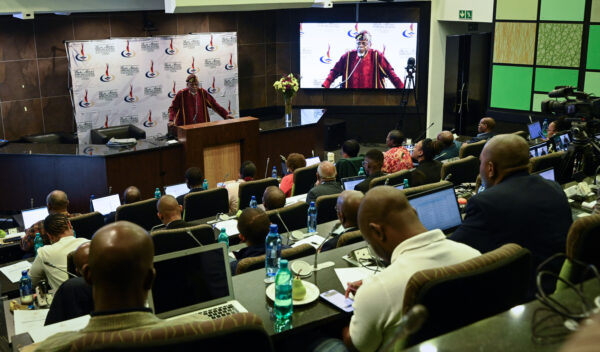
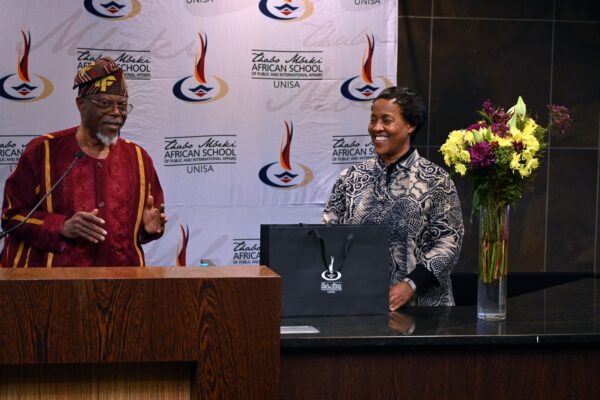
Opening Address to the International Advisory Board, Thabo Mbeki School, UNISA
November 21, 2026
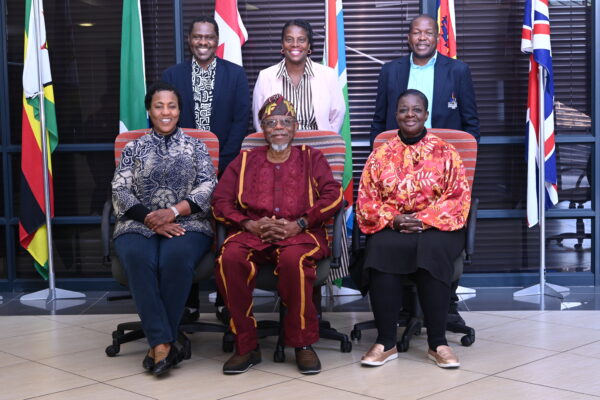
Distinguished members, esteemed colleagues, ladies and gentlemen:
Thank you for allowing me to continue as Chair of this distinguished Board. I am humbled and honored to stand before you today. We meet at a time of great significance, not just for the School, but for Africa and its role in an increasingly dynamic world. Many board meetings are consumed with reports, budgets, policies, and forecasts. All these topics are necessary. But every so often, we must look beyond the day-to-day business of running an organization and ask ourselves: What period of history are we living through? What does it require of us? What must we decide today if Africa is to have a brighter tomorrow?
This is such a moment.
Africa today teeters between great hope and great danger. Africa is youthful, inventive, resilient and connected. Africa has human talent. Africa has natural wealth. Africa has growing markets. Africa has cultural impact in every nation on Earth. But poverty persists. Millions of Africans go to bed feeling insecure. There are too many Africans without work. There are too many displaced families. There are too few public institutions that work. Too many parts of our magnificent land suffer ecological devastation. And too many Africans have lost confidence in our political class. These extremes cannot define Africa’s present or future. One paints Africa as a permanently broken continent. A continent that is waiting passively to be saved by the outside world. That is not our Africa. The other prediction cheers the certainty of an “African century.” It ignores the foundational deficiencies that could derail Africa’s potential. Unquestioning optimism is not enough. Africa needs honest hope. Hope rooted in clear-eyed diagnosis, institutional bravery, smart investments, and sustained action.
A Moment of Demographic Consequence
Africa’s demographic remains one of the great trends of this century. Africa has the youngest population of any region on Earth. That youth can be our continent’s great dividend. But if our young people are deprived of education, opportunity, dignity, and a voice in public life, it will become a source of instability and discontent. Hundreds of millions of young Africans will not settle for half-realized freedoms.
A young population is not a demographic dividend. For a population to provide a dividend, societies must invest in people. If that does not happen, demographic expansion will fuel unemployment, frustration, irregular migration, political alienation, violent recruitment, and social unrest. The critical question is not how many young Africans there are, but what opportunities they will have; what values they will embrace; what skills they will acquire; and what institutions will shape their lives.
Across the continent, young Africans are showing what they can do. They are starting technology firms. They are redefining African music and African fashion. They are making films. They are found at the center of networks of African writers, artists, scientists, and thinkers who are influencing global culture today. They are inventing new ways to organize for political action.
African youth are not waiting to be permitted to inherit the future. But too often, they come up against institutions that are barely fit for the purpose of meeting their aspirations. Our institutions can be slow, exclusivist, and hostile to change.
Our job is not to idolize youth. It is to empower them. It is to build schools that teach critical thinking, compassion, innovation, tech literacy, history, entrepreneurship—traits of character and units of knowledge that a certificate alone will not certify. Education must prepare people not just for jobs, but to think for themselves, to create value, to defend freedom, and to engage the world with confidence.
No university, government, business, media house, think tank, or civil society organization can claim to work for Africa if it regards young people as an afterthought. Every serious African institution should be asking itself questions like these: How do our decisions impact young people today and tomorrow? Are we clearing a path for young people to realize their potential, or are we interested in power only for ourselves? When we look at the leadership of our organizations, do young Africans see people who look like them? Are we training our successors, or working in silos? Are we taking steps to preserve and pass on our institutional memory? If we do not change our institutions to reflect the dynamism of young people, the future will not wait for them.
The Crisis of Governance and Public Trust
Africa’s problems are not solely due to colonialism, global injustice, or external interference. Though valid, those critiques cannot account for all that is wrong today. Modern African leaders must also own problems of corruption, mismanagement, constitutional abuse, political intolerance, and democratic institutions that they neglect or attack. Colonialism might have distorted Africa’s development but cannot be blamed for everything that goes wrong today. African leaders have an unprecedented opportunity to win back the trust of their people.
In too many countries, that trust has broken down. The relationship between state and citizen is defined by distance. Citizens are asked to follow laws that are not evenly applied, trust institutions that do not serve them, and sacrifice for political elites that do not share their burden. Public authority should provide security, justice, education, healthcare, and a basic platform for people to shape their own lives. When it cannot, it forfeits its right to rule. The consequences of this failure have been political disillusionment. They have also been a crisis of belonging: ethnic, religious, regional, and private. These alternatives gain currency when national institutions lose theirs. When education depends on who you know, when justice is bought and sold, when opportunity favors the already fortunate, citizenship loses its meaning. To rebuild nations in Africa, we must begin by rebuilding trust in public institutions. Trust is hard to measure. But it grows when government is fair, consistent, accountable, and able to get things done. People believe in institutions that treat everyone equally; that spend public money on public goods; that reward merit; and that protect the rights of all citizens without fear or favor.
Boards have a critical role to play in this process. A board should not be an ornament or a rubber stamp. It should safeguard the institution’s purpose; demand accountability; manage risk; and balance the ambitions of leaders with the organization’s need for continuity. A weak board allows leaders to make institutions into their personal property. A strong board cultivates a culture where power is checked by principle. Now is the time for everyone who cares about Africa’s future to embrace board reform, whether in government or the private sector, universities or civil society, religious organizations or professional associations. We must practice what we preach. Governance reform cannot start anywhere else, but where authority is wielded. If we criticize corruption at the level of the nation state while shielding ourselves behind opaque leadership at home, we place ourselves above the laws and standards we seek to promote. Strong boards begin with strong people. If you care about Africa, start by caring about the quality of governance in your own organization.
Africa in a Changing Global Order
The international order is changing. Economic rivalry is intensifying. Technologies are transforming how we work and what we know. Climate change is reshaping patterns of farming, migration, disease, and human habitation. Strategic competition is underway between rival powers for minerals, markets, diplomatic influence, and access. Africa cannot afford to be a place where others fight out their rivalries. Africa must become a shaper of strategy and not an object of strategy.
For generations, Africa has been a source of raw materials for others to valorize. Value is captured in processing, manufacturing, technology, branding, and distribution. Today all eyes are on Africa because of the minerals and metals that are required to feed the world’s transition to renewable energy. But if Africa exports raw materials and imports finished goods, then continental wealth will again be plundered from afar. Africa risks once again becoming a quarry for other people’s technology.
Africa must become a continent of transformation, not just extraction. It must develop regional value chains. It must add value to its commodities. It must diversify manufacturing, support research and development, negotiate fairer resource contracts, and build the skills needed for tomorrow’s industries. Natural resources are only a blessing if a country’s institutions have the capacity to harness them for the public good. Minerals become valuable only when they are connected to industrial capacity and distributed as public goods. Left untended, Africa’s natural wealth could become a curse.
Africa must integrate regionally with greater urgency. Africa’s markets are too small for most economies to industrialize on their own. Poor transport links, border queues, divergent regulations, and petty protectionism mean Africans still trade more with Europe than with each other. The AfCFTA is a tremendous opportunity, but it is just a starting point. Trade agreements themselves do not build roads or connect farmers to markets. Regional integration must tackle administrative bottlenecks and build infrastructure that can unify a continent physically torn apart by colonial borders.
Africa must also articulate its interests more clearly on the world stage, whether on international taxation, debt, climate finance, intellectual property rights, trade, migration, or global governance. There is no African position on any issue if African countries negotiate separately. Unity does not mean that countries have no national priorities or policies. It does mean that African countries should seek consensus when possible and coordinate their positions because divided we negotiate from weakness but united we can achieve global influence.
Technology, Knowledge, and African Agency
The battle over who controls knowledge will be one of this century’s defining struggles around artificial intelligence, biotechnology, digital currencies, data regimes, and automated production. These fast-emerging forces are rearranging every aspect of human existence, and they will generate massive wealth. But they could also increase the gap between knowledge-producing and knowledge-consuming nations. If we are not careful, Africa could inherit a digital future characterized by dependency. To avoid this, we need investment in broadband technology, scientific education, local data centers, cyberspace security, research institutions and innovation hubs.
We also need to think ethically. Technology is not objective. It embeds the values, assumptions, languages and interests of those who create it. If our societies are not embedded in technological design, then our languages, histories and priorities risk being marginalized in the systems that will come to define our future. Africa’s languages must become tongues of technology. Africa’s archives must be preserved and made digital. African scholars must be part of the global conversation around AI and what it means to be human. Our indigenous knowledge traditions must not be exoticized or studied in isolation from modern science. But they cannot be overlooked either. They must be integrated into public life and subject to creative interpretation. Knowledge sovereignty does not mean cutting ourselves off from the world. We have so much to learn from each other. Africa must share in global conversations and contribute to humanity’s collective endeavors. But we must do so from a place of strength. Partnership cannot simply mean pleasing the ones with the money. We must have the agency to set our own agendas, to ask our own questions, to critique solutions according to African needs and realities.
Our universities and research institutions have a particular role to play. Higher education can be the engine room of social imagination. Research programmes must connect to questions of food security and public health; governance and democratization; climate change and resilience; rapid urbanization; conflict prevention; and technological empowerment. If your institution can produce graduates but cannot produce solutions, then it has lost sight of its purpose.
Security, Climate, and Human Dignity
In too many parts of Africa, insecurity is part of daily life. Terrorism, banditry and kidnapping, communal clashes, political violence, and organized crime are uprooting communities and undermining livelihoods. People with low incomes, women, and children are often hit hardest. Farmers flee their fields. Schools close. Businesses move their operations. People lose trust in the state’s ability to provide security. Securing peace will require more than military solutions. Where people feel neglected by their governments, where justice is inaccessible, where livelihoods fail, where borders are not secured, and where individuals feel marginalized, violence will find fertile ground to grow.
Security must leverage intelligence, robust policing, inclusive economies, conflict prevention, accountable institutions, and regional collaboration. Climate change is fueling these stresses regarding drought, flooding, desertification, coastal erosion, and erratic rainfall. All are already taxing African livelihoods. Climate pressures will increase competition for land and water, propel migration, threaten agriculture, and exacerbate conflict. Africa’s historic responsibility for the current stock of emissions in the atmosphere is small. African governments are right to call for climate justice. But the responsibility of others cannot be an excuse for inaction at home. African governments and institutions can and should do more to integrate environmental planning, grow climate-smart agriculture, conserve forests and watersheds, invest in renewable energy, and plan African cities for rapid urbanization. Above all else, we must keep the focus on human dignity. Development is not measured solely by GDP. Development expands the ability of individuals to lead healthy, safe, meaningful, and productive lives. No society can call itself developed if significant portions of its citizens are hungry, unsafe, voiceless, or denied opportunity.
The Responsibility of This Board
I begin by thanking you for allowing me to address this august gathering. I realize that some of you are impatient to begin the business of this meeting but permit me a few remarks about the importance of this moment and our duty to act with seriousness and commitment.
Africa today stands on the brink of transformation. The choices we make this decade could raise millions out of poverty or condemn them to generations of hardship. They could bring peace to families who have known nothing but war. They could expand liberty, or shackle future generations to ideologies that no longer deliver results. They could drive Africa forward for millions.
Where we are meeting matters; South Africa has led numerous conversations on transformation. Today we have been summoned by history for similar reasons. Regional economic communities (RECs) are indispensable to our integration and development efforts. Alone we can do little. Divided we cannot succeed. Yet RECs are struggling everywhere in Africa. Budget shortfalls, shrinking development assistance, unrealistic mandates, political interference, rent seeking, and burnout threaten to overwhelm our ability to respond.
What distinguishes this meeting from others is that we can still alter the course. We can ensure that Africa not only survives but thrives. But that will require a serious-minded board. Allow me to be frank. Extraordinary times demand extraordinary measures, but they can also permit excuses and cause us to lose our bearings. The significance of this moment must define the tenor of our discussions. We should not view success simply in terms of whether we balance our budgets, approve projects, or finish our administrative checklist for the year.
Will our institution be more relevant to Africa’s hands? To that end, let me suggest five ideals that should guide our deliberations. First, we must uphold the integrity of this institution. Our policies should be clear. Our decisions should be transparent. And we should manage resources with care. Second, we should invest in people. Every financier cares about overhead. Buildings and equipment matter. But at the end of the day, institutions are made of people. Will we commit to staffing with capable, ethical, and motivated personnel? Third, we should embrace innovation. In the spirit of being pragmatic about Africa, tradition should inform our work, but it should not hamstring it. Fourth, we must build bridges. No institution can confront Africa’s challenges alone. We must learn to work with governments, donors, the private sector, NGOs, young people, elders, men, women, members from different countries, and members of the diaspora. Fifth, we must plan for succession. Leadership is stewardship, not ownership. When we join this board, we do not inherit a private estate to plunder; we accept a public trust to nurture. The legacy of our service should not be measured by inscriptions on our gravestones, but by whether the institution is stronger after our tenure than before. With those ideals in mind, this board must therefore balance pragmatism and vision. Without prudence we risk irresponsible decisions that could harm this institution. Without imagination we risk irrelevance.
We must choose the future. History forgives few excuses. This is a time for boldness. Africa needs leaders courageous enough to admit failure, humble enough to learn from mistakes, and wise enough to surround themselves with qualified experts. Africa needs institutions that are greater than our individual personalities; rooted in principle, not convenience; and committed more deeply to Africa’s transformation than our words.
Africa cannot afford leaders who are waiting for history to pass us by. Or civic institutions weakened by frustration and resignation. Or honest Africans silenced by cynicism. Or well-meaning international partners who have run out of charitable budgets to solve Africa’s problems for us.
Our problems can be solved. But it will take African leadership. It will take institutions stronger than what we have. It will take commitments renewed every day in government offices and parliaments, schools and universities, boardrooms and courtrooms, farms and businesses, hospitals and homes, and yes, at meetings such as these.
Many of you are talented men and women who built successful careers despite the challenges we face. That is why your expertise and experience are so valuable. But we cannot simply apply quick fixes. We must commit to being part of the solution on a level we have not demanded of ourselves before.
Africa is bigger than this room. Beyond the gates, history is waiting for us to make choices. Let us not take those choices lightly.
Thank you.
Very good. A big thanks from Cabo Verde.