
Toyin Falola
Chair’s Remarks at the Public Presentation of Dr. Lasisi Olagunju’s books, November 24, 2026
The “Monday Lines,” a weekly column by Dr. Lasisi Olagunju, is not merely writing based on the happenings in politics each specific week. The column is also an ongoing analysis of the country’s successes, situations, leadership, institutions, histories, contradictions, and failures. Using his writings, he has succeeded in providing a platform where political criticism and history can be analyzed together using Yoruba proverbs, idioms, and mythologies, as well as the life situations of ordinary citizens regarding the direction of the nation. The public presentation in Ibadan gives us the chance to formalize and archive for posterity the body of writings that analyzes power relations, describes the Nigerian situation, and engages Yoruba thought in public discourse.
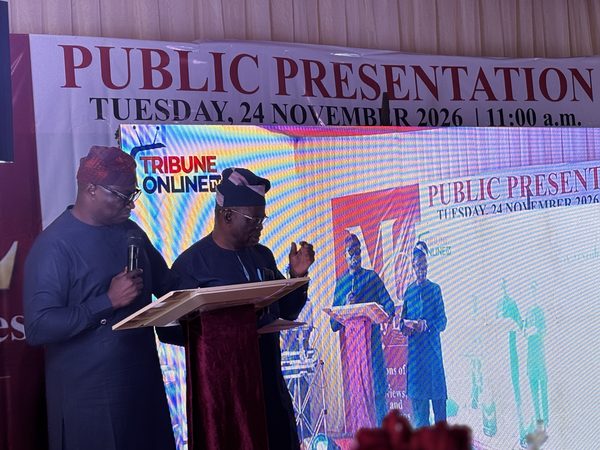
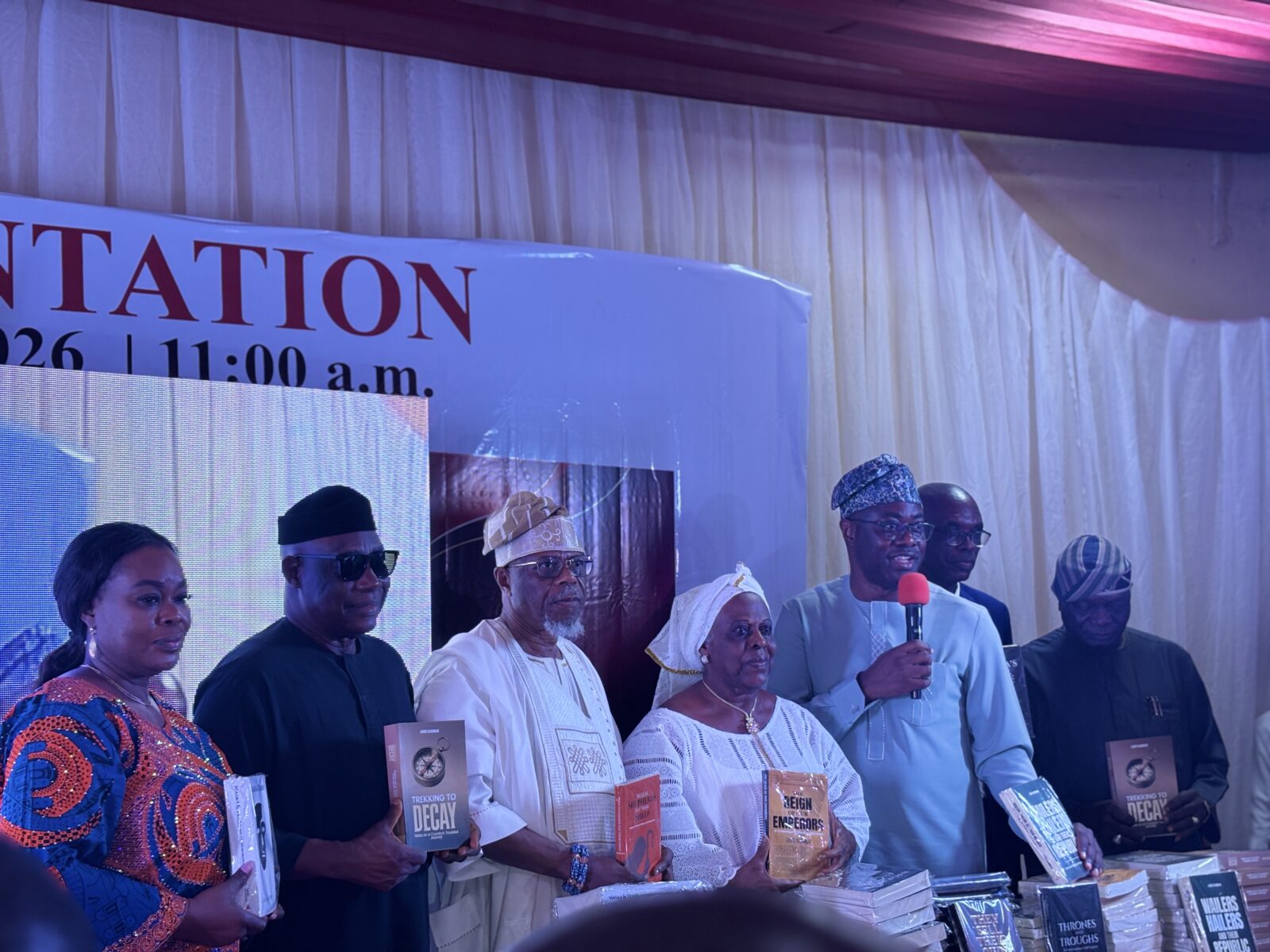
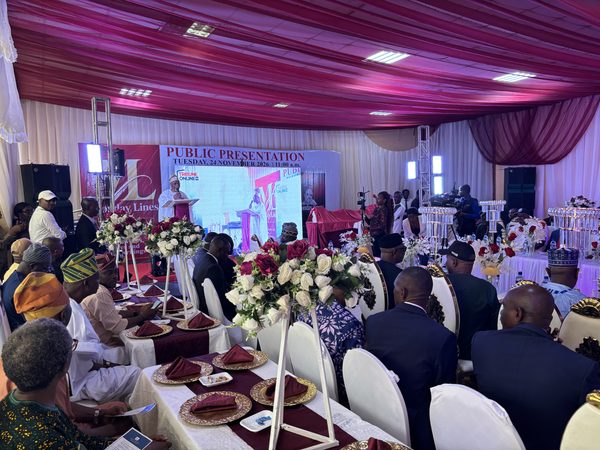
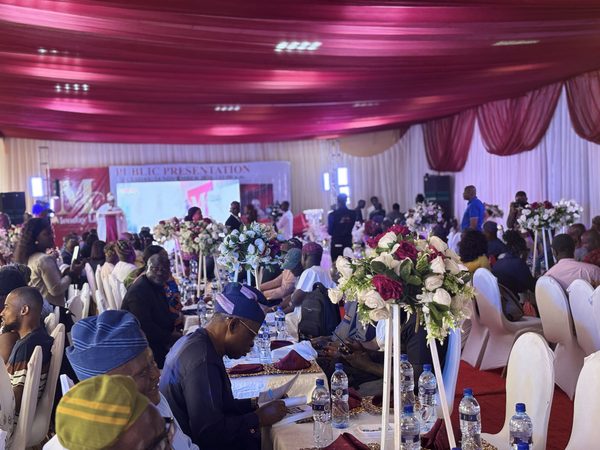
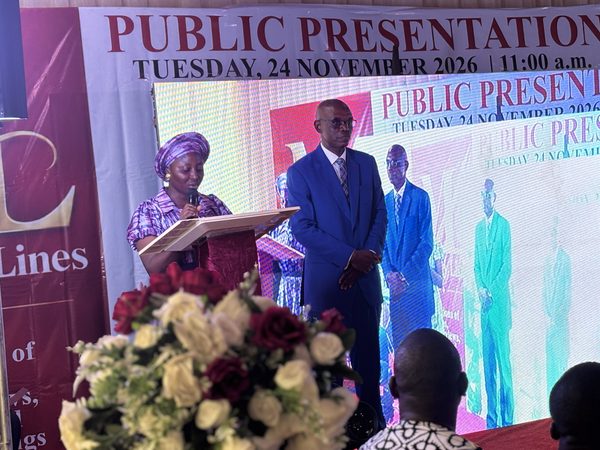
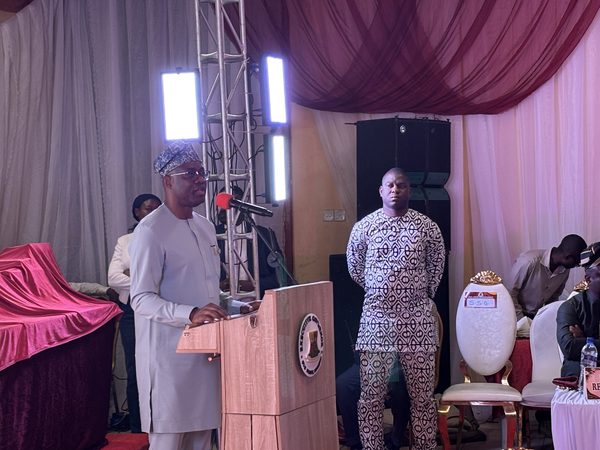
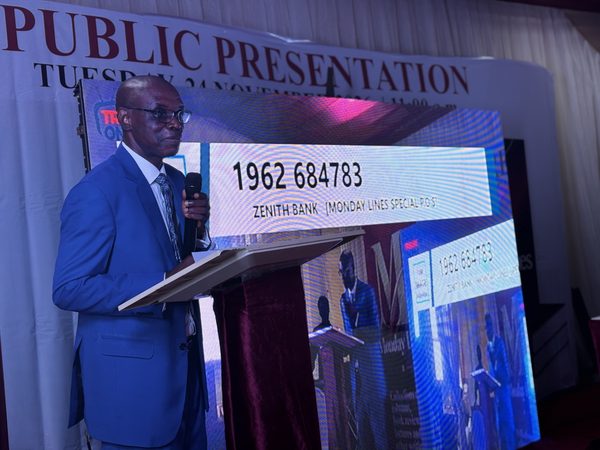
Olagunju’s corpus of writings will get a more durable platform on Tuesday, 24 November 2026, when he releases six-plus books at the International Conference Centre, University of Ibadan, Ibadan. These books constitute collections of his columns, book reviews, lectures, and writings in general, which provide the reader with the opportunity to come face to face with his intellectual prowess, even beyond his weekly newspaper penmanship. In addition to being an editorial feat, it provides good grounds for contemplating the place of journalism in the preservation of national memory and accountability. It will become more evident from the significance of the launch of his works when one considers the intellectual interests I have shown towards the person and work of Olagunju. I have studied the courage, politics, eloquence, and critical thinking of Dr. Olagunju. This kind of assessment becomes crucial since it moves the discourse from mere glorification of a successful journalist to an intellectual tradition, rarely associated with popular writing. What is being showcased today are serious works made for deep intellection and not just a broad, everyday audience that focuses on entertainment, accessibility, and strong commercial appeal.
In a previous piece, I referred to Dr. Olagunju as an evaluator of Nigerian society. This is because the act of evaluation is one of the many characteristics that define his journalistic activities. An evaluator does not just report facts but also evaluates situations that led to the emergence of the facts, identifies trends, and asks what these trends mean concerning the situation of society. A society needs to have people who keep on evaluating situations and reporting on their evaluations to diagnose the situation of that society.
Such an understanding forms a handy basis for grasping the significance of Olagunju’s writings. His writings constantly revisit issues that have been problematic in Nigeria: political leadership, governance of institutions, insecurity, economic hardships, ethnic and religious conflicts, and the increasing gap between the hopes of the citizens and the performances of their leaders. His issues may be current, but his concerns are timeless. What does leadership mean in a society that remains insecure and in economic distress? Why is politics always divorced from results? What becomes of a country whose institutions no longer cater to the needs of its citizens? This is not something that will stay within the bounds of the news cycle. These are issues within the discussion regarding the political development of the nation and the role of the citizen. The value of Olagunju in part stems from his commitment to addressing these types of questions even when they have faded out of the public eye and when many in his profession are either afraid to face such matters head-on or are already desensitized, sometimes compromised with regard to such matters in question.
Olagunju is gifted in problematizing issues. Parables and aphorisms are among the tools he invokes in this regard. Take, for example, in his parable of the noble, he recalls the well-known story of the mice that knew that a cat was a problem for them but found no one bold enough to put a bell around its neck. He effectively used this tale to discuss the issue of trying to deal with the powerful people of the state. Recognizing an issue is easy; doing something about it is much harder. This becomes a demonstration of the difficulty of dealing with powerful people when political elites are hard to hold accountable. Olagunju, in this respect, is the committed voice ready to address powerful people regardless of their political affiliation. This is an essential distinction within a democratic society. Political power should never be immune to criticism because of its power, popularity, or success at the ballot box. The press has the right and responsibility to challenge politicians, analyze government policies, and point out the ramifications of political failure. While a columnist does not have the power to make policy, he or she can assist in laying out the issues that need to be addressed when making policy.
This relevance of such journalism can be seen from the Nigerian example, where political debate may be colored by considerations of political affiliation and personality politics or politics of convenience. In this context, criticism will be judged more in terms of who criticizes rather than the strength of the arguments. Olagunju draws the very significant conclusion that political activity should always be viewed in terms of its implications for society. Accountability can never be selective.
However, political commentary is not all that Olagunju’s journalistic career involves. One of the peculiar things about Olagunju’s writings is the way he uses the richness and depth of Yoruba history, culture, and language in analyzing contemporary political events. Stories, proverbs, literature, history, and idioms do not serve only as stylistic devices in his essays. It is an essential element of Olagunju’s intellectual strength, by means of which he uses cultural knowledge in interpreting contemporary politics and moral dilemmas of the modern world. This is a clever combination of public intellectualism and cultural anthropology. Olagunju is, indeed, a polymath.
In this context, it is essential to take into consideration these distinctive features of Olagunju’s works. He realizes his ability to shift from English to the rhetoric of the Yoruba tradition. This writing style allows combining cultural authenticity with the popularity of the text among a broader audience. Not only is such a writing style very important for literature, but it is also significant to the contemporary political and social situation, because it reveals the timeless relevance of Yoruba and African intellectual traditions.
Olagunju’s written columns allow us to participate in an important discussion concerning language, knowledge, and culture. Many African writers write in colonial languages; however, they draw inspiration from their own culture and the oral tradition of their nations. It is obvious from Olagunju’s columns that it is possible to use proverbs of the Yoruba, folktales, and even references from history to make a political statement, to comment on the actions of the officials, and to expose their mistakes in the nation.
Olagunju’s flair for language and interpretation of politics helps us understand why his columns are worth reading not only for those who read newspaper commentaries but for the students of literature, history, political science and journalism. National experience is raised as an even greater concern in Cowries of Blood: Essays on Herdsmen, Banditry and Nigeria’s Endgame Politics by Olagunju. This book compiles articles that appeared in the Nigerian Tribune from March 2012 to August 2021. These essays deal with issues such as insecurity, political leadership, the impact of violence on individuals, and the many failures that have made Nigerian citizenship a harder endeavor. My review of this work brings out the heavy toll that citizens of the country have been paying because of insecurity, politics, and the failures of the institution.
In addition to the benefit of preserving historical materials in more accessible formats, there is also an advantage that comes with the transformation of columns into book form: they become yet another historical document to be studied in the years ahead. The documents and other records provided by the government are essential in the research on the history of any state, but the historical records need to include more than just the official ones: they should also reflect what people asked, discussed, questioned, and debated. And when such writing survives, it becomes part of the historical record as well as of the academic canon, allowing future generations to understand the intellectual climate of their times.
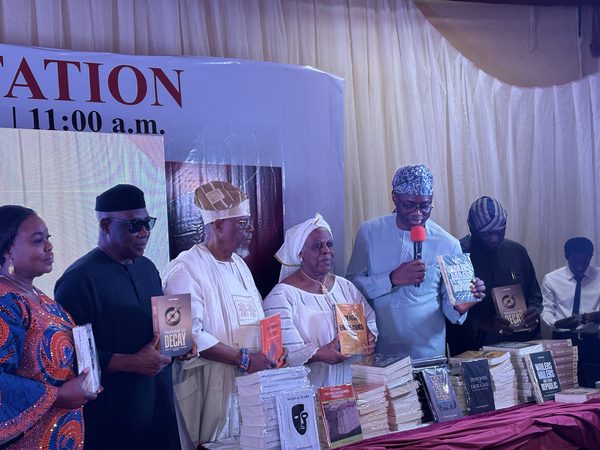
By presenting his six-plus books, Olagunju raises a larger issue concerning the preservation of Nigeria’s intellectual history. Nigeria has a lot of journalists, authors, intellectuals, and columnists whose works contribute immensely to the national discussion. But much of their work is scattered across the newspapers’ archives, the Internet, and private computers. Putting together these works of writing is both an act of preservation and an invitation to engagement anew. The books could be used by universities, research organizations, journalism schools, and individual readers as research tools for studying Nigerian political development, media history, culture, and the developing dynamics of the relationship between citizens and the government. In the end, the importance of these books would not just depend on their being written, but rather on how much they are read, discussed, and analyzed.
Moreover, one should bear in mind the importance of the event in the context of changes happening in the media industry. While digital media technology has made it easier to publish and expand the scope of people involved in the process of discussions, one should bear in mind that speed and abundance do not always imply depth. There is always a risk that the need to act quickly and to provide an immediate response may dominate over research, analysis, and context. The long public career of Dr. Olagunju makes one think again about such features of journalism as consistency, preparation, language, and editorship. However, it doesn’t mean that journalism cannot develop and the columns in the newspapers cannot be criticized. The point is that journalists should keep on fighting for the features of journalism which make it valuable: independence, accuracy, courage, context and public interest. The evaluation of the column should be done in relation to the argument, not language.
Nonetheless, there is yet another factor associated with this event specifically because of its location. The city of Ibadan is known to be the intellectual capital of Nigeria. It is known for having the University of Ibadan, which is famous for its intellectual debates and global impact. Thus, the holding of the presentation at UI’s International Conference Centre is justified since this will help study the links between journalism, scholarship, language, and the development of the nation. In addition, it is well suited to the culture of the city where much of Olagunju’s writing takes place.
To sum up, one cannot help but note that the presentation of the books highlights how prolific the author is and the importance of journalism in the intellectual debates in society. Olagunju’s books are characterized by explanations of national challenges, as well as the use of culture for understanding contemporary reality. This is an occasion that provides the chance to introduce the works to more people and create new generations of readers and writers who can appreciate the importance of public discourse. This is an opportunity to introduce these works to a wider audience, inspiring new generations of readers and writers to appreciate the importance of public discourse and be challenged by the boldness of a public intellectual who has carved his name into the sands of time.