

Toyin Falola
It is a privilege to have been invited to give the lecture to mark the 50th anniversary of the Ibadan Social Group. Its contributions are legendary. Many of its members are famous and highly distinguished in their various occupations. My lecture focused on the theme of social bonding in a technological age that is creating social distance.

There’s a great irony in the era in which we live. We are more united than ever. A communication from Lagos arrives in London in seconds. A video call traverses oceans without a second thought. Social media has given everyone a stage, an audience, a presence, the sense of being heard by many people. Yet ask any honest person how they feel within all this connection, and the word they are most likely to reach for is not “satisfied.” It is “lonely.” This is the basic contradiction of globalization, and it is the beginning point for understanding why the social club, that institution many consider a relic of another period, is not disappearing. It is needed more and more.
The conventional wisdom is that globalization is the enemy of social clubs. The idea is that the internet makes it unnecessary to meet physically. Cultural homogenization has dulled the unique local identities clubs used to rally behind. The erosion of solid, place-based communities has destroyed the basic foundation on which clubs were established. This perspective sees the social club as an endangered species plodding about while the asteroid of modernity approaches. This perspective is incorrect. And to understand why it’s incorrect, you must know what a social club really is, not what it looks like from the outside, but what it does.
A social club is not only a place for individuals with similar interests to get together for fun. This is the surface description. At bottom, a social club is a human technology for generating trust, a sense of belonging, and a sense of mutual duty amongst individuals otherwise having no reason to give a damn about one another. It is the type of institution that a society builds when it senses the need to bind itself together against forces threatening to tear it apart. By that criterion, there has never been a time in history when social clubs were more essential than today precisely because there has never been a time when the pulling factors were greater.

Globalization accomplishes great things. No sane person would dispute any of it. But globalization also accomplishes something its fans are hesitant to concede. It falls apart. It replaces transactional ties with communal partnerships. It incentivizes movement so fiercely that rootedness starts to seem like a liability. It pulls people out of hereditary networks of belonging and into open marketplaces of social connection in which you are only as good as what you can provide at any given time. The outcome is a world that is more networked and less linked, at the same time.
People feel this, even if they can’t speak it. The anxiety that hums beneath the surface of contemporary life, the feeling that no institution can be entirely trusted, that success is always provisional, that community is something you post about rather than something you live inside- this is the particular damage that globalization, left to its own logic, does to human beings who are not wired to live as isolated economic units. The platforms that were meant to link us have mostly offered the illusion of connection without the substance. You may have ten thousand followers and no one to ring. Everyone can see you, yet you are invisible to your own neighborhood. Here again the social club comes into play, not as some nostalgic project, but as a structural answer to a structural issue.
Looking at the history of club culture in Southwest Nigeria, especially Ibadan, you are not looking at a quaint custom that managed to live into the contemporary period by happenstance. Here is an institution which has shown its worth over and over again, precisely because it has been constantly put to the test. The Yoruba have a long history of community association, of individuals structuring themselves into webs of mutual duty and collective identity that do not rely on the state to operate. This tradition was not born of colonialism, but colonialism put it through its paces like no other. The colonial encounter brought with it new status categories, new economic pressures and new dangers to indigenous social organization. In response, official organizations grew across Ibadan and the greater Southwest: social clubs, professional groupings, age-grade societies, town unions, not as political opposition groups in the strict sense, but as a demand that human beings would continue to connect on human grounds, not just on colonial or economic criteria.
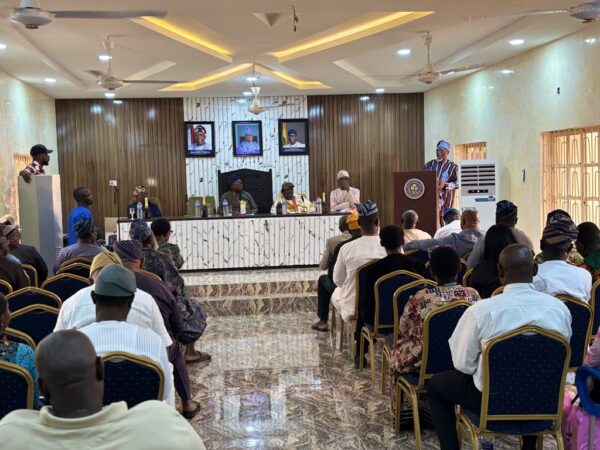
That history gave rise to the social clubs of Ibadan. They were made by women and men who knew, whether they would say it or not, that belonging is not a luxury. It is necessary. And they had created institutions to address that need in circumstances adverse to it. Colonialism disturbed the inherited social order, imposed new hierarchies, and produced a society in which the ancient markers of rank and community were subject to ongoing modification. In that context, the social club offered a place where a new sort of power was practiced, not based on colonial appointment or economic success, but on character, continuity, and the shown desire to show up for other people over time. That is the tradition worth looking into, not because it is ancient but because the issue it was answering is very much alive.
Those institutions were again challenged by post-colonial challenges. The unequal distribution of wealth after independence, the wild gyrations of Nigeria’s oil economy, the disintegration of public institutions, the collapse of civic life- all this exerted pressure on the social relationships that clubs were created to defend. Some clubs became weaker. Others headed toward exclusivity and lost the power to build a meaningful community. Some went into dormancy. But those who did adapt did so by retracing the first principles: trust, belonging, mutual duty. They lived by remembering what they stood for.

Then globalization, in its present hyper-connected form, comes along. The demand is different again, but the difficulty is essentially identical. The temptation for social clubs under this strain is to attempt to be what globalization demands: efficient, branded, digital-first, curated for performance. There have been groups that have gone down this road and discovered, not unexpectedly, that in attempting to seem like the society that was threatening them, they lost what made them worth defending. A club that is just an Instagram page and a WhatsApp group hasn’t evolved for the digital era. It has melted into it.
A more relevant topic is whether social clubs can withstand globalization. That is what a social club must become if it is to stay a real alternative to globalized forms of social life rather than a mere copy of them. That is not an abstraction for an institution like the Ibadan Social Group. It’s the ‘how do we get there’ behind a 50-year vision. A path from now to 2076 may seem extravagant, but the goal makes sense, provided you accept the fundamental premise: that local institutions with deep roots are not barriers to growth; they are anchors against the drift. The world does not need more institutions chasing the trendy. It requires institutions that know who they are and are ready to be that consistently, across generations, across economic cycles, across the churn of trends.
So how does it work in practice? It involves a conscious investment in the quality of human interaction that the club facilitates. Not events for events’ sake, nor membership drives for membership’s sake, but a deliberate effort to create circumstances under which real connections among members might develop and grow. That seems apparent. It’s uncommon, unexpectedly. Most declining organizations adapt by becoming more outward-facing, more promotional, more concerned about image. The better answer is to become more inward-attentive. To ask what goes on between individuals in the institution; what goes on there is the type of stuff that cannot be reproduced on a screen.
It also requires having a conscious interaction with the young people. Not tokenism, not just opening the doors and hoping new professionals would find their way in and carry the culture forward. Transmission of a generation is an act of intention. It asks elder members to do the hard thing, which is not simply to transfer the structure of the institution, but to impart its purpose. But why is this club around? What has it been for? What does it give you back? What does it want of you? If the younger generation can answer these questions with confidence, it is going to decide the destiny of the institution. They can’t fix them; no amount of rebranding will help.
And then there is the issue of what an institution entrenched in a particular place and culture provides to a globe that is more skeptical of the local. Globalization favors the portable, the scalable, the universally readable. An institution such as the Ibadan Social Group is naturally immune to such rationale. It’s built in. It has a history that belongs to a region, to a people.” That is no bug. In a world where everything is everywhere, the fact that certain things are someplace, that they belong to a particular group, have the memory of that community, is a type of cultural resistance in itself worth taking seriously.

The error is in supposing that the local rootedness renders the institution irrelevant to larger discourse. It’s the contrary. This is where the most serious thinking on social renewal, about how human societies restore cohesiveness in the face of atomization, is taking place. There is something to be said from nowhere else, from an institution that can speak out of a particular, well-understood experience of community-building through more than a century of colonial and post-colonial upheaval, into the current moment of hyperconnectivity. But it is a sort of authority the global stage does genuinely require, even if it has not always understood how to accept it.

Fundamentally, the fifty-year vision is a bet. It wagers that the things globalization is whittling away are the things that matter most. It wagers that the trust that develops over time between individuals who know one another and have made meaningful commitments to one another cannot be replaced by any combination of apps and algorithms. It wagers that the pain individuals experience when they lose a feeling of belonging is real, that it signals a true need, and that institutions created to address that need have a future precisely because the need is not going away.
These are not little claims. But the proof is everywhere for them. In the survival of associative life wherever there is real community. In the manner that people, given any genuine option, still want to do the most important things in their life, rejoice and grieve, make tough choices, heal damaged relationships, in the company of others who know them well and have known them for some time. The well-documented damage loneliness does to mental and physical health is damage that no amount of connectedness has been able to lessen, and by some metrics has risen as connectivity has grown. The research is clear on this: human beings require persistent, face-to-face, responsible interactions. This is not what social media offers. When it is working correctly, the social club does.
There has never been a time when the social club was pronounced dead. It lived through industrialization. It withstood the advent of mass media. It’s living via the internet. Not because it is obstinate, but because the need that it satisfies is obstinate. People will continue to find ways to meet with those they trust, to establish circumscribed spaces of duty and belonging, to insist on being acknowledged as more than individuals in a market. The social club is one of the most exquisite shapes which instinct has assumed.
The challenge for the next fifty years is whether institutions that hold this history will take up that duty with the seriousness it deserves. Suppose they would come to see that their relevance is not an argument to be made for in brochures, but something to be earned, all the time, in the quality of what they make possible amongst their members. Will they be honest about their previous failures, the exclusivities they tolerated, the trend toward ceremonial at the price of content, and utilize that honesty to establish something more durable?

A globalized world is unsettling in ways we are just starting to understand properly. People in large numbers are seeking what is genuine, local, and enduring. The social club is all three at best. That’s not a minor thing. That is the whole argument, in fact.