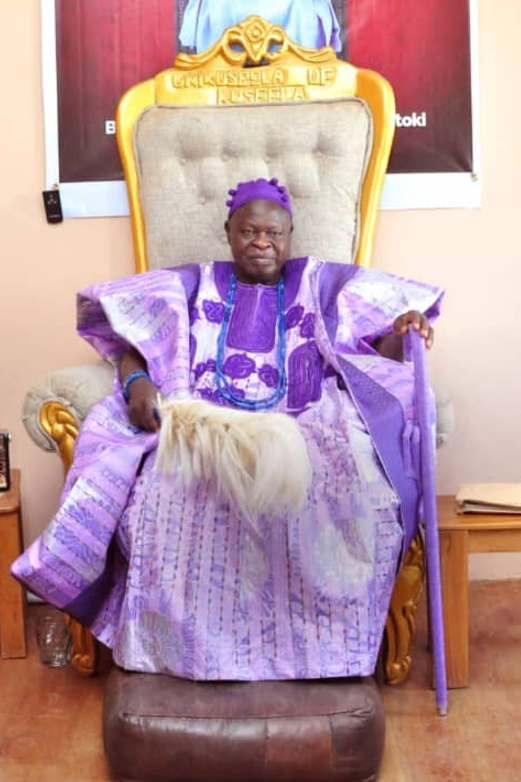

Toyin Falola
Tinwo Fatoki, Ọmọ Ìbàdàn
Your name rises where the talking drum speaks.
The hills receive it,
The courtyards return it in praise.
A great tree falls—
Yet its shade remains in memory.
We gather beneath your name,
Each bringing a word of honor.
May the earth hold you gently;
May the ancestors welcome you with song.
Atige, we call—and call again:
A worthy name outlives the voice.
Life is transient. So many times, what matters today stopped being a concern a long time ago. It is a wasteful venture to attempt holding on to life when it is certain that all is just a phase. This is why the idea of living meaningful lives is unquantifiable. As one progresses from point A to Z, there is no better way to live through this transition than expending efforts towards meaningful existence and impact. A genuine look at human society from the beginning of modern civilization confirms how countless have come and gone. They all started and passed through life just as many have done after them. For some, their story ended with death, while others continue to live even in death. The only differential factor between these groups can be described through the choices they stood for while alive. There are individuals whose existence has been adequately described by a profession and an association, and there are others whose lives seem to gather more meaning from the number of worlds they touched.
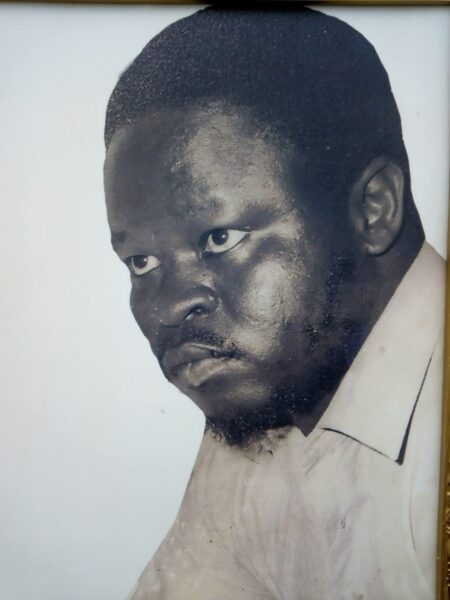
The life of Baale Olatinwo Adeagbo Fatoki is of the latter. For over seven decades, he interacted with life through public administration, Christian ministry, Yoruba literature, cultural preservation and traditional leadership. In the end, he left with a record so difficult to place under one single banner. He was a civil servant in Oyo State, serving till he rose to the rank of Permanent Secretary. He was also a Venerable in the Anglican Church. He was a writer with extensive work in Yoruba and English, and in the later years of his life, he was called upon and chosen to lead his people as the Onikusela of Kusela and Onibudo II. Without his formal titles, Baba Fatoki was a man whose life was repeatedly directed towards conscious service, learning, faith, and the preservation of values.
Born in 1951, Fatoki was of the generation where Nigerian institutions and its social landscape were undergoing profound transformation. He was a product of this change as he progressed into a professional career in the Oyo State civil service, where he rose to the position of Permanent Secretary. The demands of the civil service did not rob him of the opportunity to contribute meaningfully to other areas of interest. He was a devoted Christian, a Venerable of the Ibadan North Anglican Diocese, with a voice and lifestyle that extended beyond the routine responsibilities of ecclesiastical life. In 2004, he was interviewed for scholarly research examining the institution and history of Sharia in Oyo and Osun States. His position on this matter at the time shows he was a leader who willingly engaged in questions of faith, law, and society within the wider Nigerian public space.

Public administration and the church were parts of his personal expression of service. Another significant aspect of his existence was in literature. This is perhaps the most expressive part of his life that allows a peep into his mind. Baba Fatoki was a published Yoruba author for more than three decades. He began with Emèrè, published by Heinemann Educational Books Nigeria in 1991, and then, in 1998, there was Igi Isokan and, many years later, the release of works including The Wordsmith, Familiar Spirit, Had I Known, Ewi Itaniji and Àrèmú Alágbèdẹ Ọ̀rọ̀.
His works of literature are the closest to understanding who he was. The various works published showed what occupied his imagination and his efforts in social advocacy. Take, for example, his book Ewi Itaniji. The book was written as a collection of inspirational Yoruba poems intended to encourage good conduct, success, and appreciation of the Yoruba language. It also addressed thematic matters on destiny, naming, association, thanksgiving, and personal responsibility. Àrèmú Alágbèdẹ Ọ̀rọ̀ was a story of a young boy who loses his father and subsequently encounters a succession of difficulties before perseverance finally paid off. The Wordsmith was a work on hardship, vulnerability, and the consequences of social neglect on the vulnerable. These are fictions. However, they suggest a man deeply interested in the formation of character in adversity and the possibility of a better life.
His relationship with the Yoruba language through writing was a repository of culture and a means to transmit ideas on how people ought to live. His books are for all ages. He employed proverbs, humor, poetry, and the moral vocabulary of Yoruba society. Fatoki’s contribution to Yoruba literature is consequential. He wrote, published and placed Yoruba ideas before his readers in forms that could be studied, understood, enjoyed and transmitted to another generation.
It is fitting, then, that the later chapter of his life brought him into traditional leadership. As the Onikusela of Kusela and Onibudo II, he took charge of an institution with historical and contemporary responsibilities. As a traditional ruler, he was expected to preserve memory and identity and at the same time remain sensitive and attentive to the practical circumstances of the people. Various accounts of his later public engagements show him participating in community affairs and supporting initiatives directed solely at advancing welfarism in his community.
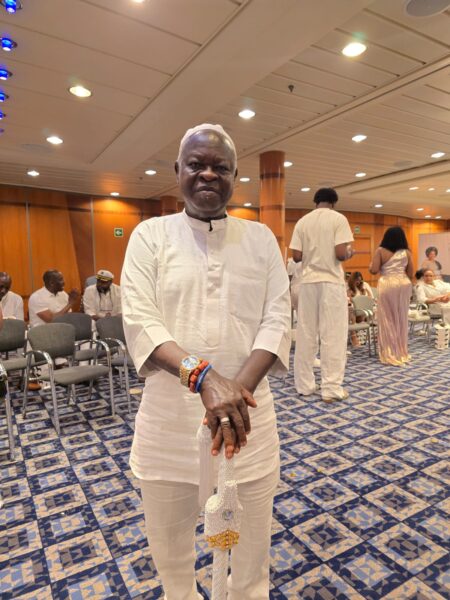
By the final years of his life, the different strands of his identity had become almost inseparable. He was the Baale who could still be identified as a Venerable and an intellectual writer. His life became an accumulation of every phase he had undergone before becoming Baálé. Perhaps this is the most distinctive way to understand him now that he is no more. He was a civil servant who dedicated time to the state; the venerable who served through faith; the writer who championed service to language, culture and moral instruction; and the traditional ruler responsible for preserving history and culture.
For his family, however, the significance of his life cannot be measured in offices or books published. Those who mourn him will remember the person behind this public figure. Only those close to him can preserve his memory in ways that no newspaper or published work can fully contain. He was a husband, a father, grandfather, brother and friend to many. His death on Saturday, 3 October 2026, brought an end to the journey of a member of a generation that moved between worlds, carrying each element without losing the other.
Baale Olatinwo Adeagbo Fatoki has now taken his place amongst the ancestors. He would be remembered fondly by everyone he touched. For a life that crossed public service, faith, literature, culture and traditional leadership, no single title can adequately describe his memory. Titan, perhaps, may then be an acknowledgement of the vastness of his life.
A Farewell from Ibadan
There are names that death removes from the roll of the living but cannot erase from the hearts of those who remain. Tinwo Fatoki is now such a name—a name spoken with sorrow, held in remembrance, and entrusted to the enduring care of family and community. Today, we mourn. We mourn the finality of a farewell we would have wished to postpone. We mourn the conversations that must now remain unfinished, the meetings that will no longer take place, and the familiar presence that memory must teach us to live without.
Ibadan, city of hills and histories, knows how to carry the names of its people. Its streets hold the footsteps of generations; its compounds preserve stories long after their tellers have departed. With the passing of Tinwo Fatoki, another life becomes part of that inheritance. Yet for those closest to Tinwo, this is more than the passing of a name into history. It is an absence felt at home, in ordinary moments, wherever remembrance suddenly brings tears.
Death makes us understand the weight of what once seemed ordinary. A greeting becomes precious. A shared moment returns with unexpected clarity. We discover that the life we mourn survives in fragments that no grave can contain: words remembered, experiences shared, and stories that someone will tell again.
To the Fatoki family, we offer our deepest condolences. No tribute can fill the space this death has opened. No eloquence can command sorrow to depart. May you find companionship in your grief, comfort in the memories you cherish, and strength for the days when the world moves forward while your hearts still linger now in loss.
Let there be room for tears. Let there also be room for gratitude—for the life that was lived, for the connections that endure, and for the memories that will gradually become a source of comfort. We need not hurry grief. Love takes its own time to learn the language of absence.
As we mark Tinwo Fatoki’s death, let remembrance become a shared responsibility. Let those who knew Tinwo preserve the stories only they can tell. Let younger generations hear the name and understand the place it holds in their family’s history. In this way, remembrance becomes an inheritance passed from one voice to another.

Tinwo Fatoki, we speak your name today with tenderness. We acknowledge the pain of your departure and the lasting place of your memory among those who knew you. Of the set that formed in 1963 at Ode Aje, only three of us remain. Greet Philip Abiola when you reach Heaven and prepare the place for those of us to join in later years.
May you rest in peace
May your family be comforted.
And may Ibadan, the city with which your name is joined, hold your memory with dignity.
Farewell, Atige. You left the company of the living, but your name remains among us.
Rest in the bosom of the Almighty.
Sleep well, Onibudo the Second.