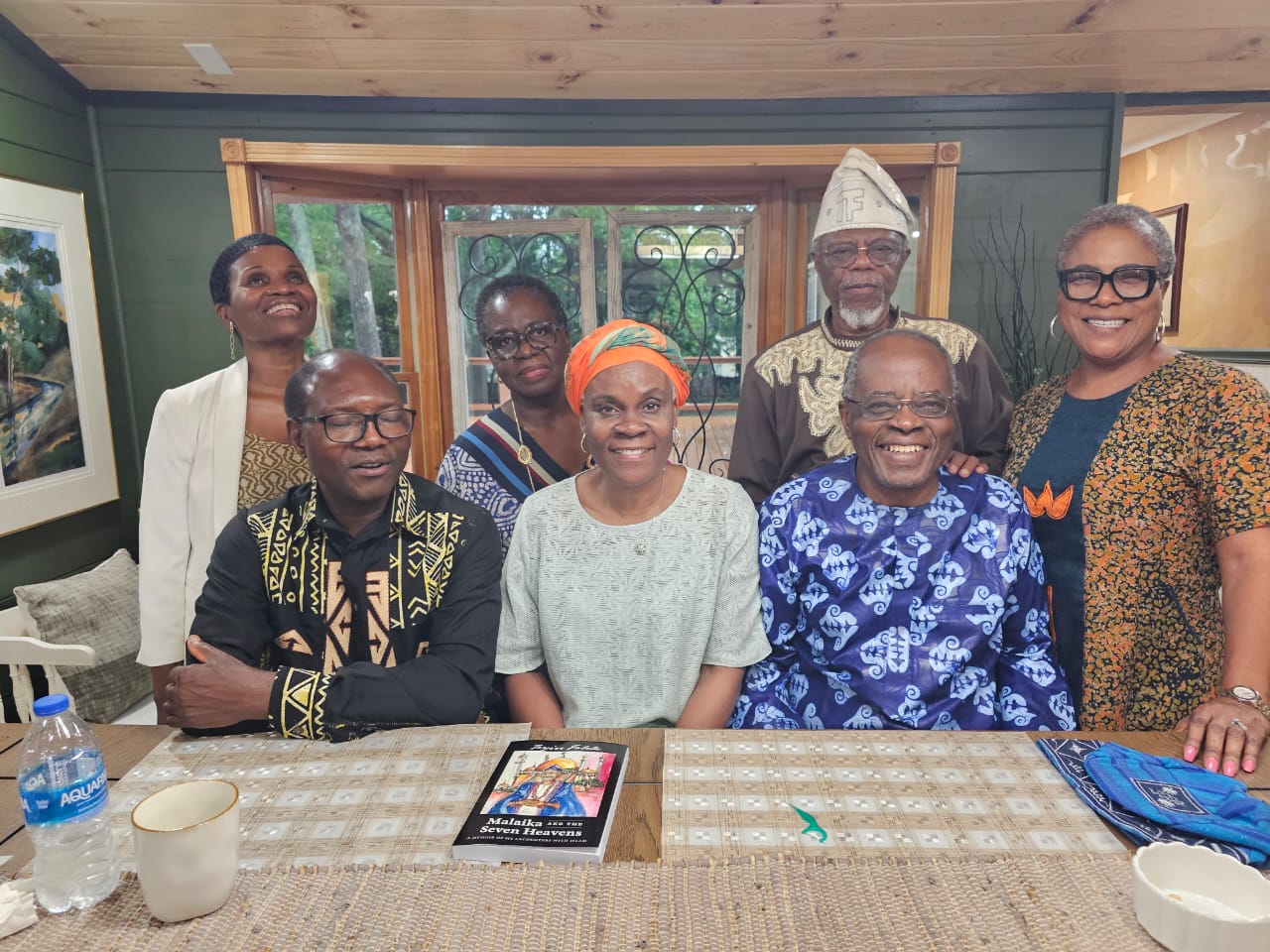

Toyin Falola
It has often been a characteristic of studies in the social sciences to be largely abstract and devoid of the practical realities that should set the fields apart. Flowing from this, experts in these fields, especially in Political Science, often find themselves in the clutches of abstract appreciation of political incidents. They remain seated on the high stools of observation, documenting, analyzing, and mythologizing political developments in their nations and around the globe. This has been a characteristic of the social sciences and a dilemma within the discipline. Hence, there are noticeable limitations in scholars’ ability in these disciplines to effect change and influence policy.
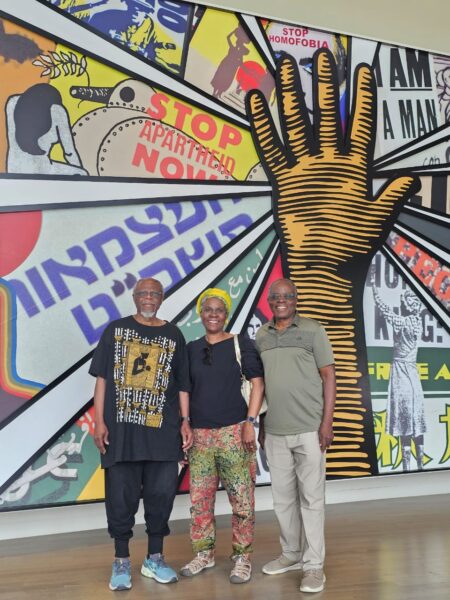
A friend once asked me, “Who makes the difference: those who document or analyze political events, or those who are able to be the cause or adjuster of those events?” It was while reflecting on this thoughtful disposition that I came to understand more about the influence of political leaders on the future of every individual in their nation and the need to be a polity influencer. Reconsidering this poser, I remember Professor Femi Badejo and immediately juxtaposed the context with the nature of the popular engagement with the abstract that dominates political scholarship.
To put this in further perspective, what strikes me about Professor Badejo across these contexts is his apparent ability to pitch his thoughts a little further outside the scholarship comfort zone of mere research and analysis by influencing political development and events themselves. Professor Badejo’s proactive approach in shaping the trends of Nigerian politics and repositioning Nigeria’s image in the international sphere of politics is an easy example of an exception to the general conception of abstract political evaluations. Rather than sitting as an armchair political scholar, he positioned himself as a reference point with an impact on the political landscape, applying all the principles of the field with enviable results and a record to show for it. So, when he is popularly referred to as “pracademics,” the understanding is quite vivid, and the truthfulness of the same is quite apparent. He is not just a scholar but a material and reference of scholarship itself.
What lends credence to the fact that Badejo can be called a pracademic can be answered by his professional involvement in the political terrain of Nigeria and Africa, as well as his sundry assignments with international organizations and communities.
While Professor Badejo’s activities have been more about carrying the flag of Nigeria in the international political space, his political background and understanding can be traced to solid political involvement in the Country. In his early years at the University of Lagos, he was involved in campus politics, student academic committees, and faculty associations, which laid the groundwork for his practical political foundation in the 1970s. This snowballed into his further involvement in policy influence at the early stage of his career as a graduate trainee at the University of Lagos. He had always had a mark of excellence. As a student, he received the Chancellor’s Prize for the Best Final Year Student in Political Science. This was coupled with numerous other awards and accolades, including the Federal Government Academic Award.
When Professor Badejo returned to the University of Lagos to study law, he did so with the excellence he had anticipated, repeating the cycle of brilliance he had created at the beginning of his academic journey, both as a student and as a young lecturer. He did not just perform excellently, he was recognized as the Best Final Year Student at the Faculty of Law with Professor Ojo’s Prize, as well as the overall Best Student in Jurisprudence with Dr Teslim Elias’s Prize. Prof went on to advance the legal profession through his commitment to the Nigerian Bar Association.
Following this trail of excellence and brilliance, Professor Badejo got involved in a couple of activities that had given an earlier signal of these future endeavors. As an expert in international politics and policy, he had early exposure to advisory roles. One of such exposures was his role at the All-Nigeria Conference of Foreign Policy, where he served as an Analyst in 1986. In this role, he stood at a crossroads in the reform of Nigeria’s international relations framework.
Following this progression, Professor Badejo found himself among the flag-bearers of Nigerian and African values in international relations. In 1991, he served as President Olusegun Obasanjo’s Special Assistant during his bid to become the United Nations Secretary-General, after his participation in the United Nations 46th session of the General Assembly was approved by the Nigerian Ministry of External Affairs under the leadership of Major General Ike Nwachukwu. He carried the heavy task of not just lobbying international delegations but also strategizing and navigating the political optics for the former President. While Obasanjo did not win his bid, the opportunity gave him further international exposure.
Within that same period, he earned consideration for another sensitive assignment following his role in the bid. Badejo went on to serve as a member of the Nigerian Fact-Finding Team to South Africa and, in fact, was the Secretary under Obasanjo’s leadership. The team aimed to respond to South Africa’s transition from apartheid and give it more international exposure. From this point, his participation and involvement with the United Nations became crystallized going forward. From 1993 to 2017, his contributions to the United Nations endeavors have been nothing but commendable.
One of Badejo’s assignments in 1993 was serving on the UN’s peace mission in Somalia, where he worked with UNOSOM II as a Political Affairs Officer and later held other roles, including Senior Political Adviser and Officer in Charge of Disarmament, Demobilization, and Demining. His assignment went beyond the peace mission for just the incident at the time. As Senior Political Adviser, he was instrumental in peacebuilding and laying the political foundation in Somalia.
Beyond Somalia, Badejo was further assigned to Guinea-Bissau, Liberia, and Sudan. His assignments included assisting in the development of peaceful political transitions, helping with peace negotiations, especially among political factions, and coordinating disarmament, demobilization, and reintegration programs and arrangements. To achieve this aim, he was instrumental in engaging bodies such as IGAD in peacebuilding. Badejo’s engagement with the United Nations positioned him to lead UN interactions with regional organizations, Non-governmental Organizations, agencies, and other international bodies. He had been instrumental in many negotiations and accords that resulted in progressive political coherence and transformation across Africa.
Badejo’s interactions are also not merely within the African framework but extended to those with global consequences. For instance, between 1993 and 1994, he contributed to the United Nations Development Program’s Human Development Report, which has international relevance for good governance and poverty eradication. His engagements have also involved consultancy with the African Union in building the framework for the operation of the African Union Humanitarian Agency, with the United Nations Economic Commission for Africa in designing the Four-Pillar Interlinkages, and with Ecowas on Vision 2050. Professor Badejo has also advised state governments; he served as an adviser to the Prime Minister of Bahrain and as a Member of the Bahraini delegation to the UN. He also advised President Jose Ramos-Horta of Timor-Leste.
Fundamentally, all these played out in Professor Badejo’s pedagogical approaches and research methodologies. It mapped out the tempo of his scholarship and allowed him to draw from his experience in appreciating political theories rather than stand in an observational position. He has written with copious practical references on different subjects. His publications, “Party Formation and Party Competition,” Democratic Governance and the Party System in Nigeria: The Place of Ideology and the Challenges Ahead,” and The State of Anti-Corruption in Nigeria (2015–2019) strategically engage the subject of democracy, politics, and good governance. In “Nigeria’s Economic Relationship with Brazil and India,” “Nigeria and India Relations (1960–1985),” and “India’s African Policy,” are early literature on the trajectory of the Nigerian foreign policies. Rethinking Security Initiatives in Nigeria is one of his attempts to recommend sustainable structures nurtured through his encounters with other security structures outside Nigeria. Professor Badejo has truly had a busy set of decades, and his continued efforts have not only revolutionized the state of social sciences studies but also contributed to Nigeria’s efforts to showcase its faculty.
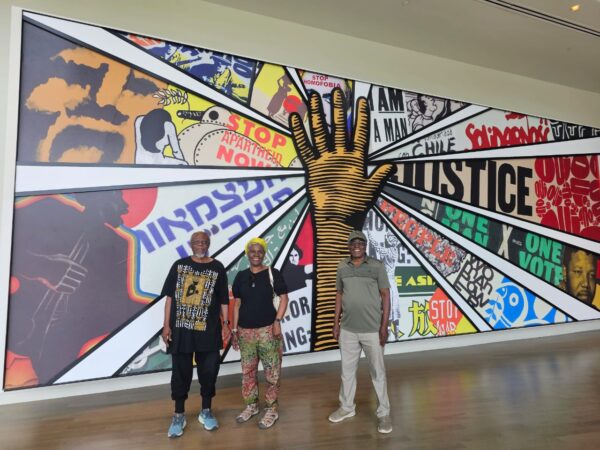
To a friend who calms my spirit and brightens my heart, I am grateful. We have a proverb in Africa that says, “The friend who stays by your side is more precious than silver or gold.” You fill my everyday with laughter, kindness, and good company. May the ancestors continue to favor your journey, may happiness embrace your home forever, and may our friendship continue to blossom in peace, respect, and warmth. Thank you for being such a wonderful soul to connect with. This piece is inspired by some hours we spent together.
What a beautifully crafted and heartfelt tribute. Thank you for sharing this piece.
Professor Femi Badejo’s journey—from campus politics at the University of Lagos to shaping peace missions across Somalia, Guinea-Bissau, Liberia, and Sudan, and advising international leaders—is a powerful testament to what it means to be a true pracademic. The way you’ve contrasted abstract scholarship with his ground-level impact is especially compelling. He didn’t just study political systems; he helped rebuild them.
The concluding paragraph, with the African proverb and the personal note about the hours you spent together, adds a deeply moving layer. It’s rare to see such intellectual rigor and genuine warmth in the same reflection. Professor Badejo is fortunate to have a friend who can articulate his legacy with such clarity and grace.
Thank you again for this inspiring read. It’s a reminder that scholarship and meaningful action need not be separate—and that friendship, as you’ve shown, can be a source of profound intellectual energy.
It is a golden opportinity to come in contact with the ever smiling pracademic.
He life has touched so many people positively
Wonderful.
These are people who should be discussing politics on television against elite almajiri seeking positions here and there.
When we think of statesmen we usually think of political leaders like Gandhi, Mandela or Carney but in my opinion the word can be used to describe Professor Badejo.
The great Prof. Toyin Falola, in engaging prose, has done a great service to humanity about Prof. Badejo. Nonetheless, from knowledge as Badejo’s Personal Assistant, there are some key milestones that complete the ‘pracademic’ arc: his 2006 book on Kenyan politics that remains a major reference material on the biography of Kenya beyond the detailed knowledge on Raila Odinga. Then his 2025 book, ‘Somalia Just Before Al-Shabaab’, distilling years of UN peacebuilding on the ground; and the recognition of this in his decoration with the “Djibouti National Order of 27 June 1977” by President Ismail Omar Guelleh; and the 2025 Nelson Mandela Distinguished Africanist Award from the Annual African Conference at the University of Texas at Austin. These recognitions validate that Badejo’s rigorous scholarship and real-world engagement as two sides of the same coin. His intellectual and hands-on struggle to change the corruption trajectory in Nigeria, including through the Nigerian Bar Association, fits very well into the life of this pracademic.
Professor Babafemi Badejo is an accomplished Nigerian scholar, diplomat, peacebuilding expert and global analyst whose distinguished career at the United Nations spanned some of Africa’s most complex conflict zones, including Liberia and Guinea-Bissau. A seasoned political scientist and former Deputy Special Representative of the UN Secretary-General for Somalia, he combined intellectual depth with practical diplomacy in navigating difficult terrains across West Africa.
I had the privilege of working with Professor Badejo in Liberia and Guinea-Bissau, where his calm leadership, strategic insight, and unwavering commitment to peace and institution-building left a lasting impression on colleagues and stakeholders alike. He remains widely respected for his contributions to conflict resolution, governance, and regional stability across the African continent.
Professor Babafemi Badejo is an accomplished Nigerian scholar, diplomat, and peacebuilding expert whose distinguished career at the United Nations spanned some of Africa’s most complex conflict zones, including Liberia and Guinea-Bissau. A seasoned political scientist and former Deputy Special Representative of the UN Secretary-General for Somalia, he combined intellectual depth with practical diplomacy in navigating difficult terrains across West Africa.
I had the privilege of working with Professor Badejo from 2005 to 2017 in Liberia and Guinea-Bissau, where his calm leadership, strategic insight, and unwavering commitment to peace and institution-building left a lasting impression on colleagues and stakeholders alike. He remains widely respected for his contributions to conflict resolution, governance, and regional stability across the African continent.
This tribute is highly commendable and true reflection of our esteemed Professor Badejo.Highly intelligent ,professional & well respected in Nigeria and the World .May God Almighty continue to be with him.
Quite an Interesting read
This is really interesting, You are a very skilled blogger. I’ve joined your rss feed and look forward to seeking more of your excellent post. Also, I’ve shared your web site in my social networks!