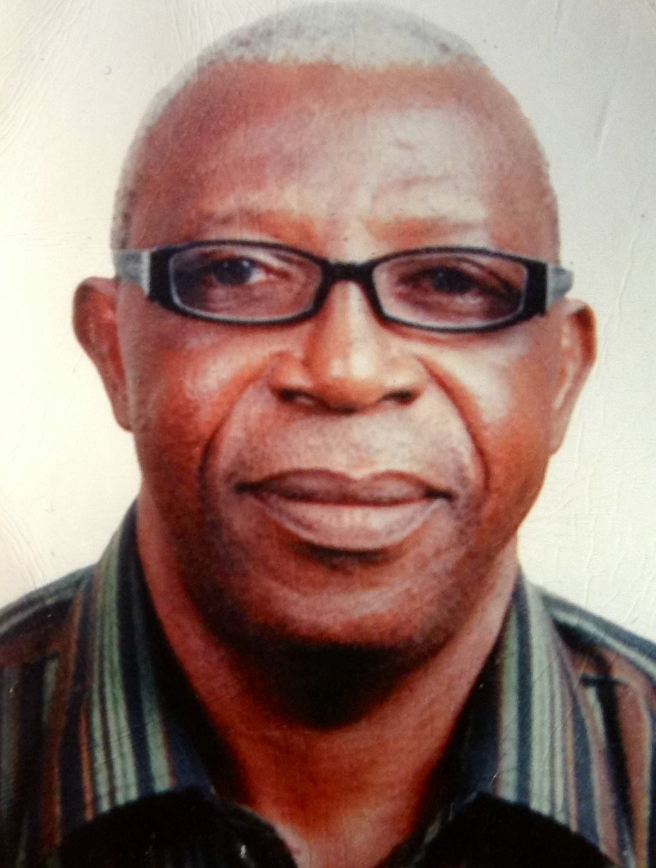

Toyin Falola
Life is transitional. A close look at human existence shows every major step was an end to a previous one. From conception, till birth, the human being has consistently moved through stages into adulthood where the cumulative efforts of who we are becomes more apparent. It is with a heavy heart that I commit to this piece in honor of a respected colleague, thought leader, and historian. The news of the demise of Professor Hakeem Olumide Danmole is a bitter pill to swallow. Little prepared the mind for this eventuality. The suddenness perhaps is what keeps friends and families heavy with grief. Who would have thought that a loving moment may actually be the last?
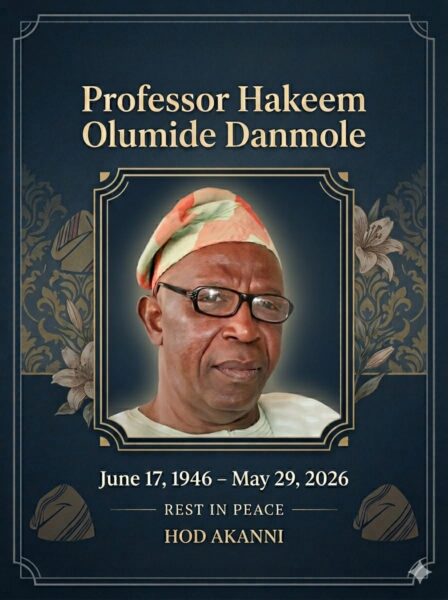
Professor Hakeem Olumide Danmole (aka HOD) is a Nigerian scholar from a generation of historians who spent their time beyond the walls of the universities, extending their knowledge into service for humanity to shape intellectual culture, historical consciousness and moral civility. His passing is therefore a loss, to the communities he served and lived for. His passing has genuinely created a hole in the walls of Nigerian historiography and Islamic scholarship.
The erudite scholar was born in the quarters of Idigba/Agarawo on Lagos Island. He was a rare generation that understood history not just as recollecting past events but a means to look into the soul of a people. His early education took him through the streets of Lagos and Ijebu-Ode, before moving into the University of Ibadan, for a Bachelor’s degree in Arabic and Islamic Studies and then to the University of Birmingham for his postgraduate studies in African History.
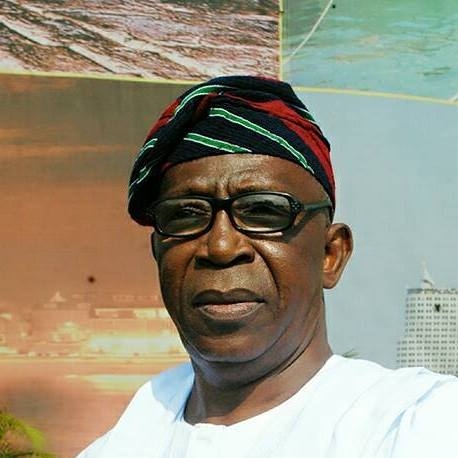
As a young student, he moved committedly between Islamic civilization, African historiography, Yoruba studies, and the sociological evolution of the Nigerian state instead of being confined to narrow disciplinary silos. Without any doubt, the late scholar embodied the long living tradition peculiar to the public intellectual: he was broad in learning, spoke elegantly grounded in his faith, and profoundly conscious of the responsibilities of scholarship to society.
As a foundation staff member of the Department of History, University of Ilorin. Professor Danmole started out as an Assistant Lecturer before his promotion as a Professor in 1992. The academic community will remember him as a teacher of history who narrates civilizations with careful diligence. He taught history with the diligence and cultural sensitivity it requires. His lectures reportedly carried the cadence of a scholar and the wisdom of the elder.
But perhaps the most enduring aspect of Professor Danmole’s intellectual contribution was his insistence on how African Muslim societies must be studied. He rejected the colonial assumptions and challenged the myopic point of views with which African Islamic history had been interpreted. He wrote against the reduction of Islam in West Africa to mere expansionism and positioned the spread of the religion through a deeply rooted socio-economic and intellectual force that shaped institutions, promoted literacy, influenced diplomacy, birth new identities and social organization across centuries.
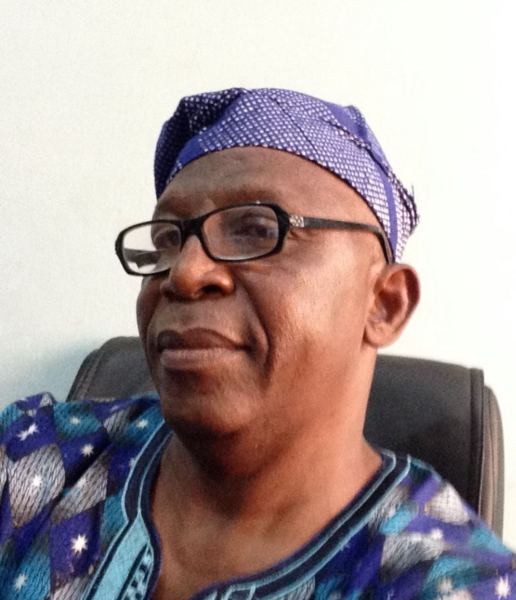
His works on the Sokoto Jihad, Yoruba Muslim communities, Islamic scholarship in Southwestern Nigeria, and the continuity of indigenous intellectual traditions shows his commitment in reframing the complexities in African history. He understood the profound damage caused by colonial historiography that put Africans as passive recipients of civilization, rather than active participants in building institutions, ideas and a flourishing society. His writings largely dispelled the wrong colonial narratives. The esteemed scholar, like others who shared his views, saw history as a liberation. To help recover African memory was, for him, a step in recovering its dignity. He understood the implications of cultural dependency and intellectual insecurity as products of being stripped of one’s historical confidence.
He taught in Lagos State University and at Al-Hikmah University, where he served as Dean of Humanities and Social Sciences. He was a stabilizing moral and academic model for others amidst growing struggles against administrative decline, intellectual burnout and an increasing commercialization of knowledge. He steered clear of workplace petty politics and maintained his ideals as a scholar who acts as a steward.
For emphasis, it is important to note the distinction between scholarship and stewardship. The academic community in Nigeria, have seen a generation of academics who viewed the university not as a sacred intellectual community and not just a workplace. They believed that the scholars owed society moral leadership alongside intellectual labor. This is where Professor Danmole belongs. It is unlikely to attribute any actions that fall short of scholarship and stewardship to him. He led a disciplined, restrained, intellectually serious and academic modest lifestyle.
As Nigerian academia suffers from infrastructural decline and an erosion of mentorship culture amongst other declines, Professor Danmole was amongst those who maintained the tradition. His supervision roles were not just an administrative obligation but a duty to build the next generation of intellectuals. His students have often spoken not only of his brilliance, patience, accessibility, and ethical clarity. He understood that knowledge reproduces only itself through relationships. Great institutions have never been built anywhere just by edifices or rankings. They are built and sustained only through living traditions of serious mentorship and knowledge exchange. A scholar becomes truly immortal when fragments of his intellectual spirit survive in the minds he cultivated.
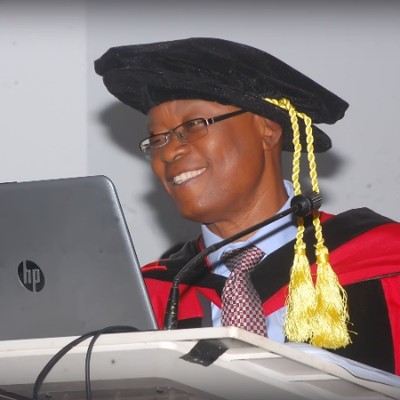
It is more appropriate to bring to mind the late scholar’s celebrated lecture on “Lagos: Yesterday, Today and Tomorrow,” delivered during the fiftieth anniversary of Lagos State. There, Professor Danmole demonstrated his rare ability to transform historical discourse into civic reflection. He described Lagos as a living historical entity, shaped by its migrational policies, booming commerce, cosmopolitanism, conflict, resilience, imagination and unique geography.
Within and outside the classroom and conference hall, he was a scholar of unusual humility. He is rightly described as a man who carried his scholarship lightly. He does not confuse erudition with arrogance and his intellectual confidence never for once displaced his humanity. His remarkable intellectual companionship with his late wife, Professor Taibat Danmole, an accomplished scholar and former Commissioner for Education in Oyo State, represented a formidable union of scholarship, public service, and Islamic values. Their lives as couples reflected a devotion, personal advancement and also the moral and educational upliftment of society.
The passing of such a man therefore reminds us of the fragility of scholarly memory in our national culture. Too often, the country celebrates spectacle while neglecting its thinkers. Even when the facts confirm that human civilizations are not sustained by politicians alone. They are sustained by a host of others including historians like Prof Danmole who preserved the continuity of meaning across generations.
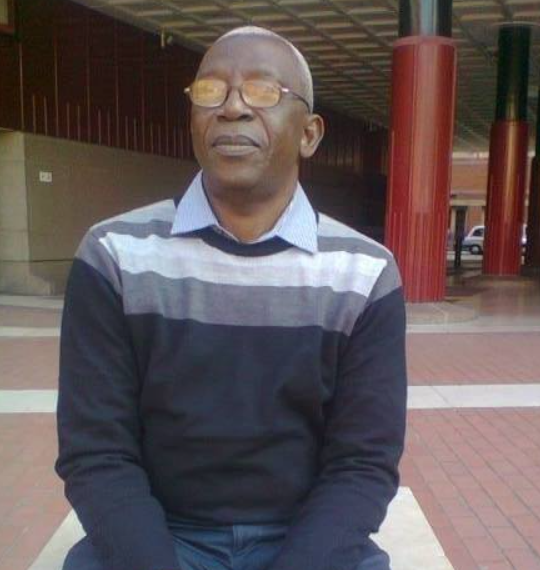
As we mourn him, we should not forget to celebrate the profound essence of his life. He was a man who lived not with transient applause, but in strong devotion to knowledge, faith, and service. He lived a life of balance. One of scholarship, faith and humility. As it was destined, the historian has now become history. There is little to what we can do. However, we take solace in the fact that history remembers its faithful servants.
The late professor Danmale was a good teacher, a mentor, peace lover and deligent scholar. May Allah forgive all his shortcomings and accept his return
Prof Danmole was a true breed mentor
Professor Danmole and I served as Research Fellows in the 3-year research project on ‘The Media and New Religious Publics in Yorubaland’, under the leadership of Professors Louis Brenner, Karin Barber, Paulo F. Moraes Farias and the late Professor John D. Y. Peel, from 1997 to early 2000. While Professor Danmole was based at the University of Birmingham, UK, I was based at the School of Oriental and African Studies, London, UK. The focus of his engagement was on Islamic perspectives of the New Media, while I focused on the Christian perspective. We complemented each other, and we met regularly in the UK and Ibadan, Nigeria, to compare notes and discuss the progress of the research – particularly how various forms of the New Media were shaping religious activities, news reportage, public perceptions of religion, and social relations across space and time. During fieldwork from 1997 to 1999, I was always welcomed at their residence in Bodija, Ibadan, while his wife served as a Commissioner of Education. He had a deep understanding of the media in the Nigerian society, a complement to his deep understanding of social history.
He was deeply religious, and in Birmingham, UK, on Fridays, he would tune his radio to participate in the Jumat services. Those were his sacred moments – devoted to silence and meditation. Indeed, we respected his boundaries at these moments.
He shied away from politics in the university and in the larger society, but devoted his time to intellectual reflection and analysis of Nigerian society from social and religious perspectives. His passion was the pursuit of knowledge.
Though much older, we formed a lasting friendship after the research. He accorded me much respect and showed love to a younger colleague and brother, whenever I went to Birmingham. I called him ‘egbon’, (i.e elder brother), which he really was to me. Often, he shared stories of growing up in Lagos Island (Isale Eko) at a time when religious harmony was fostered in the society.
I join others in mourning the passing of a great historian and a senior colleague. Indeed, as Professor Falola wrote, a historian has become history. Adieu.
Matthews A. Ojo, PhD
Monrovia, Liberia