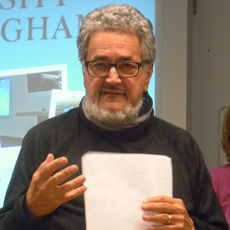

Toyin Falola
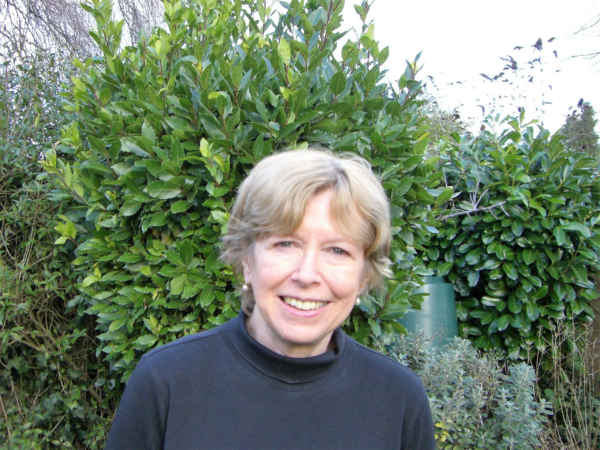
It was while I was in the process of contacting him to say I would be visiting his intellectual abode in Birmingham that I learned the elephant had fallen. I was pained, and I immediately offered my condolences to his lifelong companion, Professor Karin Barber. A few words here, and a few words later. More words in heaven!
https://www.lse.ac.uk/all-images/news/karin-barber-747×560.x83809d23.x529e1f16.jpg?w=2560&h=1920&q=85&f=webp
The bigger the house, the more the pillars that hold it. The fact that these pillars are many never takes away the impact of a single one, important enough to make a house crumble. Professor Paulo Fernando de Moraes Farias is one of the pillars of African history and epistemology, Opomulero. His own pillar stands at the core of the African pre-colonial history, an aspect of history that has been continuously attacked even before the full development of contemporary African historiography. My dear Paulo, the Opomulero, who will take your place?
The problem Paulo tried to solve was age-old. The pre-colonial history of Africa has often been described by those who did not have roots in it, like G. W. F. Hegel, as a place with “no historical part of the world; it has no movement or development to exhibit.” Hugh Trevor‑Roper also did not see beyond a tainted and biased understanding of African history. He and a couple of others whose views on history and sociology were seemingly important at one point could not see beyond the darkness they saw before colonialism. Trevor‑Roper believed that before the advent of the Europeans, the rest of African history was darkness and nothingness.
https://conferences.bham.ac.uk/wp-content/uploads/2025/02/UoB_aerial_imagery_5.jpg
The myopic approach to African history at the time was largely caused by the fallacious disposition that where there was no writing, there could be no history. Hence, many of those who believed in this school sat on the hills of continuous but damning ignorance that almost wiped the history of a whole continent because of the readership they commanded at the time. They forgot the arrays of oral history, pre-existing African approaches to the preservation of knowledge and history, substituting indigenous knowledge systems and, most importantly, archaeology. The narrative they chose was that Africa was a “dark continent,” with no past worth studying.
These perceptions were intentional, and that was why the wide range of misconceptions festered so much at the early stage of writing African history that many parts of the world started believing it. Then, many scholars, including Professor Paulo Fernando de Moraes Farias, had the heavy duty to retell the African precolonial history, working against the misconceived predispositions of white supremacy. Cheikh Anta Diop, A. Adu Boahen, Kenneth Dike, J.F. Ade Ajayi, and others carried the heavy weight of countering these notions. Farias took an important part in the struggle, analyzing oral history (a primary source of African history), expertise in epigraphic sources of the West African medieval history, African early writings, and epistemology. An important but definitive aspect of the part against the wrong notions of African history. Oh, the Opomulero has fallen; who will take his place?
Being among those who retell African pre-colonial history as a Brazilian medical doctor turned historian was an interesting twist in Pan-African history. It gives African history the opportunity to be told, based on facts, evidence, and deep understanding, and removes the potential bias many would have attributed to early African contemporary historians.
Two things must have influenced Farias’ interest in African history. His early exposure to African history and his residence in West Africa. For early exposure, Farias’ first exposure came from societal influence. He grew up in the popular city of Bahia in Brazil. Bahia had a very notable and historical link with Africa and African culture because of its role in the slavery enterprises and the development of Afro-Brazilian culture at the time. Secondly, as a student, Farias came in contact with early Afro-Brazilian history as well as cultural materials that had guided his path. At that early stage, Farias was convinced that Africa, and importantly, West Africa, was pivotal to the understanding of the Brazilian culture and identity.
He also saw that understanding both African and Brazilian history in its “pure” form, it requires deliberate inquiry beyond racism and colonial ideas. This was influenced by the impact of his exposure to anti-colonial and left-wing mentalities. Hence, he was aware and interested in the struggles for decolonization of Africa and the growing global interest in African independence. At this period, he proceeded to teach at Bahia’s Centre of Afro‑Oriental Studies (CEAO), which had a deep link with the University of Ghana and other African Universities.
On his movement and residence in Africa as a factor for his interest in African precolonial history, Farias was forced to leave Bahia after a dictatorial military government seized the country. As an active student and activist who was identifiable, especially among the intellectual community in Brazil, it was too dangerous for him to stay there. He decided to move after facing different investigations and persecutions by the military government. Hence, the Opomulero had to flee Brazil.
Farias was exiled to Ghana, one of the deepest sources of African pre-colonial history and a center of Pan-Africanism with copious Pan-African activists, writers, scientists, and historians. In Ghana, Farias engaged with African sources, resources, intellectuals, and the liberation movements, especially in Angola and Mozambique. His stay in Ghana expanded his African nationalist orientation. After the 1966 military coup in Ghana, Farias had to move again across Africa, first to Senegal and then to Nigeria. His experience in Ghana, Senegal, and Nigeria positioned him well to understand African history from a first-hand perspective.
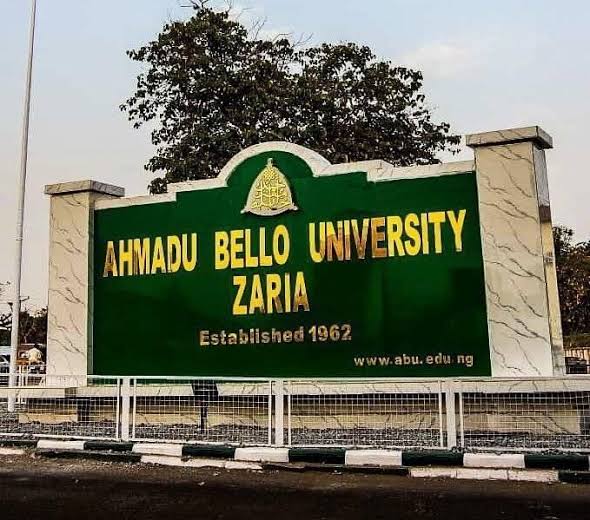
Farias taught history at Ahmadu Bello University in Zaria, Nigeria, establishing his name and influence within the African intellectual hub. He became interested in Arabic sources. He also engaged with the African academic environments, leading and supporting research across the continent. Farias particularly emphasized the need to critically study African history from an African perspective and using African materials. His disposition was also further shaped by his studies and work at the University of Ghana and at IFAN in Dakar, Senegal.
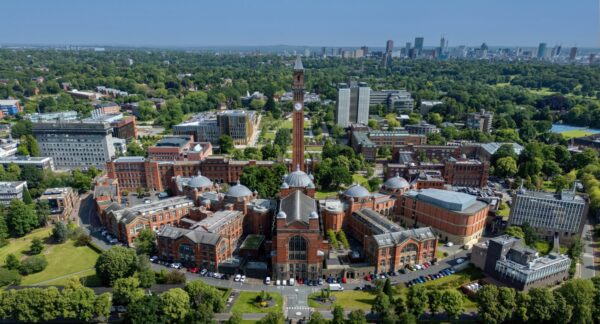
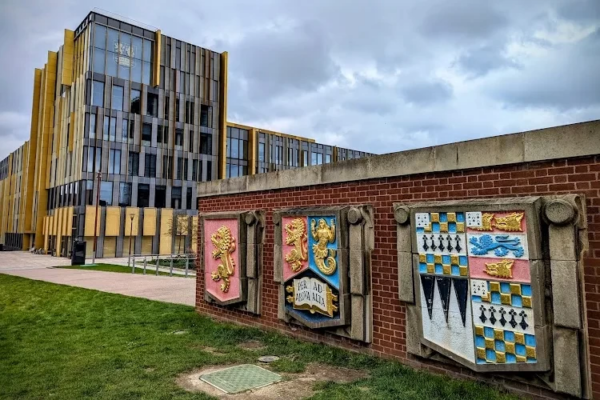
Having had these engagements, his proper academic journey was later advanced to the University of Birmingham from the late 1960s to his retirement in 2003. From Birmingham, he further engaged with Medieval African history, the history of Islam in Africa, African Oral Tradition, African Epigraphy, the Timbuktu texts, and oral traditions in Africa. By this, he was one of the very few scholars in Britain studying African subjects.
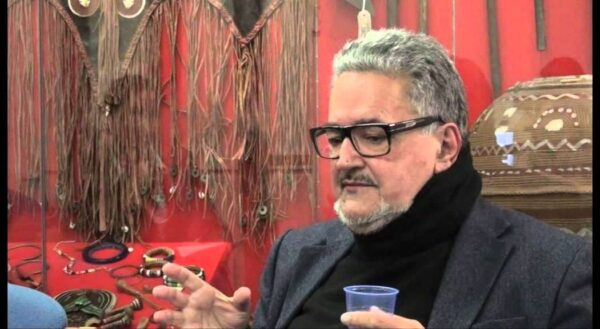
https://i.ytimg.com/vi/vkPLWRt22bE/maxresdefault.jpg
Paulo’s contribution to African history cannot be easily quantified as they are of particular importance. He was one of the first pioneers of redirecting the sources of African history to content and texts beyond the early European writings. With the combination of chronicles like the Timbuktu texts, Arabic inscriptions, and manuscripts of medieval Africa, and the various oral traditions, Farias was able to help redirect the telling of African precolonial history. By his work, he invited historians to expand the sources of African history, and he did so in many of his own publications, including Arabic Medieval Inscriptions from the Republic of Mali (2003), where he examined the Arabic inscriptions, the Timbuktu chronicles, and the African oral traditions. Also, Discourse and Its Disguises, which was co-edited with Karin Barber, analyzed African oral traditions and narratives of historical events and meanings. Self-Assertion and Brokerage, which was on the African intellectual and cultural documentation and descriptions, applied diverse sources and methods of historiography. This was also reflected in various articles.
In Arabic Medieval Inscriptions from the Republic of Mali, Farias studies the Arabic inscriptions between the 11th and the 15th centuries. These inscriptions on monuments, stones, and tombstones were found in Mali, telling notes of African history. In that book, he further translated and interpreted their meanings, as well as highlighting their historical relevance. Evidently, this retold the history of regions like the Tuareg and Songhay. Farias established that the written history of Africa predates the European contacts. He further posited that the inscriptions transcend mere religious texts and are both sources of historical events, culture, and documentation. After this publication, the focus on epigraphy as a primary source of African history became heightened and expanded. Scholars evidently started inquiring into the trends of Sahelian civilizations and Islam in Africa.

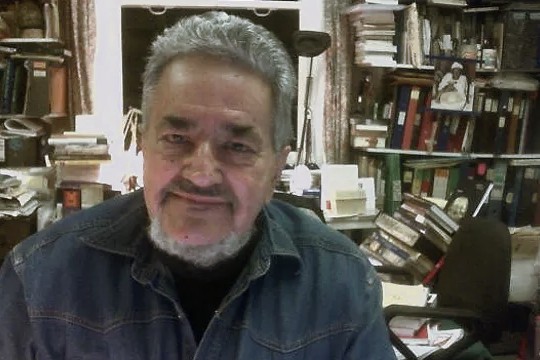
His Discourse and Its Disguises: The Interpretation of African Oral Texts (1989) was also fundamental to understanding African history, especially from oral sources. It is important to note that European historians had largely ignored oral history in Africa, and as such, many of the European archives did not properly record the synopsis of events in Africa. This work reflects on the historical significance of African stories and myths. He was able to connect and highlight the structure, history, and politics in the stories and compare them with other sources. However, while joining the host of African historians to reiterate the importance of oral history, he clarified that they should not just be taken at face value because of modifications that could have occurred over the years but compare with other sources and other oral sources on particular subjects to be able to get more definitive facts.
https://africanstudies.org/wp-content/uploads/2026/04/paulo_fm_farias_0.jpg
These contributions, and the host of others, establish the basis of referring to Faria as an Opomulero of the African precolonial history. They go to the development of African historical research methodology and approach to African history. They combine anthropology with archaeology and give a scientific and objective evaluation of African sources of history. By his work, African sources are not just more reliable but bear the true testimony of the past. Oh, the Opomulero has fallen; who will take his place?
We can not replace Farias, but we can hold the building with his contributions and expand on them. We can deepen the dependency of African historical sources and, by extension, fill the gap he had left. The pillar has fallen, but the building will not crumble because his work fills the gap.
What a Tribute! Thank You dear Toyin.
Warmest,
Mamadou.
Fascinating tribute to an equally fascinating scholar
May Paulo continue to rest well.
What a big pain to all of us who once benefitted from this mega intellectual! My heart-felt condolences o to his sweetheart, another mega intellectual, Prof. Karin Barber, at whose feet many of us, myself included, derived a great deal of tutelage in text analysis. May the giant scholar, Paulo, be at peace with his creator. Thanks, TF, for this worthy tribute. You put the right peg inside the right hole!