

Toyin Falola

A Conversation With HRM, Alayeluwa, Oba Professor Saka Adelola Matemilola, PhD, FNSE, Oluyalo Otileta VII, The 14th Olowu of Owu Kingdom, Abeokuta

(This is the final report on the conversion on September 27, 2026. For the transcript, see: https://www.youtube.com/live/5Nj7O4k7-R4?si=ShSCdRGkCQfubI9N)
PART 2
Why Do We Still Need Kings in a Republic?
This is a question that may appear paradoxical since republican language speaks about elections, constitutions and political mandates but monarchy seems to belong to a system based on hereditary succession and tradition. But in the Nigerian context, the seeming paradox has never really vanished. The traditional monarchs play an important role in the lives of communities in spite of the fact that they do not hold any significant constitutional roles in the current state structure. They preside over the ceremonies, help resolve conflicts, meet political dignitaries, play the roles of mediators during difficult times, develop their communities and are usually among the first persons sought out when citizens have problems. Thus, their role cannot be easily measured through constitutional clauses alone. It is not just whether kings should exist. It is the significance of their existence in the democratic society and the obligations that should accompany their power. If the elected government has the constitutional powers, then what extra role can the traditional leaders play? On the other hand, if the traditional leaders still carry the weight of social respect and real power at ground level, then what will happen if the political system ignores the roles they have already assumed?

Oba Matemilola responded by looking backward before looking forward. The idea he expressed was that modern Nigeria is not a result of co-development between the traditional structure and the state but rather the transformation of traditional structures of authority into the modern state. Prior to colonial times, as he asserted, Africans had their own system of politics where monarchies and chiefs organized their government structures. The colonial times came with indirect and then direct administration systems, and with independence, the political authority was transferred to politicians elected through democratic means. In Nigeria, he remembered, the traditional structure used to be more explicitly incorporated in the political structure in terms of houses of chiefs, but they have become less important now. Thus, his idea was not that Nigeria must go back to its precolonial political system. His question was that whether the modern state did away with some valuable functions of traditional structures without developing new alternatives.
This distinction is significant due to the fact that the traditional ruler in modern times is not always the holder of any official governmental power, but rather the one who holds considerable social influence. According to Oba Matemilola, the advantage of traditional rulers lies in their proximity to the community they govern. The monarch residing in the kingdom, for example, can possess certain knowledge regarding the neighborhoods, people living there, and their social interactions, which sometimes cannot be achieved by the officials residing in the distant administrative centers. When danger, conflict or any other problem arises, the royal palace is immediately at hand. This is illustrated even further by the description offered by Oba Matemilola of the type of issues that go to the palace. A family that cannot afford to pay for school fees might come to the palace. A person with medical bill might come to the palace seeking help. In times of unrest, even politicians may come to the traditional rulers asking for their intervention because they understand the social ties of the king to the community. In this case, the palace acts more as a social organization rather than a rivaling government organization. It would then be interesting to see how the state can incorporate this grassroots legitimacy into its governance system.
Professor Gabriel Babawale took this issue precisely and made it institutional. Rather than accepting the continued existence of traditional rulers as self-evidently sufficient, he asked what their constitutional role should actually be. Should traditional rulers have clearly defined responsibilities beyond their present advisory functions? If so, what should those responsibilities be? And perhaps more difficult still, can tradition really be separated from politics? If traditional rulers participate in the affairs of their communities and interact constantly with politicians, where should the line be drawn between legitimate engagement and political partisanship?
Oba Matemilola’s answer was to distinguish participation in governance from partisan politics. He acknowledged that traditional rulers cannot simply remove themselves from the political environment around them. They are inevitably connected to decisions about security, development, infrastructure and community welfare. But he argued that they should avoid becoming agents of political parties. A monarch, in his formulation, is the father of the entire community. Supporting one political party openly may therefore compromise the ability to work with those who belong to another party after political power changes hands. The palace must remain available to everyone. This distinction of politics as distinct from political partisanship is one of the major concepts to arise from this conversation. This is because the concept highlights the idea that being neutral does not imply isolationism. The traditional ruler may talk to the government, work for the good of the community, engage in the process of development and highlight the problem of insecurity without aligning himself with any political party. Oba Matemilola emphasized that as soon as a traditional ruler starts campaigning or identifying himself with any political party, he begins to weaken his own capacity to act as a mediator of political differences.
This issue is particularly important since, as mentioned earlier, traditional rulers derive much of their power and legitimacy from the extent of the community whose interests they are supposed to serve. A politician can proudly be associated with a political party since partisan rivalry is inherent in democratic politics. Traditional ruler is not an ordinary member of society. Individuals with opposing views are subjects of the same community. Should the palace get involved in the rivalry of political factions, its ability to act as mediator would become impaired. Thus, the problem is not the presence of political views on the part of traditional rulers. As stated by Oba Matemilola, they are humans and, hence, are bound to hold personal opinions. What matters is whether they can subdue their personal views to the interest of the community as a whole. The question of neutrality becomes complicated when the traditional institution itself faces conflicts between the religious affiliations of the individuals concerned. Professor Babawale raised the issue of cultural traditions and Christianity/Muslim faiths where traditional rites have spiritual undertones. The question opened another layer of the conversation: the palace is expected to represent culture in a society whose citizens increasingly inhabit multiple religious and ideological worlds.

Oba Matemilola’s response was to insist on a distinction between culture and religion. He described traditional practices not simply as religious rituals but as systems that historically performed social and educational functions. He used the example of the orientation associated with the installation of a traditional ruler. Before assuming office, a prospective ruler needed to learn about the community, its chiefs, its expectations, its rules and the relationships among different sections of the society. The process, in his explanation, was partly an education in responsibility. Whatever spiritual dimensions may have existed within older systems, the broader social purpose was also to prepare the individual for the obligations of leadership. This interpretation returns the discussion to the first theme in this series; institutions educate. Besides exerting authority, the palace conveys values. Leadership ceremonies, the behavior of chiefs, how conflicts are dealt with and how communities are portrayed by all of this convey to citizens the concept of leadership. This is why the sanctity of tradition, even in the absence of constitutional authority, is of importance. Justice is an example that shows us this very clearly. Oba Matemilola explained that traditionally, the palace was a place where disputes were settled in Yoruba communities. He contrasts this with modern times where one could use political connections, connections in the police force or money to get an edge on others in disputes.
His point was not that traditional mechanisms should simply replace the formal judiciary. On the contrary, he gave an illustration of how in Owu, a process was established to integrate traditional and alternative dispute resolution. According to him, the palace had been handling family disputes, land disputes, chieftaincy disputes, among others, some of which had gone on for several years and had resolved the disputes using the formal method where necessary. This illustration is vital since it proves that there are ways of arranging complementary institutions. Traditional institutions do not have to become courts in order to contribute to the judicial system. The traditional institutions can mediate and facilitate dialogues and reconciliation in the community while the courts exercise their formal powers. This way of operation considers the social nature of the disputes and at the same time links the disputes to the modern judicial process. This concept fits in with the overall theme of the interview, whereby it emphasizes that the future of the traditional institutions is not about the recovery of their lost political power but about complementary roles. His argument was therefore for consultation and inclusion, not necessarily for traditional rulers to replace elected officials in making development decisions.
This difference needs to be made. The argument does not mean that the traditional rulers are supposed to constitute another class of politics. It allows for the emergence of an alternative form of governance in which the formal institutions will utilize more efficiently the knowledge of the locality. The traditional rulers could constitute the instrument through which the interests of the locality could be conveyed while leaving the responsibility for policy-making and budgets with the elected representatives. The difficulty is to design appropriate mechanisms of accountability to prevent this from turning into informal politics.
If getting titles, land, and access to the palace is linked to ability to pay, does the institution lose its moral authority which it claims? The Oba Matemilola did not brush aside the criticism. Instead, he recognized it as an issue and said that being a traditional ruler or chief is about service to the people. In his account of Owu practice, the important consideration is demonstrated contribution rather than simply the ability to pay. Here again, the discussion moves beyond kingship itself toward the question of institutional legitimacy. Traditional institutions survive not merely because people inherit titles but because communities continue to believe that those institutions have something valuable to offer. Once titles are seen mostly as means of amassing wealth, influence or status, the link between power and service will become increasingly difficult to maintain.
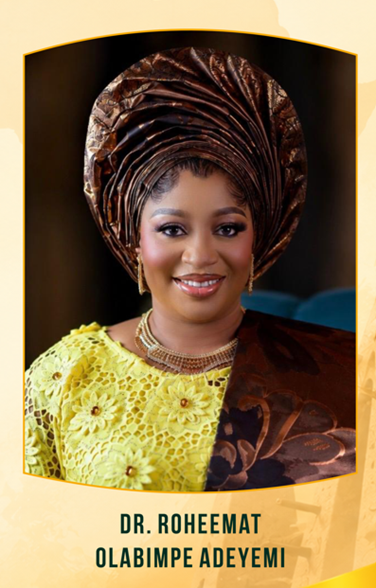
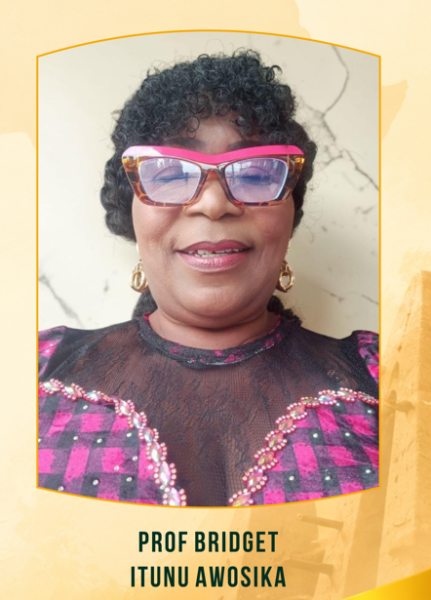
If the palace requires reverence, it must also justify why such reverence is justified. The prior focus by Dr Adeyemi on language and personality adds further dimensions to this matter of institutional significance. In light of the culture-preserving function of the palace, its power becomes dependent on some extent on its ability to maintain and pass down those values. Again, in line with the concerns of Professor Awosika on indigenous education, there are roles for the palace in addition to ceremonies and titles. It can become an avenue through which cultural knowledge, education, community service and social responsibility can come together. The relevance of the palace in the republic thus depends not so much on having power but in carrying out functions that foster social unity.
The discussion also refuses to romanticize the palace; the broader questioning of historical revisionism is relevant here. Though traditional authority will help in preserving the memory, it may become vulnerable to selective construction of history. Oba Matemilola himself recognized the problem of history writing that could be written with certain objectives and then spread via social media without proper verification. Traditional institutions that will act as custodians of the culture must thus engage in serious documentation and historical scholarship and not assume that anything referred to as traditional must automatically be true.
Besides exerting authority, the palace conveys values. Leadership ceremonies, the behavior of chiefs, how conflicts are dealt with and how communities are portrayed by all of this convey to citizens the concept of leadership. This is why the sanctity of tradition, even in the absence of constitutional authority, is of importance. Justice is an example that shows us this very clearly. Oba Matemilola explained that traditionally, the palace was a place where disputes were settled in Yoruba communities. He contrasts this with modern times where one could use political connections, connections in the police force or money to get an edge on others in disputes. Traditional authority in Nigeria will thus have to strike an extremely delicate balance, being relevant without falling into politics, being culturally authoritative but not historically absolute, exercising community leadership without abusing power and having social weight without being politically affiliated. Oba Matemilola argues for the necessity of recognition in governance, Professor Babawale stresses the importance of constitutional clarity and accountability, Professor Awosika and Dr. Adeyemi remind of the cultural and educational function of the palace and we must ask if the institution could bear the test of criticism.
One cannot look to the past, or even to nostalgia for the pre-colonial political system, for the answer; it lies in the present state of affairs within Nigerian communities and in the roles citizens continue to assign to traditional institutions. When people come to the palace because they do not have money for school fees, when families fight each other, when communities are uncertain or when development programs fail to meet their expectations, one has to admit that the institution maintains its social relevance. But relevance brings responsibility. The higher the authority of the institution in the eyes of the community, the more integrity and accountability are clearly understood as limits.