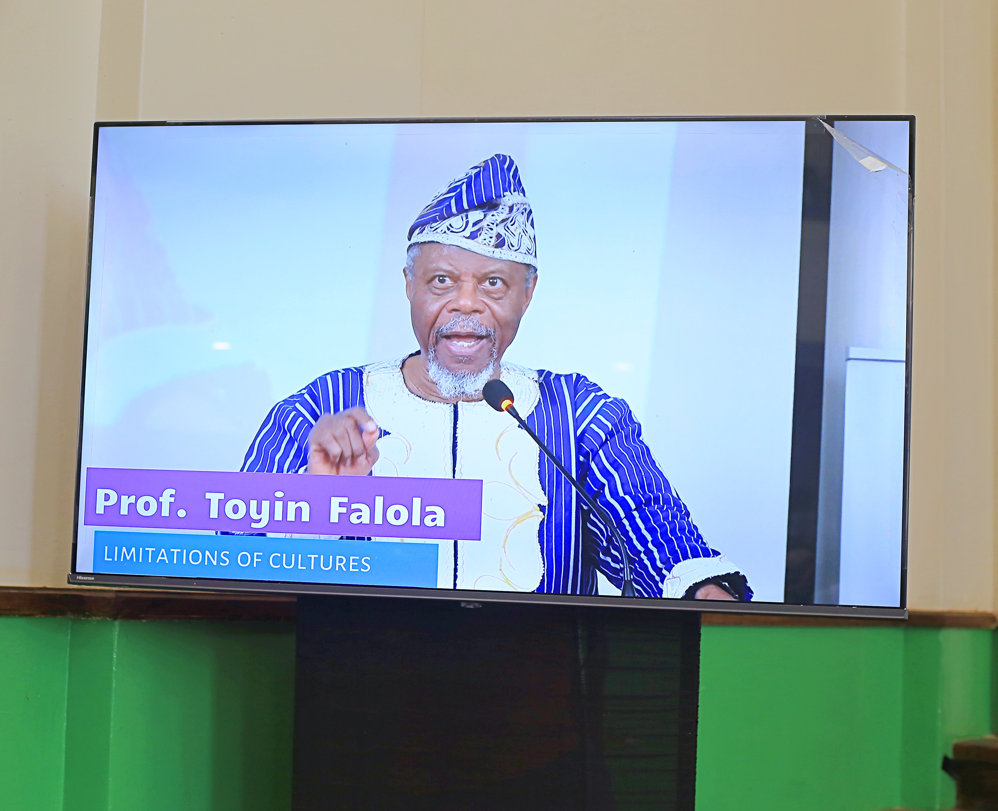

Toyin Falola
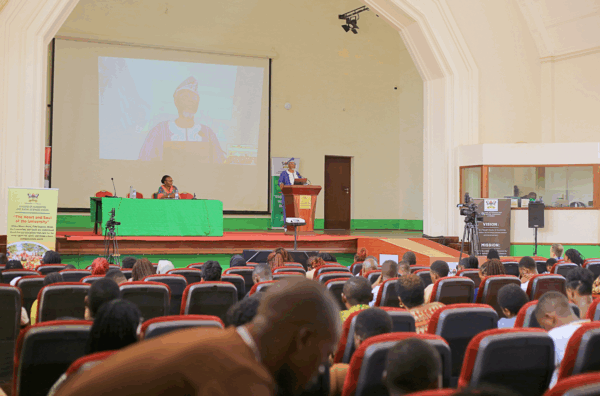
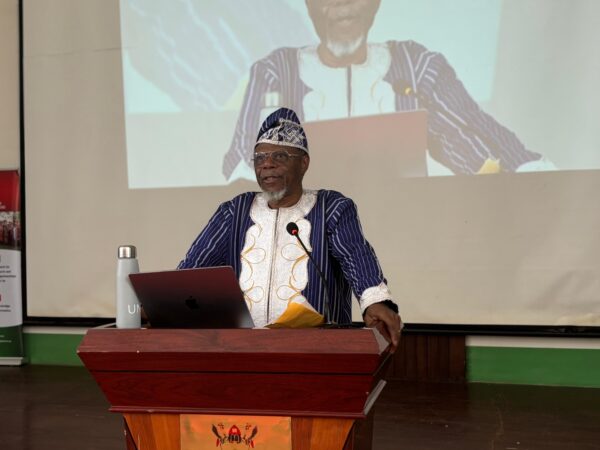
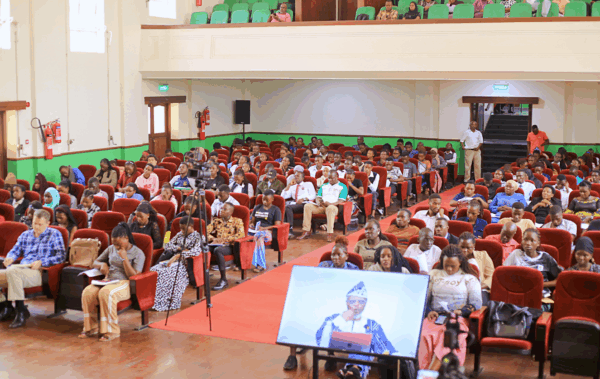
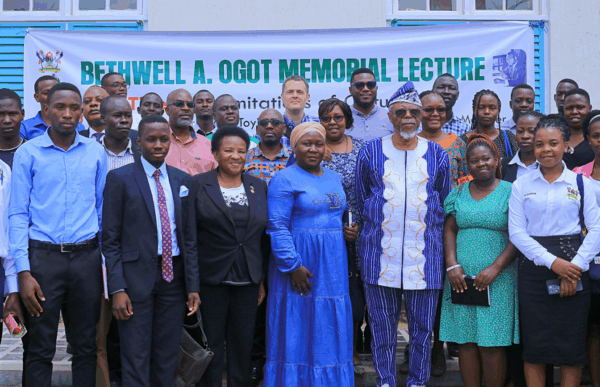
It was a great honor to give the Professor Bethwell A. Ogot Memorial Lecture at Makerere University on August 15, 2025. I appreciate the warmth of the Vice-Chancellor, the representative of the administration, Professor Helen Nambalirwa Nkabala, who opened the event with an eloquent speech, the amiable Dean, Professor Pamela Khanakwa, the host of the event, and my fellow historian, Dr. Zaid Sekitto, who showed me the campus and some of its notable buildings. The Head of History, Professor Charlotte Mafumbo. The Department of History is doing excellent work, and I look forward to reading their PhD theses. I chose the theme of culture to honor an aspect of the established scholarship of Professor Ogot.
Culture is not only a way of life, but also the store of history, identity, and community. From the West African oral tradition to the Maasai beading in East Africa, African cultures are about daily life. Cultures shape how people see the world, interact with one another, and transmit knowledge. In the series that I once edited for Greenwood, “Culture and Customs of Africa,” I referred to traditions as “the backbone of African resilience,” enabling societies to survive colonial disruption, economic hardship, and political instability.
Within that resilience lies a paradox. These same traditions and customs that protect identity can also resist necessary change, stifle innovation, and underpin inequalities. To create a course for the progressive, open societies, Africa’s future demands that Africans be willing to challenge the limitations of their cultural legacy.
Tradition doubles as a compass and an anchor for much of African society. John Mbiti characterizes African traditional life as one in which “change is always linked to the past,” i.e., new things are accepted when they can fit into an ancestral framework of custom. This perspective encourages stability but can also introduce scepticism of science, government reforms, and technology. The Ebola crisis in Africa brought this tension harshly to the fore; some groups resisted medical intervention, saying the disease was a curse that should be addressed through spirituality. Similarly, agricultural innovations and gender equality drives are commonly reduced to foreign intrusions. This resistance, while as much as rooted in the imperative to preserve cultural integrity, can undermine educational, health, and economic reform.
Patriarchy is one sub-theme running throughout precolonial and postcolonial African society, though colonial legal orders have reshaped its current configuration. Colonialism planted rigid gender hierarchies in African societies and codified them in laws that relegated women’s rights to the margins. Women are disenfranchised in most of the world from holding land, inheriting property, and exercising political rights. Customary laws can force widows to forfeit farmland to men who are related to them, taking away their economic independence. These restrictions waste huge reservoirs of potential and talent. Studies referred to in BMC Medical Ethics show that women’s empowered societies obtain improved health, improved agricultural productivity, and improved governments. The challenge is decapitating discriminatory mechanisms without desalinating cultural institutions that give identity to groups.
Ethnic pride as a ground of belonging and affiliation can be a source, yet it can also be a source of disunity in multi-ethnic nations. Scholars have pointed out that attachment to ethnic identity can replace national unity, causing political patronage, favouring resources, and, worst still, violence. The Nigerian Biafran War and the Rwandan genocide in 1994 are proof of the destructive potential of politicized ethnicity. Even in stable democracies, voting is typically ethnicized, so policy-making is a battle between ethnic blocs rather than national interest. Ethnicity in itself is not an issue, but when political interests politicize it, it undermines the cohesion required for democratic governance and sustainable development.
African cultures’ hallmark is respect for elders and leaders, being celebrated as an appreciation of wisdom and experience. Defiance becomes a problem, though, when deference is absolute, as warned by Gabriel Idang, as it chokes critical thinking and silences youthful voices. In government, this can be a kind of authoritarian rule that deters accountability. In the classroom, free questioning and debate can be stifled. In domestic and communal life, it can prevent conversations regarding harmful conventions. Politicians, religious leaders, and clan chiefs can use this respect to avoid criticism, perpetuating corruption or inept policies. A balance between deference and constructive critique is necessary if power is to serve and not oppress.
While religious systems form the foundations of cultural identity, some religious practices based on a basis of superstition harm individuals and society. Witchcraft accusations that still prevail in some African societies have led to violence, displacement, and death. Female Genital Mutilation (FGM), forced and child marriages, and ritual killing of people with albinism continue despite laws in countries and international human rights efforts to end the practices. Such practices persist because they are embedded socially within cultural legitimacy, thus rendering reform politically and socially challenging. Transformation can only prevail through culturally rooted advocacy, which operates within communities rather than against them.
African societies prioritize group identity over individual ambition. In Cultural Universals and Particulars, Kwasi Wiredu considers this a community advantage but concedes its disadvantage: stifling personal initiative and achievement based on merit. Entrepreneurs and innovators will tend to be viewed with suspicion, their success accounted for in terms of self-interest, not talent. To this must be added reliance on oral tradition as a means of preserving history and law. Although rich in moral and narrative content, oral tradition can be lost and distorted. Traditionally, legal frameworks, as resilient in rural areas, also tend to clash with constitutional protection, notably gender rights and property. It does not require closing these gaps, closing out traditional and oral systems, but consolidating them with written, rights-based systems for all citizens in equal measure.
The unwillingness to adopt new ways of tackling intricate issues such as climate change, digital technology, and globalization may create future problems. Self-interested cultural agendas, prioritizing clan or family over national or continental priorities, may hinder Africa from being completely included in the world economy, as well as in creating peaceful regional cooperation.
Nonetheless, cultures are not fixed; they can and ought to alter. The limitations of African cultures do not ostracise them; they simply demand introspection. Reform is not the elimination of heritage but its enhancement, so that Africa’s cultural heritage propels, instead of retarding, the continent towards equitable, sustainable progress. African cultures are dense, strong, and meaningful. Their strength, solidarity with society, ethical richness, and resistance must be upheld. But the limits, as stated earlier, of change resistance by gender inequality and ethnocentrism must be confronted in the open. Through education, intergenerational discourses, and reforms adopting the rights approach, Africa can preserve the richness of its past and do away with the obstacles to sustainable development.
Photos: Falola’s Memorial Lecture (Bethwell A. Ogot) at Makerere University, Uganda, Part I – August 15, 2025
https://www.flickr.com/photos/toyinfalola/albums/72177720328407207
Photos: Falola’s Memorial Lecture (Bethwell A. Ogot) at Makerere University, Uganda, Part II – August 15, 2025
https://www.flickr.com/photos/toyinfalola/albums/72177720328396040/
Thanks for this intricate but very rich presentation. The meeting point of African cultures and modernity if modernity is defined as the infusion of Western ideas and innovations, requires a delicate balancing because some of what we call modernity is sometimes a disguise for the super imposition of foreign cultures on African culture. Take the clothing system of the western world which African youths and women in particular are invited to emulate. . It’s completely at odds with African tradition and culture. The acceptance of any system of modernity into Africa should depend on whether or not it has value added potential to the existing African culture.
This article offers fresh perspectives on the strengths but also weaknesses of African culture. Prof. Falola rightly encourages us to accept the limitations and intentionally infuse the strong elements with innovations that can deliver into and sustain our heritage in global environments.