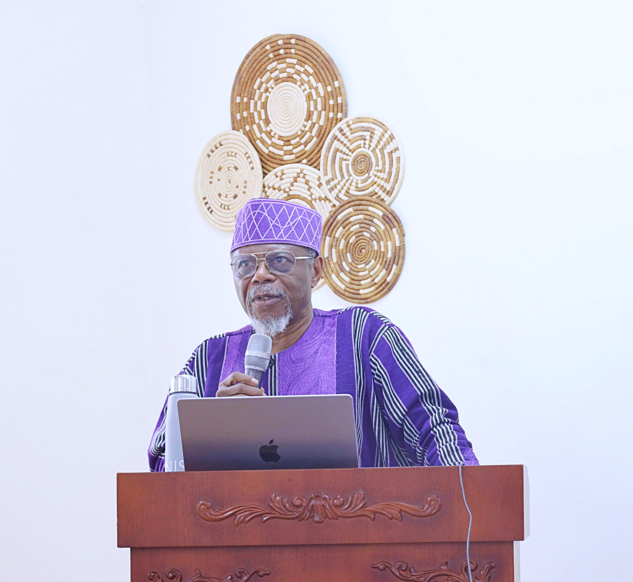

Toyin Falola
I am thankful to the Makerere Institute of Social Research in Uganda for the opportunity to speak on this important topic. For decades, it has served as a major intellectual center that serves our continent. Professor Lyn Ossome is warm and welcoming,
States in Africa are not a single, unified institution; they are a complex mix of colonial inventions, anti-colonial visions, elite bargains, violent borders, cultural projects, and daily interactions. To understand how African states exercise power today and why their development paths differ so much, we must view them as historically constructed. Colonial practices, nationalist imaginations, and everyday routines shape them. My previous work on nationalism, historiography, and culture provides a useful perspective.
Additionally, Mahmood Mamdani on indirect rule, Frantz Fanon on violence, Achille Mbembe on Necropolitics, and Ngũgĩ wa Thiong’o on cultural decolonization illustrate how power is exercised through institutions, narratives, and the right to life or death. Colonial strategies constructed the state by dismantling precolonial sovereignties. The colonizers did not arrive to find “states” that they merely displaced. Instead, colonial governance established new forms of government, police, taxation, censuses, territorial maps, and legal hierarchies that reshaped political power. Most importantly, colonial administrators employed the language of custom, “tribe,” and tradition to justify indirect rule and to govern populations through selected intermediaries.
As Mahmood Mamdani argued, this led to a divided political order: the “citizen” of the colonial metropole and the “subject” of the rural, customary territory, a distinction that made political rights and civil institutions vastly unequal from the beginning. This split was embedded in postcolonial institutions, shaping who was part of the political community and where state power could operate. History shows us a second, simultaneous process: colonialism not only tore apart African political imagination but also produced new knowledge and elites that worked to create nationalist projects from both indigenous memory and borrowed political languages. Through writing histories, cultural studies, and nationalist texts, African intellectuals reimagined the idea of the nation and the state, even as colonial administrative legacies limited that idea. While colonial cartographers redrew territory, nationalist historians and cultural figures redefined boundaries of belonging.
Regarding intellectuals, history-writing, and state legitimacy, I have argued that the state is expressed not only through police and bureaucracy but also through narratives that legitimize power: textbooks, monuments, founding myths, and the professionalization of history itself. My earlier research on nationalism and African intellectuals shows how elites in the postcolonial era used history to connect diverse peoples into imagined national communities, often favoring certain languages, lineages, and historical meanings. These narratives shape citizen identity—who can claim the state’s protections and who is excluded as irregular or backward. In essence, political power involves cultural work, with effects that are both immediate and enduring. When a country’s history emphasizes a dominant ethnic, regional, or linguistic group, policies and patronage tend to follow that bias. When historiography remains limited and is taught and reproduced within elite-controlled institutions, the country’s self-perception also narrows, weakening inclusive institutions that are crucial for broad-based development. I advocate for a decolonized and pluralistic historiography that expands, rather than restricts, the political possibilities of the state.
Beyond stories, the colonial state built tools: a bureaucracy that taxed and managed land; military and police forces that protected borders and suppressed opponents; courts that ruled unevenly on rights. These tools remained with governments after independence, and some were repurposed. Patronage networks, exchanging jobs, contracts, and favors for political support, became a main way for states to maintain influence. In many countries, this development-heavy clientelism created a flexible, though corrupt, ruling coalition that could provide specific goods and block broad reforms. In short, weak institutions and self-serving elites turned state power into rent-seeking, discouraging investments in public goods.
When elites create histories that naturalize their privileges, they also naturalize rule by patronage. This pattern accounts for divergent growth trajectories. Those states that could professionalize segments of the bureaucracy and achieve some predictable rule, either through strong state capacity or consensus ideology, could attract investment and plan development in the longer term. Where patronage overwhelmed meritocratic administration, economic growth was skewed and often extractive, benefiting narrow ruling coalitions but not building infrastructure or human capital on a large scale. What followed ? Violence, sovereignty, and the “right to kill”.
Fanon’s and Mbembe’s key insights teach us that state power often relies on having the final say over the decision to let live or let die. Frantz Fanon argued that colonialism was a violent process, and that the politics of decolonization often became struggles where violence was a primary tool for political change. Achille Mbembe applies this idea to modern contexts, identifying “necropolitics”—how sovereign power determines who gets to live and who must die—by creating zones of neglect, implementing violent policing, and enforcing securitized governance. For most African states, the securitization of politics, militarized responses to opposition, emergency rule, and invasive surveillance have become dominant methods of maintaining power, often justified through the language of development needs, counter-insurgency, or the threat of instability.
These violent forms of sovereignty have clearly incurred development costs. When the typical government response to crises is coercion rather than institutional reform, civil society spaces shrink, markets become distorted by insecurity, and elites consolidate power through control of security forces. Mbembe’s insight into the distribution of death is relevant here: marginalized populations, migrants, informal settlers, ethnic minorities, and rural communities are more vulnerable to being targeted by Necropolitics, which deepens inequalities and hampers inclusive growth. Ngũgĩ wa Thiong’o’s Decolonising the Mind emphasizes the importance of culture as a foundation of state power. Language, literature, and education are crucial because they shape who controls the national narrative. Policies that favor colonial languages and foreign knowledge risk disempowering majorities and maintaining colonial hierarchies of knowledge. When education and official culture are used to exclude people, they foster an elite that is linguistically and culturally separate from the rest, weakening social cohesion and the social contract essential for secure development.
Where states have adopted inclusive cultural policies—such as promoting local languages, recognizing multiple histories, or investing in education for all—they have sometimes succeeded in increasing political participation and building trust. When a small group controls cultural authority, the growth model becomes unstable because there isn’t enough investment in human capital, leading to brewing political issues. Connecting these elements helps explain why African states have taken different growth paths. Centrally managed, resource-driven colonial legacies and weak postcolonial reforms—like in resource-rich states—tend to develop rentier governance models. These economies are highly vulnerable to commodity shocks; political power is centralized; corruption and clientelism distort public good investments. Historical memory and elite narratives can cement exclusionary identities that justify elite dominance. Analyzing the role of intellectuals shows how national discourse can support such arrangements. States that reconstructed or improved bureaucratic and legal systems, including some that followed East Asian-style development strategies in Africa, involved greater state capacity and long-term planning. Where successful, growth was sustained and public goods expanded. Historiographical and cultural projects that promoted inclusive narratives helped legitimize the sacrifices and redistributions necessary for development.
In my earlier work on nationalism, I discussed the political efforts needed to establish such a consensus. States marred by violent politics and securitization—where the state relies on violence and Necropolitics, as described by Mbembe—experience stagnant growth, human capital flight, and reduced social investments. Fanon’s ideas on violence help us understand why riots and counter-riots often reproduce cycles that undermine stable growth. Empirically, these dynamics vary: some countries have pockets of good governance amid areas lacking state presence; others have strong central states but weak service delivery because power is used to amass resources rather than invest in public infrastructure.
If colonial legacies and elite cultural projects have significantly shaped state power, what would a decolonial approach to state-building involve? Education and official historiography must embrace diversification, as highlighted by African scholars. Promoting local languages is essential for increasing political participation and civic trust. Cultural democratization can thus expand support for inclusive policies. Drawing from Mamdani’s analysis, the divided logic of the citizen must be challenged in practice. Legal reforms and decentralization that extend civil rights and administrative authority into rural and customary areas can help reduce exclusion and foster more uniform governance. This demands careful planning to prevent merely replicating patronage at local levels.
Fanon’s warning about the priority of violence in political change is that lasting development requires reducing the political use of force and strengthening civilian oversight of security. When securitized responses dominate, economic planning and social trust decline. As Mbembe’s work emphasizes, states must confront policies that treat populations as disposable. Health, housing, and legal protections that focus on vulnerable groups are not just moral acts; they are essential for sustainable development. Patronage won’t vanish overnight, but states can create incentives and institutions, like merit-based civil services, transparent procurement, and empowered audits, that gradually steer political competition toward performance and the delivery of public goods.
In conclusion, the African state is a palimpsest. Colonial cartography, nationalist historiography, elite bargains, popular insurgencies: these are the scriptoria of a constantly overwritten text. Policy debates about “state capacity” and “growth” tend to favour technocratic prescriptions. Decolonial interpretation adds another perspective: sustainable growth requires transforming the stories states tell themselves, restructuring institutions that distribute rights and protections unequally, demilitarizing politics, and prioritizing cultural and linguistic inclusion. That is a tall order, but it is the only way to make state power work for development instead of against it.
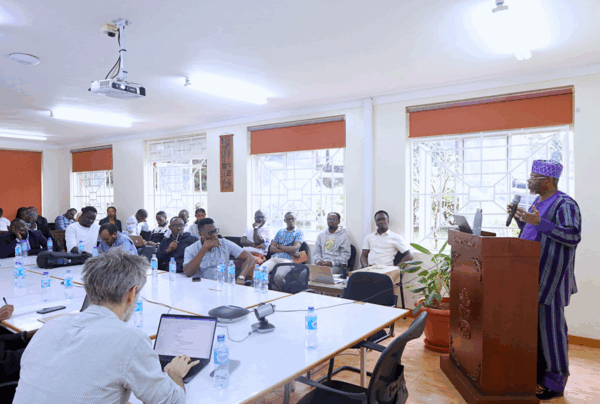
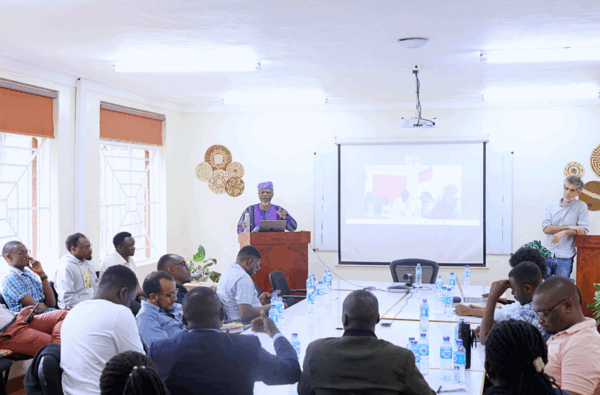
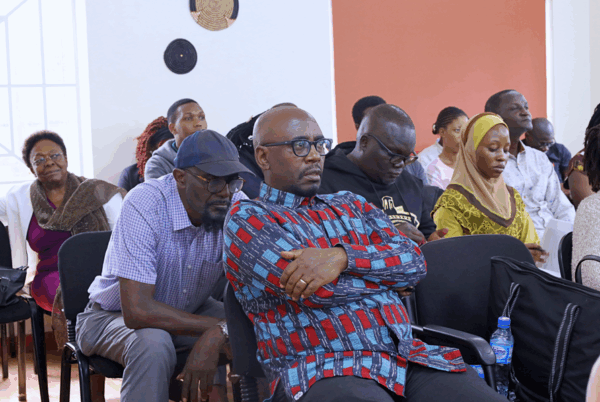
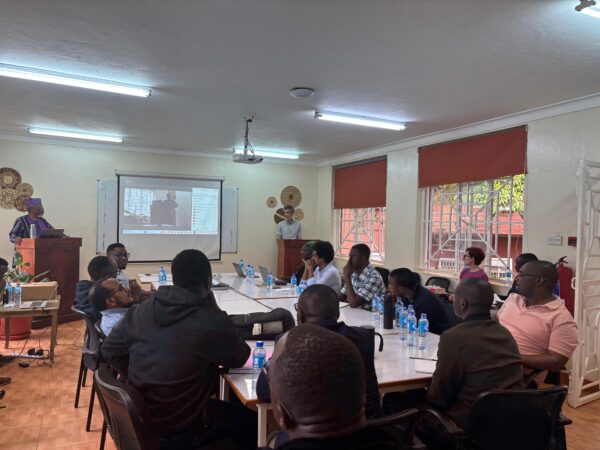
Photos: Falola’s Lecture at Makerere University, Uganda, Part I – August 13, 2025
https://www.flickr.com/photos/toyinfalola/albums/72177720328359478
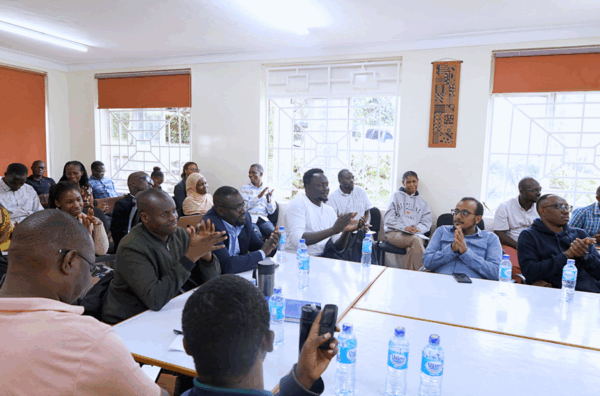
Photos: Falola’s Lecture at Makerere University, Uganda, Part II – August 13, 2025
https://www.flickr.com/photos/toyinfalola/albums/72177720328348266