

Toyin Falola
The history of Nigeria has not only been about events that have taken place politically; rather, it has also been the story of struggles with identity, sovereignty, fragmented memory, and unfinished processes of nation-state formation. Each generation has not just the history of institutions formed by previous generations but also the epistemologies that legitimize the existence of those institutions. Therefore, the question of governance in modern-day Nigeria cannot merely be understood as the inefficacy of democracy and corruption among elected politicians. There is a need to look back into history at the origins of the formation of the state of Nigeria itself. The keynote address by Professor Attahiru Jega has pointed out that very need, saying that what Nigeria has is not diversity but politicization of diversity through identity politics.
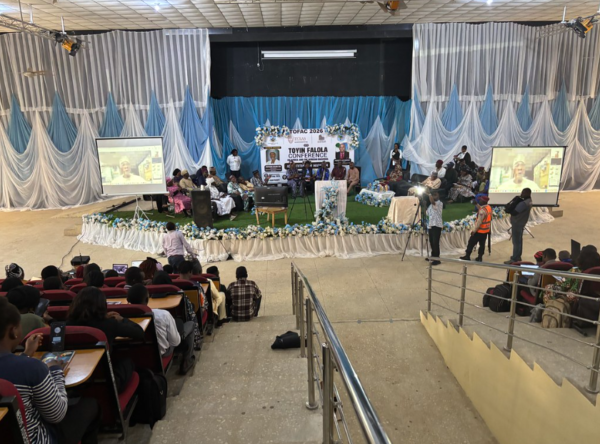
The first point which is apparent in Prof. Jega’s lecture is that he does not demonize plurality. In many of the discussions that happen within the public domain, ethnicity and religion have been considered as given and as the ‘primal sin’ of Nigeria. But in itself, multi-ethnic composition and diversity are not necessarily problematic; rather, each of them, if managed properly, can prove to be a valuable resource. “Multiethnic composition and diversity in themselves are not necessarily a problem; indeed, each of them, handled well, can be a significant asset. The challenge arises when elites mobilize and weaponize these identities in reckless pursuit of self-serving objectives,” Jega noted. The African nation-state that developed as a result of the post-colonial era did not develop with impartial institutions; it developed in a colonial context aimed at disintegrating indigenous solidarities and strengthening imperial hegemony. Colonization was not simply conquest; it was an epistemological endeavour aimed at reorganizing the essence of African realities according to foreign parameters of governance. Peoples and societies who were accustomed to interacting with each other using mechanisms of trade, diplomacy, mobility, and cultural engagement all became fixed ethnic groups separated by administrative boundaries. Jega, however, brings into focus how identity loyalty was first cultivated by the colonialists via the notorious policy of divide and rule. “The colonialists first promoted identity loyalty in Nigeria as it set the stage for division with the selfish colonial policy of ‘divide and rule.”
This insight is not just an exercise in historical trivia. It shows the origin story behind the present-day political problems in Nigeria. Colonialism did not create ethnicity, but it certainly turned ethnicity into a tool for governance. The colonial censuses, native authorities, differential education policy, and regional administration have made cultural differences into a hierarchy of political opportunities. The result is a permanent structure of exclusion whose effects live on even after the colonizers have left the scene. Yet one must move beyond merely blaming colonialism.
A decolonial reading also interrogates the persistence of colonial logics within postcolonial governance. Independence transferred political authority, but it did not fundamentally dismantle the institutional rationalities inherited from the empire. The tragedy of Nigeria lies not simply in colonial invention but in postcolonial reproduction. Indigenous elites appropriated colonial technologies of domination and redirected them toward new struggles over state resources. The colonial administrator disappeared, but the colonial state survived in African hands. This explains why identity politics repeatedly resurfaces during electoral competition. Elections become less about competing developmental visions than about competing claims to historical entitlement. Citizenship becomes subordinated to indigeneity, merit to patronage, and public service to ethnic arithmetic. The ballot consequently ceases to function as an instrument of democratic accountability and instead becomes another battlefield upon which historical grievances are mobilized for immediate political gain.

Here, his analysis acquires remarkable analytical depth when he observes that politicians have “perfected the art of negative and divisive mobilization of ethno-religious, regional and communal identities.” The operative word is perfected. Identity politics has evolved into a sophisticated political technology. It survives because it is economically rewarding. It generates electoral loyalty without requiring ideological commitment. It substitutes emotional mobilization for policy debate. It transforms historical memory into political capital. African oral traditions have long warned against leadership that profits from division.
The other significant point brought forth by Prof. Jega during the lecture, and which should be accorded much consideration, is his perception of identity. The reason is that Jega does not take identity as being predetermined through biological or cultural factors; rather, it is a social construct. Identity consciousness emanates through mobilization, provocation, and agitation. What should be highlighted is that the difference between identity and identity consciousness is theoretically very big because it helps us understand why two societies of the same people have varying political impacts. What matters is the political economy within which identities are interpreted and mobilized. This is an insight with great historical significance. More historians today refute deterministic views where Africa is portrayed as constantly trapped in “tribalism.” Deterministic views often ignore the long period in which diverse communities in Africa coexisted before the advent of colonial power. Trade was conducted across ethnic boundaries. Religion existed across ethnic communities through accommodation rather than perpetual conflict. Political associations were formed on a case-by-case basis and not out of perennial hate. Historical evidence, therefore, refutes any simplistic assumptions that African diversity will always lead to instability.
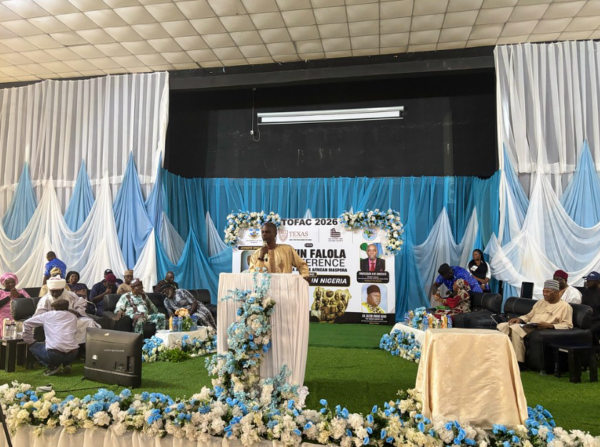
The problem, however, is not plurality but the incentive structures that promote exclusion. In situations where public office is the only avenue for economic gain, political rivalry will always be existential. Success provides the winning party with access to the country’s resources while failure will result in marginalization. It is in such circumstances that elections will become struggles for existence and not political contests.
The issue raised here also reflects a more profound concern which is usually overlooked in contemporary democratic debates. According to the liberal conception of democracy, there are relatively autonomous institutions in the form of an independent judiciary that can serve as mediators between societal conflicts. Yet, when such institutions have no historical tradition of authority, there is a chance for democracy to stay procedural but not substantial. It means that elections can take place regularly, but justice will not be done. There may be constitutions in place, but there won’t be any equality of citizenship. Considering the above point, Jega is correct in his observation that good governance is something more than procedural democracy, and he calls it good democratic governance where participation, accountability, responsiveness, and impartiality of institutions become the central components.
A historical appreciation of this argument would be to understand that governance is essentially an ethical relation between rulers and the ruled. African political culture has traditionally tended to define leadership in terms of moral duty and not in terms of the capacity to coerce. Modern governance, with all its legalistic sophistication, often forgets this ethical dimension entirely.
The Nigerian predicament, therefore, represents more than institutional failure. It represents a crisis of political imagination. The state increasingly finds it difficult to make citizens believe that its primary reason for existence is the common good and not elite gain. When citizens no longer have confidence in public institutions, they begin to seek solace in smaller solidarities of ethnicity, religion, and region, not because these are inherently better, but simply because they seem more reliable than the citizenry. Prof. Jega’s keynote gains additional analytical relevance when it moves from analyzing the pathology of identity politics to examining the underlying crisis of governance that fuels it. His insistence that Nigeria’s predicament is fundamentally a governance crisis rather than merely an identity crisis represents one of the keynote’s most profound contributions. As he observes, “given what can aptly be termed a crisis of governance at all levels, the processes, structures, and institutions of governance are essentially weak or have virtually collapsed.” This assertion deserves reflection because it redirects scholarly attention from symptoms to structures. Ethnic conflict, religious polarization, electoral violence, and regional distrust are manifestations of institutional decay rather than independent historical forces.
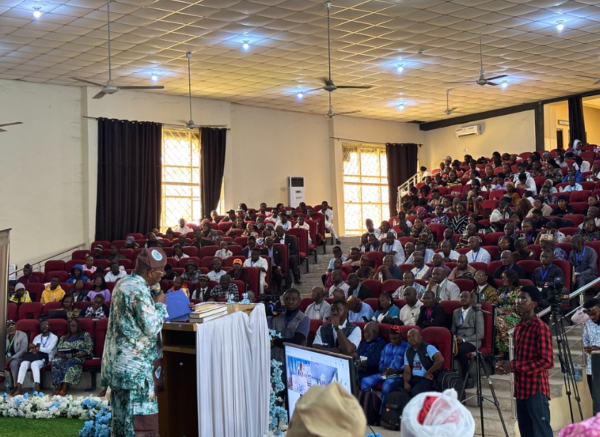
Decay of institutions happens where they lack moral legitimacy, and the people see them as vehicles of collective well-being. The forms of governance in pre-colonial Africa varied widely, ranging from kingdoms like Oyo and Borno to republicanism among the Igbo and many others, but within these different political organizations, authority was always tied to the demands of the community. Any king who constantly breached the code of morality between him and his people would be subjected to ritual degradation or even deposition. Governance thus was not only administrative but also highly moral. The postcolonial African state, however, inherited institutions whose primary historical purpose had been extraction rather than reciprocity. Colonial administrations were never designed to produce democratic citizenship; they existed to facilitate imperial control and economic exploitation. Consequently, independence altered the identity of rulers without fundamentally transforming the architecture of rule. The tragedy, therefore, is not simply that Nigeria inherited colonial institutions, but that successive political elites found these inherited structures remarkably useful for reproducing their own dominance.
This historical continuity explains Prof. Jega’s observation that politicians increasingly approach political competition as a “do-or-die affair,” subordinating constitutional norms to private accumulation and patronage. Such politics reflects what historians of the African state have repeatedly described as the personalization of public institutions. The state becomes less a repository of collective aspirations than an arena through which elite factions negotiate access to public wealth. Under these circumstances, identity becomes an instrument rather than an end. The use of ethnicity is not because of politicians’ special cultural commitment to ethnicity but rather because it is still an effective way of constructing political constituencies.
Another interesting aspect of Prof. Jega’s commentary is that he refused to romanticize democracy itself. Jega clearly distinguishes governance from what he often refers to as good democratic governance. It is participation, transparency, accountability, institutional neutrality, responsiveness, and good leadership. Democracy does not consist of procedural formalism only, and good democratic governance cannot result from just elections since elections may lead to the creation of government and not justice. In such a situation, historical imagination becomes essential. The democratic future of Africa must be shaped not merely by copying institutional models conceived elsewhere but with due regard for history, social fabric, and indigenous political philosophy of that region. Therefore, decolonization is not merely political emancipation but epistemological reconstruction. It involves critical examination of the existing notions about the nature of power, citizenship, and development. I have repeatedly stressed that the future of Africa should be built on the basis of dialogue between indigenous intellectual traditions and current global reality and not merely borrowed foreign paradigms. In this way, it provides additional depth to Jega’s argument that governance needs to be supported by a new intellectual paradigm.
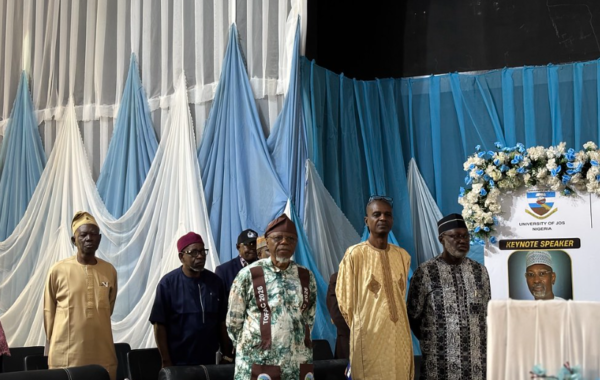
African oral tradition reinforces this point. Many ethnic groups in Africa teach wisdom in the form of proverbs that emphasize collective responsibility rather than individual gain. The Yoruba proverb warns that the river which forgets its origin dries out. When applied to the situation in Nigeria, it takes on the meaning of epistemological advice. A state that loses the ethical roots of politics, justice, reciprocity, accountability, and collective responsibility is losing its legitimacy bit by bit, even though economic resources can be plentiful.
Perhaps what makes the keynote more powerful is the way it posits that diversity needs to be recognized as national capital, not national burden. In one of the keynote’s most memorable statements, Jega argues that ” Nigeria’s diversity should be viewed not as a fault line to be managed but as a strategic asset to be harnessed.” This statement directly challenges the prevailing narratives on the topic of African diversity. For too long now, the diversity of Africa has been constructed as a source of political dysfunction in international scholarship. In doing so, such representations reproduce colonial ideas that link homogeneity with order and plurality with chaos. History tells us a different story. Diversity has always been negotiated in Africa. Long before colonial states emerged, economic, diplomatic, and matrimonial ties were drawn between peoples speaking different languages and belonging to different cultures. It was diversity that was the normal condition of African civilization, not its anomaly. What we need to do today is not erase diversity but build new institutions out of it.
This institutional restructuring cannot help but entail the development of historical awareness. Countries that cannot come to terms with their history are prone to political manipulation. Repressed memories often emerge in the form of grievances. Consequently, historical instruction should foster not just pride in the country’s past successes, but also awareness of the roots of modern inequalities. This will not create bitterness; it will enable the development of a citizenry capable of making the distinction between the structural nature of a problem and its political scapegoat. No less important is Jega’s insistence on election integrity. Jega’s assertion of the necessity of credible elections as the sine qua non of democratic renewal is not only related to the practical aspects of conducting the elections. Elections are symbolic of the ethical relationship between the citizen and the government. In countries where elections are regarded as legitimate, politics can be managed. When the credibility of elections is compromised, politics tends to turn into politics of confrontation.

However, one can safely extend the analysis provided by Jega in that the reform of institutions will not be able to change the political culture. Rules guide people’s actions, but values build civilizations. Thus, the decolonial process has to include education, historical awareness, civic morality, and rediscovery of native philosophies of citizenship. The future of Nigerian democracy will depend not only on better institutions but also on more robust democratic visions. The keynote serves as a reminder that governance cannot be separated from hope. People engage in governance activities only when they have the belief that those activities are important. On the contrary, whenever the governance system fails to provide justice, accountability, and inclusiveness, people find themselves trapped within narrow communities of trust. Therefore, identity politics emerges not only as the result of institutional failure but also as the response to it.
This piece is quite apt.