
Toyin Falola
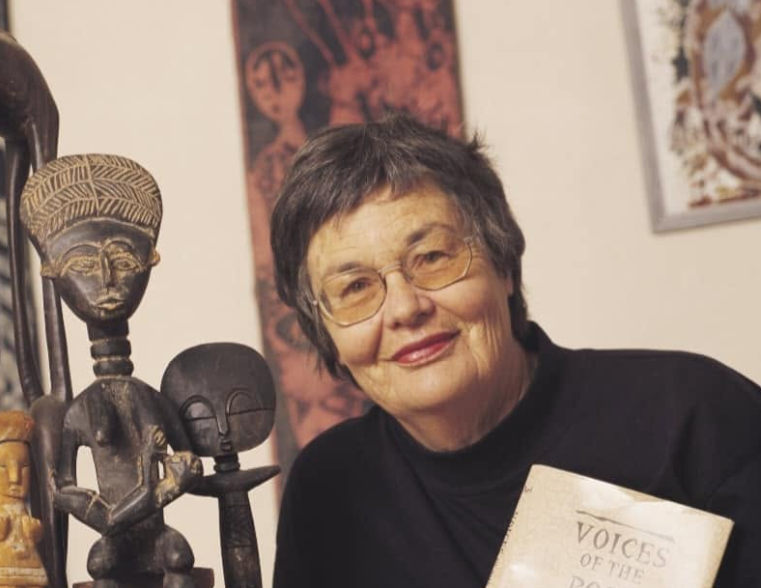
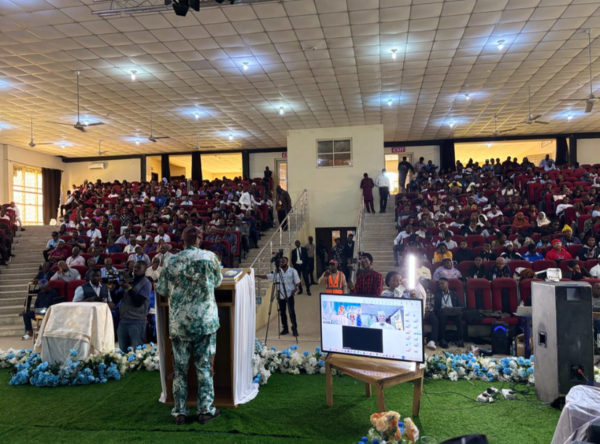
It is a wise decision for the University of Jos to have instituted a Chair named in honor of Professor Elizabeth Isichei, one of the principal architects of the Department of History on that campus. I was also surprised to be appointed as the first occupant of this distinguished Chair. Who is Professor Elizabeth Isichei?
To appreciate the significance of Professor Elizabeth Isichei is to understand some pretext to the academic study of African history. African history is unique in some ways. It is not just because of complexity and diversity, but because of the lack of conventional structures from the early stages of the development of African nations. The continent is blessed with thousands of ethnic groups and languages that tell African history from different perspectives. This did not mean that Africa lacked a unified history, but it is a perspective complicated and even peculiar.
Due to this peculiarity, coupled with global bias against African sources and materials, the early literature on Africa by the colonial conquerors was structurally demeaning and aggravated the portrayal of the continent as weak. The historical endeavors at that time attempted to rewrite African history from an inferiority perspective, refusing to assign the right credit to the African people. However, anthropology and sociology have both referred to the approach of studying a culture from such a distant and demeaning vantage point as a ridicule-based form of sociological and anthropological appreciation of that culture. Hence, there is a need for an immersive, firsthand experience of a culture, with access to how the people view their own history, culture, and development. It is a structural approach to the history of a people, a cultural relativist understanding of the people.
The need to rewrite this history and battle these notions necessitated the writings and scholarship of early African indigenous historians and anthropologists who aimed to set the record straight and combat the false understanding of African history. The likes of Kenneth Dike, Jacob Ade Ajayi, Cheikh Anta Diop, J. E. Casely Hayford, Edward Blyden, and others started the Pan-Africanist projects and schools of study.
The pretext above lays a foundation for the proper appreciation of the contributions and the importance of Professor Isichei’s contribution to African history and the development of the perspective of Nigerian history. Professor Isichei not only married a Nigerian Igbo, but she also embraced the culture of the people, saw through the complexities of cultures, and positioned herself as a field expert and historian who tells African and Nigerian history from an African context, with an understanding of the raw cultural experience. Before delving into the analysis of how the work of Professor Isichei reflects this, it is necessary to evaluate her background.
Isichei has always been excellent in her approach to academics. As a student at Tauranga College in New Zealand, her potential was obvious to most people. She had the highest score on the New Zealand entrance exams in 1955 and, as such, was among the top 1% of intelligent young students at the time. By the time she got to the University, she did not disappoint the expectations of most, continuing her brilliance and approaching all academic endeavors with peculiarity and finesse. At the University of Canterbury in New Zealand, she demonstrated remarkable academic distinction and won the Senior University Scholarship.
In 1961, she earned her Master of Arts in History from Victoria University of Wellington with a first-class honor, among the few who were able to achieve this feat. She also went to Oxford University at Nuffield College, engaging with culturally focused subject matter; her thesis was on “Quakers and Society in Victorian England.” She enjoyed the Commonwealth Scholarship while in Oxford. With the level of her commitment to excellence, academic ingenuity, and contribution to historical scholarship generally, she was conferred with the award of Doctor of Letters at the University of Canterbury and later became a Fellow of the Royal Society of New Zealand in 1997.
After she got married to Dr Uche Peter Isichai, who was also a chemical pathologist in Nigeria, she moved to Nigeria, and her academic journey started taking a different shape, presenting her with the opportunity to engage more challenging and sophisticated historical contexts and pursue her career in academia in Nigeria.
As the wife of a Nigerian and a citizen of the country where she lived for many years and a substantial part of her middle age, she exposed herself to the culture, history, and tradition of Nigeria, and nurtured her curiosity about the understanding of the history of the Igbo people. Her cultural immersion is impressive. She learnt the Igbo language to the point of speaking it properly and teaching her children. She understood the historical oral traditions of the people and the comprehensive social structure of the people.
Isichei started her lecturing journey at the University of Jos and became a professor of history in 1976. The expectations for her were a lot, as she was required to approach academics from the wealth of her international exposure. Aside from delivering on this, she became more fascinated by African history, and the trajectory of her teaching cut across Igbo History, Nigerian history, precolonial and religious history of Africa. Borrowing from her experience and cultural immersion, she did not just write like a person with roots in Africa; she propagated the need for African perspectives in writing African history. She reflected that it is not just Africans who can write African history, but everyone must experience Africa, first-hand, in order to satisfactorily represent the African realities. Hence, she was able to train many Nigerian historians to always infuse African perspectives.
As an historian, Professor Isichei focused on the ordinary people of society, including in her analysis of the Jos and Igbo cultures. She believed that the commoners, villagers, those in community life, and women have a more realistic and inclusive approach to telling African oral history and experience. Living in Jos allowed her to interact with African oral traditions and document history further from this perspective. Jos is a significant historical city and site in Nigeria, and Isichei was able to explore this, especially while telling the history of the Jos people. She was the General Editor of the Jos Oral History and Literature Texts, a platform that allowed collecting folktales, historical and cultural narrations, and songs.
Her constant engagement further developed the Igbo and Jos epistemologies and expanded the understanding of Nigerian history. Her contributions are evidence of an emic perspective on African history. In her book, A History of the Igbo People, published in 1976, she illustrates the allowances of the African perspective on history. Among other things, Professor Isichei relied heavily on oral traditions through lineage histories, community narratives, and other sources of oral traditions to describe the history of the Igbo people. She refused to describe the early Igbo as stateless or primitive, but rather as an organized, decentralized society.
In The Ibo People and the Europeans, published in 1973, Professor Isichei synthesizes the Igbo understanding of the European presence in Africa. She processed the adaptations, interpretations, and reactions the people had to European cultures and engagements. She opined that the Igbo were active stakeholders in the colonial period and not mere passive victims of political and social domination. She noted the instances of trade negotiations, resistance, and changes that happened during these periods. This emic perspective is further reflected in many other writings and publications, including The Religious Traditions of Africa: A History, published in 2004.
Professor Isichei’s industry is not just commendable; it is legendary, and the historiographic world of Nigeria will never forget it. It is apparent that the people she has talked to and researched appreciate and recognize the value of her contributions. She has been honored by the Jos and Igbo societies, as well as the Ndigbo Society in New Zealand, which recognized her as one of the renowned scholars of Igbo and African history at the Ndi Igbo Cultural Day in 2024.
Professor Isichei is obviously not a foreigner, as she ticks the boxes for what makes an outstanding African. Her work is distinguished and revered in African history. As she has retired to New Zealand, her presence is still very much felt as not just one of us but an impactful scholar of African history who approached history with an emic perspective. I am proud to occupy the Chair named after her and to produce a set of new students to advance this glorious name.