
Toyin Falola
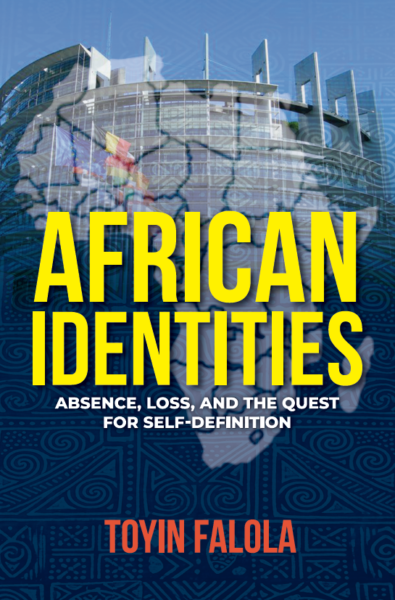
I did not think twice about who to dedicate my book on African Identities to. No other name came to my mind other than that of Professor Fwatshak, whom I call Sati, his first name, to affirm our friendship. Only a few have contributed to our understanding of Nigerian history and identity more than him. I am proud to be his long-standing friend.
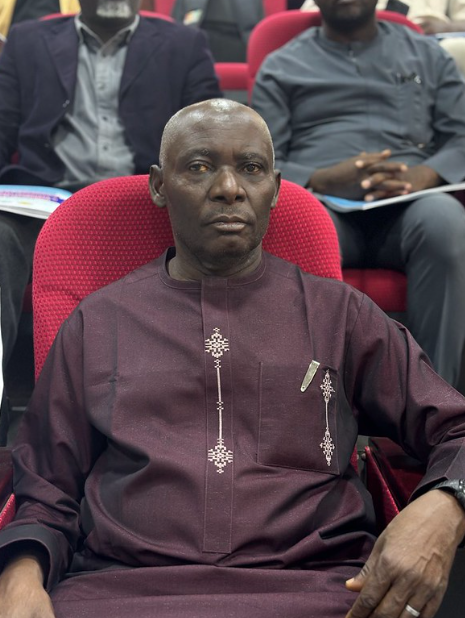
Among the many historians Nigeria can boast of is Professor Sati Umaru Fwatshak. He is one of those who have continued to lead the framing of Northern Nigeria’s intellectual landscape in the twenty-first century. He is a distinguished scholar who sees history as an ongoing conversation between human memory, societies, politics, and the future. He has built a progressive yet meticulous reputation as a 21st-century historian, from the academic community of the University of Jos to the international scholarly circles. He is a thoughtful public intellectual and academic with a deep commitment to upholding the social responsibilities of scholarship.
Born into the cultural and historical complexity that makes up the Middle Belt region of Nigeria, the erudite scholar had first-hand interactions with the complexities in his environment. From a young age, he saw how these complexities of social identities, communal coexistence, governance, religion, and social transformation shaped life. These experiences became the buildups that would influence the directions of his scholarly journey. His audience can confirm that his works reveal his deep concerns for the past and how it continues to shape contemporary African realities.

His formal academic training in history was pursued with unusual dedication. To his credit, is a Bachelor of Arts degree obtained in 1988, a master’s degree in 1992, and eventually a doctoral degree in 2003. Over the years, he had an upward move within the academic community that reflected his intellectual rigour and institutional commitment. By association, the University of Jos was not just a place of employment. It was the central point for his scholarly identity. It was within the community that he flourished intellectually. At the university, he moved through ranks to eventually become a respected professor of African History while taking on important administrative and academic roles, including leadership responsibilities within the Faculty of Arts.
Professor Fwatshak is distinguishably identified with the breadth of his historical imagination. His scholarship places him at the centre of discussions on precolonial, colonial, and postcolonial African history with remarkable fluidity. Yet, the vastness of his scope does not break him away from a consistent concern for Africa’s genuineness. Readers and colleagues can testify that his works often contain an intent on the need to explain Africa, to itself, and the wider world through evidence-based historical analysis. His work sits on complexity, continuity, and nuance rather than being dominated by increasing sensationalism and ideological simplifications.
Professor Fwatshak’s contributions to the study of history have earned him attention. His work on colonial and postcolonial Nigerian historiography has been well referenced by contemporaries and others in the field of Humanities. His surgical dissection of the changing traditions of historical writing in Nigeria, the tensions between colonial narratives and African-centred interpretations of history have raised further arguments on African genuineness. His analysis offers a deep engagement that matches the intellectual traditions of the Ibadan and Ahmadu Bello schools of history with an acknowledgement of the emerging shifts within contemporary African scholarship.
Beyond historiography, his research interests extend very much into political economy, governance, migration, conflict studies, Islam in Africa, identity formation, and higher education. This thematic diversity reflects the realities of a scholar who understands that the true essence of Africa cannot be confined within narrow disciplinary boundaries. He has published works on poverty, colonialism, Nigeria’s restructuring debates, and works on the political economy of nation-building. This expansive effort demonstrates a consistent effort to connect historical inquiry with present-day social concerns.
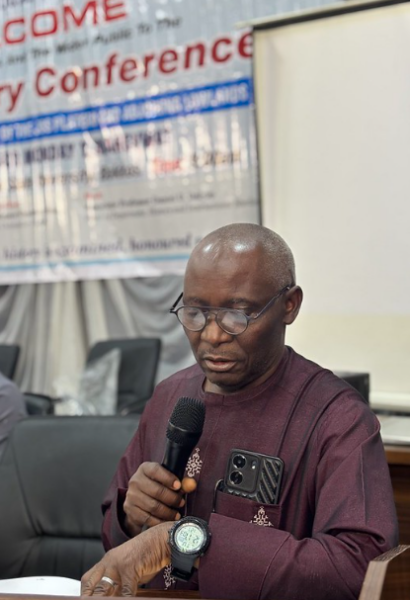
Yet, of the many dimensions possibly known of the eminent scholar’s academic life, his commitment to public relevance stands as the most enviable of all. His commitment to public service is not surprising. It is very much typical of a scholar in the ranks of those who believe scholarship must engage society. Over the years, he has been involved in documentation projects of local histories across Plateau State. He has also participated in educational initiatives aimed at restoring history to Nigerian schools. The scholar’s participation in grassroots projects breathes his desire to preserve history and build its consciousness among younger generations. His devotion to public relevance is significant as it casts away the doubts and misinformation caused by intentional historical distortions that are being weaponised to fuel political and communal tensions in Nigeria.
Beyond public service, Professor Fwatshak is distinctive with his contribution to mentorship and institutional development. With decades of teaching experience, Fwatshak has participated in shaping generations of students and younger scholars over the years. Remarkably, his academic engagements extend beyond Nigeria. He has participated in an international fellowship and is a member of various collaborative research networks. He was a Fulbright Scholar at New York University during the academic session in 2000–2001. His time in the university afforded him close contact with broader global intellectual traditions. Yet, he remained steadfast with a rooted commitment to African-oriented scholarship.

After Fulbright, he collaborated in research to bridge the gaps between local realities and global debates with institutions such as the University of Bayreuth in Germany. A reflection on his academic life reveals the consistent pattern of a scholar who values intellectual community and the ethical obligations of knowledge production above all.
Away from the formal language of academia, those familiar with Professor Fwatshak’s work often encounter a man shaped by discipline, reflection, and community values, like many scholars who cannot be separated from their teachings and research. Professor Fwatshak, like them, cannot be separated from his work. His social environment is not any different from his work environment. An encounter with him outside work gives you a man whose social ideals carry a sense of justice, dialogue, peaceful coexistence, and a fervent need to preserve historical memory.
He is family and community-centred. Traditionally, the African community demands more from public figures, including scholars. The tradition in these communities sees to it that scholars not only produce knowledge. They are also expected to embody responsibility, humility, and social guidance for others to emulate. Fwatshak’s lifestyle is no different in this case. His lifestyle reflects this older African ideal of the academic as both thinker and custodian of collective memory.
In many ways, Professor Sati Umaru Fwatshak represents the enduring relevance of the humanities in contemporary Africa. His efforts and those of others like him cannot be underemphasized, particularly as universities are now bowing to the pressures of commercialisation and technological utilitarianism. His works are reminders that history is significant to national understanding and human development.
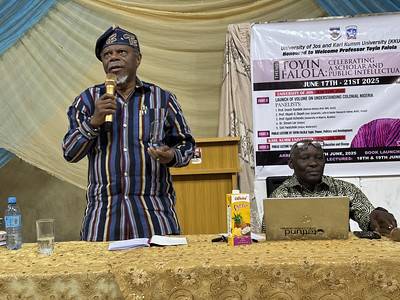
For decades, the Professor had consistently played an advocate for the preservation of history for national development and intellectual scholarship. This, he has committed to, through his writings, teaching, mentorship, and institutional service.
His journey, as at this moment, is a proof of the resilient power of disciplined scholarship in African realities and global conversations. He is more than just a university professor. He is a custodian of memory and a scholar whose work would continue to lead discussions on history, identity, and nationhood.