
Toyin Falola
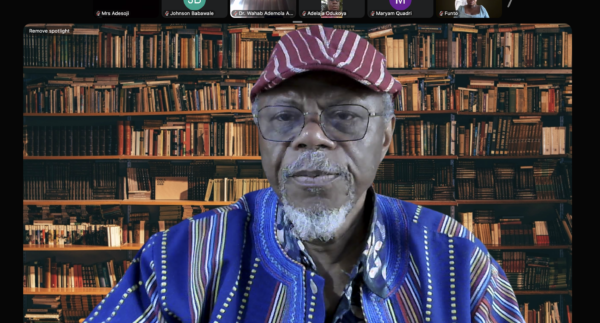
It is a privilege to have been invited to give a scholarly lecture on Professor Tunde Babawale at a well-attended virtual celebration to mark his birthday on October 4, 2026. He was my student at Ife in the 1970s, and we have known one another without break for well over four decades. His career invites examination because his fields of interest meet at a common question: how can knowledge help institutions serve the people whose lives they govern? These interests provide a useful starting point for understanding the breadth of his career. Political economy examines how political authority shapes the distribution of resources and how economic relationships influence the exercise of power. International relations extend that inquiry across borders. Read together, these fields encourage attention to the connections between domestic institutions and the wider environments in which they operate. They also make it possible to examine development as a question of public choices and competing interests, rather than as an exclusively technical exercise.

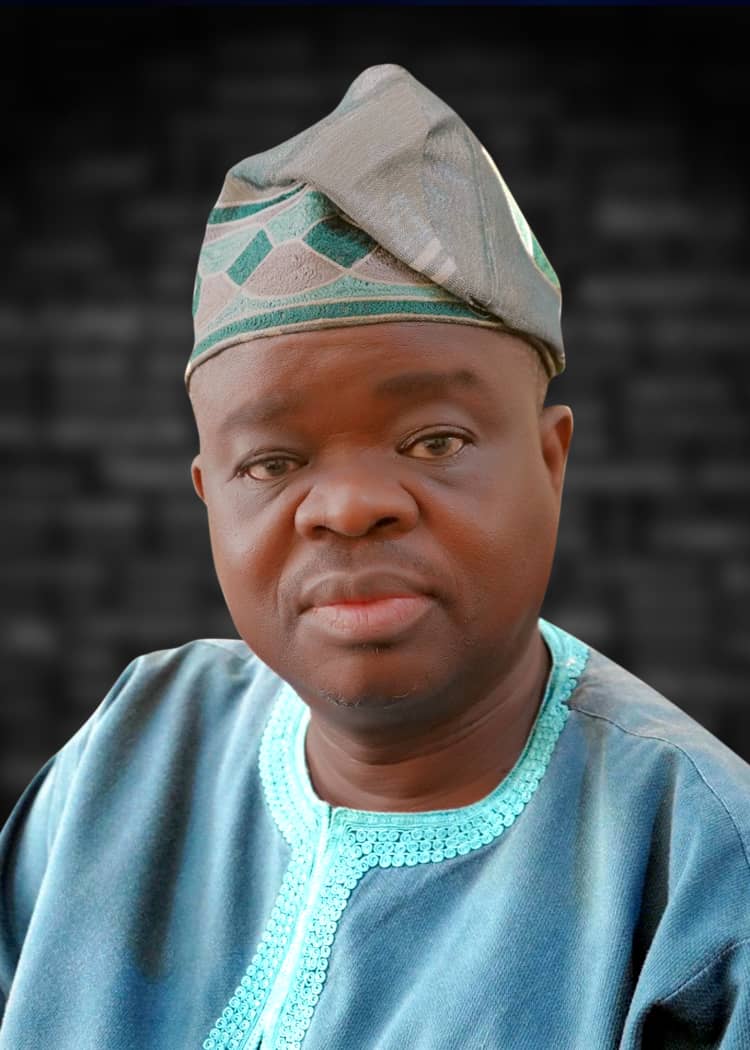
There are those whose career contributions will always be counted not only in terms of the number of books they have authored, but also in the journals where they have published, and the students who graduated from their classrooms. Then there are also those whose contributions can only be counted in terms of the institutions they have helped to create; the public questions they have raised; and the distances they have covered from knowledge to action. Professor Gabriel Olatunde Babawale, well referred to as Tunde Babawale, falls squarely within this latter category. At 65 years old, Babawale’s career presents a unique case study of an individual who has been a scholar, administrator, culturalist, political analyst, and institutional leader.
Born on October 4, 1961, in Osun State, Babawale has, for over four decades now, traveled extensively through the Nigerian intellectual and public spaces, from the classroom to university administration, from politics to cultural diplomacy, from electoral administration to anti-corruption awareness. This is not a mere story of the career of a professor. It is the story of an intellectual who has always raised public questions about the usefulness of knowledge without action.
His educational background started at Inisa Grammar School before proceeding to the University of Ife. At this university, he specialized in History, followed by International Relations, where he specialized in International Relations and Political Economy. The study of history offered him an understanding of the dynamics that formed societies over time; international relations helped him place Nigeria in the larger global setting, while political economy offered him an understanding of the dynamic relationship between power, wealth, institutions, and development. His future career would be characterized by these three perspectives. Babawale had his first professional experience in teaching. He taught in secondary schools in Adamawa State and Ile-Ife before being recruited to join the Adeyemi College campus of Obafemi Awolowo University as an assistant lecturer in 1985. His academic career progressed systematically. He joined the University of Lagos in 1991, becoming a senior lecturer in 1993 and appointed professor of political science in 2002.
By this time, his areas of academic interest included political economy, international relations, development, governance, federalism, democracy, military government, political thought, and the African condition. But the classroom was never a sufficient boundary for Babawale. His academic work has always focused on those vexing issues surrounding Nigeria and the continent of Africa. Issues such as military regimes, federalism, structural adjustment, political parties, democratic consolidation, ethnic militias, governance, citizenship, corruption, foreign policy, development, and the political economy of underdevelopment have all been topics for his writings. Two volumes of his writing titled Nigeria in the Crises of Governance and Development are one such example of this ongoing interest in the structural issues plaguing the Nigerian state. His academic interests have also broadened to include cultural and identity issues.

This diversity in the intellectual enterprise is significant in the sense that Babawale has not seen politics as a stand-alone field of study all along. The intellectual enterprise of Babawale implies that the issues surrounding Nigerian politics can never be adequately explained without taking into consideration history, culture, economy, education, labor, citizenship, and international relations. Babawale’s career has therefore taken place in the interdisciplinary zone despite the fact that he was in the formal discipline of Political Science. This is true of Babawale’s time at the Centre for Black and African Arts and Civilization (CBAAC). Since he was appointed Director/CEO of CBAAC in 2006, Babawale has had the responsibility of managing an organization that had been established for the specific purpose of handling one of the most culturally significant events in African history – FESTAC ’77. While there was much need for preservation of cultural material, the real challenge was in making African culture relevant in today’s world through education and research. In the list of things done during Babawale’s period, it is clear that his efforts focused on linking culture to development, education, diplomacy, research and African identity.
This cultural dimension is essential to understanding Babawale. He has never regarded culture as an ornamental addition to development. His many writings and lectures show a consistent line of argument about how culture is an important aspect of national development. His areas of focus include cultural diplomacy, indigenous languages, African heritage, creative industries, cultural security, Pan-Africanism, FESTAC, African music, and the connection between culture and sustainable development. His 2018 monograph, Reflections on the Need for the Promotion of Nigeria’s Cultural Heritage, and some of his previous works on culture, politics, and sustainable development attest to this intellectual stance. This is probably where all the aspects of his career come together. He went from being a political scientist to being a cultural administrator; from being a political economist to a heritage advocate; from being an academic to being a public intellectual. Instead of viewing these positions as conflicting with each other, Babawale seemed to see them complementing one another.

His service to the University of Lagos offers another dimension of this story. In addition to these wide-ranging responsibilities in the public domain, he served in many administrative roles such as Assistant Dean of Student Affairs, Dean of Student Affairs, Managing Editor of the UNILAG Journal of Politics, Senate member, and several other committees in the university, as well as Secretary of the University of Lagos branch of the Academic Staff Union of Universities. He was also awarded Best Teacher in the Department of Political Science in the university’s internal evaluation conducted in the early years of the 2000s. It is evident from these responsibilities that there is yet another dimension of his career – that of willingness to engage in the relatively mundane task of institutional building. Universities not only require professors who teach and write but also those who sit on committees, manage students, edit journals, conduct research, govern institutions and solve institutional problems.
Babawale’s record is unusually extensive in this respect. His public service later took him into electoral administration. From 2017 to 2021, he served as an Electoral Commissioner with the Lagos State Independent Electoral Commission. His public interventions around elections have consistently focused on issues such as voter confidence, transparency, participation, and democratic consolidation. In an interview during his time in electoral administration, he argued that restoring public confidence required transparency and voter education. This was another logical extension of his scholarship. The professor who had spent years writing about democracy, governance, and political institutions now found himself participating directly in one of the institutions responsible for managing democratic processes.

Then came perhaps one of the most striking transitions: anti-corruption education. He was named Provost of the Anti-Corruption Academy of Nigeria, which is the research and training institution of the Independent Corrupt Practices and other related offenses commission in Nigeria, in 2021. The Anti-Corruption Academy of Nigeria’s responsibilities include training, research, professional development, policy analysis, as well as accountability, integrity, and ethics. Babawale served as provost during a time when there were ongoing efforts towards solving one of Nigeria’s long-standing governance issues. The importance of this period of his career cannot be explained by just being appointed as Provost. It has been understood from the individual’s repeated philosophy that institutions require knowledge, and knowledge requires institutions, throughout his working life. It is not only about punishment but is also about education, institutional culture, professional ethics, change in behavior, and research. In 2025, while he was working as the provost of the Anti-Corruption Academy of Nigeria, he was appointed as the immediate past provost of the University of Lagos and was invited as a speaker at the international anti-corruption conference. Intellectual pursuit is what, even now, at the age of 65, continues to thrive. To mention one of his recent monographs published in 2025 entitled “Democracy and Its Future in Nigeria: Constraints and Prospects,” among others on corruption, leadership, culture, national development, humanities, Pan-African cultural dialogue, and Nigerian democracy.

This continuing productivity may be one of the most important features of Babawale’s 65th birthday. In his instance, sixty-five doesn’t mean intellectual retirement; it means accumulation: decades of teaching, writing, administration, civic engagement, cultural advocacy, and institutional experience coming together to form a larger body of knowledge. It is evident from the list of awards associated with his work how broad the contribution is. Among other honors, he has been awarded the Distinguished Public Service Award from the University of Texas at Austin for contributions to the culture of Africa, for leadership in African arts and civilizations, and recently, for outstanding service to the ICPC and ACAN. But perhaps even more telling about his contribution is something other than his list of awards. It is the fact that there are multiple intellectual and biographical works devoted to his career. Examples of festschrift publications include Alternative Development Strategies for Africa: A Festschrift for Gabriel Olatunde Babawale and Politics, Culture and Development in Nigeria: A Festschrift for Gabriel Olatunde Babawale. A scholar enters into the history of a field not only through the writing of books, but when one’s work is important enough that there is scholarship written about him. On his 50th birthday, Babawale was described as an individual whose scholarly work encompassed both academic success and his mission to promote African art and culture. It has been more than ten years since that was stated, but the career path can still be traced: political science, culture, governance, elections, and corruption have all been part of the same intellectual project – the challenge of constructing better institutions and people.

At 65, therefore, the question is not simply what Babawale has achieved. A more important question is what his career tells us about the meaning of scholarship in Nigeria. His life suggests that the Nigerian professor need not remain enclosed within the walls of the university. Scholarship can enter the public institution. Political science can converse with culture. History can illuminate governance. The practice of electoral administration could become a laboratory for democratic theory. The education of anti-corruption could borrow from the disciplines of political economy and ethics. Cultural heritage could be harnessed to drive national development, not consigned to the history books. It may well be Babawale’s most enduring message. For almost five decades now, he has navigated two parallel worlds of ideas and institutions. He has taught countless students, written books and articles, edited journals, run cultural organizations, engaged in electoral administration, headed an anti-corruption institute, and continued to engage the national discourse on the challenges of democracy and development in Nigeria. His career has thus not so much been one of settling into one particular professional identity as it has been one of exploring the possibilities of an intellectual whose knowledge counts as a public service.

At 65, Professor Babawale stands at an interesting point in that journey. The younger scholar, who joined the academy in the 1980s, has emerged as a senior scholar whose career spans generations and institutions. Notwithstanding the issues that were the subject matter of his early scholarly works- development, governance, democracy, political economy, national integration, and the position of Africa in the world- those issues are still open. But so is his interest in examining those issues. Perhaps the right way to honor him is not merely with a catalogue of titles, positions and awards, but by recognizing the larger principle that has run through the career: that knowledge should not end at the point of publication. It should travel to the classroom, the institution, the museum, the public agency, the electoral process, the cultural arena and, ultimately, the society itself.
Congratulations!