
Toyin Falola
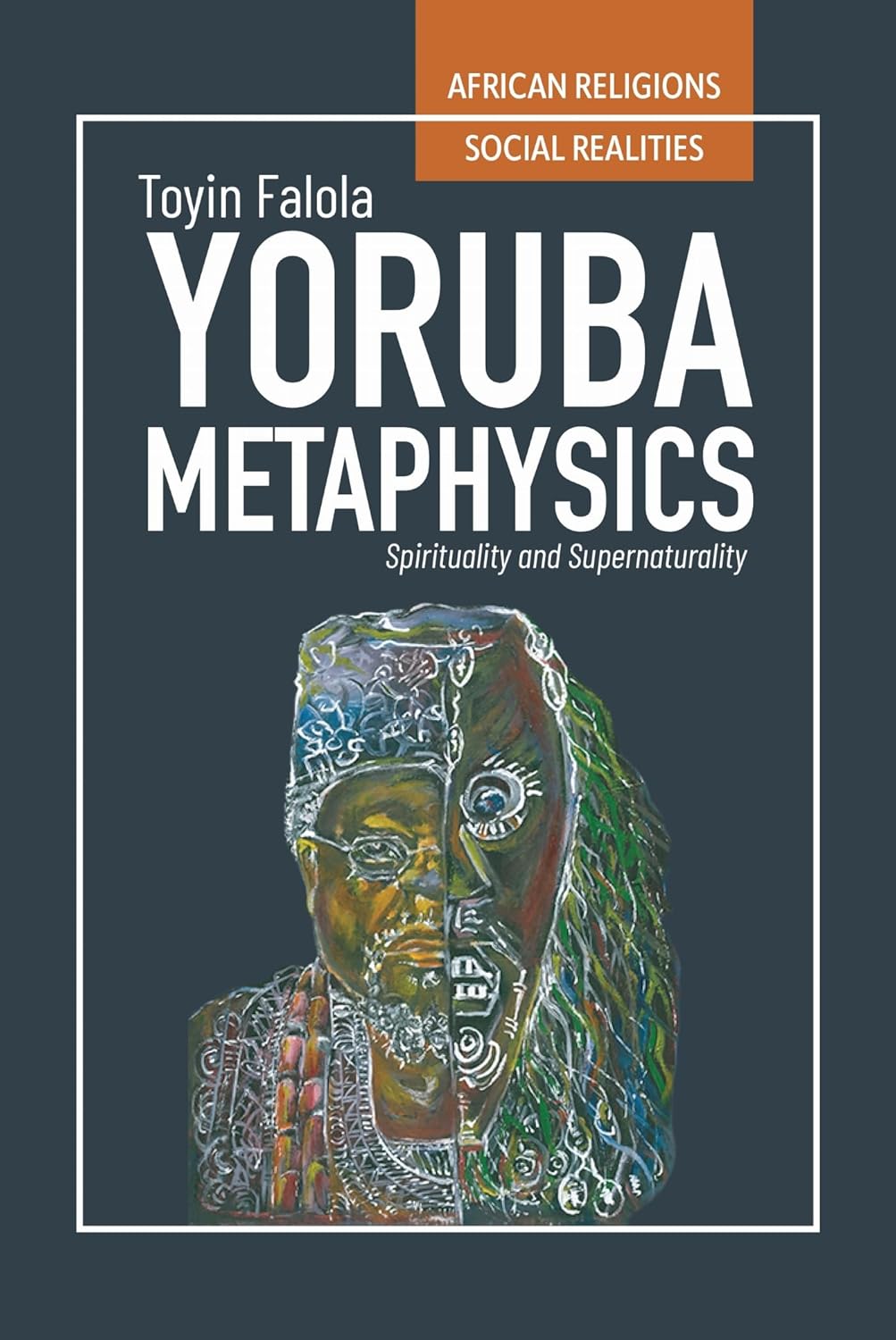
As the saying goes, the intention behind an act is as significant as the action itself. This explains why it is not surprising that someone described as an historian chooses yet another distinctive niche after many years of a long career. Why does a historian turn toward metaphysics? Why would an academic with initial interests and training in archives, chronology, political transitions, and empirical reconstruction make a shift to write extensively on spirituality, cosmology, and the unseen dimensions of existence? As curious as one might be, the answer to this lies not in the sudden departure from history, but in the awakening that history, defined in the misleading Western academic sense, may be insufficient to explain the African realities.
My engagement with metaphysics is by far one of the most intellectually revealing phases of my scholarly evolution. It is an evolution because it has little to do with my historical writings. With my three memoirs, yes. It is not that, nor is it a retreat into abstract spirituality. Rather, it stems from a deeper concern for African civilization. It arises from the need to recover African indigenous knowledge after centuries of active epistemic disruption caused by colonialism, Western rationalism, and the secular assumptions of modernity. Based on this, my incursion into writings on Yoruba metaphysics represents a broader intellectual project to restore legitimacy to indigenous African thought while confronting the limitations of dominant Western frameworks of knowledge. My interest has led to the creation of African Ancestral Studies, with a long book in preparation to spell out its essence and methodology.
A cardinal point to this metaphysical shift is an utmost dissatisfaction with the myopic nature of conventional historiography. History, especially in its Western academic form, accounts for documentation, verifiable events, state formations, political figures, and material processes. Yet African societies, particularly Yoruba civilization, long before colonialism, have indigenously understood reality through a more integrated worldview that accounts for both the spiritual and material interpretations. This worldview contrasts with the sole empirical process of the Western world in its definition of the academic discipline of History.
This discrepancy accounts for the philosophical tension in my work. Don’t look for coherence, look for ruptures. I am not a philosopher as defined in the Western academic sense. Originally, I was trained to investigate empirical facts and link them to a chain of events. However, the Yoruba in me recognizes the expansive nature of African realities, which often exceed the boundaries of colonial archives. I understood that much of African memory survives outside official records: in rituals, myths, oral traditions, sacred performances, ancestral consciousness, and cosmological systems. To rely solely on these Western historical methods would therefore amount to reproducing the same epistemic exclusions imposed on Africa.
With the above foundation, it can be deduced that I turn toward metaphysics as an attempt to rescue dimensions of African existence that cannot be accounted for by history alone. As I put it, metaphysics is rather a method to recover submerged realities. It allows me to engage questions that empirical history would leave untouched. It would be interesting to have Western historical empiricism have a go at questions like: What sustains communal identity beyond political institutions? How do spiritual systems shape moral consciousness? Or perhaps a question on what happens to a civilization when its cosmology is displaced, amongst others.
To me, these inquiries are not mere philosophical curiosities. They are questions central to Africa’s civilization. This realization explains why I consistently return to Yoruba cosmology in my writings. Yoruba metaphysics offers more than religious symbolism; it provides the ontological framework through which African reality itself is interpreted. Abstracts, yet significant concepts like destiny, ancestral continuity, sacred authority, spiritual agency, and cosmic balance are not superficial within Yoruba civilization. They form the basis for ethics, social relations, governance, and communal meaning. To document Yoruba history without engaging these foundations would only produce a partial account of its civilization. I do not lock my analysis in how Western-trained philosophers do their work, as this is far from my focus, but how organic data originates and affects daily lives. There are witches in the city of Ibadan, where I was born, as the indigenes will tell me, and I run with the data, instead of how trained philosophers engage their own debates about witchcraft.
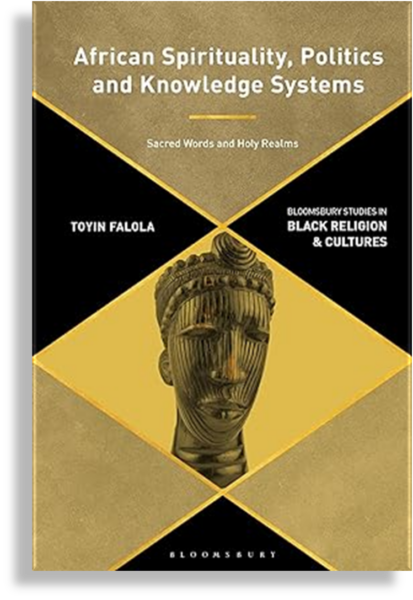
I challenge the existing tendency to dismiss African spirituality as irrational or pre-philosophical. Western-derived assumptions and Abrahamic religions continue to reduce African religions to superstitious beliefs in the same way European philosophy positioned African philosophy outside serious metaphysical inquiry. Addressing these biases requires dedicated efforts. Hence, I refuse this hierarchy. I maintain that Yoruba metaphysics is grounded intellectually to address universal inquiries on life existence, morality, causality, and transcendence. I reject the assumption that valid philosophy is exclusive to European intellectual traditions alone.
As I continue to reposition Africanity, particularly the Yorubana, as producers of theories, my intellectual position has further earned me a significant place in a wider decolonial movement in African scholarship. My work differs from the thrust of V. Y. Mudimbe, Sabelo Ndlovu-Gatsheni, and Achille Mbembe. Although my approach differs distinctly, unlike others who primarily focus on political decolonization, I am more concerned with metaphysical decolonization. In my definition, colonialism did not stop at territorial conquest or economic exploitation. It extended into Africa’s ontology itself. We must pay greater attention to daily lives as affected by how people think and imagine their lives.
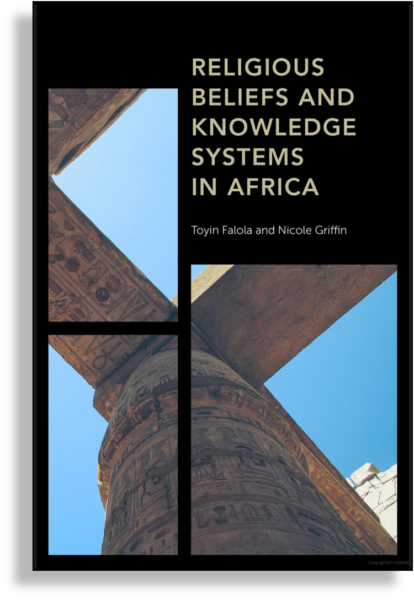
In recent times, modernity has caused the crisis to escalate. Traditionally, Western modernity privileged secular rationalism, scientific materialism, and bureaucratic forms of knowledge at the detriment of spirituality in discussing the margins of intellectual life. African cosmologies were either demonized or trivialized as relics incompatible with progress. My writings on metaphysics, without criticizing alternative views, are therefore a response to the spiritual dislocation produced by colonial and postcolonial modernity.
My shift to metaphysics is not a fantasized return to the past, nor a movement against science and reason. It is rather a genuine effort to expose the limitations of modernity that excludes indigenous spiritual frameworks from legitimate knowledge production. The contemporary African societies are fractured. They exist within broken realities. They are politically modernized yet culturally disoriented. Their education within Western epistemologies did not stop them from identifying with indigenous cosmologies. As such, metaphysics becomes the way to confront this fracture.
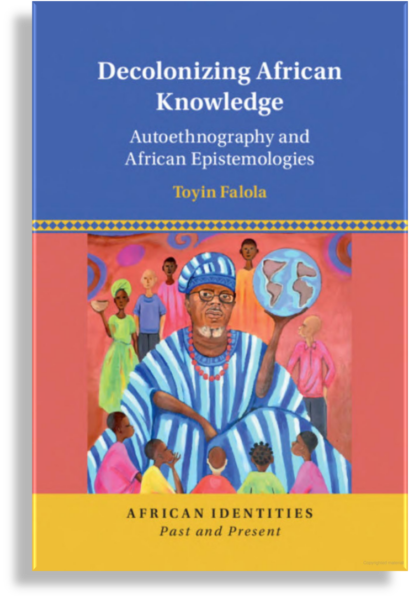
My intervention is to satisfy myself, as many writers do, and it also reflects a personal intellectual evolution of an academic who was primarily known for economic and political history, nationalism, empire, violence, and postcolonial studies. Over time, my scholarship then expanded into questions of memory, identity, spirituality, and cultural consciousness. This suggests that I gradually came to see history itself as incomplete without metaphysical inquiry. The transition shows an awareness of a scholar with a decade-long experience. As my work evolved, so did my research interests to interrogate the deeper philosophical structures beneath metaphysical experiences.
This realization is perhaps responsible for the increasingly reflective tone in my recent writings. I do not approach Yoruba metaphysics as a detached observer, a tendency manifested by the “professionals” of a discipline I don’t belong to. I violate their protocols as an outsider. I write from within a cultural universe shaped by an indigenous consciousness while working through rigorous intellectual analysis that gives depth to my work.
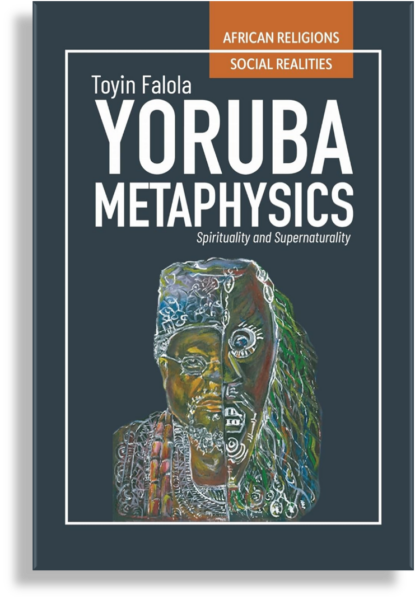
Another existential dimension is that modern humanity continues to experience crises of meaning, alienation, breakaways, and moral uncertainty. Technological advancement has not helped in this regard, either. There are unanswered questions about the essence of life, the interactions with other dimensions that modern science cannot account for. Hence, my insistence that Yoruba metaphysics may still offer resources for addressing some of these crises.
African spirituality is not a relic from the past. It remains intellectually alive. It contains philosophical possibilities capable of speaking into contemporary debates on ethics, identity, ecology, morality, and human relationships with the unseen dimensions. I seek the preservation and inclusion of metaphysics philosophies into the global philosophical conversations that it was excluded from.
Ultimately, I write on metaphysics because it allows me to pursue my deepest intellectual mission, a mission to recover African epistemic dignity. Through these efforts, I seek to challenge the colonial exclusion of African spirituality from knowledge production while restoring visibility to indigenous systems of thought buried beneath colonial modernity. I seek to recover dimensions of African existence that empirical history alone cannot fully explain. I cannot help but write what I write and not seek any form of validation from other intellectual currencies. When you are old enough to lose your teeth, you can laugh without dentures! My intervention is not to build a career but to encourage a conversation.
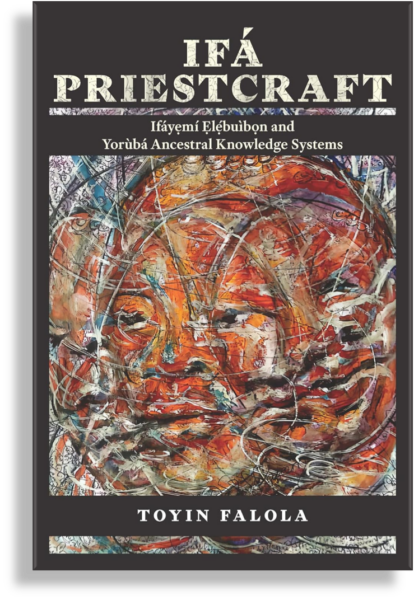
To me, metaphysics is what remains when history reaches its limits. And if I fail, which may happen, it is my destiny to fall, without anyone alive to lift me. Misanthropism is not too far away from metaphysics: the enemy lives at the back of the compound, the traducer lives in the hallway, the scorpion is inside the pillow, and the snake is underneath the bed.
Magnificent
Since my seminal work on Esu Elegbara, in which I researched Esu as the principle and master of satire in terms of his fateful-fatal complementarity, I have applied the concept creatively in most of my plays, such as The Gulf, The Eye of Gabriel, Dionysus of the Holocaust, and most recently CRATERS.
What a wonderful historical cum philosophical turn by a mentor and academic Master!
Deep, yet, still unfolding!
Inspiring to say the least.
A journey into the African world of spirituality and disconnectedness. This is Falola’s Bold and Courageous intellectual choice.
Profound and challenging!
Read the essay twice. Like it very much. Inspiring.
A brave incursion into the unknown. May the spirit of DO Fagunwa live again, now? not in fiction but in the real deal. Good luck Prof🙏
Brave incursion into the unknown! May the spirit of DO Fagunwa be revived; now not in fiction but in the real deal. Good luck Prof🙏