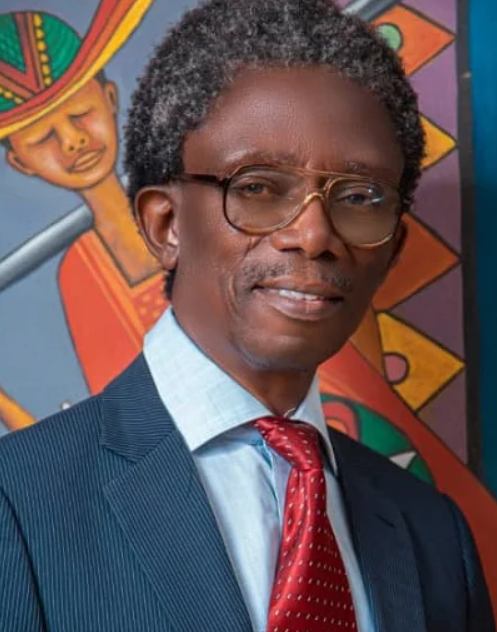

Ademola Omobewaji Dasylva
Well, death to the indigenous African mind is hardly a defining feature of culture, but the consciousness or verity of “life-after-life” is.
I have just read it. I also read some comments and reactions of the people that read it. It is unique in its poetry, with a lucid philosophical depth. I took my time reading through. Like you rightly pointed out African traditions and cultures are as protean as its many ethnic groups. In Nigeria alone, there are more than 400 ethnic groups, therefore, it cannot be an easy task putting all of them in one basket. However, Africans still, largely, share themes like, worldview, belief systems, and concepts such as life, death and afterlife, myths, legends, contemporary history, all captured in their epic (narrative) poetry, laudatory or praise poetry, dirges and elegiac poetry (a good example is the Yoruba hunters’ “Ìrèmòjé”, a dirge, and a subset of “Ijala”. Your conclusion is that these arts and performances rightly enhance the memorialisation of the departed loved ones, and that they are dead, all the same. To the contrary, I humbly submit that ancestors live forever. I will explain what I mean shortly.
There is no single side to life and death; or mortality and immortality. And it is not peculiar to Africa alone, I believe it has a pluriversal dimension. Humans naturally and generally are animists, but modernity has reduced all that. However, Africans have largely remained animists. Stones, rocks, trees, rivers and animals are believed to have spirits, and are sensitive to their environment. To Africans, LIFE is a Continuum, an endless chain of circle, and cycle: the world of the Unborn children, the world of the Living, and the Ancestral world. Only the world of the Living is tangible, others are not, they are intangible. A spirit child leaves the abode of the Unborn children, and is born into the tangible world of the Living. At death, an old person joins the ancestors in the Ancestral world, and he could be promoted to a deity if he is considered to merit being deified. Africans have the Ancestral cult culminating in “Egungun”-Masqueraders festivals where the ancestors periodically visit and interact with their people in the world of the Living. Should a child die, it is recycled, and returns to the world of the Living, born into a family.
Similarly, some ancestors return to the family with palpable evidence of a “returnee”, with proven signs. For example, the child could display an unusual pre-birth memory, and precociousness associated with the departed father or mother.
In Africa, ancestors are neither extant nor extinct personalities, they are always around, albeit, as spirits, yes. On such occasions when a familiar person dons a masquerade costumes, the primary intention or emphasis isn’t drama, or a bit of entertainment, but rather, the person in the masquerade costumes becomes possessed by the spirit of the ancestor, and he becomes an extra-ordinary man who at that moment embodies the Ancestral spirit. He sees visions and makes prophetic statements. He prays for the people, the barren, the sick, etc., and they have their requests met. And when the festival is over he becomes his normal self, again. The spirits are real, and so are ancestral spirits.. Modern science through technology has been able to track and communicate with spirits (Ref. Paranormal Episodes on the cable channel). Furthermore, a former doctoral student of mine, Dr. Egwu, (currently a faculty member of the University of Nigeria, Nsukka) had worked on Dirges, a funerary poetry tradition in his Igbo community. At a funeral rite, a goat was tied to a tree, and in the course of the invocation that followed the spirit of the departed one manifested Amidst the praise chants and dirges celebrating the man, the goat was visibly weeping with tears running down its face. The spirit of the man was said to have possessed the goat, and that it was the man that was weeping to indicate his painful departure and grief.
To the African, long before the advent of Islam or Christianity, Death, has always been a transition to life-after-life; Death especially of an elderly wasn’t dreaded. People are pained by the transition of a loved one, because he or she has turned into a spirit, and could only be interacted with in dreams, and at uncommon occasions. Death is a translation to the Ancestral world. The indigenous African lives with the consciousness to live a decent, modest life of what the Yoruba refer to as, an Omoluwabi, such that people can be proud of his or her ancestry. This is not peculiar to Africans. The Abrahamic root or faith as we have in Judaism, Islam and Christianity are also associated with ancestral worship, viz Abraham, Isaac, Jacob, and the saints of the Christians are considered as ancestors, that the Catholic, among other Christian denominations, pray to.
The belief in life-after-life, is very much pronounced in ancient Egypt where departed kings and queens were mummified, preserved, deified and their spirits were worshipped. Similarly, in the ancient Oyo kingdom, the Abobaku tradition was very much in practice, where a prominent chief was buried with the dead monarch, so the king could be accompanied in his journey to the Ancestral world. In some ancient East African communities, departed kings were buried with hundreds of cows, and dozens of slaves, golden utensils, etc., to secure a comfortable afterlife, and the retinue of slaves could keep serving him.
The question then is, if the idea of life-after-life is anything to take seriously, why are their decayed remains found in such a rather vain state by archeologists, etc? Well, my response to that is: It is true that archivists, and archeologists might dig up the remains of departed kings and might have things buried with them, their essences, their spirit beings remain, indeed, unreachable and invisible, they’re domicile in the Ancestral realm or world. Therefore, what they dug up and we see are mere relics, the spirits that once inhabited them have long relocated to the Ancestral world.
Finally, the belief in, and consciousness of, life-after-life very profoundly define, determine, and shape the cultures, lives and trustworthiness of the indigenous African, long before the advent of modernity. Death is certainly not a finality. My 2 Kobo. I come in peace. And as we say in my father’s village, TF, e kú isé opolo, well done. Cheers. DAO
Quite an interesting reflection. I really appreciate the debate. Cheers
Deep critique from a seasoned critic. I cannot agree more. It is clear that life and death as well as life-after-death are universal cultural phenomena. The ultimate concept stressed both in TF and Dasylva’s write-ups is the soul and its relationship with the human flesh. My understanding of these concepts was underscored by a personal experience, which I summarize in what follows:
Three years ago, our father’s “body” was relocated and re-buried. I was the only biological child of our father with the audacity to witness the unearthing of his remains. It was that day that I knew the real meaning of the word “remains,” and I had a grasp of what the concept of “Soul” meant. I stood with eeriness, deep sorrow and sober sentiment at this in-door graveside and saw the gravediggers bring out what remained of our late father. It was surreal!
Luckily, I was there at the same graveside almost three decades earlier when Father was lowered to this same grave. I still remembered the graveside hymn that we sang, the priest that ministered, the exact litany of words he was pronouncing as he mentioned our father’s name in intervals between the refrains. Who could imagine that a few generations after the event, we would be relocating the man who lay rested. The remaining bones were minimal – just a few broken pieces left were collected and wrapped in a new white shroud and placed in the coffin. I was shocked. I was expecting that the full skeleton would still be there. I was wrong. But then I realized how true the words of the philosopher King Solomon was when he said in Ecclesiastes 12:7 that, “Then shall the dust return to the earth as it was: and the spirit shall return unto God who gave it..” It became crystal clear that we were only picking up the pre-dust particles left, because I was so sure that if another decade rolled by, there would be nothing else to pick but dust. The Soul was long gone, and what we had were mere Remains.
In my mind, the Traditional Yoruba/African and probably humanity’s belief about life-after-death was/is snugly in alignment with the Judeo-Christian theology of the same.
Kudos to TF and Ojogbon Dasylva.