
Toyin Falola
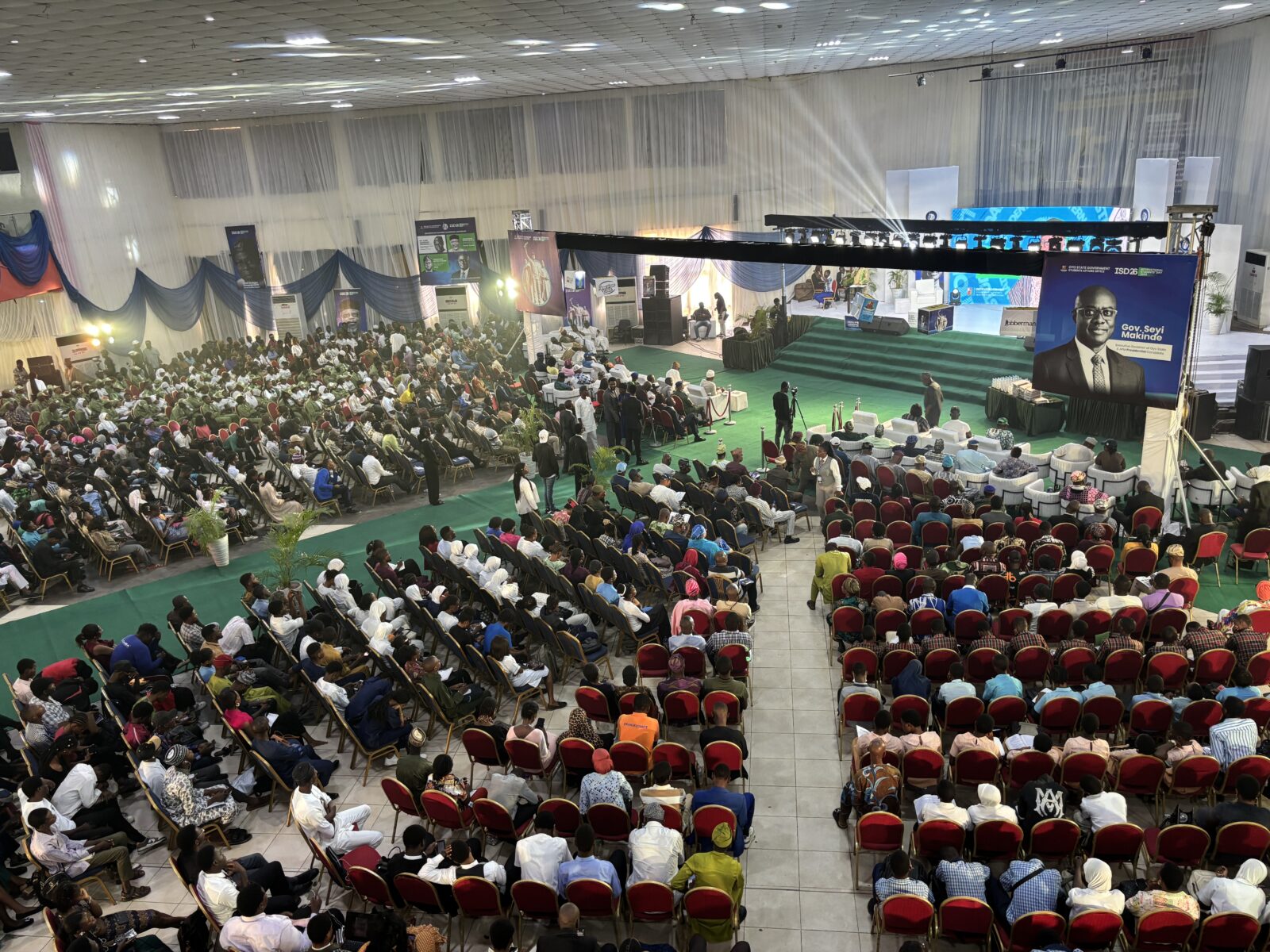
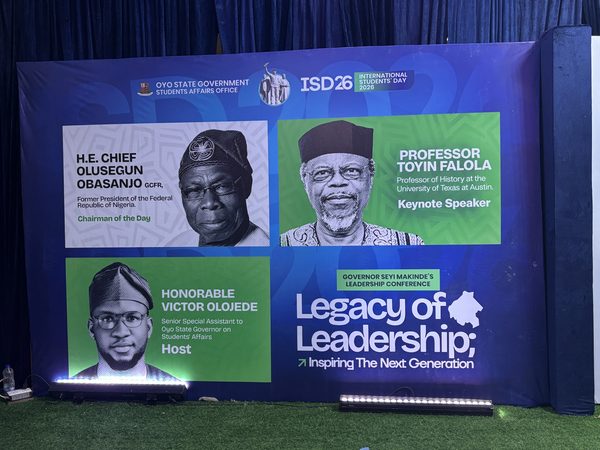
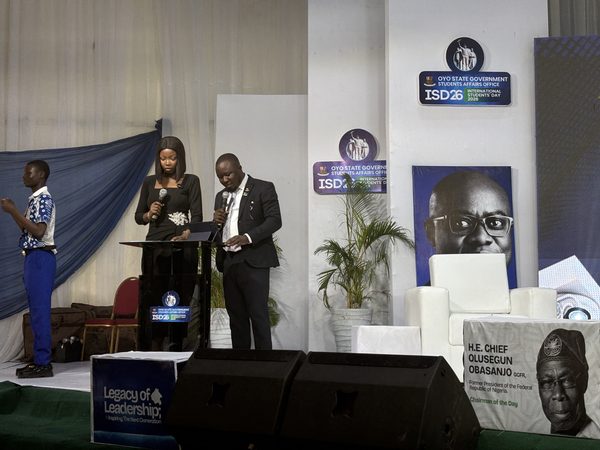
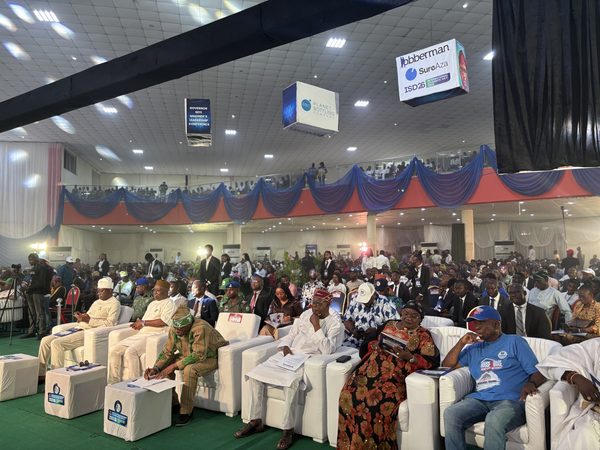
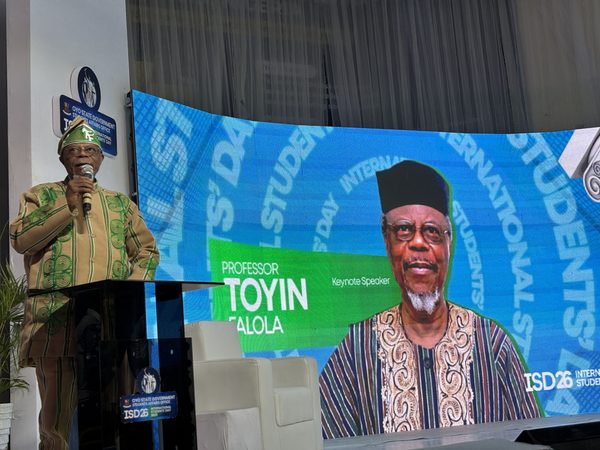
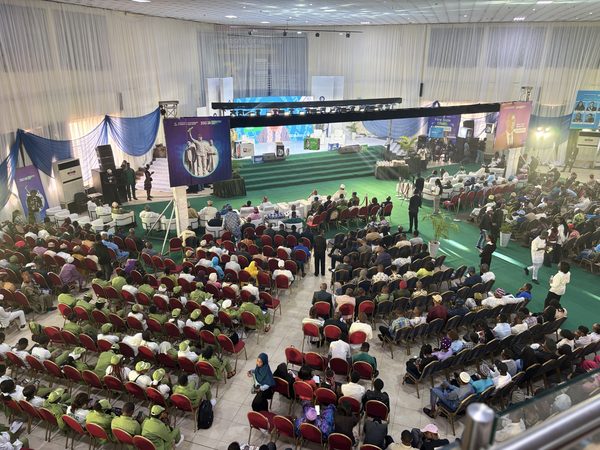
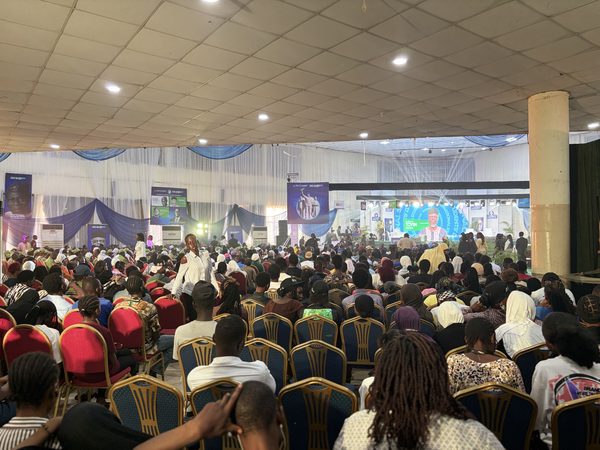
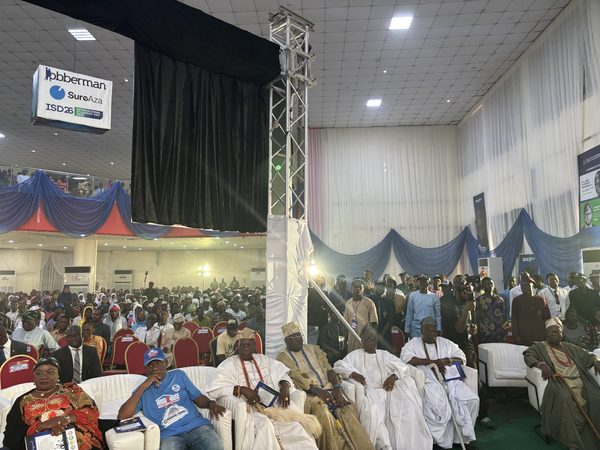
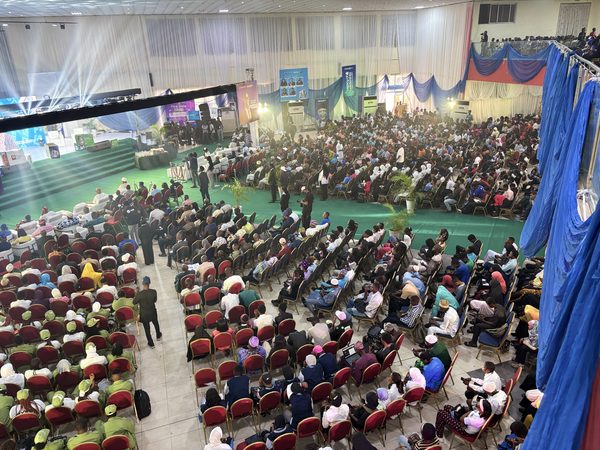
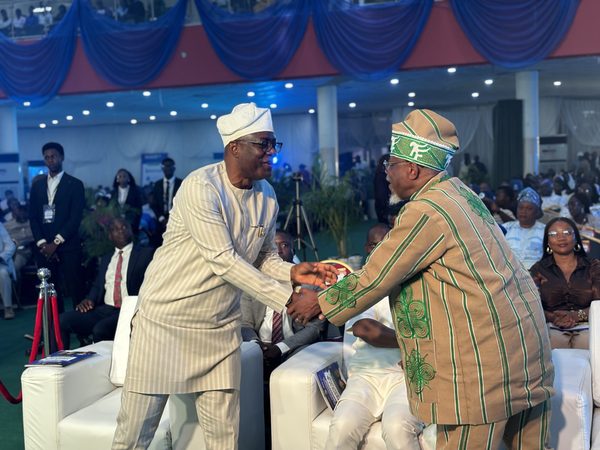
Oyo State International Students’ Day, 2026, hosted by the Oyo State Government on November 25, 2026, was a great success. The state governor, Engineer Seyi Makinde, played an excellent role, answering tough questions. It was a rare opportunity to be invited to address a cross-section of Nigerian students from different parts of Nigeria.
A residential hall at the University of Ibadan is named after the first principal, Kenneth Mellanby, while a library at the institution is named after the historian, Kenneth Dike. Those names are yelled out daily by students, who often do not give any consideration to the lives that are behind them. Because it just informs us who was revered and not what they left behind, a name on a structure is the most inexpensive form of respect a society can provide. Furthermore, a leader’s legacy is never limited to physical structures.
A lesson that is easy to overlook is carried by International Students’ Day. A medical student by the name of Jan Oleta was murdered during a Prague student protest against the German occupation of his nation in October 1939. His funeral turned into yet another demonstration when he succumbed to his injuries. Over a thousand students were deported to concentration camps, nine student leaders were killed, and colleges in the Czech Republic were shuttered by the Germans. A day for students worldwide to commemorate was set aside by student delegates gathered in London two years later on 17 November. Take note of the story’s omission. Not a single person there was a politician or elected official. Despite this, a group of youthful Nigerians who have never been to Prague nonetheless congregate around their recollection of the city. They were not born into power. It originated from a determination, made at an early age and with much sacrifice, to reject the idea that a university might be censured.
Because of this, we should be wary of leadership narratives that start with the person in charge. Additionally, it ought to bring us face-to-face with our own past. Both men and women from Ibadan have made their way into every facet of national life. Some created enduring structures. Some people’s work was stolen by others. Very diverse alumni despite using the same libraries and classrooms. Therefore, the level of instruction was not the distinguishing factor. It was determined by something else.
A little push against the term “inspiration” is what I’m going for. But by Monday the inspiration that had warmed us in the afternoon was replaced by rent, data bundles and lectures. What happens is less glamorous: a standard that other people follow, an organization that carries on working long after its founder has faded away, or an honesty habit that has been passed down through the generations until nobody can remember who began it. Said, I am making a point. The real value of a leader is judged by the legacy he leaves.

Think of it as a test. Get the person out of the room, vandalize the door, cut off the financing, take off the microphone, and see what is left. A legacy is continuance of the clinic’s work schedule, preservation and transfer of patient data. What we had was publicity for management if everything falls apart the day the leader leaves. Leaders tend to leave behind three categories of things: objects, rules, and people. Buildings become ruins without maintenance, rules require believers, and only people are capable of procreation. We are all too acquainted with the Nigerian abandoned project, and some evildoer or lack of financing is usually to blame. Generally, the first leader would build something for himself and then drop the baton, handing it on to the following generation.
Legacy also works in the other direction. A school founder leaves a legacy as strongly as a leader who exploits public money as his own and gets away with it because he delivers. After watching him in action, the junior officials learned the lesson that regulations are for those with connections, and adopted it in their employment. If a legacy is terrible, it’s easier to copy than a good one; hence, the bad one will last longer.
We also need to distinguish between impact and visibility. Name recognition is an indicator of exposure. This is your impact: the world works differently because of you. With your tools, anybody can be seen any time for free, and it’s never been easier to seem like a leader. Imagine two student union officers in office in the same year. On every occasion, there is chat with certainty, and images of each meeting are taken. You spent the year doing boring stuff like mending a leaking hostel building, rearranging the financial records so that an outsider may look at them, and writing a long handover statement. Even in two years the former will be remembered. It is the second, however, which has an unnoticed but significant influence on the union’s activities. Rarely can one see legacy from the outside, and frequently it is unknown. Nobody ever has to know your name if you want to be the cause of something wonderful continuing.
Building a legacy begins long before you are bestowed with authority. According to Aristotle, we gain virtue and courage when we accomplish good deeds. A crisis is not the place to find one’s character. Repetition makes it stronger. Think about the student who reveals to the instructor that she was the beneficiary of a scoring mistake, gives proper credit to her sources, and refuses to use leaked test questions. Little by little, she is cultivating virtue, and eventually, when the big exam comes along, she will realize the answer was already known a long time ago. Power magnifies existing character traits rather than producing new ones. Your future offices are like amplifiers; right now, they’re recording the signal.
Check out some successful lives and ask them three questions to get a feel for how this works. Is there anything we can inherit from them? Was there any actual expense to them for the service? How did they decide who would be the next to arrive? Come here to begin. While many academics continued to claim that Africa’s history could not be written, Kenneth Dike produced a study of the Niger Delta in 1956 that portrayed the inhabitants of the region as players with their own economic and political logic. He dug records and established a school to teach others how to do the same as a response. Even if he resigned as vice-chancellor in 1967, the methodology remained. His mentees headed departments and wrote textbooks, and J. The University of Lagos appointed F. Ade Ajayi as Vice-Chancellor. People are what make that legacy what it is. Free elementary education was instituted in 1955 by the Western Region under the leadership of Obafemi Awolowo. The concerns voiced by critics about overcrowding in the classroom and unequal quality are valid. Even when his political career came to an end, the principle that every kid in Nigeria deserves an equal opportunity to attend school would remain. Even now, Awolowo’s policies, not the person himself, cause controversy.
Courageous authors were also developed by this institution. After spending almost two years in solitary confinement at the outbreak of civil war in 1967, Wole Soyinka wrote The Man Died, a contemplation of the mental toll that incarceration may have. According to Chinua Achebe’s 1983 book The Trouble with Nigeria, the issue with Nigeria is not the country’s territory or its people, but rather the incompetence of its leaders. People who are prepared to put themselves in harm’s way to proclaim that a country is being neglected are just as important as those who are willing to create it.
You may learn the same things from the continent. After almost twenty years at the helm, Tanzania’s former president Julius Nyerere voluntarily stepped down in 1985, without being ousted by a coup or election. That the task is greater than any one individual is shown by his leaving. South Africa’s president, Nelson Mandela, served one term after spending 27 years in jail; he rejected a second. The fact that it was a repeatable, respectable decision made it all the more significant. Unofficially, Wangari Maathai demonstrates leadership. She started the Green Belt Movement in 1977 with the goal of uniting rural Kenyan women in tree planting. As a result of her efforts, she was detained and assaulted by the government at the time. In 2004, she became the first African woman to receive the Nobel Peace Prize. Because she accomplished something that every rural woman could achieve with a seedling and some land, the movement persisted even after she passed away in 2011. If we want to succeed, we should focus on creating fans rather than heirs.
In contrast to our successors, admirers enhance our appearance. A leader is defined by the caliber of those he leaves behind when he exits a room. If you take away nothing else from this speech, let this be it.
Now let’s talk about competence and character simultaneously, as both were present in the lives I mentioned. The principal issue we deal with in my line of business is the trust of other people. If you have coworkers who would like to hear “yes,” a compliance officer is there to formally tell them no. Trust is not an emotion; you learn that on the job. It is an asset that cannot be replaced with fresh cash and does not show on the balance sheet. Such trust is held to a higher standard than market ethics, Judge Benjamin Cardozo said in a 1928 judgement. Just preventing theft is not enough to fulfil the requirement. What happens when trust dissolves is seen in the demise of Arthur Andersen. It was found guilty in 2002 for its role in the Enron scandal, despite being one of the top five biggest accounting companies globally. The verdict was unanimously reversed by the US Supreme Court in 2005, but at that point it had little impact since the firm’s whole commodity was the faith of strangers, and faith cannot be restored via judicial decree. When Nigeria’s Central Bank ousted the heads of many banks in 2009, the country ultimately paid the price. They audited and licensed the banks. Both behavior and ability were inadequate.
A lot of the public discourse around leadership focuses on ethics, and I feel compelled to argue for competence with equal vehemence. A leader’s cleanliness is a question we continue to ask. That is important, but a nation that focuses only on that would elect sincere but inept leaders and then wonder why their policies fail. Those who place their faith in a trustee with a sterling reputation, but who fail to thoroughly review the deed, are just as likely to suffer damage as those who rely on a thief—and with less forewarning—because everyone is afraid of his impeccable reputation. Honesty is a kind of competence. This includes figuring out what’s really important and not feigning competence when you don’t have it.
When no one is watching, the toughest question is to answer. In Plato’s Republic, Glaucon recounts the story of a shepherd who discovers an invisible ring and wonders whether anybody would remain if he had it. He thinks we’re all being truthful because he’s watching. Systems monitor the transactions. The establishment of audit trails is a reaction by regulatory bodies and organizations. In order to avoid delaying the end of the project, the known discrepancy is not being addressed. This is because doing so would cause the delay. What a terrible sight that is! It is only accessible on foot currently.
An example of this would be a junior compliance officer analyzing transaction paperwork and finding a difference between a statement and the record that it is based on. They thought she ought to close. To speak out may create delays, and may even earn her some ill will. If she keeps her mouth shut, no one’s ever going to know. Every junior who hears of it knows what the place really values; therefore, what she does in that hour will have a greater impact on the institution than any ethics course. Speaking out is a quick way to pay the price of doing the right thing, but being silent will cost you more in the long run. With the advent of cheap memory, the only practical course of action is to transform into someone whose record you would feel comfortable having read out.
Now we can get to the point of this speech: the youth. The expression ‘leaders of tomorrow’ is perhaps the most damaging compliment in Nigerian public life. It may seem nice, but putting off obligations until some indeterminate future day is a prescription for catastrophe. Please decline the offer. The real world isn’t going to wait for you in college. This is the real world with political campaigns, limited money, and stiff competition. Malala Yousafzai has a strong case. At 11, she began writing anonymous articles for the BBC Urdu service, describing her life in the Swat Valley of Pakistan, where the Taliban had banned girls from being educated. She was short on funds and space. At the age of seventeen, she became the youngest person to ever receive the Nobel Peace Prize; she had survived being shot at the age of fifteen what she did as a leader while still a student was obvious. A girl has the right to an education, and she often stated this in her writing.
You already have three places under your control. Don’t sign off on something you haven’t read, and don’t let a collaborative effort devolve into a project completed by one person and signed off by six. Student organizations should reveal their financial information. You should use your dues as a trust fund and make sure that someone is ready to take over when you step down. Avoid cults and secret organizations that promise a rapid road to power and safety, as well as the sponsors who provide it. The power of fear is analogous to paying a debt to people who will follow you, and all they will have is your reputation. A law student just outside the gate in the heart of the city is doing better than most conferences by informing businesses about the true meaning of their lease agreements. Warning: This service should not be converted into content. If the first thing you do when you see someone in need is go for your camera, you’ve confused visibility for effectiveness.
In Yoruba, Owolabi, a person of complete character, is said to be someone who does not think about material things but rather the way they treat others. That means honest, courteous, fearless, eager to chip in when asked, and other excellent attributes. No man gives himself such an honor. Close friends and relatives are the first to discover when somebody is lying.
Your objection is well-known to me. Graduates wait years for employment, tuition goes up, the electricity goes out, and professors go on strike. Is this only an enjoyable sermon? In such situations, it is not your job to study. It is my generation’s job to discover solutions to ameliorate such circumstances. Negligent behavior is not excused by a broken system. Stand up for the system; I’m not asking that of you. Do not mimic its behavior; I beg you. And accept failures as learning experiences. After running for president of Liberia in 1997, Ellen Johnson Sirleaf was defeated by Charles Taylor. After a long eight-year campaign, she finally triumphed in 2006 and became Africa’s first female head of state. In 2011, she received the Nobel Peace Prize. She refused to let the setback spoil her career. That was part of it.
Let me go back to the first question. So, what gets by the leader? We have seen the answer in the attitude of a prime minister, the attitude of a young soldier, the attitude of a defeated candidate, the attitude of a historian. In none of these circumstances was the person the answer. The pattern existed, and individuals might follow it without ever knowing where it originated from. The Yoruba say that an ignorant youth would in the end sell the home of the family. It’s a severe warning in terms of legacy. The future of this institution is for its descendants, and you are one of them. “Responsibilities are two-way. “If I ask you to keep honest records, then it is up to my generation to do the same.
So now I’m asking for a choice, not graduation. Before you turn in for the night, jot down a single statement in your journal: “When I depart from my study and workplaces, those who remained will say that this is what I left behind.” Suppose the penalty will not come; better to find it out now than when you are elderly. I don’t expect you to be outstanding. Be dependable even when no one is watching. If you go on long enough like this, the offices, honors, and edifices with your name on them will either show up or stay unrealized. Anyway, you will have done the most important thing. Give back what doesn’t belong to you. Even if it hurts, be honest. Give your replacement good training. Try doing a little service that no one will bother to take pictures of, and then do it again. Years from now, your legacy will be the fact that an unknown person performs the right thing without your knowledge or consent and cannot explain how they did it.
Photos: Oyo State International Students’ Day (ISD), Part 1, November 25, 2026
https://www.flickr.com/photos/toyinfalola/albums/72177720336914966/
Photos: Oyo State International Students’ Day (ISD), Part 2, November 25, 2026
https://www.flickr.com/photos/toyinfalola/albums/72177720336915036