
Toyin Falola

A PANEL DISCUSSION ON WITCHCRAFT IN AFRICA
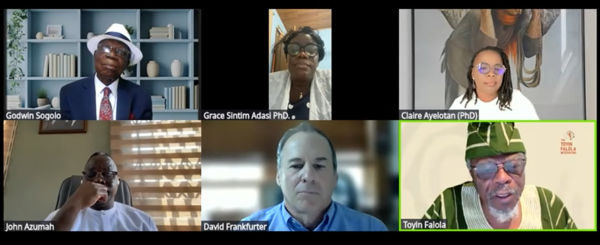
(This is the second report on a panel on Witchcraft in Africa, August 30, 2026. For the transcript, see https://www.youtube.com/live/oIDeymUW_o8?si=W3hoi3GWKC9NumJq)
While beliefs could provide the answers to what happens to societies, stories will be the means through which those explanations are kept alive and conveyed. In simple terms, no belief system can exist without the fact that people believe in it individually. Such belief systems come alive socially through language, repetition, performance, and teaching. The beliefs are narrated to children, talked about at home, and performed during rituals. What a society believes about the invisible world is therefore also connected to the ways in which that world is imagined and communicated.
This is important in the case of witchcraft. The African conceptions of hidden power discussed in two previous parts were never simply abstract theological propositions. These were expressed through stories, proverbs, folklore, ritual, religion and social interactions. Via these mediums, societies passed down ideas regarding power, danger, morality, responsibility and the ramifications of breaching one’s social duties. The witch, where this concept existed in a certain cosmology, was thus more than just a supernatural figure. The concept embodied broader ideas regarding jealousy, secrecy, destruction, chaos and socially inappropriate behavior.
The means through which societies tell these stories have changed. The oral storyteller has been joined by the novelist, the dramatist, the filmmaker, the preacher, the television presenter and, more recently, the content creator with a smart device. The cinema, television studio, radio station, YouTube channel, Facebook page, TikTok account and WhatsApp group have supplemented the community gathering. The technologies are new, but the human need to explain, interpret and communicate the unknown is not.
It is at this point that the question of witchcraft becomes inseparable from the question of media. The media is not simply an external observer reporting what society believes. It has become one of the principal places where contemporary societies produce and negotiate meaning. In fact, it chooses the stories, gives them imagery, gives them language, makes them visible, and connects them with an audience. By doing so, it can keep the old myth alive, turn it into something new, or give it shape so that it becomes comprehensible to those who have no experience whatsoever of the original culture where the myth originated. That is why the modern representation of witchcraft needs to be analyzed not only in the light of religion and anthropology, but also in terms of media history. What people now imagine when they hear the word “witch” may come from several different sources: indigenous traditions, Christian preaching, missionary narratives, popular films, television dramas, personal testimonies, internet videos, or stories circulated within social networks. These sources do not necessarily present the same understanding of witchcraft. They overlap, contradict one another, and sometimes transform each other. The result is a contemporary African spiritual imagination that is neither entirely traditional nor entirely modern.
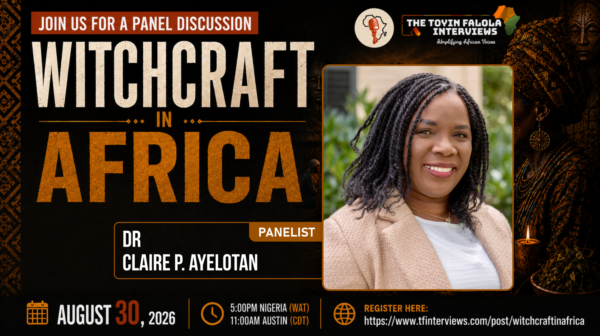
The panel discussion made this transformation particularly visible. Dr Claire Ayelotan’s contribution showed that some of the images through which contemporary audiences recognize witchcraft have identifiable modern histories. Her references to Hubert Ogunde’s Aiye, Mike Bamiloye’s Agbara Nla, Christian drama, and deliverance media demonstrate that the contemporary repertoire of witchcraft has not simply been inherited unchanged from an ancient past. It has also been produced through modern cultural forms and circulated through modern communication networks.
This observation changes how we should think about the relationship between witchcraft and modernity. The question is not only why modernity has failed to eliminate belief in witchcraft. We should also ask how modernity has provided belief with new languages, new images, and new audiences. The television screen, for example, can take a spiritual idea that once existed within a particular cultural setting and turn it into a dramatic narrative that can be consumed by millions. A religious broadcast can reinterpret older ideas through the vocabulary of spiritual warfare and deliverance. A social-media post can detach an accusation from the community in which it originated and send it into an entirely different social environment.
The media therefore does something more than transmit belief. It can give belief a public form. That distinction is crucial because public representation changes the relationship between belief and authority. A private conviction may remain uncertain. An account that is told repeatedly to the same audience becomes familiar. If this account is told by a respected religious leader, a popular filmmaker, a TV personality, or a popular online personality, it will also begin to become legitimate because of the respect accorded to such figures. It is not just about delivering messages. The media gives hints on how these messages are to be interpreted by the audience. This is when the transition from belief to accusation becomes relevant. A community may believe that invisible forces exist without identifying a particular person as responsible for a misfortune. But once the story supplies a human agent, the nature of the situation changes. The invisible becomes attached to a visible body. Suspicion acquires a name. A complex misfortune is given a single cause. A person who was previously a mother, neighbor, widow, child, or relative can suddenly be reinterpreted as a source of danger.
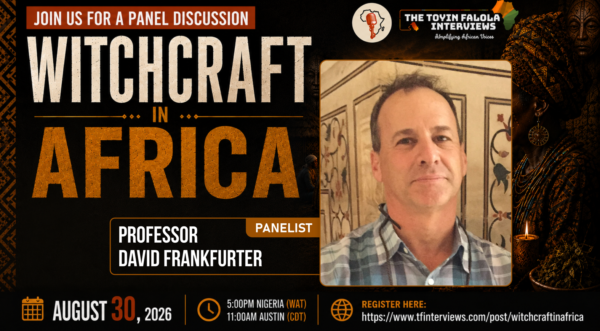
The panel discussion brought this distinction into sharp focus. Ayelotan insisted on separating belief from accusation. One may respect the belief in spiritual realities without accepting the naming of a particular person as a witch. The danger begins when a spiritual explanation becomes an allegation against an identifiable human being, and that allegation is then repeated, legitimized, and given an audience. This is precisely where media becomes consequential. An accusation requires an audience. It needs someone to hear it, repeat it, confirm it, or remain silent when it is made. In an earlier social environment, the audience might have been a family or a small community. Contemporary communication technologies can transform that audience almost instantaneously. A suspicion expressed within a household can enter a WhatsApp group; a message can become a video and can be reposted. A religious pronouncement can move from a congregation to social media. What was once a local allegation can acquire an audience far beyond the place where it began.
The problem, therefore, is not simply that the media tells stories about witchcraft. It is that the media has become part of the process through which stories acquire social authority. And this is perhaps the point at which the discussion becomes an urgent media question. If stories help societies interpret uncertainty, and if media organizations and platforms have become among the most powerful institutions for producing and circulating stories, then those institutions inevitably participate in shaping how uncertainty is interpreted. They can make a complicated social problem appear to have a simple supernatural cause. They can reinforce stereotypes about who should be feared. They can amplify accusations before they are examined. But they can also do the opposite: introduce evidence, question claims, investigate motives, and restore complexity to stories that have been reduced to a single explanation.
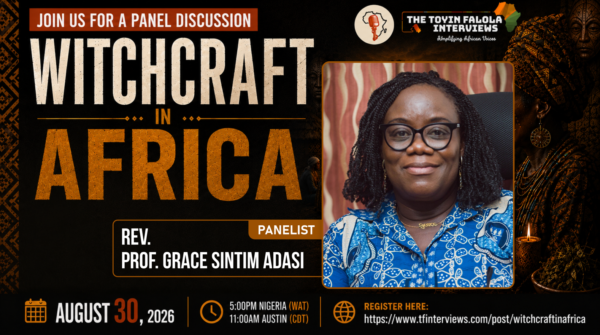
The media, in other words, occupies an ambiguous position. It can be an amplifier of fear, but it can also become an instrument for interrupting fear. It can turn suspicion into spectacle, but it can also turn spectacle into an object of investigation. This is why the conversation on witchcraft ultimately takes us beyond the question of representation. The important issue is not simply whether films, television programs, religious broadcasts, or social-media platforms portray witchcraft. They inevitably will, because the supernatural remains part of African cultural and religious imagination. The more important question is what happens when the stories produced by these media forms begin to shape how real people are understood.
Once the fictional witch acquires a counterpart in the real world, representation acquires consequences. The media may not hold the weapon, but it has the capacity to shape the story prior to the weapon. It may not make the accusation, but it has the ability to provide an audience for the accusation. It may not shape the beliefs of the community, but it can affect the shaping of the form of belief. This is when the media stops being a mere reflection of society and becomes a component of the social process itself. The question before us is therefore no longer simply whether witchcraft belongs in African media. It is how media representations of witchcraft interact with African beliefs, contemporary anxieties and real human relationships. It is how an image created for entertainment can become a stereotype, how a religious explanation can become an accusation, and how an accusation circulating through digital networks can acquire the appearance of truth.
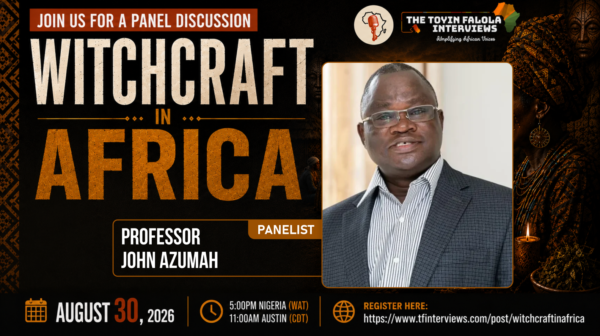
The conversation has shown us that the journey from belief to violence rarely begins with violence itself. It often begins with an interpretation, then a story, then repetition, then recognition and finally the naming of a person. If that is so, then the media occupies one of the most important points in the sequence—not because it is solely responsible for what follows, but because it has the capacity either to accelerate the movement from suspicion to accusation or to interrupt it. The real media question, therefore, is not whether we should tell stories about the invisible world. It is whether, in telling those stories, we make it easier or harder to accuse someone in the visible world.